
What Parents Need to Know When a Baby Tooth Shows Signs of Decay
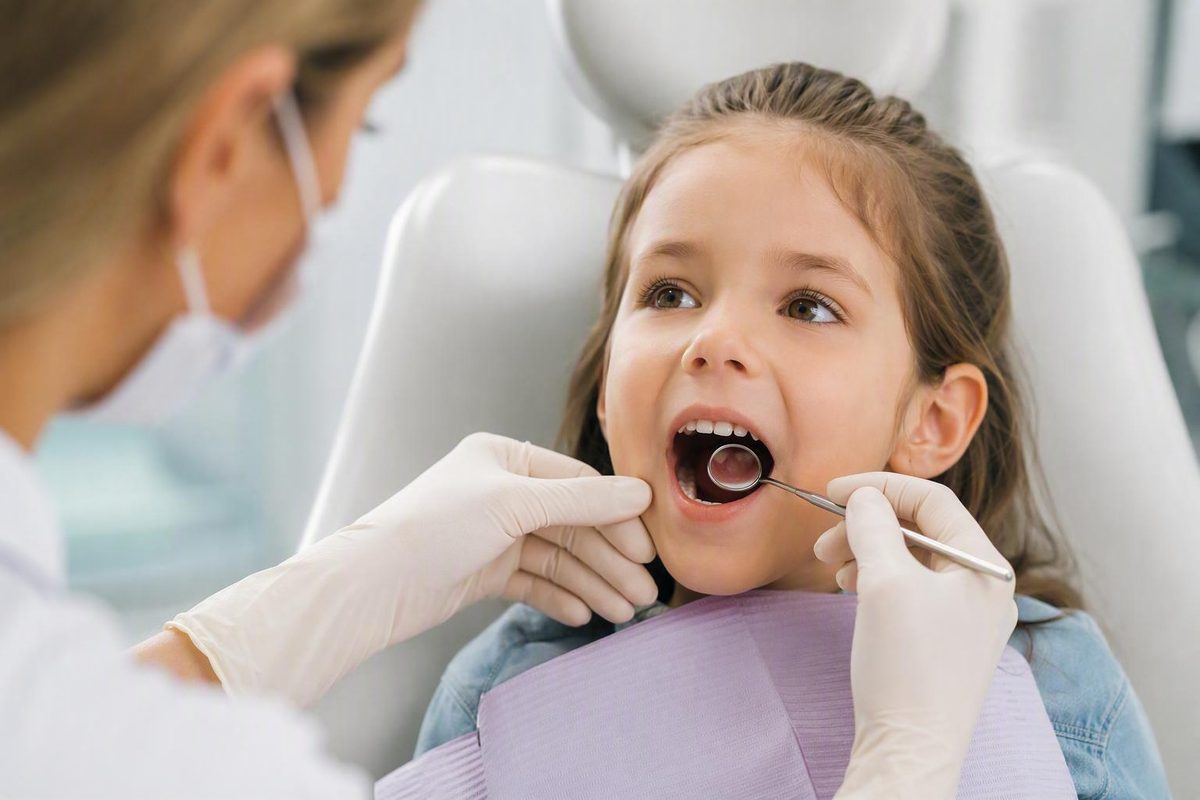
The short answer: baby-tooth cavities matter
A possible cavity in a baby tooth deserves attention. Primary teeth eventually fall out, but many must continue working for years before permanent teeth replace them. During that time, they help a child chew comfortably, speak, and preserve space for the teeth developing beneath the gums.
Untreated decay can grow and may lead to sensitivity, toothache, difficulty eating, infection, or loss of the tooth earlier than expected. These are possible outcomes, not a prediction for every mark or every child. Early enamel changes and established holes are also managed differently, so timely assessment can preserve more options.
When a baby tooth is lost prematurely, neighboring teeth may move toward the open space. That does not mean crowding, orthodontic treatment, or a space-maintaining appliance will inevitably follow. The effect depends on the tooth involved, the timing of the loss, the child’s dental development, and the surrounding teeth.
Cavities in primary teeth are common at a population level. More than half of U.S. children ages 6 to 8 have experienced a cavity in at least one baby tooth, and untreated cavities can cause pain or infection and interfere with activities such as eating and speaking, according to the CDC’s oral-health guidance for children. That statistic cannot predict whether a particular child has decay or how quickly an individual lesion will progress.
The practical message is not that every mark is an emergency or that every baby-tooth cavity requires the same procedure. It is that a persistent tooth change should not be dismissed simply because the tooth will eventually fall out.
Decay Guide publishes general dental-health information. It cannot examine a tooth, diagnose decay, or determine whether an individual child needs monitoring, restoration, or another treatment.
As explained on the publisher’s About page, Decay Guide is not a dental practice and does not provide individual diagnosis or treatment advice. Decisions about a child’s tooth must be made by a qualified dental professional after an examination.
How decay starts in a baby tooth
Decay can begin soon after the first tooth erupts, commonly during the latter half of a baby’s first year. A child does not need to have a complete set of baby teeth before cavities become possible. Nationwide Children’s Hospital explains that cavities can begin as soon as baby teeth appear and describes the roles of carbohydrates, bacterial acid, thinner enamel, and reduced saliva during sleep in its guidance on cavities in baby teeth.
The process can be understood in four steps:
- Plaque and bacteria remain on the tooth. The mouth naturally contains bacteria, some of which contribute to decay.
- The bacteria use fermentable carbohydrates. These include sugars and starches left on or around the teeth.
- Acids are produced. Repeated acid exposure removes minerals from and weakens the enamel.
- The surface may eventually break down. If mineral loss continues beyond the enamel’s ability to recover, tooth structure can collapse and form a physical hole.
“Sugar” in this context does not mean candy alone. Milk, formula, juice, sweetened drinks, bread, cereal, crackers, raisins, fruit products, cakes, and many other foods contain carbohydrates that oral bacteria can use. These foods are not nutritionally equivalent, and children do not need to avoid all carbohydrates. What matters for the teeth is the overall pattern of exposure and cleaning.
Frequency and duration matter. A drink served as part of a meal creates a different exposure pattern from prolonged sipping. Frequent grazing, carrying a bottle or cup throughout the day, or repeatedly sipping a carbohydrate-containing drink gives the teeth more acid challenges and less recovery time between them.
Bedtime exposure is particularly relevant because saliva helps dilute and clear material from the mouth, while saliva flow decreases during sleep. A bottle containing milk, formula, juice, or another sugar-bearing liquid can therefore keep erupted teeth in contact with carbohydrates for an extended period. This is a risk pattern—not proof that one bottle, snack, or feeding will cause a cavity.
Cavity risk has several interacting influences:
- how often the teeth encounter fermentable carbohydrates;
- how long foods or drinks remain in contact with them;
- plaque levels and the effectiveness of brushing and flossing;
- fluoride exposure;
- saliva flow;
- tooth shape and enamel characteristics;
- deep grooves or close contacts that are difficult to clean;
- the child’s ability to cooperate with oral care; and
- existing decay or other indicators of elevated risk.
This is why children with apparently similar diets can have different experiences. It is also why blaming one food, one bottle, or one imperfect evening of brushing is rarely useful. Prevention is built from repeated routines; diagnosis depends on assessing the tooth itself.
What cavities in baby teeth can look and feel like
A cavity does not always begin as an obvious black hole. Possible signs range from subtle mineral changes to discoloration, structural damage, and symptoms.
An early enamel change may look like:
- a chalky or cloudy white patch;
- an area that appears duller than the surrounding enamel;
- a pale band close to the gumline;
- a light-brown area; or
- a difference that is easiest to see after the tooth has been cleaned.
At this stage, the enamel surface may still be intact. That distinction matters because a non-cavitated lesion may have preventive treatment options that are no longer sufficient after the surface collapses.
As decay progresses, the tooth may develop:
- yellow, brown, dark-brown, or black discoloration;
- a rough or irregular surface;
- a pit or sunken area;
- a visible hole;
- a chipped or broken edge; or
- obvious loss of tooth structure.
Color alone cannot reveal how deep a lesion is.
Some cavities form in back-tooth grooves or between neighboring teeth, where caregivers cannot see them. Food repeatedly catching in the same place or floss consistently shredding at one contact can justify an assessment, but neither observation proves decay. Tooth shape, a tight contact, or another rough surface could produce similar clues.
A child with deeper decay may have:
- sensitivity to sweets;
- sensitivity to hot or cold foods and drinks;
- toothache;
- pain while biting or chewing;
- a preference for chewing on one side;
- avoidance of particular foods;
- food refusal associated with the mouth;
- irritability when one area is brushed; or
- swelling near the affected tooth.
Young children may communicate discomfort through behavior rather than words. A toddler might push the toothbrush away from one spot, stop eating a normally accepted food, or consistently chew on the other side.
Early and hidden cavities can be painless. Some children have no noticeable symptoms until a dentist identifies decay during an examination. The range of possible color changes, structural signs, symptoms, and lookalikes is summarized in this clinical overview of what cavities can look like on baby teeth.
Not every mark is decay. Tooth color may also change because of:
- surface staining;
- tartar;
- strongly colored foods or drinks;
- iron supplements;
- differences in how the enamel developed; or
- an earlier injury.
A tooth that turns gray, brown, or dark after a fall or blow may have sustained internal trauma. That change warrants dental evaluation, but it should not automatically be labeled a cavity. Likewise, a dark speck in a deep groove may be stain, decay, or a combination of the two.
Home inspection can help a caregiver notice and track a change, but it cannot confirm the diagnosis or depth. Even a clear photograph shows only visible surfaces under particular lighting. It cannot reveal what is happening between teeth or inside the tooth.
How dentists find decay that caregivers cannot see
Diagnosing decay usually involves more than looking for a hole. A dentist combines the child’s history with an examination of the mouth and teeth.
The history may cover:
- when the mark or symptom was first noticed;
- whether it has changed;
- whether discomfort occurs with sweets, temperature, or chewing;
- feeding and snacking patterns;
- bedtime bottle or cup use;
- brushing, toothpaste, and flossing routines;
- fluoride exposure;
- previous cavities or dental treatment;
- relevant health information; and
- any recent fall or blow to the mouth.
During the examination, the dentist considers where the area is located, how it looks, whether the surface is intact or broken, and whether there are signs of plaque retention, food trapping, swelling, or structural damage. Those findings are interpreted alongside the child’s overall cavity risk rather than by color alone.
This distinction matters because several conditions can look similar. A chalky patch may represent active mineral loss or a developmental enamel difference. A brown mark may be stain or decay. A darkened tooth may reflect trauma. A visible defect may be a cavity, a chip, or an enamel-development problem.
Decay can also hide between adjacent teeth or in grooves that cannot be assessed fully from a caregiver’s viewing angle. A dentist may sometimes recommend X-rays to investigate suspected hidden or deeper decay. Imaging is not automatically required for every child or every visit; the decision should be individualized according to the clinical question, history, risk, visible findings, and treating professional’s judgment. Johns Hopkins Medicine describes diagnosis as a combination of the child’s history, oral examination, and, when appropriate, dental X-rays.
Professional assessment can therefore identify some cavities before a child reports pain. Waiting for a complaint is not a reliable screening strategy because early decay may cause no discomfort and young children may not recognize or describe sensitivity.
The result of an assessment is not always “fill it” or “do nothing.” The dentist may conclude that the mark is not decay, that it is an intact early lesion suitable for preventive management, that it needs planned observation, or that tooth structure has been lost and restorative treatment should be considered.
Can early decay be reversed, or does it need a filling?
The word “cavity” is often used loosely for every stage of tooth decay. The most important treatment boundary, however, is whether the tooth surface remains intact.
An intact early lesion may sometimes be arrested or remineralized. Early demineralization means enamel has lost minerals but has not yet collapsed into a hole. Under professional guidance, better plaque removal, appropriate fluoride exposure, and changes to the frequency or duration of carbohydrate exposure may help the enamel regain minerals or stop the lesion from progressing.
This does not mean every white spot will disappear. Nor can a caregiver determine from appearance alone whether a white patch is demineralization, a developmental enamel difference, or another condition.
A formed hole is different. Once tooth structure has been physically lost, brushing and fluoride cannot rebuild the missing shape. Better home care remains important because it may reduce the risk of further decay, but it cannot close a pit, replace a broken edge, or reconstruct a cavitated surface. This is one example of what daily brushing cannot fix.
Two common oversimplifications should therefore be avoided:
- “Every suspicious mark needs a filling” is too broad. Some marks are not decay, and selected intact early lesions may be managed preventively.
- “Baby-tooth cavities can heal at home” is also misleading. A physical hole does not grow back through brushing, fluoride toothpaste, supplements, or dietary changes alone.
A dentist may actively monitor selected early lesions rather than restoring them immediately. Active monitoring is not the same as ignoring the tooth. It means preventive management combined with professional follow-up to determine whether the area remains stable or progresses.
In some circumstances, a dentist may also decide to observe a small, symptom-free lesion in a baby tooth that is close to natural shedding, provided the assessed risk of pain or infection is low. Age alone does not answer that question because different baby teeth fall out at different stages.
Only an examination can determine whether the surface is intact, how far the lesion appears to extend, and whether observation is reasonable. General patient guidance distinguishes conservative management for some early decay from restoration of damaged tooth structure for many established cavities, as outlined by Johns Hopkins Medicine.
How treatment decisions are made
Treatment for decay in a baby tooth is not governed by a universal filling rule. The goals are to maintain comfort and function, control decay or infection, and preserve useful tooth structure when appropriate.
A dentist may consider:
- whether the enamel is intact or cavitated;
- the apparent depth and activity of the lesion;
- pain, sensitivity, swelling, or other symptoms;
- which tooth and surface are involved;
- whether enough sound tooth structure remains;
- the risk of the decay progressing inward or causing infection;
- the child’s health and individual circumstances;
- the child’s ability to receive care;
- whether preventive care and follow-up are likely to be reliable; and
- how long the tooth is expected to remain before natural shedding.
For selected early lesions, care may emphasize professional cleaning, fluoride or another remineralization measure, better plaque control, changes to eating and drinking patterns, and planned reassessment.
For an established hole, treatment commonly involves removing damaged material and restoring the tooth with a filling. A restoration replaces structure that home care cannot rebuild and helps return the tooth to useful function.
For more extensive decay, a dentist may recommend a larger restoration, a crown, treatment directed at the tooth’s inner tissue, or another tooth-preserving approach. If a tooth cannot be restored, removal may be considered. These are broad categories rather than recommendations for a particular child; the appropriate choice depends on an in-person assessment.
If a baby tooth is removed well before its natural shedding time, nearby teeth may move toward the space. A dentist may consider a space maintainer in some cases, but one is not automatically required after every early loss. Treatment overviews for primary-tooth decay describe a spectrum from preventive measures and fillings to more extensive care, depending on severity and the tooth involved, but these choices require individualized professional judgment.
The immediate reasons for treating significant decay are practical: reducing pain, supporting eating and chewing, controlling infection, and retaining useful tooth structure. Spacing may be relevant, but a child with a cavity is not automatically destined for crowding, braces, or permanent-tooth damage.
Recommendations can legitimately differ between children whose teeth appear similar at home. A small intact lesion on a lower-risk surface is not equivalent to a rough hole that traps food. A symptom-free tooth near natural shedding is not equivalent to a painful tooth expected to remain for years.
An age-based routine for preventing new cavities
Prevention does not require a perfect diet or flawless brushing every night. It depends on a repeatable routine that reduces plaque, provides age-appropriate fluoride exposure, and limits prolonged carbohydrate contact.
Before the first tooth erupts
Gently wipe the gums with a soft, clean, damp cloth. This removes residue and introduces oral care before a toothbrush is needed. It can also help the child and caregiver become accustomed to having the mouth cleaned.
From the first tooth to age 3
Once the first tooth appears:
- Brush twice daily with a soft, age-appropriate toothbrush.
- Use a rice-grain-sized smear of fluoride toothpaste.
- Have an adult perform or actively assist with brushing.
- Clean along the gumline as well as the visible tooth surfaces.
- Begin flossing where two adjacent teeth touch.
State public-health guidance advises that baby teeth are vulnerable to decay as soon as they appear and recommends a rice-sized amount of fluoride toothpaste for children younger than 3, supervised brushing, and flossing once teeth touch. See the North Dakota Department of Health and Human Services’ baby-teeth guidance.
Some published consumer guidance differs on fluoride-toothpaste use in children younger than 2. If a child’s dentist or clinician has provided different instructions based on age, swallowing ability, water supply, or total fluoride exposure, follow that individualized advice.
From age 3
Use a pea-sized amount of fluoride toothpaste and continue supervising. A preschooler may want to brush independently, but willingness is not the same as having the manual skill to clean every surface. Letting the child brush first and then having the caregiver finish can support independence without sacrificing cleaning.
Use only the recommended amount, keep the toothpaste out of reach when it is not being used, and teach the child to spit as that skill develops.
When teeth touch
Begin flossing wherever two neighboring teeth contact each other. Toothbrush bristles may clean open spaces between separated baby teeth, but they generally cannot clean a tight contact area adequately.
Not every gap needs flossing before contact forms. Once teeth touch, clean gently between them without snapping the floss into the gums. A dentist or hygienist can demonstrate positioning if access is difficult.
At meals, between meals, and overnight
The goal is not to ban milk, formula, fruit, bread, or every carbohydrate-containing snack. Instead, reduce how frequently and how long erupted teeth are exposed.
Practical measures include:
- serving carbohydrate-containing drinks as part of feeding rather than allowing prolonged sipping;
- avoiding a bedtime bottle containing milk, formula, juice, or another sugar-bearing liquid;
- using water between meals as the generally less cavity-promoting option when it is age-appropriate;
- reducing frequent grazing throughout the day;
- cleaning erupted teeth after the final feeding when practical; and
- not dipping pacifiers in honey, sugar, juice, or sweetened drinks.
These are general dental-prevention principles, not instructions to stop breastfeeding, formula, water, or medically necessary nighttime nutrition. Children with nutritional, growth, swallowing, metabolic, or other medical needs may require individualized feeding plans. Caregivers can ask the child’s clinician and dentist how to protect the teeth while maintaining necessary nutrition.
Limit saliva-sharing practices
Avoid sharing spoons and cups when practical. These measures may limit transfer of cavity-associated bacteria, but saliva transfer alone does not determine whether a child develops decay. Cavities have multiple contributing factors.
Consider the whole fluoride picture
Fluoride toothpaste acts directly at the tooth surface. Fluoridated community water can contribute to prevention, and a dentist or other qualified clinician may recommend professionally applied fluoride varnish according to the child’s needs.
Families relying mainly on bottled water, well water, or another non-fluoridated source should discuss the child’s total fluoride exposure with a dentist or clinician. Bottled water does not necessarily contain the same fluoride level as a fluoridated public supply. Do not start fluoride supplements without individualized professional advice.
Establish dental care during infancy
The first dental visit is generally recommended within six months after the first tooth erupts and no later than the first birthday. Infant oral-health guidance also pairs early visits with gum cleaning, age-appropriate fluoride-toothpaste amounts, and flossing once teeth touch, as described in this overview of preventing cavities in babies and toddlers.
When to arrange a dental assessment
Arrange a dental appointment for any persistent change that could represent decay, including:
- a chalky, cloudy, or dull area;
- a pale line near the gumline;
- a brown, dark-brown, or black mark;
- food repeatedly catching in one place;
- floss repeatedly shredding at the same contact;
- a rough or sunken area;
- a pit or visible hole;
- a broken tooth or edge; or
- visible loss of tooth structure.
Do not wait for pain before arranging an assessment. Early decay and cavities between teeth may not hurt, and some children cannot describe sensitivity clearly.
Seek prompt professional assessment if a child has:
- tooth pain;
- sensitivity that interferes with eating or drinking;
- pain while chewing;
- persistent chewing on one side;
- avoidance of normally accepted foods;
- food refusal associated with the mouth;
- localized gum swelling; or
- a visibly damaged tooth.
Pain and swelling can accompany deeper decay or infection. They should not be managed solely by brushing harder, applying more toothpaste, or relying on an online photograph.
This article does not provide emergency triage.
A tooth that turns gray or dark after an injury also warrants evaluation. Trauma-related discoloration is not automatically decay, and its significance cannot be determined from color alone.
Before the appointment, note:
- when the mark, break, or symptom first appeared;
- whether its appearance has changed;
- whether pain is linked to sweets, hot or cold items, or chewing;
- whether the child has changed how or what they eat;
- the usual meal, snack, bottle, cup, and overnight-feeding routine;
- brushing frequency and the toothpaste used;
- whether and where flossing is performed;
- the main source of drinking water;
- any recent fall or blow to the mouth; and
- relevant medicines and health conditions.
A photograph taken when the change was first noticed may help document its appearance, but it cannot replace an examination. The dentist must determine urgency and treatment after assessing the tooth.
Frequently asked questions
Do cavities in baby teeth always need fillings?
No. A suspicious mark may not be decay, and an intact early area of mineral loss may sometimes be managed through plaque control, fluoride, changes to exposure patterns, and professional monitoring.
An established hole commonly requires restorative treatment because missing tooth structure cannot grow back through brushing or fluoride. A dentist may occasionally monitor a small, symptom-free lesion in a tooth close to natural shedding when the assessed risk of pain or infection is low. The decision depends on the tooth, lesion, symptoms, and examination findings.
Can a white spot on a baby tooth go away with fluoride?
A chalky white spot may represent early mineral loss while the enamel remains intact. Under professional guidance, fluoride, effective plaque removal, and changes to eating or drinking patterns may help remineralize or arrest the lesion.
The spot may remain visible even if it becomes inactive. It could also be a developmental enamel difference rather than decay. If the surface has already collapsed into a hole, fluoride cannot replace the missing structure.
Can a child have a cavity without pain?
Yes. Early cavities and decay hidden between teeth can cause no pain. Some are discovered only during a professional examination or with selectively chosen dental imaging.
Pain may become more likely as decay progresses toward the tooth’s sensitive inner tissue, but symptoms vary. A lack of complaint does not prove that a persistent color or surface change is harmless.
Can a cavity in a baby tooth affect a permanent tooth?
A cavity does not literally jump from a baby tooth to a permanent tooth. Severe local disease or infection may affect nearby tissues, however, and premature loss of a primary tooth may allow neighboring teeth to shift and change the space available for the permanent tooth.
Those outcomes are not inevitable. Risk depends on the tooth involved, the severity of disease, whether infection is present, and the child’s stage of dental development. The strongest immediate reasons to assess significant decay are comfort, chewing, preservation of useful tooth structure, and infection control.
When should brushing, flossing, and dental visits begin?
Before teeth erupt, clean the gums gently with a soft, damp cloth. Begin caregiver-assisted brushing when the first tooth appears. Common guidance recommends a rice-grain-sized smear of fluoride toothpaste before age 3 and a pea-sized amount from age 3, with supervision to limit swallowing.
Begin flossing wherever two adjacent teeth touch. Schedule the first dental visit within six months after the first tooth erupts and no later than the first birthday. If a suspicious mark, break, pain, or swelling appears earlier, arrange an assessment rather than waiting for the routine visit.
The practical takeaway
The central distinction is straightforward: an early enamel change with an intact surface may still respond to professionally guided preventive care, while a formed hole will not rebuild itself.
Because decay in baby teeth can be painless, hidden, or confused with staining or trauma, persistent changes are best assessed before significant discomfort develops. Caregiver-assisted brushing with the appropriate amount of fluoride toothpaste, flossing where teeth touch, reducing prolonged carbohydrate exposure, and establishing dental care during infancy provide a practical prevention framework.