
What Can't Daily Brushing Fix, and When Does It Backfire?
Roughly a third of each tooth's surface lies between teeth, beyond bristles. See why tartar, bone loss and acid erosion need different responses.
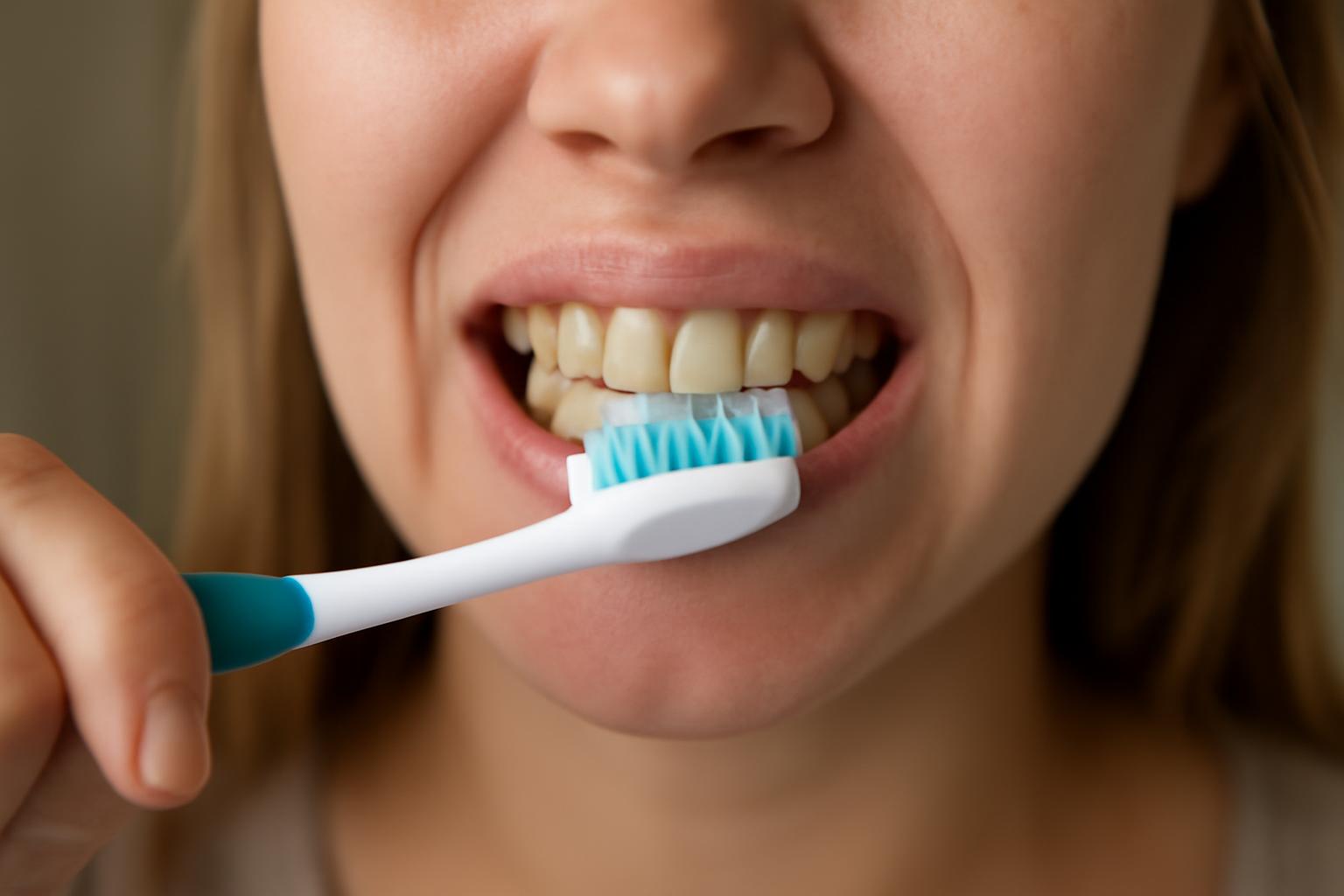
Brushing twice a day is genuinely the highest-return thing you can do for your teeth. It is also routinely expected to solve problems it has no mechanism to touch — and the gap between those two facts causes a lot of confusion in a dentist’s chair.
Here is the honest division.
What brushing does well
It disrupts biofilm. Plaque is a living bacterial community that re-establishes on a clean tooth within about a day, and mechanical disruption is what keeps it from maturing. That directly reduces both decay and gingivitis, which is why the two-minute rule survives every review of the evidence.
Gingivitis in particular is reversible. Inflamed, bleeding gums caused by plaque generally settle within a couple of weeks of consistent cleaning.
What brushing cannot reach
Between teeth. Roughly a third of each tooth’s surface sits against its neighbour, where bristles do not go. That surface is where a lot of decay starts, and no brushing technique compensates for skipping interdental cleaning.
Tartar. Once plaque mineralises — a process taking somewhere around a fortnight — it is no longer soft, and a toothbrush will not shift it. Only a scaler will. This is the single most common reason people who brush diligently still need a hygienist.
Bone loss. Gingivitis is reversible; periodontitis is not. Once supporting bone is gone, cleaning stops the progression but does not rebuild what was lost.
Where brushing actively backfires
Acid erosion is not a bacterial process. It is chemical dissolution of enamel by acids from drinks, citrus or reflux — no plaque required. Softened enamel is more vulnerable to abrasion, so brushing immediately after something acidic can remove more mineral than leaving it alone would.
Waiting, rinsing with water, and using a soft brush with light pressure all help. Brushing harder does not.
The practical version
Brushing is prevention against bacteria. It is not a treatment, not a substitute for interdental cleaning, and not a defence against acid. Problems that persist despite good brushing are usually a sign that the cause was never bacterial in the first place — which is a diagnosis question, not an effort question.
Decay Guide publishes general information about dental health. It is not a dental practice and does not diagnose or treat. Discuss your own care with a qualified dentist.