
How to Read Changes in Your Gums Without Diagnosing Yourself
Color alone is not the test. Compare firm fit, comfort and routine bleeding with your personal baseline, then check which changes need dental care.
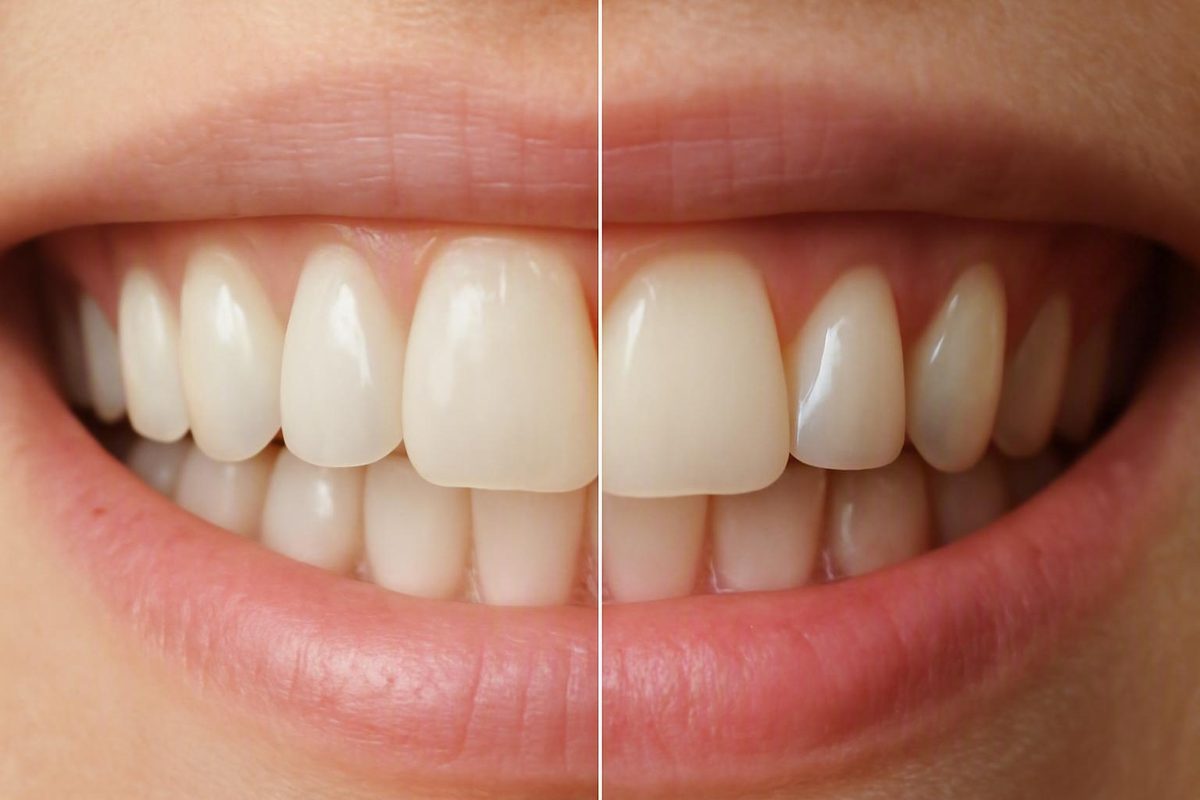
Healthy gums are not defined by one ideal shade. A healthier pattern is better recognized by tissue that is firm, comfortable, closely fitted around stable teeth and consistent with your natural pigmentation, without routine bleeding during gentle cleaning.
Repeated bleeding, swelling, recession, persistent bad breath or tenderness deserves attention. Loose or shifting teeth, new gaps, pus, facial swelling or fever are more concerning. Even so, a symptom or photograph cannot determine whether the cause is gingivitis, periodontitis, infection, brushing trauma, a tooth problem or something else. That requires a dental examination.
Healthy vs. unhealthy gums at a glance
Use this comparison to recognize changes worth monitoring or discussing with a dental professional—not to diagnose yourself.
| Feature | Common healthy pattern | Potential warning pattern |
|---|---|---|
| Color | Consistent with your natural pigmentation, which may range from light pink to deep brown | New redness, darkening, uneven patches, pallor or another unexplained change from your normal color |
| Texture | Firm and sometimes subtly stippled or orange-peel-like | Puffy, spongy, unusually smooth or shiny |
| Contour | A smooth or gently scalloped gumline around the teeth | A new bulging, irregular, swollen or visibly altered contour |
| Fit around teeth | Gums hug each tooth closely | Gums appear to pull away or fit differently from your usual baseline |
| Bleeding | No routine bleeding with gentle brushing or interdental cleaning | Frequent, persistent, heavy or unexplained bleeding |
| Comfort | Generally comfortable and unnoticeable | Tenderness, soreness, throbbing or pain |
| Breath or taste | No persistent unexplained odor or unpleasant taste | Ongoing bad breath or a lingering unpleasant taste despite routine cleaning |
| Recession | Gumline appears stable relative to your baseline | More tooth or root becomes visible, teeth look longer or the gumline continues to retreat |
| Tooth stability | Teeth feel stable and the bite feels unchanged | Loose or shifting teeth, new gaps, chewing pain or a change in how the teeth meet |
A broadly healthy pattern is firm, comfortable tissue that follows a smooth or scalloped line and fits closely around stable teeth. It should not routinely swell or bleed during gentle cleaning. Natural color varies considerably, so shade should be interpreted relative to the person rather than against a single “perfect” photograph. Cleveland Clinic likewise emphasizes firmness, a snug fit and the absence of easy bleeding as useful indicators of gum health (healthy-gum characteristics).
Potential warning patterns include a change from your usual color, localized redness or darkening, puffiness, shininess, tenderness, frequent bleeding, recession or a change in how the gums fit around a tooth. Persistent bad breath, an unpleasant taste and sensitivity may accompany a gum problem, but they are nonspecific.
Tooth movement deserves particular attention. A new gap, a tooth that feels loose or a change in your bite may occur when the tissues or bone supporting the teeth have been affected. These changes are generally more concerning than color alone.
A comparison table, mirror check or photograph can help you notice a change. It cannot diagnose gum disease or exclude disease when the gums look normal. It also cannot show every periodontal pocket, attachment change, deposit below the gumline or change in supporting bone.
Healthy gums are not always pink: establish your personal baseline
Descriptions of “healthy pink gums” are incomplete. Healthy tissue may range from light pink to deep brown because natural pigmentation differs between people. Pigmentation may also vary within the same mouth.
The more useful question is not “Do my gums match this photograph?” but “Have they changed from what is normal for me?” A stable, deeply pigmented gumline that is firm, comfortable and nonbleeding may be healthy. Conversely, naturally light gums may become noticeably redder during inflammation. An unexplained darker or lighter area may deserve assessment, but color alone cannot identify its cause. Aspen Dental’s patient guide similarly describes healthy gum color as ranging from light pink to deep brown and emphasizes consistency, texture and fit around the teeth (gum color, texture and fit).
Texture and behavior provide additional context. Healthy gums usually feel firm rather than soft or spongy. Some have a fine stippled texture, although the absence of visible stippling does not by itself indicate disease. Puffy, glossy or unusually smooth tissue is more concerning when it represents a change from baseline.
Healthy gums also tend to follow the contours of the teeth and hug each tooth closely. The teeth should feel stable, and the bite should not be changing. Routine tenderness, swelling or bleeding during careful cleaning is not part of the usual healthy pattern.
A safe mirror check
Use clean hands, good light and an ordinary mirror. Do not poke the gums with sharp tools or attempt to measure spaces around the teeth yourself.
- Lift your lips gently and look along the gumline.
- Compare the left and right sides, remembering that perfect symmetry is not expected.
- Look for new localized swelling, redness, darkening, recession, sores or unexplained patches.
- Notice whether bleeding happens repeatedly during gentle cleaning.
- Check whether a tooth appears longer, has shifted or feels less stable.
- Consider comfort, breath, taste and sensitivity alongside appearance.
- If useful, take a dated photograph in similar lighting to help describe a change to your dentist.
This check has limits. Lighting and natural pigmentation can change how the gums appear, and early gum disease can be painless or visually subtle. Tissue that looks normal may still bleed during a professional examination or have deeper spaces, tartar below the visible gumline or changes in supporting bone.
Article note: Decay Guide provides consumer dental-health education. Its material is written by a health writer, has not been reviewed by a clinician and cannot replace a dental examination or X-rays when indicated. These limitations are explained in the site’s editorial disclosure.
What bleeding, swelling, recession, and other changes may mean
No single symptom proves that your gums are unhealthy. Consider the wider pattern: how often the change occurs, whether it is worsening, whether it is localized or widespread and whether it comes with swelling, pain, tooth movement or possible infection.
Bleeding
Repeated bleeding during gentle brushing or interdental cleaning commonly accompanies gum inflammation or gingivitis, but bleeding alone does not establish a diagnosis. It may also follow local trauma, forceful brushing, an awkward flossing technique or irritation around trapped food.
A small amount of bleeding can occur when someone resumes interdental cleaning after a long break. If it is minor and short-lived, continue with a gentle technique rather than abandoning cleaning completely. Frequent, heavy, painful, worsening or persistent bleeding should be assessed.
Brushing harder is not the answer. Excessive pressure can traumatize gum tissue and may contribute to recession. Effective brushing depends on systematic plaque removal with a soft-bristled brush, not scrubbing until the gumline hurts.
Redness, puffiness and tenderness
Inflammation may make gums look redder or darker than usual, swollen, shiny or rounded around the teeth. The tissue may feel tender and bleed more readily. These are common gingivitis-type changes, but appearance cannot establish whether plaque is the only cause or whether a local irritant, trapped food, infection, restoration problem or another condition is involved.
Pain is also an imperfect guide. Inflamed gums may be sore, but gum disease can progress with little or no pain. Pronounced pain may instead originate from a tooth, an exposed root, an ulcer or another oral structure.
Recession and sensitivity
Gum recession means that the gum margin has moved from its previous position, exposing more of a tooth or root. The tooth may look longer or become sensitive to cold, touch or brushing. An exposed root can also be more susceptible to decay.
Recession does not automatically mean periodontitis. A professional assessment is needed to investigate the likely cause.
Receded gum tissue generally does not grow back by itself. Management may focus on addressing the cause, limiting further change, reducing sensitivity and, in selected cases, considering a periodontal procedure. Home care should not be expected to rebuild tissue that has already been lost.
Bad breath, unpleasant taste and sensitivity
Persistent bad breath or an unpleasant taste can accompany bacterial accumulation or periodontal disease. These symptoms are not specific to gum disease: dry mouth, tongue coating, tooth decay, infection, diet, tobacco exposure and other oral or medical factors may contribute.
Sensitivity is similarly nonspecific. New, localized or worsening sensitivity should be assessed rather than diagnosed by appearance.
Inflammation versus possible infection
Redness, puffiness, tenderness and bleeding are typical signs of inflammation. Pus, fever, facial or jaw swelling, or escalating throbbing pain raises concern for an infection or abscess and warrants urgent professional assessment. Dental infections may cause swelling of the gum, jaw, cheek or face and can be accompanied by fever (possible signs of oral infection or abscess).
Unexplained sores, white patches, discolored areas or persistent color changes should also be examined. Their appearance is not enough to determine the cause, and not every sore or patch is related to gum disease.
From plaque to gingivitis and periodontitis
The common plaque-related pathway can be understood as a sequence, although not everyone progresses through it at the same rate:
- A soft bacterial film called plaque accumulates on teeth, particularly near and between the gumline.
- The gums may respond with inflammation, causing redness, swelling, tenderness or bleeding.
- Plaque that is not removed can mineralize into hardened tartar, also called calculus.
- Gingivitis may persist and, in some people, progress to periodontitis.
- Periodontitis can create or deepen spaces between the teeth and gums and damage attachment tissues and supporting bone.
- Advanced damage may result in recession, tooth mobility, bite changes, new gaps and eventual tooth loss.
Plaque can be disrupted by effective brushing and interdental cleaning. Established tartar adheres firmly to the tooth and generally requires professional removal.
Gingivitis is early inflammation confined to the gums, without loss of the bone supporting the teeth. It commonly causes puffiness, redness or darkening, tenderness and bleeding during cleaning. Because the supporting structures have not yet been destroyed, gingivitis is often reversible when plaque and tartar are controlled through effective home care and appropriate professional treatment.
“Reversible” does not mean every case can be diagnosed or treated at home. Persistent inflammation may be maintained by tartar, difficult-to-clean anatomy or another issue requiring professional attention.
Periodontitis affects the gums and other structures supporting the teeth. As attachment is lost, pockets can form and become difficult to clean. The disease may damage soft tissue, periodontal ligaments and supporting bone, potentially causing recession, exposed roots, chewing discomfort, tooth movement, bite changes and tooth loss.
Established attachment and bone loss generally cannot be fully reversed. Treatment instead aims to control inflammation and infection, slow or stop further destruction and retain teeth where possible. Periodontitis is therefore generally managed rather than described as fully cured. Cleveland Clinic’s medically reviewed guide explains the progression from gingivitis without bone loss to periodontitis involving pockets, supporting-tissue damage, mobility and possible tooth loss (periodontal disease stages, diagnosis and treatment).
Do not use pain as a staging tool. Gingivitis and periodontitis may be painless, particularly earlier in their course. Comfort is reassuring only when considered alongside tissue stability, cleaning response, professional findings and individual risk.
For additional context, Decay Guide publishes separate guides to gum-disease stages and receding-gum stages. These internal guides provide background reading, not independent clinical evidence or a substitute for assessment.
Why gums become inflamed: causes and risk modifiers
Plaque accumulation near the gumline is the principal preventable driver of common gingivitis and periodontitis. If plaque remains, it can maintain inflammation and harden into tartar.
It helps to separate contributors from symptoms:
- Contributors and risk modifiers include plaque, tartar, tobacco exposure, poorly controlled diabetes, dry mouth and factors that make effective cleaning more difficult.
- Possible signs include bleeding, swelling, tenderness, bad breath, recession and tooth movement.
Bleeding does not cause gingivitis; it can be a sign of inflammation. Recession is an observed change, not an explanation for why the gum margin moved.
Tobacco use
Smoking and other tobacco exposure can increase periodontal-disease risk and severity and interfere with healing. Smoking may also reduce visible bleeding, so an absence of blood is not reliable reassurance for someone who smokes.
Diabetes
This is a clinical association, not proof that either condition invariably causes the other.
People with diabetes and gum symptoms should involve both dental and medical professionals. Better oral hygiene is useful, but it does not replace individualized diabetes care or periodontal treatment.
Other possible modifiers
Hormonal changes may alter how gum tissue responds to plaque. Impaired immunity may increase vulnerability to infection or change how inflammation appears.
Stress and genetic susceptibility may also modify risk, while crowded areas or dental appliances can make plaque removal more difficult. These factors do not guarantee disease. Penn Dental Medicine’s patient guidance identifies plaque and tartar as leading contributors and discusses tobacco, diabetes, hormonal changes, dry mouth, stress and other factors as possible modifiers rather than diagnostic findings (gum-disease risks and preventive care).
Forceful brushing belongs in a different category. It may injure tissue or contribute to recession, but it does not correct inadequate plaque removal. Someone can brush aggressively while still missing plaque between teeth or along difficult gumline areas.
Periodontal disease has been associated with conditions including diabetes and cardiovascular disease, but association does not establish that gum disease directly causes heart disease, stroke or another systemic illness. These relationships should not be used to diagnose gum disease or predict an individual outcome.
When to monitor, book a dental visit, or seek urgent help
This three-level framework is general education, not an individualized diagnosis. If you are uncertain, have relevant health conditions or notice worsening symptoms, contact a dental professional rather than relying on the lowest category.
1. Monitor while continuing gentle care
Brief monitoring may be reasonable when irritation is minor and short-lived—for example, a small amount of bleeding after resuming careful interdental cleaning. Continue gentle brushing and interdental cleaning and observe whether the area settles or worsens.
Monitoring is not appropriate merely because a symptom is painless. Do not normalize bleeding that is heavy, frequent, painful, increasing or persistent. Do not repeatedly force floss or an interdental brush into an area where it causes injury.
2. Arrange a dental assessment
Book an examination for:
- Repeated or persistent bleeding
- Redness, darkening, swelling or tenderness that does not settle
- Gum recession or teeth appearing longer
- Ongoing bad breath or an unexplained unpleasant taste
- New sensitivity or discomfort
- A persistent sore, white patch or unexplained color change
- Any gum change clearly different from your baseline
- Symptoms that recur despite consistent, gentle cleaning
Seek a prompt appointment for loose or shifting teeth, new spaces between teeth, bite changes, pain when chewing or worsening recession. These changes can accompany damage to supporting tissues and bone and should not be managed by home care alone.
3. Seek urgent dental or medical assessment
Pus, fever, facial or jaw swelling, significant pain or rapidly worsening throbbing requires urgent assessment because these findings may occur with an abscess or spreading infection. The appropriate destination depends on the complete clinical picture, so contact an urgent dental or medical service for direction.
Do not rely on appearance or pain alone when deciding whether a problem matters. Infection may be centered around a tooth or below the visible gumline, while periodontal disease can be subtle or painless. Cleveland Clinic advises professional evaluation for bleeding, swollen or tender gums and identifies loose teeth, chewing pain and other changes among possible periodontal symptoms (periodontal warning signs).
Someone with previous periodontitis, active risk factors, difficult-to-clean areas, implants or current inflammation may need a different schedule from someone with stable gums and lower risk. Follow the interval recommended after examination rather than assuming one schedule suits everyone.
What a dentist checks and how treatment differs by stage
A mirror shows only the exposed surface of the gums. A dental examination can assess how the tissue behaves, how it fits around each tooth, whether deposits extend below the gumline and whether the supporting structures appear to have changed.
A dentist or dental hygienist may inspect:
- Gum color, contour, texture and swelling
- Bleeding during examination
- Plaque and visible tartar
- Recession and exposed roots
- How closely the gums fit around individual teeth
- Areas that trap food or are difficult to clean
- Tooth mobility, spacing and bite changes
- Restorations or appliances that may complicate cleaning
Periodontal measurements assess the spaces between teeth and gums and help clinicians identify areas requiring closer attention.
Dental X-rays may be recommended when clinically indicated to evaluate supporting bone and structures not visible in a mirror.
Photographs can document external changes, but they cannot reveal every periodontal pocket, attachment change, deposit below the gumline or bone change. They also cannot reliably distinguish plaque-related inflammation from an abscess, trauma, a tooth problem or another condition.
Treatment depends on the examination:
- Early plaque-related inflammation may be addressed through professional cleaning, attention to plaque-retention factors and improved home plaque control.
- Established periodontitis may require cleaning below the gumline, including scaling and root planing, followed by reassessment and ongoing periodontal maintenance.
- More complex disease may lead to consideration of additional periodontal procedures according to anatomy, severity, response to initial care and the prospects for retaining affected teeth.
- Abscesses and acute infections require diagnosis and targeted treatment; brushing and flossing cannot treat them.
No procedure is universally best, and treatment cannot be selected from appearance alone. Professional cleaning removes deposits but does not automatically rebuild lost attachment or bone. More advanced procedures may help control disease or address selected defects without guaranteeing that all lost tissue will be restored.
The practical distinction is that gingivitis can often return to health because supporting tissue has not yet been destroyed. Established periodontitis generally requires continuing treatment, maintenance and monitoring rather than a promise of complete reversal.
A practical routine for protecting gum health
Daily care should remove plaque effectively without traumatizing the gums. More pressure is not better.
Brush gently twice a day
Brush for about two minutes, twice daily, using a soft-bristled toothbrush. Clean the outer, inner and chewing surfaces, paying particular attention to where teeth meet the gums. Use light, controlled movements rather than vigorous horizontal scrubbing. These frequency and duration recommendations are supported in general gum-care guidance from Crest, which also emphasizes gentle strokes and a soft-bristled brush (daily brushing and interdental care).
A powered or manual brush may be suitable.
Clean between the teeth daily
A toothbrush does not fully reach between adjacent teeth. Use a suitable interdental method once daily, following any individualized advice from your dental professional.
Options may include string floss, interdental brushes, a water flosser or specialized aids for bridges, braces or implants. Tooth spacing, dexterity, dental work, comfort and the ability to use the method consistently all matter.
Do not stop all interdental cleaning solely because slight bleeding occurs after restarting. Use a gentle technique and avoid snapping floss into the gums. Arrange an assessment if bleeding continues, becomes significant or occurs with pain, swelling or other changes.
Know what home care cannot do
Brushing and interdental cleaning can disrupt soft plaque. They cannot:
- Reliably remove established tartar
- Diagnose or close periodontal pockets
- Regrow lost gum tissue or supporting bone
- Treat an abscess
- Stabilize a loose tooth
- Explain persistent sores or discoloration
- Replace professional periodontal treatment
If an area remains inflamed despite conscientious cleaning, the answer is not necessarily to brush harder. Tartar, difficult anatomy, a local irritant, periodontitis, infection or another condition may be present.
Address modifiable risks
Avoid tobacco. If you have diabetes, work with the appropriate healthcare professionals to manage it alongside dental care. Report persistent dry mouth to your dentist or prescribing clinician, particularly if it began after a medication change. Do not stop prescribed medication without advice from the relevant clinician.
Use risk-based professional care
Attend examinations and professional cleanings at the interval recommended for your findings, history and risk.
Regular care remains useful when nothing hurts. Gum disease can be painless, and professional assessment may identify bleeding, tartar, periodontal spaces, mobility or bone changes that are not obvious at home.
An optional weekly awareness check
The following weekly reminder is an editorial awareness tool, not a clinically validated test or required medical interval:
- Bleeding: Is it new, more frequent or heavier?
- Swelling: Does an area look puffy or feel tender?
- Recession: Does a tooth look longer, or is more root visible?
- Comfort: Is there new soreness, sensitivity or chewing pain?
- Breath or taste: Is there an unexplained persistent change?
- Stability: Does a tooth feel loose, shifted or different in the bite?
The purpose is to recognize changes and communicate them clearly—not to determine whether periodontal pockets or bone loss are present.
Frequently asked questions
Can dark brown or naturally pigmented gums be healthy?
Yes. Healthy gums can range from light pink to deep brown depending on natural pigmentation. Dark gums are not inherently unhealthy, and pale pink should not be treated as a universal standard.
Look instead at consistency, firmness, comfort, fit around the teeth and changes from your usual appearance. New localized darkening, redness, swelling, bleeding, soreness or an unexplained patch should be assessed, but color alone cannot diagnose disease.
Is bleeding after restarting flossing normal?
A small amount of bleeding can occur after restarting interdental cleaning, particularly when plaque-related inflammation is already present or the technique is awkward. Continue gently rather than snapping floss into the tissue or abandoning cleaning completely.
There is no universal safe waiting period. Frequent, heavy, painful, worsening or persistent bleeding warrants a dental assessment, especially when accompanied by swelling, tenderness, bad breath, recession or tooth movement.
Can unhealthy gums become healthy again?
It depends on the condition and how far it has progressed.
Gingivitis is inflammation without supporting-bone loss and is often reversible with effective plaque control and professional care. The gums may become firmer, bleed less and return closer to their usual contour after plaque and tartar are addressed.
Periodontitis involves damage to structures supporting the teeth. Inflammation can often be controlled, but established attachment and bone loss generally cannot be fully reversed. Professional treatment and ongoing maintenance are usually required.
Can receding gums grow back on their own?
Receded gum tissue generally does not grow back by itself. Improving cleaning technique and treating the cause may help limit further damage, but these measures should not be expected to replace tissue already lost.
A dentist can assess whether recession is associated with periodontal disease, brushing trauma, tooth position, tissue anatomy or another factor. Management may include monitoring, technique changes, sensitivity care, periodontal treatment or a procedure in selected cases.
Can gums look healthy even when gum disease is present?
Yes. Early gum disease can be subtle or painless, and visible surfaces do not reveal everything happening around or below the gumline. Smoking may also reduce obvious bleeding and make inflammation less noticeable.
A professional examination can assess bleeding response, spaces around teeth, recession, deposits below the gumline, tooth mobility and supporting bone. Normal-looking or pain-free gums are encouraging, but they cannot conclusively rule out disease.
Healthy gums are ultimately defined by a stable personal baseline, firm fit around stable teeth, comfort and the absence of routine bleeding—not by one particular color. Use changes as prompts for action rather than labels for self-diagnosis.
Maintain gentle daily plaque control and arrange an examination for persistent warning signs. Seek urgent assessment for pus, fever, facial or jaw swelling, significant pain or other signs of infection.