
How to Brush Your Teeth Correctly: A Simple Guide to Gumline Cleaning and Plaque Control
Most brushing problems come down to three things: the angle is off, the pressure is too high, or the coverage is incomplete.
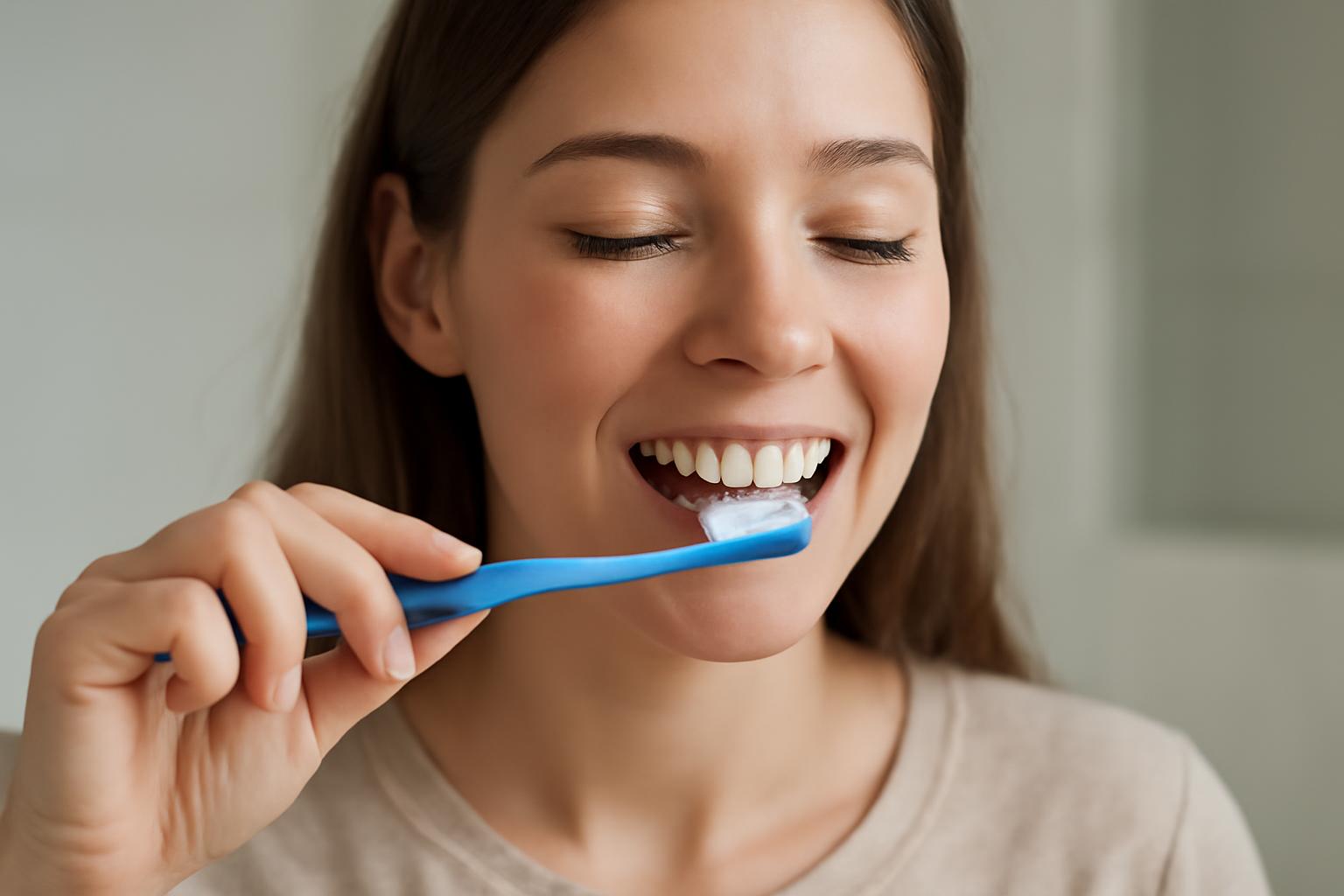
If you brush every day but still hear words like plaque, gingivitis, or tartar at the dentist, the problem may not be effort. More often, it is technique, coverage, or expecting brushing to do jobs it cannot do.
Proper toothbrushing technique is fairly simple: use a soft brush, fluoride toothpaste, light pressure, and short strokes with the bristles angled toward the gumline for about two minutes, twice a day (step-by-step brushing guidance).
But brushing has limits. It does not clean between teeth well enough on its own, it does not remove tartar once plaque has mineralized, and it does not reverse enamel erosion from acid or bone loss from advanced gum disease. If that distinction feels fuzzy, this short explanation of what daily brushing cannot fix is worth keeping in mind.
This guide is general reference information. Decay Guide is an independent information site, not a dental practice, and nothing here is a diagnosis or personal treatment plan.
Why Proper Toothbrushing Technique Matters More Than Tools
If you still have plaque despite brushing daily, the most likely explanation is not that you bought the “wrong” brush. It is that plaque is sticky, it comes back constantly, and it gathers where rushed brushing often misses: along the gumline and between teeth. The ADA recommends placing the brush at a 45-degree angle to the gums and cleaning between teeth daily because toothbrush bristles do not fully reach those spaces on their own (ADA brushing guidance).
That matters because brushing is mainly mechanical. You are not dissolving plaque so much as repeatedly disrupting it before it sits long enough to inflame gums or feed decay.
This is also why an expensive brush does not rescue bad coverage. If you clean the middle of the teeth well but keep missing the inside of the lower front teeth, the backs of molars, or the gumline itself, plaque survives there. And even excellent brushing leaves a gap between neighboring teeth, which is why brushing alone is not a complete home-care routine.
Pressure is another common trap. People often assume harder scrubbing means better cleaning, but heavy pressure tends to flatten the bristles and irritate the gums instead of improving plaque removal. A lighter fingertip hold and short motions usually clean better than forceful back-and-forth scrubbing.
It also helps to be realistic about what brushing is for. Brushing is strong prevention against plaque-related problems. It is not a treatment for tartar, not a substitute for interdental cleaning, and not a fix for acid erosion. If your main problem is softened enamel after acidic drinks, reflux, or frequent citrus exposure, brushing harder does not solve the chemistry. In some situations, it can make surface wear worse.
So if you brush faithfully and still have problems, do not jump straight to “I must need a better toothbrush.” First ask the more useful question: Am I actually cleaning the gumline gently and completely, or am I just brushing often?
Selecting the Right Toothbrush and Toothpaste
For most people, the safest default is not fancy: a soft-bristled toothbrush that fits the mouth comfortably and a fluoride toothpaste. Replace the brush every three to four months or sooner if the bristles fray, because worn bristles clean poorly.
Soft bristles matter more than the packaging suggests. The goal is not to scour the teeth. It is to let the bristle tips reach the gumline and small curves around each tooth without scraping the gums or contributing to overbrushing.
Fit matters too. If the brush head is too large to reach the back molars comfortably or to maneuver behind the lower front teeth, technique suffers. A manageable head and comfortable handle make complete coverage easier.
Fluoride toothpaste is the other basic tool that does real work. Brushing removes plaque mechanically, but fluoride helps strengthen enamel and improve resistance to cavities. That is why “deep clean,” “advanced,” and similar marketing terms matter less than whether the toothpaste is fluoride-based.
Manual versus electric is mostly a fit question, not a moral one. A manual brush can work very well when technique is gentle and thorough. An electric brush can help if you tend to rush, scrub, miss areas, wear braces, or have trouble with dexterity. What matters most is whether the brush helps you clean the gumline completely, twice a day, without pressing too hard.
A simple checklist for most adults looks like this:
- soft bristles
- a head size that reaches the back teeth easily
- fluoride toothpaste
- a brush you can control comfortably
- replacement once bristles splay, even if the calendar says you still have time left
The best toothbrush is the one that helps you do the boring basics correctly.
Step-by-Step Proper Toothbrushing Technique
A good routine should be simple enough to repeat without much thought. A practical default is to brush for at least two minutes total and mentally divide the mouth into four quadrants so no area gets all the attention while others get skipped (two-minute, four-quadrant approach).
Here is a reliable sequence:
-
Wet the brush and use a small amount of fluoride toothpaste.
-
Hold the brush lightly. A fingertip grip makes it easier to avoid excess pressure.
-
Aim the bristles at about a 45-degree angle toward the gumline.
-
Use gentle, short strokes on the outer surfaces.
-
Brush the inner surfaces the same way.
-
Tilt the brush vertically for the inside of the front teeth. Use short up-and-down strokes with the tip of the brush.
-
Brush the chewing surfaces with short, controlled strokes.
-
Brush your tongue from back to front. This helps clear residue and can improve breath (step-by-step technique).
-
Spit out the excess toothpaste. Advice on rinsing right away varies by source, but if your goal is longer fluoride contact, a common approach is to avoid a vigorous immediate rinse after brushing (post-brush rinsing guidance).
If you use a manual brush, the motion should feel controlled and deliberate. If you use an electric brush, the principle stays the same: guide the head slowly along the gumline and tooth surfaces instead of scrubbing aggressively.
If all of that sounds too technical, reduce it to one sentence: angle the bristles gently into the gumline, cover every surface, and give each area enough time.
Mastering Pressure, Angle, and Coverage
Most brushing problems come down to three things: the angle is off, the pressure is too high, or the coverage is incomplete.
The angle matters because plaque does not sit only on the flat middle of the tooth. It tends to collect where tooth meets gum and around the small curves of each tooth. The 45-degree angle is useful because it aims the bristle tips at that margin instead of just polishing the center of the enamel.
Pressure is the next skill. If you grip the brush tightly and scrub, you usually mash the bristles sideways. Once that happens, you lose precision at the gumline. A lighter fingertip grip makes it easier to let the bristle tips do the work.
Coverage is the third skill, and probably the most underestimated. Even with a good angle and light pressure, a random brushing pattern creates blind spots. The easiest fix is to use the same route every time. For example:
- upper right outer surfaces
- upper front outer surfaces
- upper left outer surfaces
- upper left inner surfaces
- upper front inner surfaces
- upper right inner surfaces
- chewing surfaces
- repeat the same map on the lower arch
- finish with the tongue
The exact route does not matter much. Consistency does. A fixed pattern turns brushing from a vague habit into a complete one.
Another useful self-check is the brush itself. If the bristles spread dramatically while you brush, the pressure is probably too high. If the brush looks blown open long before replacement time, that is another clue.
Two minutes also becomes easier when you stop thinking about it as one long task. It is just four short sections. Many people brush less thoroughly than they think, so dividing the mouth into zones helps prevent the familiar pattern of overbrushing the front teeth and underbrushing everything else.
Manual vs. Electric: Which Brush Fits Your Needs
The most accurate answer is that both manual and electric toothbrushes can work well, and neither one excuses poor technique.
The University of Iowa College of Dentistry summarizes the evidence as having no clear universal winner in most comparisons and emphasizes that technique is what usually drives the result. It also notes that some of the apparent advantage of electric brushes may come from helping people brush better, not from magic cleaning power by itself (manual vs. electric summary).
That said, “no clear winner” does not mean “no practical difference.” Electric brushes can make good habits easier. A built-in timer helps people who stop too early. A pressure sensor helps people who scrub too hard. A powered head can simplify the motion so the user mainly has to guide the brush slowly and thoroughly.
There is also some trial evidence suggesting that powered brushes may outperform manual brushes in certain settings. In one randomized clinical study, 60 dental students ages 18 to 28 used either manual or powered brushing for six weeks; both groups improved, and the powered group showed greater plaque reduction by the end of the study. Useful finding, but still a small short trial in a narrow population, so it should not be treated as the last word (clinical trial in PMC).
In practical terms, an electric brush may be especially helpful if you:
- tend to brush too hard
- often stop before two minutes
- have braces or other appliances
- find it easier to guide a brush than to perform precise manual strokes
- have arthritis or limited hand dexterity
A manual brush may suit you best if you:
- already have good technique
- prefer simplicity
- travel often
- want lower cost and no charging
- like controlling the motion yourself
The better question is not “Which type is better in theory?” It is “Which one helps me clean the gumline gently and completely every day?”
Common Brushing Mistakes and Fixes
Most brushing mistakes are ordinary habits repeated twice a day.
Mistake 1: Scrubbing hard. This is the classic “trying too hard” problem. Hard brushing can irritate gums and contribute to wear over time. The fix is not a stronger toothpaste. It is softer bristles, a lighter grip, smaller motions, and a deliberate slowdown.
Mistake 2: Brushing too briefly. Many people do brush every day, but not long enough to cover the whole mouth well. A timer or a quadrant-based routine solves this better than vague promises to “brush better tomorrow.”
Mistake 3: Missing predictable areas. A fixed route helps more than trying to rely on memory.
Mistake 4: Ignoring the tongue. This does not usually cause cavities, but it can leave the mouth feeling less clean and can contribute to bad breath.
Mistake 5: Brushing immediately after acidic food or drink. This is where people often confuse “cleaning” with “good timing.” After acidic exposure, enamel can be temporarily more vulnerable to abrasion. A better response is usually to rinse with water, wait a bit, and then brush gently later rather than scrubbing right away (timing after acid and early bleeding nuance).
Mistake 6: Panicking over a little bleeding when you improve your routine. If plaque has been sitting at the gumline, the gums may already be inflamed. Mild bleeding or tenderness can settle as plaque control improves. But persistent bleeding, worsening bleeding, swelling, pain, bad breath, or looseness are not things to “brush through” indefinitely. They need a dental exam (when bleeding may improve and when it should be checked).
That last point matters. Good brushing can calm reversible gingivitis, but it does not mean every sore or bleeding gum problem is a technique issue.
Beyond Brushing: Timing, Flossing, and Checkups
Brushing is the foundation of home care, not the whole structure.
The biggest gap is between the teeth. A toothbrush does not clean those surfaces well enough on its own, which is why daily flossing or another interdental method matters.
A practical routine usually looks like this:
- brush twice daily with fluoride toothpaste
- clean between teeth once daily
- make one brushing your bedtime brushing, after the day’s eating is done
- after acidic foods or drinks, rinse with water and delay brushing rather than brushing immediately
- limit frequent sugary snacks and drinks instead of expecting brushing to cancel them out
Professional care fills the gaps that brushing cannot. Harvard Health describes professional cleanings every six months and a dental visit yearly as a common baseline, while also noting that some people need different intervals based on tartar buildup, gum disease, restorations, or cavity risk (professional care intervals).
Those visits matter for a basic reason: tartar does not brush off at home. Home care prevents a lot, but it does not replace examination, scaling, or personalized advice when the same problem keeps returning.
So think of brushing as daily maintenance that keeps plaque from maturing. It works best when it is paired with interdental cleaning, sensible timing, and regular professional care.
Signs Your Technique Is Working and When to Adjust
Good brushing technique leaves clues.
The first is feel. After brushing, your teeth should feel smooth when you run your tongue over them. Not just minty or foamy. Actually smooth.
The second is appearance. Gums should gradually look calmer, not angrier. They should not routinely stay red, puffy, or tender after you have been brushing carefully and consistently for a while.
The third is brush wear. If your toothbrush looks flattened well before replacement time, that usually means too much pressure. Even a good brush becomes a poor brush once the bristles splay.
A useful way to check yourself more objectively is with disclosing tablets. They can show you the plaque left behind after brushing, which makes patterns easier to spot: maybe you always miss the inside of the lower teeth, or maybe you polish the front teeth and neglect the back molars.
It is also worth remembering that there is no single universal motion that suits every mouth. Crowded teeth, gum recession, bridges, implants, partial dentures, and orthodontic appliances all change the angles you may need. The principle stays the same: gentle bristle contact at the gumline with complete coverage. The exact motion can vary by mouth and by dental work.
Consider changing your approach if:
- you still see obvious plaque near the gums after brushing
- your gums stay inflamed after a few consistent weeks
- sensitivity seems tied to overbrushing
- you always miss the same areas
- your brush frays quickly
- you have braces, implants, or dental work that create hard-to-clean corners
And consider professional help sooner if:
- bleeding persists
- tartar is visible or feels rough near the gumline
- teeth feel loose
- you have pain, pus, swelling, or bad breath that does not improve
- you keep getting told the same problem is recurring despite a solid routine
Those are the kinds of signs that suggest the problem may not be solved by “brushing better” alone. Teeth should feel smooth and gums should not look red or swollen after effective brushing practice (signs of effective brushing).
Decay Guide publishes general dental reference information only. It is not a dental practice and does not diagnose or treat.
How long and often should I brush my teeth?
Brush for about two minutes, twice a day. Dividing the mouth into four quadrants can make that easier to do thoroughly instead of spending most of the time on the front teeth.
Should I use a manual or electric toothbrush?
Either can work. Manual and electric brushes are both effective when used properly, and the best choice is usually the one that helps you clean thoroughly, gently, and consistently.
What if my gums bleed when brushing?
If plaque has been sitting at the gumline, mild bleeding can improve as brushing becomes more consistent and effective. But persistent bleeding, worsening bleeding, swelling, pain, or looseness should be checked by a dentist rather than ignored.
Do I rinse after brushing, and when to brush after meals?
Advice on rinsing varies by source, but a practical compromise is to spit out the excess toothpaste and avoid a vigorous immediate rinse if you want longer fluoride contact. After acidic food or drink, rinse with water first and wait a bit before brushing rather than brushing right away.
How often to replace my toothbrush?
Replace a manual toothbrush or electric brush head about every three to four months, or sooner if the bristles are frayed or splayed. If your brush wears out quickly, that often means you are pressing too hard.