
What Does Flossing Do That Brushing Misses?
Floss removes plaque and food between teeth and may reduce gingivitis. Learn what the evidence shows, what floss cannot fix, and how technique matters.
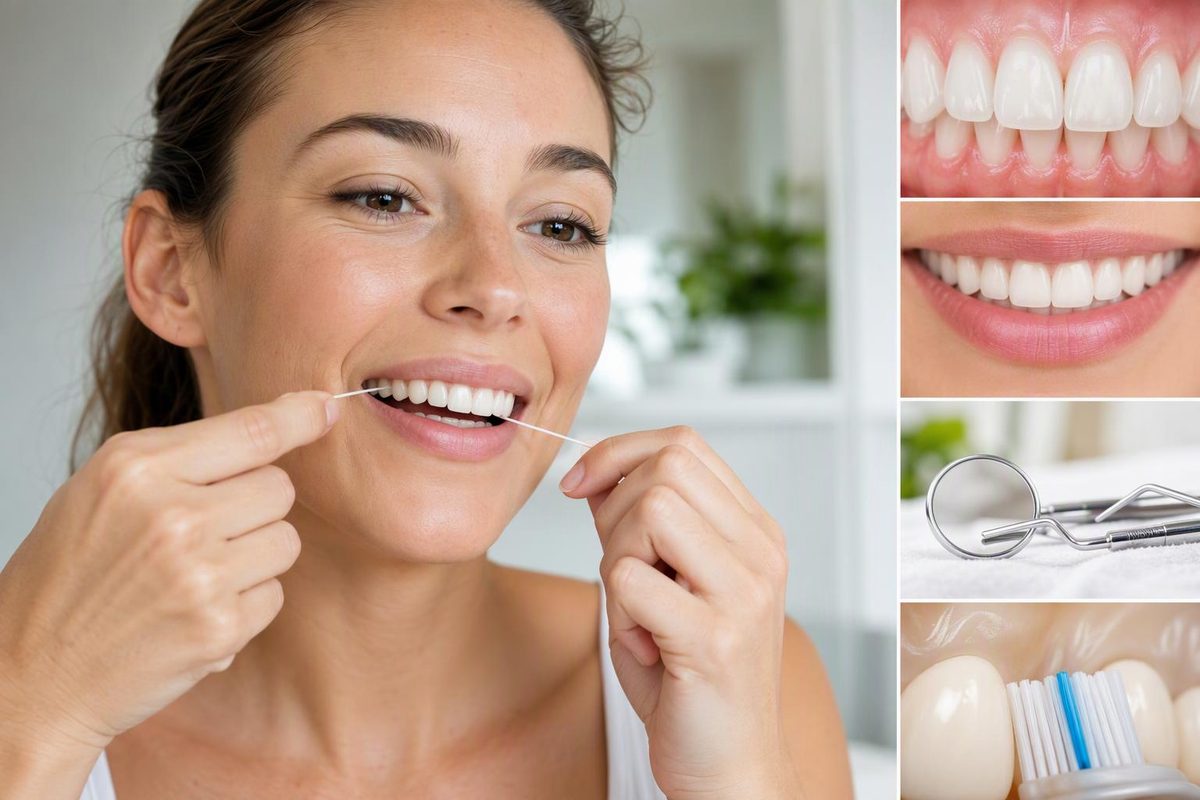
Flossing removes food particles and disrupts plaque—the sticky film of bacteria—on the sides of teeth where a toothbrush cannot clean effectively. Its purpose is not just to dislodge something after a meal: it cleans tooth surfaces even when no food feels trapped. Flossing alongside brushing may reduce gum inflammation, but evidence that everyday flossing prevents cavities is less certain. American Dental Association (ADA)
What happens when you floss?
Floss passes through the contact between two teeth, then curves against each tooth to rub away plaque near the gumline. Simply pulling it in and out of the gap may remove food without thoroughly cleaning those surfaces. Toothbrush bristles have difficulty reaching these tight spaces, which is why cleaning between teeth adds something brushing alone cannot reliably provide. ADA flossing guidance
Plaque matters in two different ways:
- At the gums, plaque buildup can trigger gingivitis: inflammation that makes gums red, swollen or prone to bleeding. Plaque-related gingivitis can usually be reversed with daily brushing and interdental cleaning.
- On the teeth, bacteria use sugars and starches to produce acids. Repeated acid exposure can remove minerals from enamel and eventually create a cavity.
These are separate processes, not two names for the same disease. Flossing addresses plaque between teeth; fluoride toothpaste also helps protect enamel against mineral loss. NIDCR oral hygiene guidance, NIDCR tooth decay explanation
How strong is the evidence?
A 2019 Cochrane review included 35 studies of interdental cleaning involving 3,929 adults. It found that adding flossing to brushing may reduce gingivitis over one to six months. Results for plaque and the proportion of bleeding sites were inconsistent. Overall evidence was low to very low certainty, and the observed benefits might not be clinically important. Most studies were short, and many participants started with little gum inflammation.
Importantly, none of those trials measured cavities between teeth, and most did not assess periodontitis, the more advanced gum disease that damages supporting tissues. That leaves uncertainty about long-term prevention—not proof that flossing is useless. Cochrane review
The ADA still recommends cleaning between teeth once daily, alongside brushing twice daily. The distinction is between a sensible plaque-control practice and a promise that flossing will prevent every cavity or case of gum disease. ADA evidence and recommendations
What flossing cannot fix
Flossing is a cleaning step, not a repair procedure:
- It cannot remove established tartar. Once plaque hardens into tartar, professional cleaning is needed. Floss helps remove plaque before it hardens.
- It cannot close a cavity. Early mineral loss may remineralize with help from saliva and fluoride, but a physical hole is permanent tooth damage.
- It cannot treat established periodontitis on its own. Daily cleaning remains important, but disease affecting the tissues supporting teeth needs professional treatment.
NIDCR oral hygiene guidance, NIDCR tooth decay explanation, NIDCR gum disease guidance
Technique matters more than force
For string floss, the ADA describes gentle rubbing to guide it between teeth—never snapping it into the gums. Curve it into a C against one tooth, gently slide it just beneath the gum edge, and rub up and down against the tooth. Then clean the facing side of the neighboring tooth. Repeat throughout the mouth, including behind the last teeth. ADA technique guide
Bleeding is not the goal or proof of effective cleaning. Inflamed gums may bleed, but forceful flossing can also damage tissue. Persistent bleeding, swelling or pain warrants a dental assessment rather than harder flossing. NIDCR gum disease guidance, ADA guidance on discomfort
String floss is not the only option. The ADA identifies floss as useful for tight spaces and appropriately sized interdental brushes for more open gaps. ADA interdental cleaner guidance
Water flossers are another option when other tools are difficult to use. ADA flossing guidance For the differences in benefits and evidence, see our comparison of water flossers and string floss. The task is regular cleaning between teeth, not using one particular product.
Decay Guide is an independent information publisher, not a dental practice. This article provides general education, not individual diagnosis or treatment advice.