
Are Water Flossers as Good as Flossing? It Depends on the Outcome
Water flossers can reduce gum inflammation, but plaque results vary. See when they can replace string floss and why cavity prevention remains uncertain.
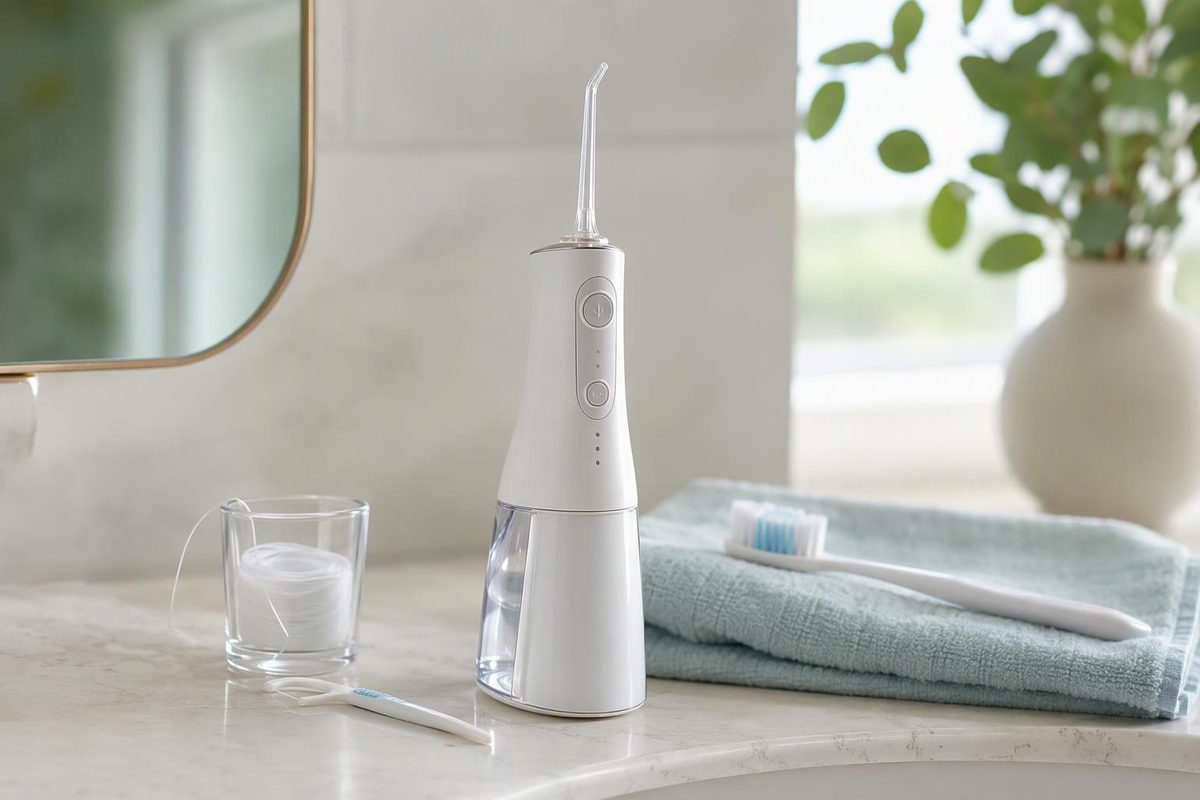
Water flossers are a valid option for cleaning between teeth, especially when string floss is difficult to use. They use a pulsing stream of water rather than a strand of floss. They can reduce gum inflammation, and some studies find them better than string floss for that outcome. But they have not been shown to be universally better—or equally effective for every purpose, particularly preventing cavities over the long term. The American Dental Association (ADA) recognizes water flossers as an interdental cleaning option; Cochrane’s review describes the comparative evidence as limited and uncertain.
The practical question is not just which tool wins a study. It is which tool can clean the relevant spaces thoroughly and become a daily habit.
“As good” for gums, plaque or cavities?
These are different outcomes. Plaque is a sticky bacterial film on teeth. Gingivitis is inflammation of the gums, often associated with plaque buildup. A reduction in gum inflammation does not, by itself, demonstrate fewer cavities.
Gum inflammation: water flossers can help
Cochrane’s 2019 review found some evidence that oral irrigation—the technical term for water flossing—may reduce gingivitis more than string floss at one month. However, the evidence was low to very low certainty, and the effects might not be clinically important. Most studies were short, and many participants had little gum inflammation at the start. Cochrane review
A broader 2024 scoping review also found consistent anti-inflammatory benefits from oral irrigation, while calling for better trials. This supports water flossers as useful tools for gum health—not a guarantee that every device outperforms careful string flossing.
Plaque removal: results are mixed
Water flossers do more than rinse away visible food. ADA-accepted devices have demonstrated effectiveness at removing plaque. String floss removes plaque by rubbing against the adjoining tooth surfaces.
Comparative findings vary. A systematic review of seven trials found that four favored water flossers for plaque reduction and three found no significant difference. Five measured plaque immediately after cleaning rather than over weeks, and the studies differed substantially in design and starting plaque levels. The broader 2024 review likewise found mixed plaque-removal results. A favorable single-use result is not proof of long-term superiority.
Cavity prevention: equivalence is not established
The 2019 Cochrane review found no trials assessing cavities between teeth for any of the included cleaning devices—not just water flossers. The 2024 scoping review still identified cavity prevention as an evidence gap requiring comparisons with other cleaning tools. That means these reviews do not establish that water flossers prevent cavities as well as string floss. It also does not mean water flossers are ineffective. Cochrane; 2024 review
Neither tool replaces twice-daily brushing with fluoride toothpaste.
Can a water flosser replace string floss?
It can serve as the daily interdental cleaning tool; string floss is not the only accepted choice. The ADA recommends cleaning between teeth once daily with floss or another interdental cleaner. Its water-flosser guidance specifically identifies water flossers as an option for people who struggle with hand flossing or have braces or fixed bridges that make access difficult.
The choice depends on access and ease of use:
- Tight tooth contacts: String floss is an effective option. If it works well and there are no gum problems, there is no need to switch solely because a powered device seems more advanced.
- Difficulty handling floss, braces or bridges: A water flosser may make cleaning more manageable.
- More open spaces between teeth: A suitably sized interdental brush may be appropriate; the choice is not limited to water versus string.
These distinctions are supported by Mayo Clinic’s comparison and ADA guidance. A dentist or hygienist can assess which tool reaches particular spaces and whether different areas need different tools.
Technique and limits still matter
For string floss, gently guide it between teeth, curve it into a C shape against each tooth, and rub up and down rather than snapping it into the gums. For a water flosser, follow the device’s instructions for the tip, pressure and cleaning. An ADA Seal indicates evaluated safety and effectiveness, not proof of superiority over every alternative: the effectiveness requirement is a benefit when added to brushing, compared with brushing alone. ADA flossing instructions; Seal requirements
Neither method removes hardened tartar; that requires professional cleaning. Early plaque-related gum inflammation can often reverse, but established periodontitis needs professional treatment as well as home care. See gingivitis versus periodontitis for that distinction. NIDCR guidance
Repeated gum bleeding, painful or swollen gums, or persistent bad breath warrant a dental assessment rather than simply increasing cleaning pressure. Very sore, swollen gums or newly loose teeth call for an urgent dental appointment. NHS gum-disease guidance
Decay Guide is an independent information publisher, not a dental practice. This article provides general information, not individual diagnosis or treatment advice.