
When a Waterpik Can Replace Floss—and What Remains Unproven
Compare Waterpik and string floss for bleeding gums, plaque removal and cavity prevention, with guidance for tight contacts, braces and wider tooth gaps.
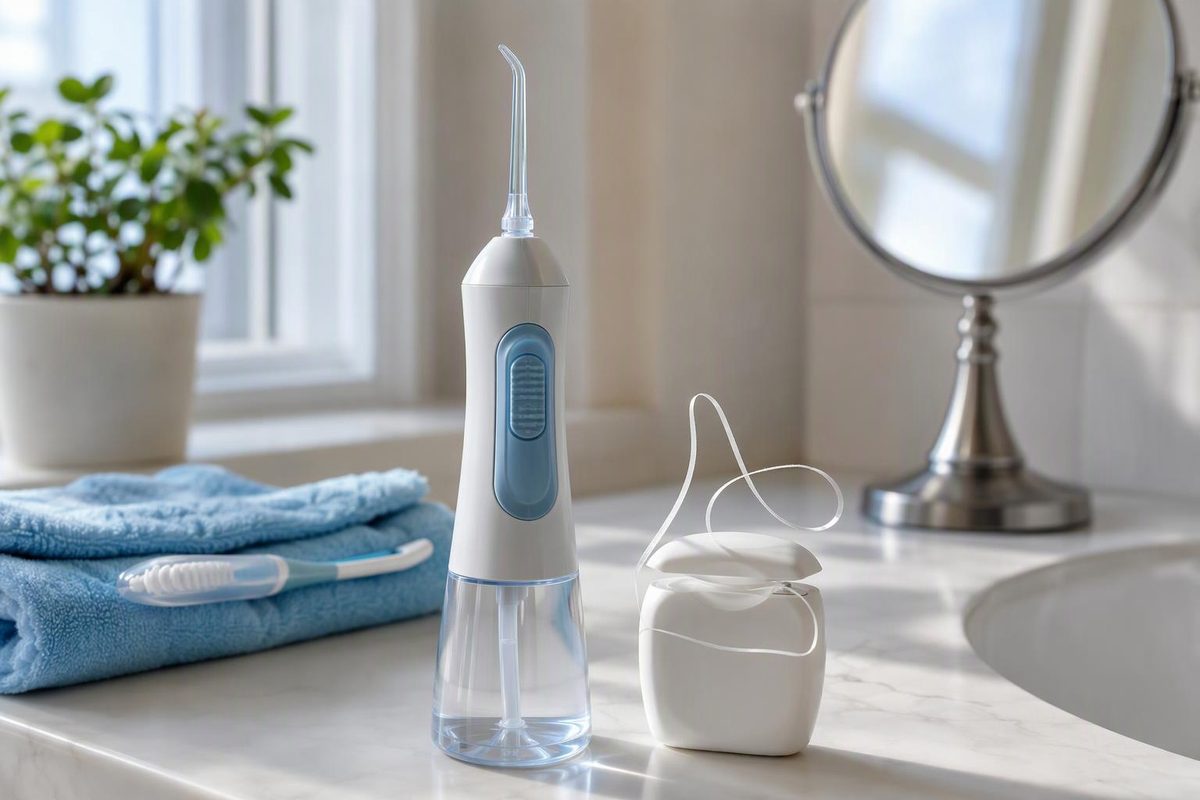
A Waterpik can be a reasonable alternative to string floss, especially if floss is difficult to use. But it has not been proved equally good—or better—for every outcome, particularly long-term cavity prevention. Some studies favor water flossers for reducing gum inflammation; findings on plaque removal are more mixed. The ADA recognizes water flossers with its Seal of Acceptance as safe and effective for removing plaque and reducing gingivitis. That seal does not establish superiority over string floss. ADA guidance
Choose your cleaning situation and main goal to see which tool fits—and what the evidence can support.
Find Your Interdental Cleaning Fit
Tool Fit
Keep Floss if It Works for You
There is no need to switch solely because a water flosser is powered. A water flosser remains a reasonable alternative.
Evidence for Your Goal
Water flossing may reduce gingivitis more in the short term, but the 2019 review rated the evidence low to very low certainty. The difference may not be clinically meaningful.
Sources: ADA interdental-cleaning guidance; Mayo Clinic comparison; 2019 Cochrane review; 2024 plaque systematic review. This tool does not diagnose dental disease.
Waterpik is a brand of water flosser, also called an oral irrigator. These devices direct a stream of water between and around teeth. String floss works differently: it rubs against the sides of teeth to remove sticky plaque from spaces a toothbrush cannot reach. Neither replaces brushing. Mayo Clinic comparison
Gum Health, Plaque and Cavities Have Different Answers
Less gum bleeding does not automatically establish better cavity prevention. To judge whether a Waterpik is “as good,” the outcome matters.
Water Flossing May Help Gum Inflammation More
Gingivitis is inflammation of the gums, without the loss of tooth-supporting bone seen in periodontitis. Cleveland Clinic explanation
A 2019 Cochrane review found some evidence that water flossing may reduce gingivitis more than string floss in the short term. However, the evidence was low to very low certainty, and the effects might not be large enough to matter clinically.
The same review did not find clear evidence of a difference between water flossing and string floss for plaque removal. It also found no trials assessing decay between teeth. 2019 Cochrane review
Those findings make water flossing a credible option for gum care—not a guaranteed upgrade over well-used floss.
Plaque Findings Depend on the Review and Study Design
A later systematic review, published in 2024, was more favorable to water flossers: four of its seven included trials favored them, while three found no significant overall difference.
The later review also reported substantial differences between studies. Five measured plaque immediately after one cleaning session; the others followed participants for four or six weeks. Devices, study designs and starting plaque levels varied. The review focused on plaque scores, not new cavities. 2024 systematic review
These results do not justify a single claim that a water flosser is a fixed percentage “better” for everyone. A result after one cleaning session also does not establish how well a tool prevents disease over years.
Long-Term Cavity Prevention Remains Unproven
Neither review establishes whether water flossing prevents cavities as well as string floss over years. That is a gap in the evidence, not proof that either method is useless. There is no long-term cavity-prevention figure in these reviews to use for a head-to-head comparison.
Decay also depends on repeated acid production by plaque bacteria, eating and drinking patterns, saliva and fluoride—not simply whether visible food has been washed away. Brushing with fluoride toothpaste remains an important part of cavity prevention. NIDCR explanation of tooth decay
Choose the Tool That Reaches Your Tooth Spaces
The practical choice depends on the spaces being cleaned and whether you can use the tool thoroughly and consistently. The choice is not always limited to water versus string.
| Cleaning Situation | Tool to Consider | Reason |
|---|---|---|
| Floss works comfortably | Keep string floss | No need to switch just because a device is powered |
| Braces, fixed bridges or difficulty handling floss | Water flosser | May make difficult access more manageable |
| Tight spaces between teeth | String floss | Suitable for close contacts |
| Wider spaces or periodontitis | Sized interdental brush | May suit these spaces better; seek fitting advice |
Mayo Clinic says people using floss without gum bleeding or other problems need not change. It also identifies water flossers as an option when dental work or difficulty handling string floss makes cleaning harder. A water flosser’s practical advantage in those situations does not depend on proving it superior for every dental outcome.
For wider spaces or periodontitis, an appropriately sized interdental brush—a small brush designed to fit between teeth—may be more suitable. A dentist or hygienist can help determine which tool reaches the relevant spaces.
Using Both Is Not a Universal Requirement
The ADA recommends cleaning between teeth once daily with floss or another interdental cleaner, alongside brushing twice daily. Its general recommendation does not require everyone to use both string floss and a water flosser. The ADA Seal requirements for interdental cleaners support plaque-removal and gingivitis claims, not a claim that every accepted device outperforms floss. ADA recommendations and Seal requirements
You may need different tools for different spaces, but that is an individual cleaning decision rather than a universal rule. For more on frequency, see whether twice-daily flossing adds value.
String Floss Needs Contact With Each Tooth
For tight contacts, gently guide floss through, curve it around the side of each tooth and move it up and down. Snapping it into the gum is not the aim. Cleaning between teeth should not cause persistent pain. ADA flossing technique
If floss is uncomfortable or difficult to control, the useful comparison is between a method you can use thoroughly and one you struggle to use—not simply between a powered device and a piece of string.
Neither Tool Removes Tartar or Treats Advanced Gum Disease
Neither string floss nor a water flosser removes established tartar, the hardened deposit that requires professional cleaning. Nor can either rebuild bone lost to periodontitis. As the ADA and Cleveland Clinic guidance above explain, gingivitis can often reverse with appropriate cleaning and improved home care; periodontitis needs professional management.
Recurring bleeding, swollen or tender gums, or a loose permanent tooth warrant a dental assessment rather than simply changing tools or increasing pressure. Choosing a water flosser may make daily cleaning easier, but it should not substitute for finding out why symptoms persist.
Decay Guide is an independent information publisher, not a dental practice. This article provides general information, not individual diagnosis or treatment advice.