
Electric Toothbrushes Have an Edge—but Technique Still Matters
Electric toothbrushes reduce plaque and gingivitis more on average. Learn how big the benefit is, which features help, and what brushing cannot fix.
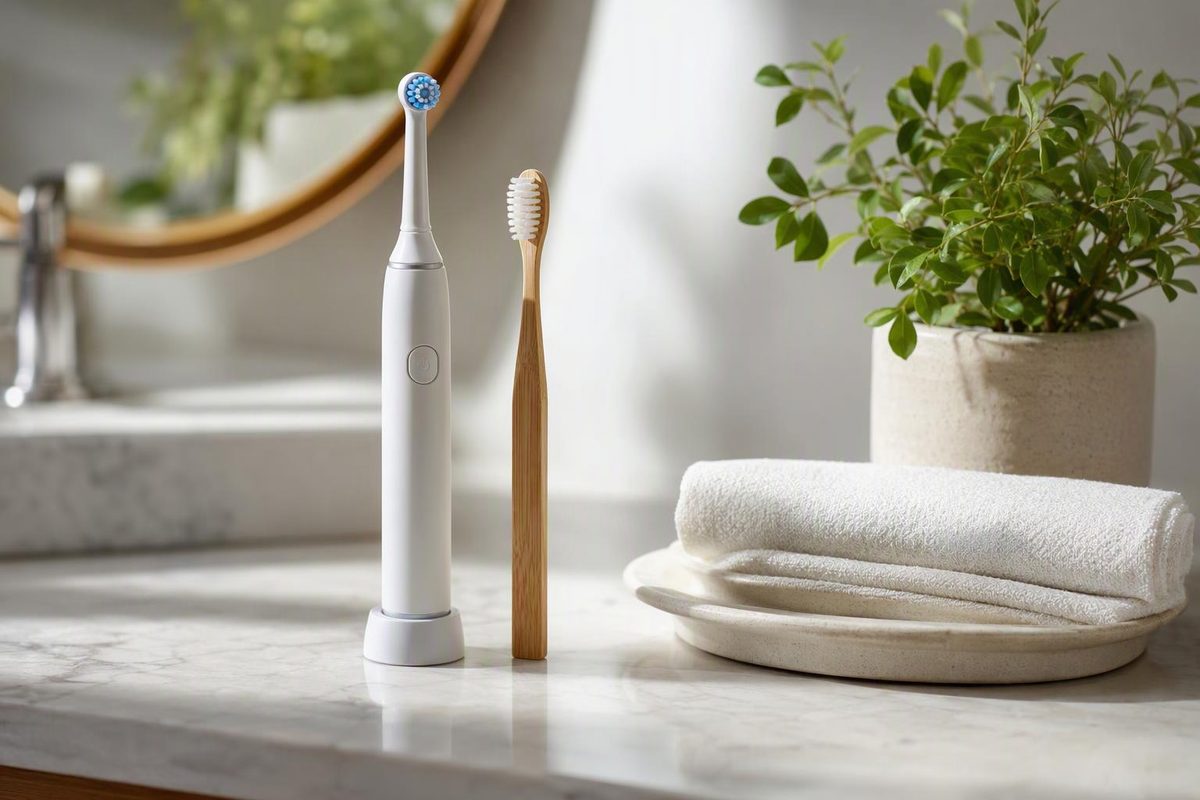
Yes, on average electric toothbrushes remove more plaque and reduce gingivitis more than manual brushes. Plaque is the sticky bacterial film on teeth; gingivitis is inflammation of the gums. The advantage is measurable, but it does not mean everyone needs to switch—or that an electric brush guarantees fewer cavities. Both types can clean teeth effectively when used well. Cochrane review; American Dental Association
How much better are they?
A 2014 Cochrane review included 56 trials, with 51 trials involving 4,624 participants contributing to its combined analysis. Compared with manual brushing, powered brushing produced improvements that corresponded to these reductions on commonly used clinical scoring scales:
| Outcome | After 1–3 months | After more than 3 months |
|---|---|---|
| Plaque scores | About 11% lower | About 21% lower |
| Gingivitis scores | About 6% lower | About 11% lower |
These figures do not mean 21% fewer cavities or an 11% lower chance of losing teeth. The review rated the evidence as moderate quality, found substantial variation between studies, and said the clinical importance and long-term dental-health benefits remained unclear. Its “long-term” category meant more than three months, not necessarily years. Cochrane review
Results also depend on who is studied. A 2025 systematic review of healthy children brushing their own teeth, without fixed braces, found a small plaque-removal advantage for rechargeable powered brushes, but no significant difference in gingivitis scores. Its evidence primarily concerned oscillating-rotating designs. The broader Cochrane review mostly involved adults, so its averages should not be treated as promises for every child. Children’s systematic review; Cochrane review
This is compatible with the ADA’s practical position: either manual or powered brushes can work effectively. An average advantage across studies does not make a well-used manual toothbrush inadequate.
When switching may be worthwhile
An electric toothbrush may be especially useful when the obstacle is the brushing process itself. The ADA notes that people with limited hand dexterity, disabilities or dental appliances such as braces may find powered brushes easier to use. That is an ease-of-use benefit, not proof that everyone in those groups will achieve better results. ADA toothbrush guidance
For a purchase decision, prioritize features that support thorough, gentle brushing:
- A two-minute timer: helps avoid stopping too soon. Thirty-second prompts can remind you to move around the mouth.
- A pressure sensor: warns when you press too hard; extra force is not the goal.
- Soft replacement heads: choose a comfortable size and check their ongoing cost and availability.
Multiple cleaning modes and app connections are optional. The Oral Health Foundation says a basic daily-clean mode is enough for most people; apps may help track habits but are not essential. A higher price alone does not establish better cleaning. Electric toothbrush guide
Oscillating-rotating brushes have small round heads that move back and forth; sonic brushes use rapid vibrations. Both can clean well. The Cochrane review had its largest body of evidence for oscillating-rotating designs, but that does not prove every model outperforms every sonic brush. Oral Health Foundation; Cochrane review
Technique still determines what gets cleaned
With an electric brush, gently guide the head from tooth to tooth rather than adding forceful scrubbing. Follow the model’s instructions, cover the gumline, and clean the inner, outer and chewing surfaces. A timer measures time—not whether every surface has been reached. Oral Health Foundation
For either brush type, the ADA recommends:
- Brushing twice daily for two minutes with fluoride toothpaste.
- Using soft bristles and gentle pressure.
- Replacing the brush or head roughly every three to four months, sooner if the bristles are matted or frayed.
Fluoride contributes to cavity protection independently of the motor in the handle. ADA guidance
What an electric toothbrush cannot fix
A better brush still does not replace cleaning between teeth with floss or a suitable interdental cleaner. NHS cleaning guidance
It also cannot remove hardened tartar, which requires professional cleaning. Early plaque-related gum inflammation can often reverse with effective daily care, but periodontitis—gum disease involving the tooth-supporting tissues—needs professional treatment. Persistent gum bleeding, recession or loose teeth calls for a dental assessment, not simply a stronger brush. NIDCR gum-disease guidance
Nor can brushing fill an existing hole. Early mineral loss may be stopped or reversed while the surface remains intact; missing tooth structure cannot regrow through brushing. See why a hole changes whether decay is reversible. NIDCR tooth-decay explanation
Decay Guide is an independent information publisher, not a dental practice. This article provides general information, not individual diagnosis or treatment advice.