
The Line Between Reversible Gum Inflammation and Lasting Support Loss
A 4 mm pocket may prompt closer periodontal assessment, but a measurement at that depth does not independently prove periodontitis.
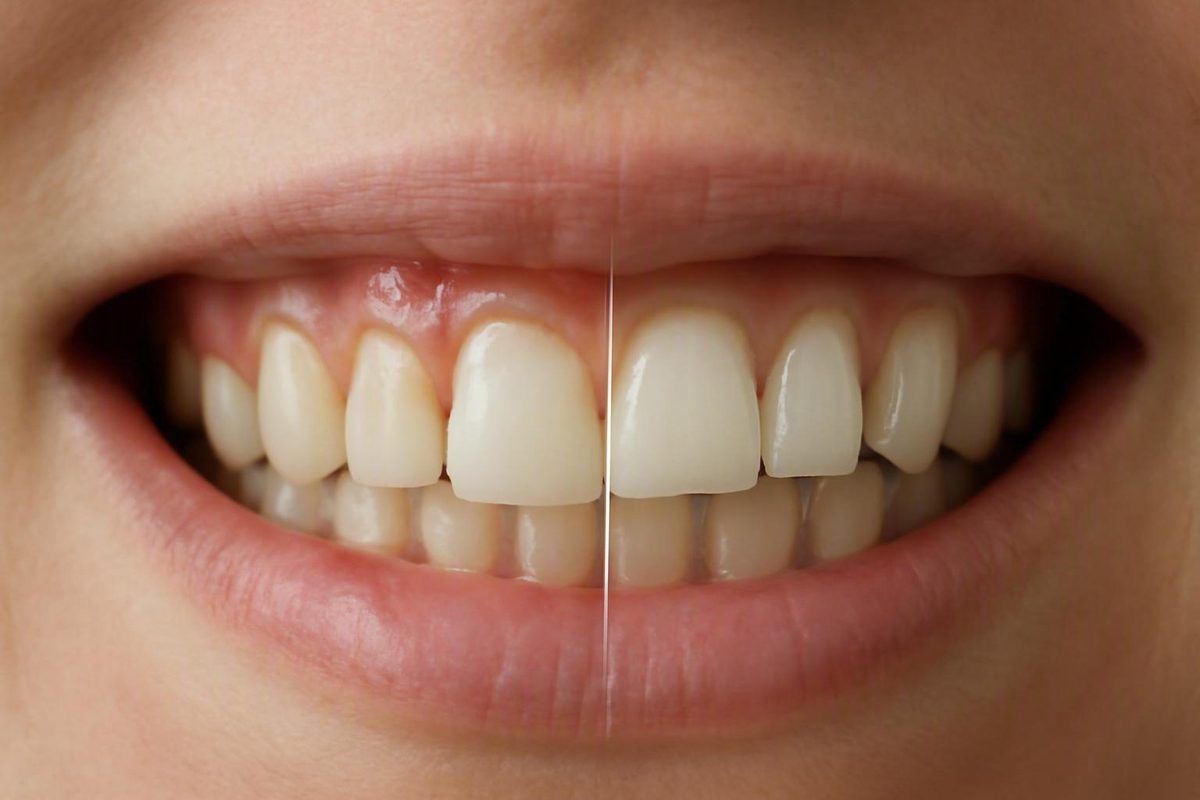
Gingivitis vs periodontitis at a glance
The simplest difference between gingivitis and periodontitis is where the disease stops.
Gingivitis is inflammation limited to the gums. The tissues attaching the teeth and the supporting bone have not been lost. Periodontitis extends beyond gum inflammation and damages the attachment tissues and bone that hold teeth in place. Both are forms of periodontal, or gum, disease, but they are not interchangeable diagnoses. The CDC distinguishes treatable gingivitis from periodontitis involving supporting-bone loss.
That structural dividing line matters more than how red the gums look, how much they bleed or whether they hurt. Gingivitis can generally be reversed when plaque and tartar are addressed and effective daily plaque control is maintained. Periodontitis can often be slowed, stabilized and managed, but attachment and bone already lost generally do not restore themselves.
| Comparison | Gingivitis | Periodontitis |
|---|---|---|
| Tissue affected | Gum tissue | Gums plus the attachment tissues and supporting bone around teeth |
| Attachment or bone loss | No loss attributable to periodontitis | Attachment and/or bone loss attributable to periodontitis, interpreted with the examination, history and imaging |
| Symptoms the conditions may share | Redness, swelling, tenderness, bleeding and bad breath | Redness, swelling, tenderness, bleeding and bad breath may also occur |
| Stronger warning signs | Symptoms may remain limited to inflamed gums | Pus, persistent or deeper pockets, recession accompanied by other support-loss findings, exposed roots, loose or shifting teeth, bite changes and painful chewing |
| Reversibility | Gingival inflammation is generally reversible | Existing attachment and bone loss generally does not naturally reverse |
| Diagnostic evidence | Inflammation without attachment or radiographic bone loss attributable to periodontitis | Support loss established from attachment findings, imaging and the wider clinical context |
| Usual treatment | Professional plaque and tartar removal plus improved brushing and interdental cleaning | Treatment below the gumline, commonly scaling and root planing, followed by reassessment; selected cases may need additional procedures |
| Continuing management | Effective daily plaque control and professionally advised preventive care | Sustained home care and individualized periodontal maintenance after active treatment |
The table summarizes findings described in the Cleveland Clinic’s medically reviewed periodontal-disease guide, including overlapping inflammatory symptoms and the support loss, recession, mobility and bite changes associated with periodontitis.
It is an orientation tool, not a home diagnostic test. Bleeding can occur in either condition, and recession can have causes other than periodontitis. Even a periodontal-pocket measurement cannot establish the diagnosis when separated from attachment findings, inflammation, recession, imaging and the rest of the examination.
Editorial note: Decay Guide is written by a health writer, not a dentist, and its articles are not clinician-reviewed. This information does not replace a dental examination or any imaging a dental professional considers appropriate. The site’s editorial disclosure explains its authorship, source use and limitations.
Shared symptoms—and signs that raise more concern for periodontitis
Symptoms can tell you that your gums deserve attention, but they usually cannot tell you how much support a tooth has lost. Gingivitis may cause red, swollen or tender gums, bleeding during brushing or interdental cleaning, and persistent bad breath. Redness, swelling, bleeding and bad breath may also occur with periodontitis, so none of them identifies the stage by itself.
The opposite problem is equally important: a lack of obvious symptoms does not establish that the gums and supporting structures are healthy. Gingivitis is often painless, and periodontitis may cause few noticeable symptoms until damage is more advanced. Recession, periodontal pockets, pus, loose or shifting teeth, chewing pain and bite changes raise greater concern that the tissues supporting a tooth may be involved.
| Symptoms that can occur in either condition | Findings that need assessment for support loss |
|---|---|
| Red or discolored gums | Increasing or extensive recession |
| Swollen or puffy gums | Exposed roots |
| Tenderness | Pus between a tooth and gum |
| Bleeding during brushing | Persistent or deeper periodontal pockets |
| Bleeding during flossing or other interdental cleaning | Loose or shifting teeth |
| Bad breath or an unpleasant taste | A change in how the teeth meet |
| Little or no pain | Pain when chewing |
| Bone loss seen on dental imaging |
These symptom patterns and warning signs are consistent with the InformedHealth.org overview hosted by the National Library of Medicine, which also notes that gingivitis and periodontitis may initially cause little discomfort.
The right-hand column does not provide a do-it-yourself definition of periodontitis. It identifies changes that make professional assessment for attachment and bone loss especially important.
Recession is a good example of why context matters. A receding gum exposes more of a tooth or its root, but recession by itself does not prove that periodontitis caused it. A dentist must interpret the position of the gum alongside attachment measurements, inflammation, oral and dental history, and imaging where appropriate.
Bleeding is similarly nonspecific. It is a sign of irritation or inflammation worth taking seriously, but it cannot show whether the supporting bone is intact. Bad breath cannot make that distinction either. Nor can gum color, which varies naturally and may also change with inflammation.
Pain is an unreliable guide to severity. Someone with sore, swollen gums does not necessarily have periodontitis, while someone with little discomfort may still have support loss. The practical message is to notice symptoms without translating any single symptom into a diagnosis or disease stage.
How plaque-related inflammation can progress below the gumline
Plaque is a soft bacterial film that continually forms on teeth. Its accumulation near the gumline is the principal initiating factor in most gum disease. If plaque is not disrupted effectively, the adjacent gums can become inflamed.
A simplified pathway looks like this:
- Plaque accumulates at the gumline. Bacteria in the film interact with the surrounding tissues.
- The gums become inflamed. They may look swollen or bleed more easily, although visible symptoms vary.
- Bacteria and deposits persist or extend below the gumline. These areas become harder to clean effectively.
- The space around a tooth may form or deepen into a periodontal pocket. Swollen tissue can also produce a deeper measurement without proving that attachment has been lost.
- At susceptible sites, the tissue connection supporting the tooth breaks down. This is attachment loss.
- Supporting bone may be lost. As support decreases, recession, mobility or changes in the bite may eventually become noticeable.
Soft plaque can be disrupted through effective brushing and interdental cleaning. Tartar—also called calculus—is plaque that has hardened onto a tooth or root surface. It cannot be reliably removed with an ordinary toothbrush or floss and requires professional removal. The InformedHealth.org overview explains the roles of bacterial plaque, hardened tartar, professional treatment and continued oral hygiene in controlling gum disease.
This pathway should not be read as an automatic countdown. Gingivitis may develop into periodontitis, but it does not inevitably do so. There is no dependable number of days, months or years after which inflamed gums become destructive disease.
Progression also need not be smooth or uniform. Periodontitis may progress episodically, and its course can differ among people, teeth and individual surfaces of the same tooth. Plaque exposure, tobacco use, diabetes, individual susceptibility and previous damage may influence what happens at a particular site.
That variation explains why one mouth does not always fit a single simple label. A person may have plaque-related gingivitis around some teeth while having established periodontitis at other sites. Determining what is happening requires a site-by-site examination and, where available, comparison with previous measurements and images.
The useful distinction is therefore not simply “early symptoms versus late symptoms.” It is inflammation without loss of tooth support versus disease in which attachment or bone has been lost.
How a dentist distinguishes inflammation from loss of support
A periodontal diagnosis begins with context. A dentist or dental hygienist may ask about current symptoms, previous gum treatment, home-care practices, tobacco exposure, diabetes, pregnancy-related changes, medications and other health factors. Previous dental records may help show whether measurements or bone levels have changed.
The clinical examination commonly considers:
- Gum color and contour
- Swelling or tenderness
- Plaque and tartar
- Bleeding
- Gum recession
- The space between each gum and tooth
- Tooth mobility
- Changes in the bite
- Areas that are difficult to clean
- Pus or other signs of inflammation
What periodontal probing measures
Measurements are generally taken at several locations because conditions can differ around the same tooth.
Pocket depth is useful, but it is only one part of the assessment. A single number—especially one recalled from a conversation or obtained without clinical training—cannot independently prove periodontitis.
What clinical attachment loss means
Clinical attachment loss means that some of the tissue connection supporting a tooth has been lost. It is not simply another term for a deep pocket.
Imagine that swelling causes the gum edge to enlarge around a tooth. A probe may travel farther than expected even though the original attachment remains intact. Conversely, recession can leave a site with attachment loss even when its pocket measurement does not sound especially deep. The clinician therefore interprets probing depth in relation to the gum margin, attachment position and other findings.
Attachment loss also needs a cause. Recession or altered support from another process should not automatically be labeled periodontitis. The diagnosis depends on whether the pattern of loss is attributable to periodontal disease after the history and examination have been considered.
This is why “What is my pocket depth?” is less informative than “Do I have attachment loss, and what do all the measurements mean together?”
What X-rays add
Dental X-rays may reveal supporting-bone loss that cannot be established from gum appearance alone. They can help show the height and pattern of bone around teeth, although the image still has to be interpreted alongside the clinical examination and, when available, older records.
Probing and imaging provide complementary information:
- Probing assesses the current gum-to-tooth relationship, including pocket depth, bleeding and attachment position.
- X-rays help assess the supporting bone and the pattern of bone loss.
- Mobility and bite assessment help identify whether support or tooth function may be compromised.
Cleveland Clinic’s diagnostic overview includes pocket measurements, recession, mobility and dental X-rays among the findings used to assess periodontal disease.
Useful questions at an appointment include:
- Do I have clinical attachment loss?
- Is there supporting-bone loss on my X-rays?
- What do the pocket, recession and attachment measurements mean together?
- Is bleeding present when the gums are probed?
- Are any teeth mobile?
- Does the disease appear stable, or does it require treatment?
- Are these findings new, or were they present in older records?
The goal is not merely to obtain a label. It is to understand whether damage has occurred, where it is located, whether inflammation is controlled and what evidence will be used to monitor the condition.
What reversible, irreversible, and manageable actually mean
The words reversible and irreversible can be misleading unless they are tied to the particular tissue being discussed.
Reversal of gingival inflammation
Gingivitis is generally reversible because inflammation has not yet destroyed the attachment tissues or supporting bone. When plaque and tartar are removed and effective plaque control is maintained, redness, swelling and bleeding can resolve.
That does not mean every case can be managed through home care alone. Hardened tartar requires professional removal, and persistent inflammation may have contributing factors that need assessment. Assuming that bleeding will disappear after changing toothpaste or adding mouthwash may delay appropriate cleaning or allow unrecognized periodontitis to go untreated.
Stabilization of periodontitis
Calling periodontitis irreversible does not mean treatment is futile. It means that attachment and bone already lost do not normally regrow on their own. Treatment aims to reduce inflammation, remove plaque and tartar from affected areas, make sites easier to maintain, and prevent or slow further loss. The CDC describes periodontitis as irreversible but manageable with professional treatment.
This outcome is often described as stabilization. Depending on the individual findings, signs of control may include:
- Less bleeding and inflammation
- Sites that are easier to keep clean
- No evidence of continuing support loss
- Stable mobility and bite findings
- Effective daily plaque control
- Continued professional monitoring
A stable site may still show evidence of old damage. Recession can remain visible, an X-ray may continue to show reduced bone height, and the original anatomy may not return. Stability is nevertheless a meaningful success because the aim is to preserve the support and function that remain.
Selective regeneration
Regeneration is a narrower concept. In selected cases, grafting or regenerative procedures may rebuild some bone or soft tissue in a particular defect. These options depend on professional assessment and are not suitable or necessary for every affected site.
Such procedures do not make periodontitis universally reversible. They may improve a selected defect without restoring all support lost throughout the mouth. The realistic distinctions are:
- Gingivitis: reverse inflammation.
- Periodontitis: control inflammation and stabilize remaining support.
- Selected defects: assess whether partial regeneration or grafting is appropriate.
No fixed healing timeline can be promised. Response depends on the diagnosis, extent and pattern of disease, treatment provided, plaque control, tobacco exposure, medical factors and individual tissue response.
Why treatment differs: routine cleaning, deep cleaning, and selected surgery
Treatment differs because gingivitis and periodontitis involve different anatomical problems. Removing accessible deposits and improving daily cleaning may be enough when inflammation is confined to the gums. Once root surfaces and periodontal pockets below the gumline are involved, treatment must address those areas.
Care for gingivitis
Typical gingivitis care includes:
- Professional removal of plaque and tartar
- Brushing twice daily with attention to the gumline
- Daily cleaning between teeth
- Guidance on technique and suitable cleaning tools
- Management of factors that make plaque control difficult
- Reassessment if inflammation persists
A routine professional cleaning generally addresses accessible deposits above and near the gumline. It may be appropriate when there is no attachment or bone loss requiring periodontal treatment.
Home care remains essential, but simply applying more force is not the goal. Consistent plaque removal and cleaning between teeth matter more than aggressive scrubbing.
Scaling and root planing for periodontitis
Established periodontitis commonly requires professional treatment below the gumline. Scaling and root planing involves removing plaque and tartar from above and below the gumline and treating affected root surfaces so the area can heal and become easier to maintain.
It is often called a deep cleaning, but that informal label can obscure the reason for the procedure. It is not merely a longer routine cleaning. It is directed at periodontal sites that cannot be adequately managed through ordinary home care or surface-level cleaning. The InformedHealth.org treatment overview describes plaque and tartar removal above and below the gumline and emphasizes continued oral hygiene after treatment.
Initial treatment is followed by reassessment. The dental team may review bleeding, inflammation, pocket measurements, plaque control and other findings to determine whether:
- The condition appears controlled
- Further nonsurgical care is needed
- Particular sites remain difficult to maintain
- Additional treatment or specialist assessment should be considered
- The maintenance plan needs adjustment
Adjuncts and selected surgery
Some patients may be offered additional treatment, but none of the following is automatically required for everyone:
- A prescribed antimicrobial rinse
- Medication delivered into a particular periodontal site
- Systemic antibiotics
- Periodontal surgery
- Gum grafting
- Bone grafting
- Regenerative procedures
Antibiotics are not a universal requirement and do not replace mechanical removal of plaque and tartar. Their possible role depends on the disease pattern, severity, medical history and professional judgment.
Surgery, grafting or regeneration may be considered for selected sites after assessment and initial care. The expected purpose, likely benefit, limitations and alternatives should be explained for the individual case rather than presented as standard treatment for every person with periodontitis.
Treatment choice depends on the severity and distribution of disease, pattern of damage, response to initial treatment, health history, risk factors and outlook for each tooth.
Why maintenance continues
Periodontitis does not simply disappear after one procedure. Active treatment reduces inflammation and bacterial deposits, but previously affected sites remain vulnerable to renewed inflammation or further breakdown. Periodontal maintenance allows the dental team to remove deposits, review home care and monitor bleeding, pocket findings, mobility and other changes.
The interval should be individualized. One fixed schedule cannot account for differences in previous damage, plaque control, tobacco use, diabetes, treatment response or the stability of particular sites.
Mouthwash may be recommended for a defined supporting purpose, but it cannot replace brushing, interdental cleaning, professional evaluation or treatment below the gumline. A rinse cannot remove hardened tartar or determine whether attachment or bone has been lost.
Risk factors, prevention, and long-term control
Plaque control matters, but gum disease should not be framed simply as a personal-hygiene failure. People differ in susceptibility, anatomy, medical status, medication exposure, access to dental care and response to bacterial plaque.
Modifiable considerations
Factors that may be changed or managed include:
- Plaque accumulation and daily cleaning practices
- Tobacco use
- Diabetes control, coordinated with the person’s medical team
- Missed professional care
- Barriers to cleaning around crowded teeth, restorations or appliances
- Nutrition and broader self-care where these are contributing concerns
Smoking and poorly controlled diabetes are important risk factors for gum disease and its progression. Their presence does not establish a diagnosis, but they are relevant to risk assessment and long-term control.
Medical and inherited susceptibility
Other factors may influence susceptibility or severity without guaranteeing disease. These include:
- Genetics
- Hormonal changes, including pregnancy-related changes
- Immune or systemic conditions
-
Chronic stress
-
Nutritional problems
- Tooth position and other anatomical challenges
The presence of a risk factor does not prove that someone has periodontitis, and the absence of known risk factors does not rule it out. CDC guidance identifies smoking and diabetes as important considerations and describes several other factors as associations still being studied.
Practical prevention and control
A useful baseline routine is to:
- Brush twice daily
- Clean between teeth daily using a method suited to the spaces
- Clean carefully along the gumline
- Attend professional cleanings and checkups at an interval recommended for individual needs
- Ask for help if technique, dexterity, crowding or dental work makes cleaning difficult
- Avoid tobacco or seek support to stop using it
- Tell the dental team about diabetes, pregnancy, immune conditions and current medications
These twice-daily brushing and daily interdental-cleaning recommendations are also included in Cleveland Clinic’s preventive guidance.
Brushing and interdental cleaning disrupt soft plaque, but they cannot remove hardened tartar or reliably treat established deep periodontal sites. Improved home care is essential, but it is not a substitute for diagnosis or professional treatment.
After periodontitis treatment, sustained plaque management becomes part of long-term control. Good home care does not erase previous damage, but it helps create conditions in which treated sites can remain stable. Professional maintenance addresses deposits and changes that home care cannot manage or detect.
No routine can promise that every case of gum disease will be prevented. The realistic goals are to reduce avoidable plaque exposure, manage modifiable risks, identify disease earlier and preserve the tooth support that remains.
When to arrange an examination and what to ask
Arrange a dental assessment if bleeding, redness, tenderness, swelling or bad breath persists. These symptoms do not prove periodontitis, but prolonged self-treatment with a new toothbrush, mouthwash or salt-water rinse cannot establish whether attachment or bone has been lost.
Particularly prompt assessment is appropriate for:
- Pus at the gumline
- Increasing or newly noticed recession
- Loose or shifting teeth
- A change in how the teeth meet
- Painful chewing
- Exposed roots accompanied by other gum changes
- A suspected deep pocket
- Symptoms that are worsening
Authoritative patient guidance advises dental evaluation for bleeding, tender or swollen gums and identifies recession, loose teeth, bite changes and chewing pain as potentially important signs.
The absence of pain is not a reason to postpone routine care. Significant periodontal disease may produce few obvious symptoms, particularly before mobility or chewing problems develop.
Assessment can begin with a general dentist. Depending on the examination, treatment may be provided in general practice or referral to a periodontist may be recommended for complex diagnosis, advanced disease, selected procedures or sites that are difficult to stabilize. The appropriate route depends on the findings rather than on a symptom checklist.
Appointment checklist
Before the visit, make a short note of:
- When the symptoms began
- Whether bleeding occurs spontaneously or during cleaning
- Which areas appear affected
- Whether symptoms are constant or intermittent
- Tobacco or nicotine use
- Diabetes status and, if relevant, how it is being managed
- Pregnancy-related gum changes, if applicable
- Current prescription and nonprescription medications
- Previous periodontal treatment
- The date and location of recent dental X-rays
- Any tooth movement, bite change or chewing difficulty
Bring previous records if they are available, particularly after changing dental practices. Comparing current findings with older probing charts and X-rays may help the dental team understand whether support levels or measurements have changed.
Questions worth asking include:
- Is there bleeding on probing?
- Do I have clinical attachment loss?
- Is bone loss visible on my X-rays?
- Are any teeth mobile?
- What do my pocket, recession and attachment measurements mean together?
- Does the condition appear controlled, or is treatment needed?
- Which sites are affected?
- Why are you recommending a routine cleaning or scaling and root planing?
- How will you reassess the response?
- What will periodontal maintenance involve?
- Do any areas need specialist assessment?
Frequently asked questions
Does every case of gingivitis become periodontitis?
No. Gingivitis may persist or progress to periodontitis, but progression is not inevitable and there is no universal timeline. Susceptibility varies among people and among sites in the same mouth.
Treating gingivitis still matters because inflammation indicates that plaque control or professional care needs attention. The reason to act is not that destruction is guaranteed, but that appropriate care can reverse gingival inflammation and reduce an avoidable route toward support loss.
Can I have periodontitis without pain or bleeding?
Yes. Periodontitis can be painless, and obvious symptoms may be limited or absent, particularly before the disease becomes advanced. Bleeding may also vary with the amount of current inflammation and other individual factors.
No pain or visible bleeding therefore cannot rule out attachment or bone loss. Periodontal assessment is important because probing, attachment measurements and X-rays may reveal information that appearance and sensation cannot.
Does a 4 mm periodontal pocket mean I have periodontitis?
Not by itself. Some educational descriptions use 4 millimeters as a benchmark that may prompt closer periodontal assessment, but a measurement at that depth does not independently prove periodontitis. It must be interpreted with the position of the gum margin, inflammation, bleeding, recession, attachment findings, local anatomy and, when appropriate, imaging. One dental-practice comparison likewise cautions that pocket depth must be interpreted with attachment and bone-loss findings.
Swollen gums can create a deeper measurement without corresponding attachment loss. Recession can produce attachment loss even when the pocket number seems less dramatic.
Ask what the measurement means in context: Is there attachment loss? Is bone loss visible? Was the site bleeding? Is the finding new or unchanged from earlier records? Those answers are more informative than the number alone. Decay Guide’s terms also state that pocket-depth figures are educational benchmarks, not self-diagnostic thresholds.
Can gingivitis and periodontitis affect different parts of the same mouth?
Yes. Periodontal conditions are assessed site by site, not only as one label for the whole mouth. A person may have gingivitis around teeth where the attachment and bone remain intact while other sites show established periodontitis.
That is one reason a complete periodontal chart may include several measurements around each tooth. Treatment can then be directed according to what each area needs rather than assuming that every site is in the same condition.
Can mouthwash cure gingivitis or periodontitis?
Mouthwash cannot replace mechanical plaque removal, professional cleaning or a periodontal examination. A dentist may recommend a particular rinse as an adjunct in selected circumstances, but rinsing cannot remove hardened tartar or determine whether tooth support has been lost.
For gingivitis, successful control generally depends on professional deposit removal where needed plus effective brushing and interdental cleaning. For periodontitis, mouthwash cannot substitute for treatment below the gumline, reassessment and continuing maintenance. The useful question is not whether a rinse can “cure gum disease,” but whether it has a defined supporting role in an appropriate treatment plan.
The central distinction remains structural: gingivitis affects the gums and can generally be reversed, while periodontitis includes loss of tooth support and requires professional treatment plus continuing management. Periodontitis is manageable, but that does not mean every lost tissue can be restored. Bleeding deserves attention, and lack of pain offers no guarantee. Online descriptions and numerical benchmarks cannot determine an individual diagnosis; only a professional examination can establish whether attachment or bone loss is present.