
Gingivitis Is the Early Warning Stage Before Lasting Gum Damage
Gingivitis is the earliest form, not "stage 1 periodontitis." Inflammation remains limited to the gums, without periodontitis-related bone loss.
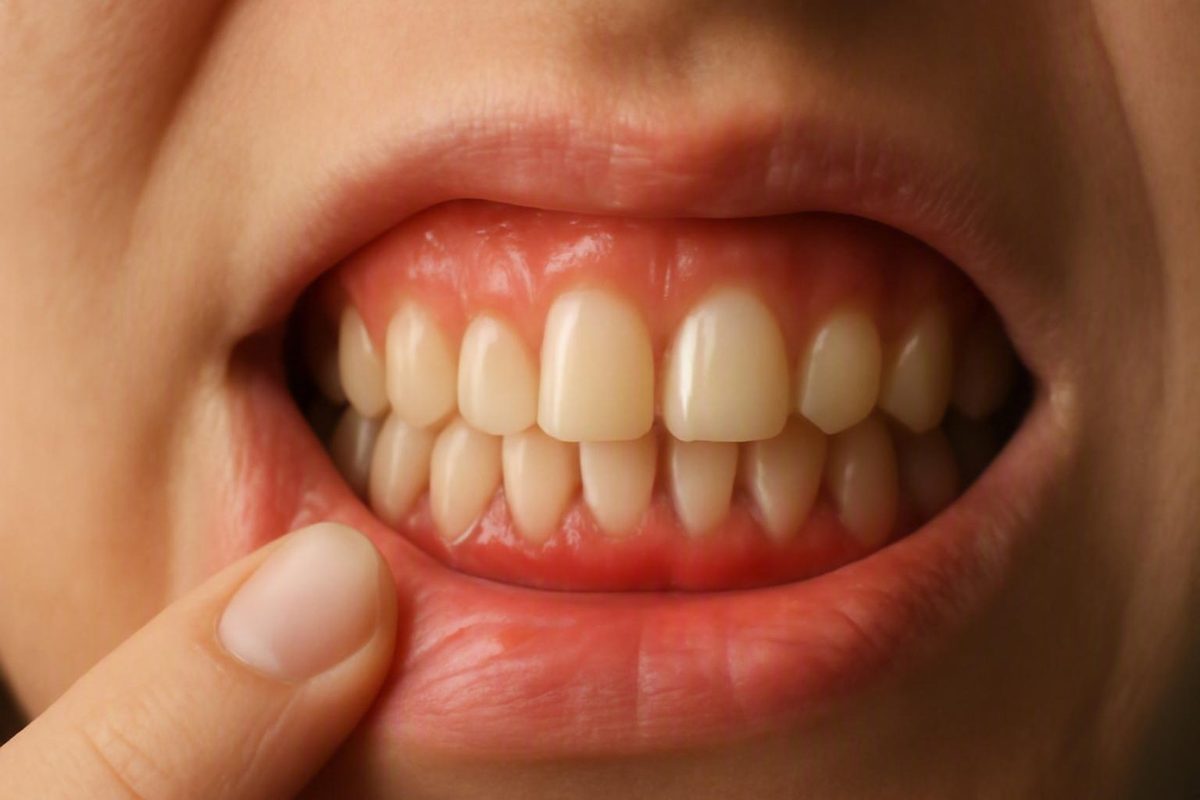
The direct answer: gingivitis is the earliest stage
Gingivitis is the earliest and mildest form of periodontal disease, also called gum disease. It is inflammation of the gums, commonly associated with plaque accumulating on the teeth and along the gumline. Possible warning signs include red, swollen, puffy, tender, or easily bleeding gums, although early gingivitis may cause little pain or no obvious symptoms. Cleveland Clinic explains the signs and causes of gingivitis.
The defining boundary is what has not happened: uncomplicated gingivitis has not caused the supporting-tissue or bone loss that characterizes periodontitis. Gingivitis is generally reversible with routine oral hygiene and professional cleaning, while periodontitis involves bone loss and irreversible structural damage that requires professional management. See the CDC’s overview of periodontal disease.
This distinction matters because inflamed gums can return toward health when plaque is controlled and hardened deposits are professionally removed before permanent supporting-tissue damage occurs. Once periodontitis has caused attachment or bone loss, ordinary brushing, interdental cleaning, or a routine cleaning cannot restore the missing support in the same way.
Gingivitis at a glance
- Common possible signs: red, swollen, puffy, tender, or easily bleeding gums
- Pain: may be mild or entirely absent
- Bone loss: absent in uncomplicated gingivitis
- Reversibility: generally reversible with timely professional care and sustained plaque control
- Next step: arrange a dental assessment if symptoms persist, recur, or worsen
Bleeding or redness does not prove that you have gingivitis. Nor can normal-looking gums confirm that deeper structures are healthy. These signs are reasons to pay attention and seek assessment when appropriate, not tools for diagnosing yourself.
Important educational note: Decay Guide provides general information, not diagnosis or individualized treatment. Its content is written by a health writer rather than a dentist, has not been reviewed by a clinician, and does not replace a dental examination or any imaging a clinician considers necessary. Read Decay Guide’s editorial and clinical-review disclosure.
Gingivitis, periodontitis, and periodontal disease: what the terms mean
The terminology can seem contradictory because periodontal disease is used in more than one way.
In broad patient education, periodontal disease and gum disease are umbrella terms that include gingivitis and periodontitis. Gingivitis is inflammation limited to the gums, without the bone loss found in periodontitis. Periodontitis affects deeper tissues supporting the teeth and involves bone loss around affected teeth. Cleveland Clinic distinguishes the forms and stages of periodontal disease.
People sometimes use “periodontal disease” more narrowly to mean periodontitis alone, particularly when contrasting it with gingivitis. This explains statements such as “gingivitis can progress to periodontal disease,” but the phrasing can obscure the broader meaning. More precisely, gingivitis is a form of periodontal or gum disease, while periodontitis is a distinct and more destructive form.
Gingivitis should not be called “stage 1 periodontitis.” That wording merges two clinically important conditions:
- Gingivitis: inflammation is confined to the gums, without periodontitis-related attachment or bone loss.
- Periodontitis: deeper tooth-supporting structures have been damaged, with bone loss around affected teeth.
A useful simplified pathway is:
Healthy gums → gingivitis → possible periodontitis
The word possible is essential. Untreated gingivitis may progress to periodontitis, but progression is not inevitable or predictable for every person.
Some patient guides expand this pathway into gingivitis followed by early, moderate, and advanced periodontitis. That model can illustrate increasing destruction of tooth-supporting tissues, but it should not be treated as a universal formal classification or used to assign yourself a stage. Diagnosis and classification depend on clinical findings that symptoms and home inspection cannot establish.
The simplified biological distinction is therefore:
- Clinically confirmed inflammation confined to the gums, without bone loss, is consistent with gingivitis.
- Damage extending into deeper supporting structures, with bone loss, indicates periodontitis.
This is a professional distinction, not an equation that allows every case of red or bleeding gums to be diagnosed as gingivitis.
What early gingivitis can look and feel like
Possible early signs include:
- Red or darker-looking gums
- Swollen, puffy, or enlarged-looking gum tissue
- Bleeding during brushing
- Bleeding during flossing or other cleaning between teeth
- Mild tenderness around the gumline
- Persistent bad breath
Redness, swelling, and gums that bleed easily are characteristic visible warning signs. Tenderness and persistent bad breath can also occur, but they are nonspecific: neither proves gingivitis nor reveals how advanced a condition may be. Gingivitis can also produce no obvious symptoms. Review Cleveland Clinic’s gingivitis guide.
Why painless gums are not necessarily healthy gums
Gingivitis may cause little or no pain. This makes it easy to dismiss a faint line of blood after brushing or assume that the gums are healthy because they do not hurt.
Pain is not a reliable measure of periodontal health. Early inflammation may be found during routine dental care before a person notices anything unusual. Conversely, gum discomfort can have causes other than gingivitis. The presence or absence of pain cannot confirm a diagnosis.
What bleeding gums do—and do not—tell you
Bleeding deserves attention, particularly when it happens repeatedly or occurs with redness and swelling. It does not, by itself, establish that gingivitis is present. A dental professional must consider the pattern, examine the tissues, and determine whether there are other explanations.
If you notice bleeding, it may help to record:
- How often it occurs
- Whether it affects one area or much of the mouth
- Whether it occurs during brushing, interdental cleaning, or without cleaning
- How long it has persisted
- Whether the gums also look swollen or receded
- Whether bad breath persists
- Whether a tooth feels loose or appears to have changed position
This record cannot diagnose the condition, but it can give the clinician a clearer account than saying the gums “sometimes bleed.”
Signs that deserve professional assessment
Gum recession, loose teeth, and apparent changes in tooth position are not defining features of uncomplicated gingivitis. They may indicate periodontitis or another dental problem and warrant professional assessment. Persistent or worsening bleeding, swelling, tenderness, or bad breath should also be examined.
Lighting, natural pigmentation, image processing, and camera angle can change how gums appear. More importantly, a photograph cannot show whether attachment or bone has been lost.
How plaque causes gum inflammation—and why tartar changes the response
Plaque is a bacterial film that forms on teeth. When it accumulates near the gumline, it can trigger inflammation in the adjacent gums, which may then become red, swollen, tender, or prone to bleeding.
Effective brushing and cleaning between the teeth disrupt soft plaque. Daily plaque removal is therefore central to improving uncomplicated gingivitis and limiting its recurrence.
Plaque and tartar are not interchangeable:
- Plaque is a soft film that effective daily cleaning can disrupt and remove.
- Tartar, also called calculus, is mineralized material that has hardened on the teeth and generally requires professional removal.
The distinction determines what home care can accomplish. Brushing and interdental cleaning remain essential because they control new plaque accumulation, but they do not replace professional removal of hardened tartar. Plaque also reforms over time, so professional cleaning does not replace daily home care. Dental Depot’s patient guide describes plaque formation and the need for professional tartar removal.
Do not treat suspected tartar as a home-scraping task. Continue normal gentle cleaning and ask a dental professional to examine and remove hardened deposits as needed.
Professional care and home care have complementary roles:
- Professional care removes deposits that routine home cleaning cannot and provides an opportunity to examine the gums.
- Daily home care repeatedly disrupts new plaque.
- Follow-up assessment establishes whether inflammation is resolving or whether deeper disease or another condition requires attention.
People also vary in their susceptibility and response. Disease may also be present in areas that are difficult to see, including between teeth or beneath the visible gumline.
Gingivitis versus periodontitis: the point at which lasting damage begins
The main difference between gingivitis and periodontitis is not simply how red the gums look. It is whether inflammation remains confined to the gums or has been accompanied by destruction of the tissues and bone supporting the teeth.
| Feature | Gingivitis | Periodontitis |
|---|---|---|
| Affected tissues | Inflammation is limited to the gums | Deeper tooth-supporting tissues are affected |
| Common possible signs | Redness, swelling, puffiness, tenderness, or bleeding | May include bleeding, recession, loose or shifting teeth, and other signs of reduced support |
| Bone loss | Absent in uncomplicated gingivitis | Present around affected teeth |
| Reversibility | Gum inflammation is generally reversible when addressed in time | Existing attachment and bone loss are not reversible in the same way |
| Tooth stability | Teeth retain their support without gingivitis-related bone loss | Stability can decline as supporting destruction advances |
| Typical professional care | Examination, professional cleaning as needed, and improved daily plaque control | Individualized periodontal treatment and continuing management based on clinical findings |
When gingivitis is described as reversible, the statement refers to inflammation before permanent supporting-tissue destruction has occurred. It does not mean that every gum problem is reversible or that professional cleaning can rebuild bone already lost to periodontitis.
Periodontitis can still be treated and managed. Professional treatment may control the condition and preserve remaining support, but management is different from returning damaged tissues to their original structure through routine brushing or cleaning. Advanced destruction can contribute to loose teeth and eventual tooth loss. Cleveland Clinic outlines the structural damage and management of periodontitis.
Untreated gingivitis may develop into periodontitis, but not every case follows the same course. There is no dependable universal timeline for predicting how quickly an individual case will progress. That uncertainty supports timely assessment and prevention; it does not mean either that progression is inevitable or that persistent inflammation is harmless.
The practical turning point is the onset of supporting-tissue destruction:
- Before attachment or bone loss, gingival inflammation may resolve and gum health can improve.
- After attachment or bone loss, professional care can manage the condition and protect remaining support, but the structural loss is not reversible in the same way.
Loose teeth and tooth loss are possible consequences of advanced periodontal destruction, not expected outcomes for everyone who notices bleeding gums.
Why symptoms cannot tell you whether bone loss has started
The appearance and feel of the gums do not reveal everything happening beneath them. Redness, swelling, bleeding, tenderness, or bad breath may be consistent with gingivitis, but these symptoms cannot establish whether deeper supporting tissues or bone have been affected.
A dental assessment may include examining:
- Redness and swelling
- Areas that bleed
- Gum recession
- Deposits on the teeth
- Tooth position and stability
- Other findings that may explain the symptoms
If jawbone involvement is suspected, imaging may be used to evaluate it. A dentist may assess bleeding, redness, swelling, recession, and loose teeth, with X-rays used when bone involvement is a concern.
Self-assessment therefore has firm limits. You cannot reliably determine the disease stage from:
- A photograph of your gums
- Gum color alone
- One episode of bleeding
- Bad breath
- Pain or the absence of pain
- An improvised home measurement
- A comparison with another person’s symptoms
Numerical periodontal measurements sometimes appear in educational material, but they are not self-diagnostic cutoffs. Decay Guide expressly treats such figures as educational benchmarks rather than thresholds readers can apply to themselves. Read the site’s policy on informational content and self-assessment limits.
Early disease may be detected during routine dental care even when there is no pain or obvious symptom. At the other end of the spectrum, noticeable recession or a loose tooth still cannot tell a reader exactly what diagnosis or treatment is appropriate. Assessment and treatment planning depend on the findings in the individual mouth.
Can gingivitis be reversed?
Gingivitis is generally reversible when plaque and tartar are addressed before permanent loss of tooth-supporting tissue or bone occurs.
Here, reversible means that gum inflammation can resolve and the tissues can return toward health. Bleeding, swelling, and redness may improve as plaque and hardened deposits are controlled. It does not mean:
- The person becomes immune from future gingivitis
- The condition cannot recur
- Every case responds identically
- A one-time cleaning replaces continued home care
- Periodontitis-related attachment or bone loss will regrow through ordinary hygiene
Reversal usually depends on professional care together with sustained daily plaque control. Professional cleaning removes hardened deposits that cannot be removed effectively through routine home care, while brushing and interdental cleaning control newly accumulating plaque. Gingivitis remains distinct from periodontitis because its inflammation can resolve before destructive attachment or bone loss has occurred. An approved patient guide summarizes the reversibility of gingivitis and the irreversible effects of periodontitis.
Feeling better does not independently prove that the problem was limited to gingivitis. Persistent or recurring symptoms still require assessment because an examination is needed to determine whether tartar, deeper periodontal disease, or another dental condition is involved.
Avoid promises that gingivitis will disappear within a fixed number of days or weeks.
The important limit is straightforward: reversibility applies to gingival inflammation before permanent supporting-tissue damage. It does not extend to established periodontitis-related attachment or bone loss.
What to do now and how to reduce recurrence
If you suspect gingivitis, support your gum health at home and arrange professional assessment when symptoms persist, recur, or worsen. Home care is important, but it cannot confirm the diagnosis or show whether bone loss is present.
Arrange a dental examination
Book an examination if you have persistent or recurring:
- Bleeding during brushing or interdental cleaning
- Red or swollen gums
- Gum tenderness
- Bad breath
- Gum recession
- A loose or shifting tooth
- Symptoms that are becoming more noticeable
These findings do not all mean gingivitis. The purpose of the examination is to identify their cause and determine whether inflammation is confined to the gums.
Recession and loose or shifting teeth deserve prompt attention because they may indicate reduced support or another dental problem. This does not automatically make every case an emergency, but it does mean the finding should not be dismissed or managed solely through online information.
Brush twice daily
Brush all tooth surfaces twice each day, paying consistent attention to the area where the teeth and gums meet. The goal is gentle, thorough plaque removal rather than forceful scrubbing.
If you are uncertain about your technique or have difficulty cleaning particular areas, ask a dental professional for individualized instruction.
Clean between the teeth daily
Clean between the teeth every day as part of routine plaque control. A dentist or dental hygienist can recommend an appropriate method after examining your mouth.
The CDC recommends brushing twice daily, flossing daily, and obtaining regular professional dental care. Review the CDC’s prevention and treatment guidance.
Understand what professional cleaning adds
Professional cleaning removes hardened deposits that routine brushing and interdental cleaning cannot remove. It also gives a dental professional an opportunity to examine the gums and decide whether the pattern is consistent with uncomplicated gingivitis or requires further evaluation.
Professional cleaning does not remove the need for home care. Plaque continues to form, and gingivitis can recur if it accumulates again along the gumline.
Follow an individualized care schedule
There is no single examination or cleaning interval that is ideal for everyone. Follow the schedule recommended after your dental assessment rather than assuming that one fixed timetable applies to every person.
Avoid scraping tartar yourself
If you see or feel a hard deposit, do not treat it as something that can be removed through routine home cleaning. Continue gentle plaque control and arrange professional care, because hardened tartar generally requires professional removal.
Continue prevention after the gums improve
Improvement is not a reason to stop the habits that helped control the inflammation. Gingivitis can recur when plaque accumulates again. Prevention therefore depends on maintaining daily plaque control even when the gums no longer bleed or feel tender.
Practical checklist
- [ ] Note where symptoms occur and how long they have persisted.
- [ ] Record whether bleeding is occasional, frequent, or worsening.
- [ ] Brush gently and thoroughly twice daily.
- [ ] Clean between the teeth daily.
- [ ] Do not attempt to scrape suspected tartar.
- [ ] Arrange professional assessment for persistent bleeding, redness, swelling, bad breath, recession, loose teeth, or worsening symptoms.
- [ ] Follow the examination and cleaning schedule recommended for you.
- [ ] Continue daily plaque control after symptoms improve.
Frequently asked questions
Are bleeding gums always a sign of gingivitis?
No. Bleeding gums are a common possible sign of gingivitis, particularly when the gums are also red, swollen, or puffy, but bleeding does not establish a diagnosis by itself.
Note how often it occurs, where it happens, and whether it accompanies swelling, recession, bad breath, tooth movement, or worsening symptoms. Persistent or recurring bleeding should be discussed with a dental professional.
Does every untreated case of gingivitis become periodontitis?
No. Untreated gingivitis may progress to periodontitis, but progression is not inevitable, and no fixed timetable applies to everyone.
Persistent inflammation should still be assessed because symptoms cannot show whether supporting-tissue or bone loss has begun. The absence of pain is not proof that the gums are healthy.
How long does gingivitis take to reverse?
There is no reliable universal number of days or weeks. Improvement varies with the clinical findings, the presence of tartar, and the effectiveness of plaque control.
Do not use a promised recovery deadline as a substitute for assessment. If bleeding, redness, swelling, or bad breath persists despite better home care, arrange a dental examination.
Can I remove tartar from my teeth at home?
Routine brushing and interdental cleaning can remove soft plaque, but hardened tartar generally requires professional removal.
Do not treat tartar as a home-scraping task. Continue gentle daily plaque control and ask a dental professional to examine the area.
Can gingivitis cause bone loss or loose teeth?
Uncomplicated gingivitis does not include the bone loss characteristic of periodontitis, and it does not cause teeth to become loose through loss of supporting bone.
Bone loss and declining tooth stability point beyond uncomplicated gingivitis or toward another dental problem. Advanced periodontal destruction can lead to loose or shifting teeth and eventual tooth loss, so recession or a loose tooth should receive professional assessment. A periodontal patient guide describes the progression from gingivitis to advanced supporting-tissue damage.
Gingivitis is the earliest, generally reversible form of periodontal disease because inflammation has not yet caused the supporting-tissue and bone loss associated with periodontitis. Redness, swelling, or bleeding—especially when persistent—should lead to consistent plaque control and a dental examination, not self-diagnosis. Timely professional care provides an opportunity to address inflammation and tartar before lasting periodontal damage occurs.