
How to Protect a Wobbly Adult Tooth and Get the Right Level of Care
Mild, gradual looseness with no severe symptoms or recent trauma may allow the earliest dental appointment instead of same-day emergency care.
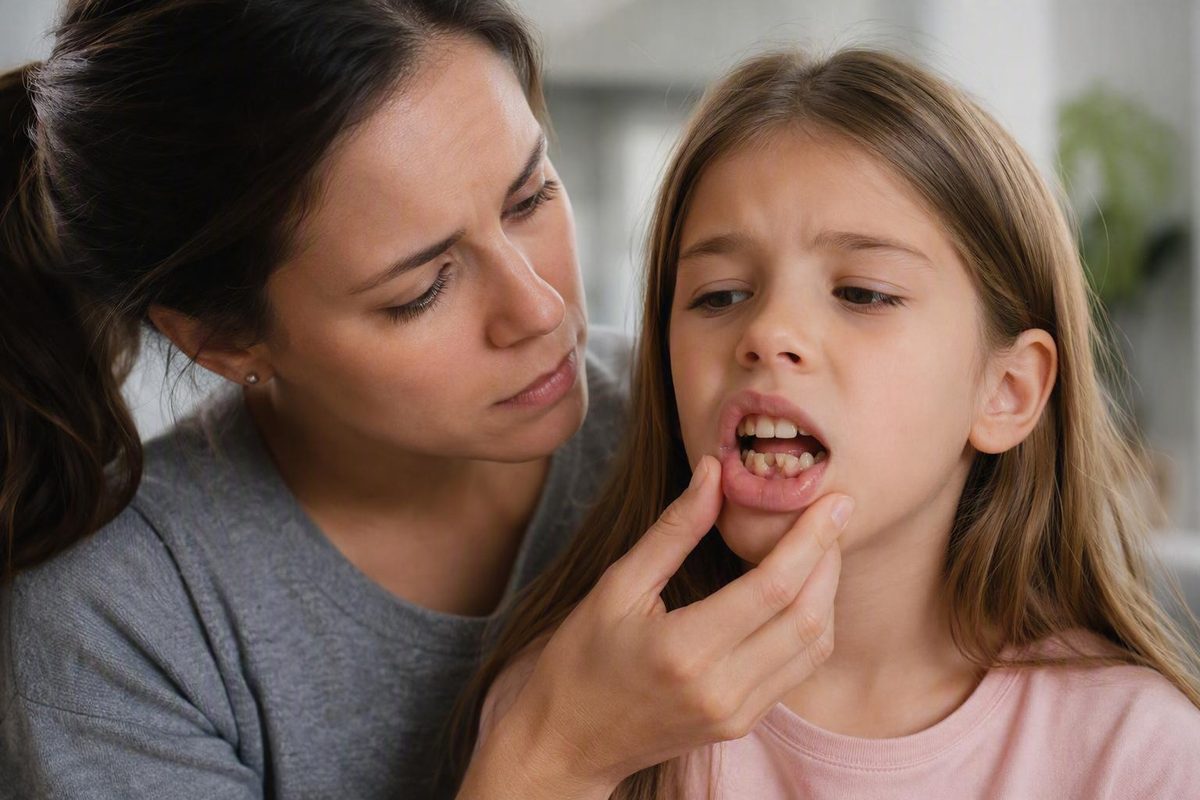
First decide how urgently the tooth needs attention
New, visible, painful, or worsening movement in a permanent tooth warrants prompt dental assessment. That does not mean every loose tooth requires the same emergency response, but it should not be ignored or managed indefinitely at home.
Use these three pathways:
- Intact but mildly loose, with no severe symptoms or recent trauma: Protect the tooth from additional pressure and arrange the earliest available dental appointment.
- Suddenly loose after a blow, fall, collision, sports injury, or biting accident: Contact an emergency dentist or urgent dental service immediately and seek same-day assessment.
- Displaced, nearly out, partly knocked out, or completely knocked out: Treat this as a time-sensitive dental emergency. Call an emergency dental service while arranging immediate care and follow its real-time instructions.
A traumatic injury can affect the periodontal ligament, root, socket, or surrounding bone even when the visible crown looks intact. Sudden looseness after an impact therefore requires rapid professional evaluation rather than waiting to see whether it settles. Emergency warning signs include severe pain, facial swelling, fever, pus, uncontrolled bleeding, breathing difficulty, or a tooth that is nearly out, according to this specialist overview of urgent tooth mobility.
Seek immediate professional help for:
- A partly or completely knocked-out permanent tooth
- A tooth that has moved substantially out of position
- Sudden looseness following trauma
- Severe or rapidly worsening pain
- Facial or substantial gum swelling
- Fever
- Pus, drainage, or another clear sign of infection
- Bleeding that will not stop
- Breathing difficulty
- A tooth that is nearly out
A displaced or knocked-out permanent tooth is not simply an ordinary wobbly tooth. Call an emergency dental service, identify the injury clearly, and follow its instructions while arranging care. Do not force the tooth into position or apply the intact-tooth care checklist later in this article.
If the movement developed gradually, remains mild, and is not associated with trauma, displacement, severe pain, swelling, fever, pus, uncontrolled bleeding, or breathing difficulty, the earliest available dental appointment may be appropriate. Even then, do not watch the tooth for weeks or rely entirely on home care. Adult tooth looseness can reflect trauma or underlying disease, and treatment depends on the cause, as explained in Cleveland Clinic’s overview of loose permanent teeth.
An article cannot determine the urgency, cause, or prognosis of your particular tooth. It cannot show whether a root is fractured, how much support remains, whether an infection is present, or whether the tooth can be preserved. If you are uncertain which pathway applies, contact a dental professional and describe:
- When the movement began
- Whether an accident occurred
- Whether the tooth has changed position
- How much movement you can see or feel without deliberately testing it
- Whether you have pain, swelling, bleeding, fever, discharge, or breathing difficulty
What a loose permanent tooth means
The clinical term for a loose tooth is tooth mobility, also called dental mobility. It means that a tooth moves within its socket.
Teeth are not fused rigidly to the jaw. Fibrous periodontal ligaments connect their roots to the surrounding bone and permit a minute amount of movement during biting and chewing. This normal physiological movement is generally too slight to notice and is different from a tooth that visibly wiggles, suddenly shifts, hurts, or feels unstable while eating. A dental overview of periodontal ligaments and tooth mobility describes these ligaments as allowing a very small, normally unnoticed amount of movement.
Movement is concerning when it is:
- New or clearly greater than before
- Visible in a mirror
- Noticeable while chewing
- Painful or tender
- Increasing over hours, days, or weeks
- Accompanied by bleeding, swollen gums, or gum recession
- Associated with a changed tooth position
- Accompanied by a bite that suddenly feels different
Do not repeatedly wiggle the tooth with a finger or tongue to determine how loose it is. Repeated testing applies force to tissues that may already be injured or inflamed. It also cannot reveal whether the problem involves the ligament, root, pulp, gums, socket, or surrounding bone.
Pain is not a reliable measure of seriousness. Periodontal damage can develop with limited discomfort, and trauma-related injury may not produce severe symptoms immediately. A painless loose permanent tooth still needs assessment if the movement is new, visible, increasing, or otherwise abnormal.
For a child, first try to establish whether the tooth is a baby tooth or a permanent tooth. Gradual loosening and shedding of a baby tooth can be normal. Looseness of a permanent tooth is not normal simply because the patient is young. If there is uncertainty—particularly after an injury—contact the child’s dentist or an emergency dental service instead of pulling or repeatedly testing the tooth.
What to do—and avoid—while waiting for dental care
For an intact but mobile permanent tooth, the immediate goal is to reduce additional pressure while keeping the rest of the mouth reasonably clean.
Do:
- Contact a dentist and explain when the movement began.
- State clearly whether trauma was involved.
- Choose soft foods that require little chewing.
- Chew on the opposite side when practical.
- Clean the rest of the mouth normally.
- Use a gentle technique around an intact, mildly mobile tooth.
- Follow any instructions provided by the dental service.
- Watch for worsening pain, swelling, fever, pus, bleeding, displacement, or breathing difficulty.
Do not:
- Wiggle or repeatedly test the tooth.
- Pull it with your fingers.
- Press it with your tongue.
- Bite hard food to “see whether it holds.”
- Attempt to pull the tooth out.
- Make a splint from wire, adhesive, floss, or household materials.
- Force a displaced tooth back into position.
- Delay assessment because the tooth does not hurt.
- Expect a rinse or special diet to tighten the tooth.
Soft foods reduce chewing pressure while the tooth awaits examination. Avoid hard, crunchy, sticky, or chewy foods, especially anything likely to catch on the tooth or require forceful biting. Suitable lower-force choices may include smooth soups, yogurt, eggs, mashed vegetables, soft-cooked foods, and other foods that do not require biting with the affected tooth. Interim-care advice also supports avoiding manipulation and hard or sticky foods.
Advice from the supplied dental sources differs on brushing and flossing directly around a loose tooth. A practical approach is to distinguish between situations:
- Intact and mildly mobile: Brush gently and clean carefully between teeth without deliberately moving the affected tooth.
- Highly mobile, painful, or actively bleeding after trauma: Avoid applying direct force and ask the emergency dental service for instructions.
- Displaced or partly knocked out: Do not attempt routine cleaning around it before obtaining immediate professional guidance.
Do not abandon oral hygiene throughout the mouth. Plaque buildup will not help, but forceful brushing, aggressive flossing, or snapping floss against the affected area may add stress. One dental source advises careful brushing and flossing around an intact loose tooth, while another advises avoiding normal cleaning directly against it. The tooth’s position, mobility, bleeding, and cause therefore matter.
A gentle warm salt-water rinse is optional if rinsing does not move the tooth or provoke bleeding. Swish gently rather than forcefully. Treat it only as a temporary comfort or cleanliness measure—not as a disinfectant or treatment.
If the tooth has moved substantially out of position or has come out, stop using the intact-tooth checklist. Call an emergency dental service, identify it as a displaced or knocked-out permanent tooth, and follow its real-time instructions while arranging immediate care. Do not improvise a splint or force the tooth into place.
The main causes and the clues that may accompany them
Symptoms can suggest a cause, but they cannot prove one. Periodontal disease, trauma, infection, and excessive bite forces can produce overlapping signs. More than one problem may also be present.
Periodontal disease
Periodontal disease affects the structures that support the teeth. As it progresses, inflammation and disease can damage the gums, periodontal ligaments, connective attachment, and supporting bone. When enough support is compromised, a tooth may begin to move.
Possible clues include:
- Red, swollen, tender, or bleeding gums
- Gum recession
- Persistent bad breath
- Tenderness while chewing
- Teeth shifting or spaces changing
- More than one mobile tooth
- A bite that no longer meets in the same way
These signs make periodontal disease a possibility, not a diagnosis. Bleeding can have other explanations, and periodontal damage may occur without dramatic pain. Cleveland Clinic’s discussion of gum disease and loose teeth explains that supporting bone and ligaments can be damaged as periodontal disease progresses.
Trauma
A blow, fall, collision, sports accident, or forceful biting injury can damage the periodontal ligament, root, socket, or nearby bone. The visible crown may appear intact even when deeper supporting structures have been injured.
Possible clues include:
- Sudden movement of one tooth
- Bleeding around the gumline
- Pain or tenderness when biting
- A changed tooth position
- A bite that suddenly feels uneven
- A chip, crack, or discoloration
- A recent impact to the mouth or jaw
Looseness may be apparent immediately or become noticeable after the initial event. Do not dismiss an impact because the tooth is still present or the crown looks normal. Examination and, when indicated, dental imaging may be needed to investigate hidden damage.
Infection or internal tooth damage
A cavity, crack, or chip may allow bacteria to reach the pulp inside a tooth. Infection or inflammation can then affect tissues around the root and compromise surrounding support. A specialist dental article discussing infection, trauma, and loose permanent teeth describes this possible pathway while emphasizing that treatment depends on the cause.
Possible clues include:
- Toothache
- Pain when biting
- Gum or facial swelling
- Pus or drainage
- A foul taste
- Persistent bad breath
- Tooth darkening or other discoloration
- Sensitivity or tenderness
Symptoms may be incomplete. Mobility does not prove that the pulp is infected, discoloration can have other causes, and root canal therapy is not automatically required simply because a tooth is loose.
Grinding, clenching, or uneven bite forces
Chronic grinding or clenching can repeatedly overload teeth and their supporting tissues. A tooth may also receive disproportionate force when the bite is uneven or it contacts before neighboring teeth.
Possible clues include:
- Jaw or tooth soreness
- Worn, flattened, or chipped tooth surfaces
- Symptoms that are more noticeable after sleep
- A sensation that one tooth “hits first”
- A recently changed bite
- Mobility without an obvious accident
These findings do not establish grinding or clenching as the sole cause. A dentist still needs to consider periodontal damage, cracks, infection, and other structural problems. Reducing excessive force may form part of treatment, but it cannot restore supporting tissue that has already been lost.
Recent orthodontic movement
Orthodontic treatment deliberately moves teeth through their supporting tissues. If unexpected mobility develops during or after treatment, contact the treating orthodontist or dentist. Do not assume that a particular amount or duration of looseness is normal, especially if movement is worsening or accompanied by pain, bleeding, swelling, trauma, or a changed bite.
A dentist may also ask about health conditions, pregnancy, medications, tobacco exposure, and changes in general health. This information helps place the dental findings in context. A loose tooth by itself does not establish that diabetes, osteoporosis, hormonal changes, stress, medication, or a nutritional deficiency caused the problem.
How a dentist investigates tooth mobility
Tooth mobility is a sign, not a complete diagnosis. Before recommending treatment, the dentist needs to determine which structures are affected and why the tooth has become mobile.
The assessment commonly begins with questions such as:
- When did the movement begin?
- Did it develop suddenly or gradually?
- Has it been worsening?
- Was there a blow, fall, sports accident, or biting injury?
- Is there pain, sensitivity, swelling, bleeding, drainage, or fever?
- Have the gums been bleeding or receding?
- Do other teeth feel mobile or appear to have shifted?
- Do you grind or clench your teeth?
- Does the bite feel different?
- Have you recently had orthodontic, periodontal, restorative, or other dental treatment?
- Are there relevant health conditions, medications, or tobacco exposure?
The clinician may assess the amount and direction of movement and record the finding for comparison at follow-up. This is not a test to copy at home: the result must be interpreted together with the condition of the gums, supporting tissues, tooth position, bite, and symptoms.
The periodontal examination may look for:
- Redness or swelling
- Bleeding
- Gum recession
- Periodontal pocket depth
- Attachment loss
- Plaque and tartar
- Patterns suggesting reduced bone support
If grinding, clenching, or uneven loading is suspected, the dentist may examine how the upper and lower teeth meet and whether one tooth receives disproportionate force.
Dental X-rays may be used when the history and examination indicate a need to investigate bone loss, root fractures, infection around a root, socket injury, or other damage that cannot be seen directly. Periodontal charting and imaging provide different information: charting assesses the gums and attachment around the tooth, while imaging may reveal changes in bone or root structures. A specialist overview of professional tooth-mobility assessment describes the combined use of clinical movement testing, periodontal measurements, and X-rays.
Treatment decisions may take account of:
- The apparent cause of the mobility
- The amount and direction of movement
- Root and bone findings
- Periodontal support
- Signs of ligament or socket injury
- Possible pulp damage
- Infection
- Tooth position and bite forces
- Whether suitable neighboring teeth can provide support
- Changes found during follow-up
This is why two teeth that feel similarly loose to their owners may require different treatment.
Treatment depends on what made the tooth loose
Treatment should address the cause rather than mobility alone. Stabilizing a tooth without treating continuing periodontal disease, infection, or overload may leave the underlying problem unchanged.
If periodontal disease is responsible
Professional treatment may be needed to remove plaque and tartar above and below the gumline and manage disease affecting the supporting tissues. Depending on the findings, care may involve nonsurgical periodontal treatment, ongoing periodontal maintenance, or referral to a periodontist.
More advanced damage may require periodontal procedures or surgery. Suitability depends on the type and extent of damage and the overall treatment plan.
Daily cleaning remains important, but brushing harder cannot reverse established attachment or bone loss. Professional removal of hardened deposits and treatment of the underlying disease may be required. Decay Guide’s explanation of what daily brushing cannot fix further distinguishes preventive plaque control from treatment of tartar and established bone loss.
If trauma injured the supporting tissues
For selected injuries, a dentist may place a professional splint. Splinting connects a mobile tooth to stable neighboring teeth to provide temporary support while injured tissues are monitored or allowed to heal.
A splint:
- Is not appropriate for every loose tooth
- Must not be improvised at home
- Does not cure periodontal disease
- Does not eliminate an infection
- Does not replace lost bone support
- Does not guarantee that later complications will be avoided
Splints can make cleaning more difficult, so the patient may need specific instructions for brushing, cleaning between teeth, food choices, and follow-up. Dental material on splinting and periodontal support describes both its potential role for selected teeth and the added cleaning difficulty around splinted areas.
Trauma treatment may change after reassessment. The dentist may monitor mobility, symptoms, tooth color, pulp health, and root or bone findings over time.
If grinding, clenching, or the bite is overloading the tooth
Treatment may focus on reducing continuing force. Depending on the diagnosis, a dentist may consider adjusting a problematic bite contact or recommending a professionally selected guard.
A guard may reduce exposure to grinding or clenching forces, but it cannot:
- Replace missing bone
- Reverse periodontal destruction
- Repair a fractured root
- Eliminate infection
Because a mobile tooth or changing bite may affect appliance selection, obtain a professional assessment rather than assuming that a store-bought guard will solve the problem.
If the pulp is injured or infected
Root canal therapy may be considered when the pulp is infected or irreversibly injured and the tooth is otherwise considered treatable. The procedure addresses diseased tissue inside the tooth; it is not a general treatment for mobility.
If looseness is primarily caused by periodontal bone loss, bite overload, or ligament injury, root canal therapy alone will not correct those problems. A tooth may require more than one form of care when internal damage and supporting-tissue injury coexist. Cause-specific uses of periodontal treatment, splinting, and root canal therapy are outlined in this discussion of treatments for loose permanent teeth.
When treatment needs to be combined
A treatment plan may combine temporary stabilization with periodontal therapy, infection treatment, or management of excessive forces. The order and extent of care depend on the urgency and diagnosis, and follow-up findings may change the plan.
No procedure can be promised to save a particular tooth without an examination. Recovery also varies with the cause, severity, tissue condition, treatment performed, and response during follow-up. General timelines from other patients should not be used to predict an individual outcome.
Can the tooth tighten again or be saved?
Sometimes. A loose permanent tooth may become firmer after a supporting-tissue injury heals, excessive force is reduced, infection is controlled, or periodontal disease is treated. Selected teeth may also receive temporary support through professional splinting. Symptoms alone cannot show whether tightening is realistic.
The prognosis may depend on:
- Why the tooth became loose
- The severity and direction of movement
- The condition of the root
- The amount of remaining bone and periodontal support
- The extent of supporting-tissue injury
- Whether infection or internal tooth damage is present
- Whether excessive bite forces continue
- How quickly appropriate assessment begins
- How the tooth responds during follow-up
Prompt care may improve the opportunity to preserve a tooth because it allows the cause and continuing sources of damage to be addressed. It does not guarantee preservation. Cleveland Clinic’s review of loose-tooth prognosis and treatment emphasizes that treatment and outcome depend on the underlying cause.
Simply waiting for the tooth to tighten is risky. Periodontal disease, infection, excessive force, and significant trauma require cause-specific assessment. Even when mild mobility eventually improves, a dentist may need to distinguish a limited supporting-tissue injury from more substantial damage.
A loose tooth does not automatically require extraction. Mobility is one finding among many, and the dentist must consider support, function, symptoms, infection, neighboring teeth, and the likely predictability of treatment.
However, not every tooth can be stabilized predictably. Extensive supporting-tissue destruction, severe bone loss, advanced infection, or major root or socket damage can make preservation difficult.
There is no universal healing period. Follow-up may be needed to determine whether mobility is improving, stable, or worsening and whether additional signs of pulp, root, periodontal, or bone injury have appeared.
If preservation is not possible—and how future risk may be reduced
Extraction is a later option when examination indicates that preserving the tooth is not reasonably predictable. It is not the inevitable result of discovering mobility.
If removal is necessary, possible approaches include:
- A fixed dental bridge
- A removable partial dental prosthesis
- A dental implant
- In some situations, delaying or declining replacement after discussing the consequences and alternatives
The appropriate choice depends on the tooth’s location, the patient’s age and growth, the condition of the bone and gums, neighboring teeth, general health, preferences, maintenance requirements, treatment burden, and cost. An implant is not automatically necessary, preferred, or suitable.
Replacement planning for children and adolescents differs from adult planning because growth and development must be considered. A pediatric dentist, orthodontist, or another relevant dental professional may recommend a temporary strategy before definitive replacement. Pediatric guidance on permanent-tooth loss and replacement notes that planning for a growing patient differs from adult treatment planning.
Reducing future risk depends on the original cause:
- Plaque-associated periodontal disease: Maintain daily oral hygiene and attend recommended professional periodontal care. Home cleaning can reduce plaque exposure but cannot rebuild established bone loss.
- Sports or activity-related trauma: Use an appropriately fitted mouthguard when an activity carries a risk of facial impact.
- Grinding or clenching: Obtain professional evaluation rather than assuming any guard will be suitable.
- Bite overload: Complete recommended follow-up so tooth contacts and mobility can be monitored.
- After splinting or periodontal treatment: Follow the clinician’s hygiene, dietary, and review instructions, particularly because cleaning may be more difficult around a splint.
- Tobacco exposure: Avoid smoking as a general oral-health risk-reduction measure; dental prevention advice includes smoking avoidance alongside hygiene and protective mouthguards.
- After orthodontic treatment: Follow retention and review instructions and report unexpected mobility or bite changes.
Prevention can reduce future risk, but it cannot substitute for assessment of a tooth that is already mobile.
Frequently asked questions
Can a loose permanent tooth tighten on its own?
It may become firmer in some circumstances, particularly after a mild supporting-tissue injury or after the underlying cause is treated. You cannot determine at home whether the tooth has a limited ligament injury, periodontal bone loss, infection, root damage, or another condition.
Do not wait for spontaneous tightening as a substitute for care. Protect the tooth from pressure, stop testing it, and arrange a dental assessment.
Should I brush and floss around a loose permanent tooth?
Keep the mouth clean, but adjust your technique to the situation. Around an intact, mildly mobile tooth, brush gently and clean between teeth without pushing against or deliberately moving the tooth.
If it is highly mobile, bleeding, displaced, or painful to touch following trauma, ask the dental service for immediate, situation-specific instructions before applying direct force. Do not stop cleaning the rest of the mouth.
Is a loose permanent tooth always a dental emergency?
No. Mild, gradual mobility without severe symptoms or recent trauma may allow the earliest available dental appointment rather than emergency treatment the same day.
Immediate emergency-dental contact is appropriate when movement follows trauma, the tooth is displaced or nearly out, or there is severe pain, facial swelling, fever, pus, uncontrolled bleeding, or breathing difficulty. A completely knocked-out permanent tooth is a distinct, time-sensitive dental emergency.
Does a painless loose tooth still need to be checked?
Yes. Lack of pain does not prove that the root, gums, periodontal ligaments, pulp, or supporting bone are healthy.
Arrange prompt assessment when movement is new, visible, increasing, or accompanied by gum recession, bleeding, persistent bad breath, shifting teeth, discoloration, or a changed bite.
What is the medical term for a loose permanent tooth?
The clinical term is tooth mobility or dental mobility: movement of a tooth within its socket.
A dentist may assess the amount and direction of movement together with the gums, periodontal support, bite, root, bone, and possible signs of infection or injury. Do not attempt to assign your own numerical grade, because movement alone does not identify the cause or determine whether the tooth can be saved.
Stop testing the tooth, protect it from chewing pressure, and arrange prompt dental assessment. Trauma, displacement, severe pain, facial swelling, fever, pus, uncontrolled bleeding, breathing difficulty, or a tooth that is nearly out requires immediate professional help. A loose permanent tooth is not automatically lost, but only an examination can identify the cause and determine whether stabilization is realistic.
Decay Guide publishes general reference information and is not a dental practice or diagnostic service. For advice about a specific loose permanent tooth, contact a qualified dental professional.