
Gum Disease Can Improve Without All the Damage Disappearing
Care can control active disease, but lost attachment or bone generally remains. Some bone may regrow in selected defects with grafting or guided tissue regeneration.
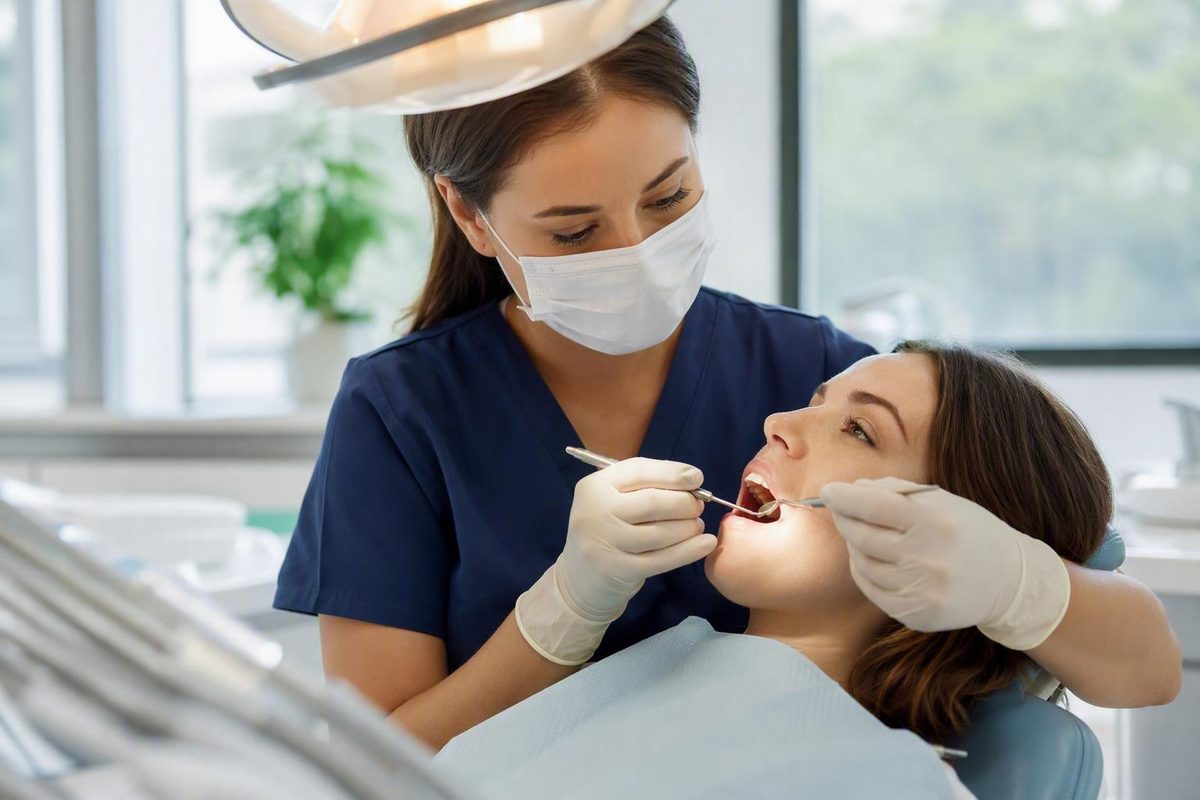
The direct answer: periodontitis is manageable, but not fully reversible
Gingivitis is usually reversible, but established periodontitis generally is not fully reversible once connective tissue or tooth-supporting bone has been destroyed. The CDC distinguishes treatable gingivitis from periodontitis involving irreversible bone loss, while emphasizing that periodontitis can still be slowed and managed with professional treatment.
“Irreversible” does not mean untreatable, hopeless, or certain to end in tooth loss. It means treatment usually cannot return every affected structure to exactly the condition it was in before the disease began. Professional care may still:
- Reduce bacteria and inflammation below the gumline
- Reduce bleeding and swelling
- Make periodontal pockets easier to clean and maintain
- Limit additional tissue and bone loss
- Preserve the support that remains
- Help retain affected teeth where clinically realistic
- Rebuild some bone or tissue in selected defects
The essential distinction is between controlling disease activity and restoring anatomy. If gums bleed less, appear less swollen, or fit more closely around the teeth after treatment, those are meaningful improvements. They do not, by themselves, prove that previously lost bone or connective-tissue attachment has returned.
Periodontitis also does not have one uniform outcome. Its effects can differ between people and even between teeth in the same mouth. The outlook depends on factors such as the amount and pattern of existing damage, tooth mobility, the shape of bone defects, tobacco exposure, diabetes control, oral hygiene, general health, and response to treatment. Cleveland Clinic’s overview of periodontal disease similarly distinguishes reversible gingivitis from periodontitis with structural loss and explains that treatment varies with severity.
No general article can promise that treatment will permanently stop the disease, save every affected tooth, or tighten every loose tooth. A realistic approach is to reduce current disease activity, assess how the tissues respond, preserve what can be preserved, and maintain the result over time.
Why gingivitis can reverse but periodontitis usually cannot
“Periodontal disease,” or “gum disease,” is a broad label for inflammatory and infectious conditions affecting the gums and the structures that surround and support the teeth. That label includes conditions with very different biological consequences.
Gingivitis is inflammation limited to the gums. The tissue may be red, swollen, tender, or prone to bleeding, but the connective-tissue attachment and supporting bone have not been destroyed. Because those supporting structures remain intact, professional cleaning and consistent plaque control can usually allow the gums to return to health.
Periodontitis extends below the gumline. The gums separate from the teeth, periodontal pockets form, and the disease damages connective-tissue attachment and supporting bone. Once that structural support has been lost, ordinary healing does not reliably reconstruct it to its original form.
The boundary is therefore not simply whether gums are red or whether someone uses the phrase “gum disease.” The crucial difference is whether there has been loss of attachment or supporting bone. The comparison below reflects the stages, structural changes, and treatment goals described in Cleveland Clinic’s periodontal-disease guidance.
| Feature | Gingivitis | Mild-to-moderate periodontitis | More advanced periodontitis |
|---|---|---|---|
| Tissue involved | Inflammation is limited primarily to the gums | Disease extends below the gumline and affects tooth-supporting tissues | Deeper or more extensive destruction affects the gums, attachment, and supporting structures |
| Bone or attachment loss | No established supporting-bone or connective-tissue attachment loss | Some attachment or bone loss is present | More substantial or complex attachment and bone loss may be present |
| Reversibility | Usually reversible with professional cleaning and effective daily plaque control | Not fully reversible once structural loss has occurred | Not fully reversible; reconstructive possibilities are limited and defect-specific |
| Usual treatment goal | Remove plaque and tartar, resolve inflammation, and restore gum health | Control infection and inflammation, reduce pockets where possible, and prevent additional damage | Control persistent disease, preserve teeth that can be maintained, improve function, and reconstruct selected defects where feasible |
| If disease progresses | May advance to periodontitis in susceptible circumstances | May cause greater recession, deeper pockets, additional bone loss, or mobility | May contribute to loose or shifting teeth, bite changes, and tooth loss |
This is why the phrase “early gum disease” can be misleading. Patient-education sources often use it to mean gingivitis, not an early stage of periodontitis. Early periodontitis already includes attachment or bone loss and should not be treated as interchangeable with reversible gingivitis.
Conversely, periodontitis may exist without dramatic redness or pain. Diagnosis depends on clinical findings rather than terminology, appearance, or symptoms alone.
What “reversed,” “controlled,” and “regenerated” mean in practice
Confusion about periodontitis often comes from treating several different outcomes as if they meant the same thing. A three-layer framework makes the distinction clearer.
1. Reducing current inflammation
The first layer is reducing the active bacterial and inflammatory burden. Bleeding and swelling may lessen, the gums may look healthier, and periodontal pockets may become shallower or easier to clean.
These changes matter because they can show that treatment and plaque control are improving the environment around the teeth. But symptom relief is not the same as anatomical reversal. A site can bleed less while still retaining bone loss caused by earlier disease.
2. Stabilizing the disease
The next layer is disease control or stability. In ordinary language, this means that treatment and monitoring show improvement without evidence of continuing destruction at that assessment.
“Stable” does not mean permanently cured. It does not guarantee that future progression is impossible or that maintenance is optional. Periodontitis can become active again, particularly if plaque control deteriorates, follow-up stops, or relevant health and behavioral risks remain difficult to manage.
Stability is therefore a continuing management result, not a one-time declaration. Clinicians assess more than how the mouth feels. Bleeding, pocket measurements, gum condition, recession, tooth mobility, plaque and tartar, and changes in bone support may all contribute to the clinical picture. A periodontal-practice review likewise describes control as improvement and stabilization rather than restoration of previously lost support.
3. Reconstructing selected damage
Regeneration is narrower than reversal. It means rebuilding some lost bone or periodontal tissue in a suitable, localized defect. Procedures intended to support this process include bone grafting and guided tissue regeneration.
The Mayo Clinic describes bone grafting and guided tissue regeneration among surgical options that may encourage bone or tissue growth in selected situations. Suitability depends on the defect, the condition of the tooth, health factors, risk exposures, and healing response.
Partial regeneration does not make periodontitis as a whole fully reversible. A successful procedure at one site does not mean every area of recession, attachment loss, or bone loss throughout the mouth can be restored.
In plain language:
- Reversed means returned to the pre-disease state.
- Controlled or stable means current findings have improved and no continuing destruction is evident during assessment.
- Regenerated means some lost support has been rebuilt in a selected area.
Established periodontitis generally does not meet the first standard. With effective treatment and maintenance, it may meet the second, while some individual defects may be candidates for the third.
Which changes may improve—and which may remain
Periodontal treatment does not affect every feature in the same way. Some changes reflect reduced inflammation; others involve structural damage that generally remains unless a suitable reconstructive procedure is possible. The treatment possibilities summarized below are consistent with Penn Dental Medicine’s overview of periodontal care.
| Feature | What disease control may achieve | What may remain or require reconstruction |
|---|---|---|
| Bleeding and swelling | May improve substantially as inflammation decreases | Improvement does not prove that bone or attachment has regenerated |
| Bacterial burden | Professional cleaning and daily plaque control can reduce deposits and make affected areas more manageable | New plaque continues to form, so control requires ongoing care |
| Pocket depth | Pockets may become shallower as swelling decreases and the gums heal more closely against cleaned roots | Residual pockets may remain, especially where substantial structural loss has occurred |
| Gum recession | Reduced inflammation can make recession easier to monitor and manage | Receded tissue generally does not return naturally to its original position; selected sites may be considered for soft-tissue grafting |
| Connective-tissue attachment | Healing and closer adaptation to cleaned root surfaces may occur | Complete replacement of all lost attachment should not be assumed |
| Bone loss | Treatment can aim to prevent additional loss | Existing loss generally remains, although selected defects may be candidates for partial regeneration |
| Tooth mobility | Clinical treatment may address inflammation and other contributing problems | A loose tooth is not guaranteed to tighten or remain maintainable |
| Missing teeth | Disease control can protect the remaining mouth and support later restorative planning | A missing tooth does not grow back and requires a separate discussion about replacement |
Bleeding is easy to observe, but it is only one clinical sign. Less bleeding is encouraging; it cannot show how much bone surrounds a tooth or whether earlier attachment loss has been restored.
Pocket depth also needs context. It should not automatically be translated into “the bone grew back.” Pocket measurements are most useful when interpreted alongside recession, attachment levels, tissue condition, radiographs, plaque control, and changes over time.
Gum recession and bone loss generally do not naturally return to their original condition. That does not mean nothing can ever be repaired. Soft-tissue grafting may reinforce or cover part of a selected recession defect, while bone grafting or guided tissue regeneration may repair part of an appropriate bone defect.
Tooth mobility is especially difficult to predict from general information. An examination is needed to determine whether a particular tooth can be maintained, requires stabilization, or has an unfavorable outlook.
Without treatment, periodontitis may lead to deeper pockets, greater recession, additional attachment and bone loss, loose or shifting teeth, bite changes, and tooth loss. Treatment is intended to interrupt that progression where possible—not to guarantee preservation of every affected structure.
How a dental professional determines the stage and extent of damage
Symptoms alone cannot confirm periodontitis or establish how severe it is.
A periodontal evaluation may include:
- Reviewing medical and dental history
- Asking about tobacco exposure, medications, and health conditions
- Looking for plaque and tartar
- Assessing redness, swelling, and bleeding
- Examining gum recession
- Checking whether teeth are mobile or have shifted
- Evaluating how the teeth meet
- Measuring around the teeth with a periodontal probe
- Taking dental X-rays where clinically appropriate
Periodontal probing measures the space between the gum and tooth at multiple points.
Dental X-rays can reveal patterns of supporting-bone loss that are not visible simply by looking at the gums. A clinician may then assign a stage and grade based on severity, treatment complexity, risk factors, and health. The Mayo Clinic outlines this diagnostic process, including history review, examination, probing, X-rays, staging, and grading.
Signs that justify arranging a dental evaluation include:
- Bleeding or swelling that persists
- Pus around the gumline
- Persistent bad breath
- Increasing recession or exposed roots
- A loose or shifting tooth
- Discomfort when chewing
- New spaces between teeth
- A bite that feels different
These are warning signs, not a self-diagnostic checklist. Their presence does not establish periodontitis, and their absence does not rule it out. Periodontitis may progress without significant pain, so neither comfort nor the visible appearance of the gums can establish how much support remains.
Treatment follows a pathway from infection control to selective reconstruction
Periodontitis treatment is better understood as a response-based pathway than as a universal checklist:
- Assessment and treatment planning
- Initial infection control
- Healing and reassessment
- Additional treatment if disease remains
- Long-term periodontal maintenance
The exact plan depends on disease severity, defect anatomy, overall health, tobacco exposure, diabetes control, previous treatment, and the tissues’ response.
Assessment and treatment planning
The clinician determines where disease is present, how much support has been lost, which areas are inflamed or difficult to clean, and which health or behavioral factors may affect treatment. The resulting plan can differ between sites in the same mouth.
Initial mechanical treatment
Initial treatment commonly focuses on removing deposits from the teeth and below the gumline.
Scaling removes tartar and bacterial deposits from tooth surfaces above and below the gums. Root planing smooths root surfaces to discourage further buildup and support closer healing of the gums against the teeth.
Scaling and root planing is commonly used when periodontitis is less advanced. It is not sufficient for every case. Deep or complex defects, persistent inflammation, inaccessible deposits, or more advanced support loss may require additional care.
Case-dependent adjuncts
A dentist or periodontist may add a locally delivered antimicrobial, prescribed rinse, or oral antibiotic in selected circumstances. These are additions to mechanical cleaning, not substitutes for it. A rinse cannot remove hardened tartar, and antibiotics do not make cleaning contaminated root surfaces unnecessary.
Medication decisions should be based on a clinical reason rather than the assumption that more treatment always produces a better result.
Reassessment
After the tissues have had an opportunity to respond, the clinician reassesses bleeding, inflammation, plaque control, pocket depths, gum condition, and other relevant findings.
If the response is satisfactory, care may move into maintenance. If significant pockets or active disease remain, the next step may involve further nonsurgical treatment or surgery.
Surgical access and pocket reduction
Pocket-reduction or flap surgery may be considered when persistent deep areas cannot be managed adequately through nonsurgical treatment alone. The gum tissue is moved to provide access to the roots for cleaning. Underlying bone may also be reshaped where appropriate.
The goal is to create a healthier area that can be maintained more effectively, not to erase the history of periodontal disease.
Soft-tissue reconstruction
Soft-tissue grafting may be considered for selected recession defects. Suitability and the amount of root coverage possible vary.
Bone grafting and guided tissue regeneration
Bone grafting places graft material into a selected defect to support healing and provide a framework for bone growth.
These procedures attempt to reconstruct specific defects. They do not return every periodontal structure throughout the mouth to its original condition. The broader treatment range—from scaling and root planing to flap surgery and grafting—is described in Penn Dental Medicine’s periodontal-treatment guidance.
Laser treatment
Lasers may be used in some periodontal settings, but Cleveland Clinic’s review describes results for laser-assisted treatment as mixed. Laser therapy should therefore not be presented as automatically superior to established mechanical or surgical approaches or as necessary for every patient.
The relevant question is whether a proposed technique has a defined purpose in the treatment plan and is appropriate for the particular site. More treatment is not automatically better: a localized defect suitable for regeneration is different from generalized bone loss, and a tooth with manageable support is different from one with severe mobility or an unfavorable defect.
Why home care helps but cannot treat established disease by itself
Home plaque control is essential, but it cannot replace professional evaluation or remove hardened deposits below the gumline.
Soft plaque is a bacterial film that daily cleaning can disrupt. When plaque hardens into tartar, it becomes firmly attached to the tooth and requires professional removal. Brushing harder cannot turn tartar back into removable plaque, reach every contaminated root surface, or rebuild destroyed bone and connective-tissue attachment.
General habits that support periodontal treatment include:
- Brushing twice daily
- Cleaning between the teeth daily
- Attending professional cleanings and dental examinations
- Avoiding tobacco
The CDC recommends regular oral hygiene and professional care and notes that hardened tartar requires professional removal.
The most suitable method of cleaning between teeth may depend on the spaces present, restorations, dexterity, and periodontal anatomy. A dentist or dental hygienist can demonstrate an appropriate approach. The general aim is consistent disruption of plaque rather than forceful scrubbing.
Mouth rinses and prescribed medications may be useful additions to some treatment plans. They are not universal cures and do not replace scaling and root planing when hardened deposits or contaminated root surfaces are present. Home remedies and supplements should not be assumed to reconstruct periodontal support or remove tartar below the gums.
A periodontal assessment may also consider tobacco exposure, diabetes, oral hygiene, medications, genetics, stress, and general health. These factors do not determine an individual outcome by themselves and should not be used to assign blame. They help the clinician assess susceptibility, healing, and whether dental treatment should be coordinated with other health care.
The practical division is straightforward:
- Home care controls new soft plaque each day.
- Professional care removes deposits and treats areas that home tools cannot adequately reach.
- Reassessment shows whether those combined efforts have controlled the disease.
Neither side substitutes for the other. Professional treatment without consistent home care allows new plaque to accumulate; home care without professional treatment cannot remove established tartar or determine the extent of bone loss.
Long-term control requires reassessment and individualized maintenance
Active treatment is followed by reassessment to determine how inflammation, bleeding, pocket measurements, tissue condition, plaque levels, and tooth stability have changed.
If findings improve, periodontal maintenance helps preserve that result. If important disease remains, the clinician may recommend further treatment before or alongside maintenance. Reassessment is therefore central to care: it connects the initial plan with the mouth’s actual response.
Periodontal maintenance is commonly needed because controlling the disease does not eliminate the possibility of renewed activity or progression. Daily plaque control and professional maintenance have different roles:
- Daily care limits new plaque accumulation.
- Professional maintenance removes deposits that remain or recur.
- Follow-up examinations monitor difficult sites and compare clinical findings over time.
- Periodic assessment can identify changes before they become obvious to the person affected.
There is no single correct interval for everyone. Some people require periodontal maintenance more often than routine preventive cleaning, but a fixed three-, four-, or six-month schedule should not be prescribed without clinical context. Frequency may reflect residual pockets, previous severity, plaque control, tobacco exposure, diabetes control, general health, treatment response, and consistency of follow-up. A periodontal-care review emphasizes that stability depends on ongoing treatment, home care, and individualized maintenance rather than a one-time cure.
That does not make care pointless. It may change the treatment strategy, the outlook for individual teeth, and how closely the condition should be monitored.
Frequently asked questions
Can scaling and root planing reverse periodontitis?
Scaling and root planing can remove deposits below the gumline, smooth root surfaces, reduce inflammation, and help the gums heal more closely against the teeth. It may also reduce pocket depth.
It does not necessarily restore all bone or connective-tissue attachment already lost. It is more accurate to say that scaling and root planing can help control or stabilize periodontitis in suitable cases. The response must be reassessed, and persistent or advanced disease may require additional treatment. Penn Dental Medicine describes scaling and root planing alongside surgical and regenerative options.
Can bone lost to periodontitis grow back?
Some bone may be regenerated in selected defects through procedures such as bone grafting or guided tissue regeneration. Whether this is possible depends on the shape and location of the defect, the tooth’s condition, health factors, and healing response.
Bone loss does not ordinarily return to its original condition simply because bleeding stops or the roots are cleaned. Regeneration is localized and generally partial; it does not mean all bone lost throughout the mouth can be restored.
Does less bleeding mean my periodontitis has been cured?
No. Less bleeding is a favorable sign that inflammation may be improving, but it does not prove that lost bone or attachment has returned.
A clinician interprets bleeding alongside pocket measurements, recession, attachment, plaque levels, tooth mobility, and radiographic findings. Periodontitis may be controlled while previous structural damage remains, and ongoing maintenance is still commonly needed.
Can periodontitis be treated at home?
Not by home care alone. Brushing and interdental cleaning are essential for disrupting new plaque and supporting professional treatment, but they cannot remove hardened tartar below the gumline or determine whether supporting bone has been lost.
Mouthwash may be an adjunct in some plans, but it does not replace professional evaluation, scaling, root planing, or other indicated treatment. Established periodontitis requires professional assessment.
How often is periodontal maintenance needed?
The interval should be individualized. It may depend on residual pockets, initial severity, current inflammation, plaque control, health conditions, tobacco exposure, treatment response, and the likelihood of renewed progression.
Some people need periodontal maintenance more often than routine preventive cleaning, but no single schedule is appropriate for everyone. The purpose is continued monitoring and control—not proof that the disease has been permanently cured.
The bottom line
Periodontitis can improve substantially without being anatomically reversed. Gingivitis can usually return to health before the supporting structures are lost. Established periodontitis instead requires professional treatment, reassessment, sustained home plaque control, and individualized maintenance.
Selected gum or bone defects may be partly reconstructed, but reduced bleeding, shallower pockets, and disease stability should not be mistaken for complete restoration. The realistic goals are to control infection and inflammation, limit additional damage, preserve remaining support, and retain teeth where clinically possible.
Persistent bleeding, swelling, pus, recession, tooth mobility, chewing discomfort, or bite changes are reasons to arrange an examination with a qualified dentist or periodontist. Decay Guide is an independent dental-information publisher, not a dental practice, and does not diagnose conditions, treat patients, or provide individualized dental advice.