
Does Your Child Need a Dental Spacer After Losing a Baby Tooth?
It preserves room. A narrowed gap may need active space regaining. A child may wear one for several months to a few years, based on dental development.
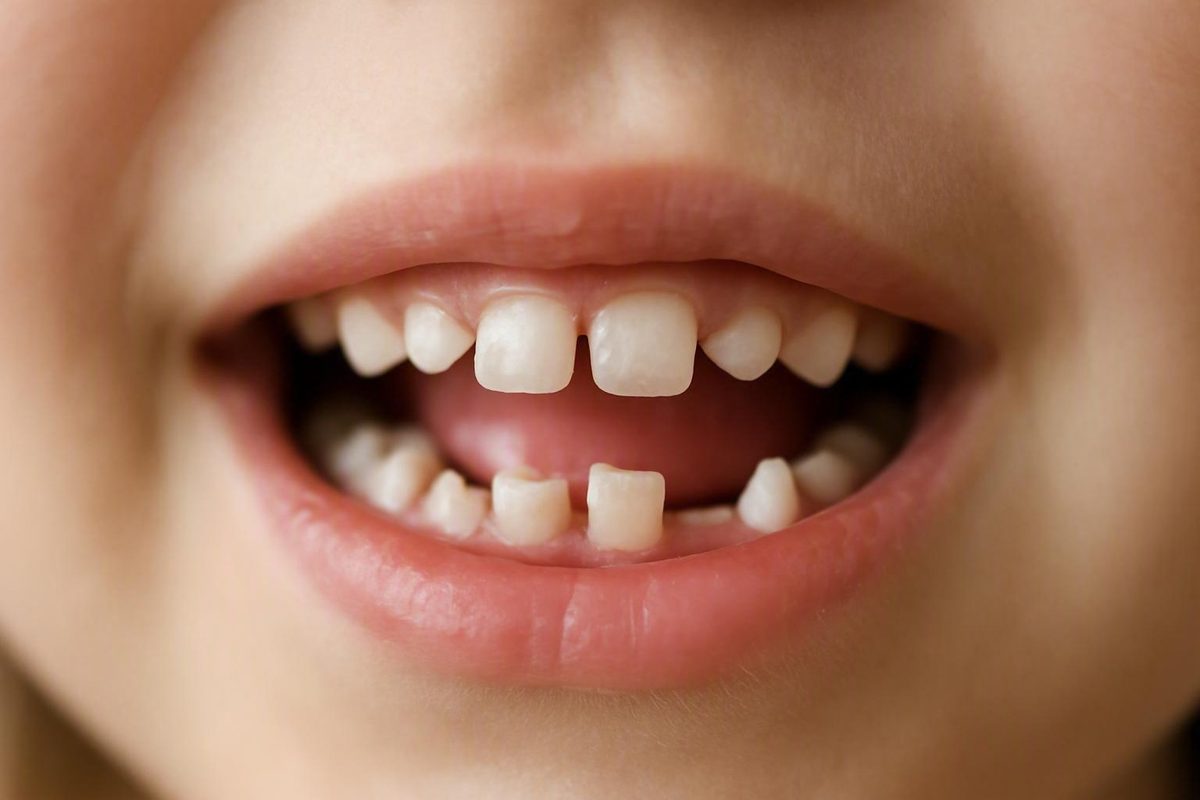
A baby tooth that comes out during the expected stage of dental development has usually completed its role. A tooth lost earlier than expected because of decay, extraction, or injury is different: the permanent replacement may not yet be ready to appear, giving neighboring teeth time to move into the opening.
A space maintainer, sometimes called a dental spacer, can preserve that opening while the permanent tooth develops. But early tooth loss does not automatically mean a child needs an appliance. The decision depends on which tooth was lost, how much room remains, how close the permanent tooth is to eruption, whether nearby teeth have moved, and whether the child can tolerate and care for the proposed device.
What a space maintainer is—and what it can and cannot do
A space maintainer is a custom, passive dental appliance used when a primary—or baby—tooth is lost before its permanent replacement is ready to erupt. “Passive” means that its primary purpose is to preserve existing space, not actively move teeth.
Baby teeth act as natural placeholders in the developing mouth. When one is removed or lost early, teeth beside the opening may tilt or drift toward it. The American Dental Association’s patient guidance on space maintainers explains that this loss of space may leave insufficient room for later-erupting permanent teeth.
A maintainer is intended to limit that movement and preserve room that remains available. That is a narrower—and more realistic—goal than guaranteeing that the permanent tooth will erupt in a particular position.
A space maintainer cannot reliably:
- Make a permanent tooth erupt on schedule
- Guarantee its final angle or position
- Correct every form of crowding
- Eliminate the possibility of braces
- Guarantee that a tooth will not become impacted
- Prevent every future bite or alignment problem
- Reopen a gap that has already substantially narrowed
Premature primary-tooth loss may follow decay requiring extraction, an accident that knocks out or badly damages the tooth, or other health or developmental circumstances. If the permanent successor is absent, the child may need a longer-term restorative or orthodontic plan rather than routine space maintenance tied to an expected eruption date.
It is also important to distinguish a space maintainer from a space regainer. A maintainer passively preserves an opening. A regainer applies active force after a tooth has already moved into the space. A dental laboratory’s description of space maintainers and active space-regaining designs illustrates this mechanical distinction, although the appropriate treatment must be selected clinically.
Does every prematurely lost baby tooth need a space maintainer?
No. Not every child who loses a baby tooth early needs a space maintainer.
Treatment and monitored observation are both possible, depending on the circumstances. The decision cannot be made from the child’s age, a photograph, or the visible gap alone.
Which tooth was lost?
Premature loss of a primary molar toward the back of the mouth is generally more likely to prompt a space-maintenance assessment than loss of an upper front baby tooth. Back teeth may have longer to wait for their permanent successors, leaving more opportunity for nearby teeth to move.
An upper front baby tooth often does not require the same form of space maintenance when adequate room remains. That is a general pattern, not an automatic rule. Location, eruption stage, bite, and individual development still matter.
How much space remains?
A gap that looks open may not contain all the room the permanent tooth will need. The dentist may measure the opening and examine whether nearby teeth have tipped, rotated, or moved.
If useful space remains, a passive appliance may be able to preserve it. If the opening has narrowed substantially, simply maintaining the smaller gap may not provide enough room for the permanent replacement.
How developed is the permanent replacement?
A permanent tooth that appears close to eruption may leave a shorter period during which space needs to be preserved. Observation may sometimes be considered when adequate room remains and the dentist expects the replacement relatively soon.
A tooth at an earlier developmental stage may create a longer interval during which movement could occur. Even so, practice-specific cutoffs such as a particular age, six months, or one year should not be treated as universal treatment thresholds. Dental development varies, and estimated eruption timing is only one part of the assessment.
The decision may include tooth location, spacing, crowding, development, expected eruption timing, examination findings, and imaging, as summarized in this pediatric dental overview of space-maintainer selection.
Is there already crowding?
Existing crowding, unusual eruption patterns, missing teeth, or bite concerns may alter the value of preserving one particular opening. The dentist may need to consider the entire dental arch rather than treating the visible gap in isolation.
A passive maintainer also cannot be expected to reverse movement that has already occurred. When space has been lost, the child may require a different assessment and potentially active orthodontic treatment.
Can the child manage the appliance?
A fixed appliance avoids the need to remember daily wear, but its bands and wires create additional surfaces around which plaque and food can collect. A removable appliance can be cleaned outside the mouth, but it works only when worn as directed and can be lost or damaged.
Oral hygiene, cooperation, sensory tolerance, and the child’s ability to avoid manipulating the device all affect whether a design is practical. These factors do not create one universal rule, but they should be discussed with the treating dentist.
Is observation a reasonable alternative?
Sometimes a dentist may recommend monitoring rather than immediate appliance placement. This does not mean the gap is being ignored. Observation can include clinical measurements, checks for tooth movement, evaluation of permanent-tooth development, and imaging when appropriate.
Conversely, accepting a maintainer does not guarantee that all future orthodontic concerns will be avoided. The supplied evidence consistently describes how these appliances preserve space, but it does not establish a reliable percentage of children in whom treatment prevents later braces, impaction, surgery, or other intervention.
What to bring to the appointment
Before the visit, note:
- Which tooth was lost, if you know
- When it was lost
- Why it was lost, such as decay, extraction, trauma, or unexplained absence
- Whether the gap appears to have become smaller
- Whether the child has pain, swelling, bleeding, or irritation
- Any difficulty brushing or flossing the area
- Any known sensory or cooperation concerns
- Any swallowing or breathing concerns
- Details of previous dental treatment or relevant imaging
How a dentist evaluates the gap and the permanent tooth
The assessment usually has several parts, although the exact workflow varies among dental offices.
-
History of the tooth loss. The dentist asks which tooth was lost, when and why it came out, and whether there was an extraction, injury, infection, or previous restoration.
-
Examination of the opening. The clinician looks at the gap, gums, bite, nearby teeth, and teeth that might support an appliance.
-
Space and crowding assessment. The opening may be measured. The dentist considers whether nearby teeth have tilted or moved and whether crowding exists elsewhere.
-
Hygiene and cooperation review. The team considers whether the child and caregiver can clean around a fixed device or manage the wear, storage, and cleaning of a removable one.
-
Evaluation of the permanent tooth. Its development and expected eruption path help the dentist decide whether preserving the gap is likely to be useful.
X-rays may help show the developing permanent tooth, its approximate eruption position, and changes that cannot be seen during a visual examination. They may also help the dentist assess neighboring teeth and estimate how much dental development remains.
The pattern of missing teeth matters as well. One missing tooth on one side may call for a different design from missing teeth on both sides. Several absent teeth may require a bilateral appliance, a removable device, or broader restorative and orthodontic planning.
The supporting tooth must be suitable
Many fixed maintainers depend on another tooth for support.
A band may be placed around an appropriate supporting tooth. If that tooth also needs full coverage because of damage or decay, a crown-supported design may be considered instead. The available appliance descriptions support this distinction, but the final choice depends on an examination rather than a fixed rule.
Tolerance is not all-or-nothing
A removable appliance requires reliable wear and handling. A fixed appliance avoids that daily wear decision but demands effective cleaning, food precautions, and professional monitoring.
Swallowing, breathing, sensory, medical, or cooperation concerns should be discussed directly with the treating dentist. They may affect design, timing, or whether another approach is more practical, but the supplied evidence does not establish a universal candidacy rule for every child with these concerns.
Neither a photograph, the child’s age, nor an apparently large gap can settle the decision. The dentist needs to assess the missing tooth, remaining room, permanent successor, supporting teeth, bite, hygiene, and the child’s ability to manage treatment.
Fixed and removable space maintainers compared
The two broad categories are:
- Fixed space maintainers, which are cemented to one or more teeth
- Removable space maintainers, which the child can take out when instructed
“Fixed” does not mean permanent. It means the child should not remove the appliance at home. The dental team adjusts or removes it when appropriate.
| Design | Fixed or removable? | Typical situation | How it holds space | Adherence or hygiene demands | Monitoring considerations |
|---|---|---|---|---|---|
| Band-and-loop | Fixed | Often considered for one missing primary tooth on one side | A band surrounds a supporting tooth, and a wire loop spans the opening | No daily wear decision, but careful cleaning is required around the band and wire | Check cement, anchor tooth, loop position, space, and eruption |
| Crown-and-loop | Fixed | Similar to a band-and-loop when the supporting tooth also requires a crown | A crown supports a wire loop across the space | Cleaning is required around the crown margin and wire | Monitor the restored tooth, appliance security, and approaching permanent tooth |
| Distal shoe | Fixed | May be considered after early loss of a second primary molar before the first permanent molar erupts | A component extends slightly below the gum beside the unerupted molar | Care around the gum and appliance is important | Requires close review and may need adjustment as eruption progresses |
| Lower lingual holding arch | Fixed, bilateral | May be considered for lower-jaw space needs involving both sides | Bands on back teeth support a wire along the tongue side of the lower teeth | Multiple components create more surfaces to clean | Monitor bands, wire, teeth, bite, space, and eruption |
| Nance-type appliance | Fixed, bilateral | May be considered for upper-jaw space management involving both sides | Back-tooth bands connect through an upper appliance with palatal support | Cleaning is needed around the bands and palatal component | Check appliance security, hygiene, soft tissue, space, and eruption |
| Removable retainer-like maintainer | Removable | May be considered when a child can follow wear and handling instructions | Acrylic, wires, or clasps preserve selected spaces; artificial teeth may be included | Depends heavily on consistent wear, cleaning, and safe storage | Review fit, wear, damage, cleanliness, and eruption-related changes |
| Pediatric partial denture | Usually removable | One possible approach when several teeth are missing | Replaces the appearance or function of multiple teeth while incorporating space management | Requires reliable wear, cleaning, handling, and storage | Fit and treatment goals may change as the mouth develops |
These are typical descriptions rather than prescribing rules. Practice guidance comparing unilateral and bilateral space-maintainer designs describes the mechanics of band-and-loop, crown-and-loop, lower lingual holding arch, and Nance-type appliances.
Band-and-loop
A band-and-loop is a fixed design for one missing-tooth space. A metal band is cemented around a supporting tooth, while a wire loop crosses the opening and rests against the tooth on the other side.
The loop does not replace the missing tooth or push the permanent tooth into position. It acts as a passive barrier intended to limit movement into the available space.
Crown-and-loop
A crown-and-loop works on the same general principle, but a crown supports the wire instead of a band. It may be considered when the anchor tooth also requires a crown because of decay, damage, or insufficient remaining structure.
Distal shoe
A distal shoe is a specialized design that may be considered when a second primary molar is lost before the first permanent molar behind it has erupted. Because the permanent molar is not yet available to support a conventional loop, part of the appliance extends slightly below the gum.
This design requires particularly close professional oversight. Dental-practice guidance describing the distal shoe and its monitoring needs notes that it may require adjustment and that its position must be checked as the permanent molar erupts.
Lower lingual holding arch and Nance-type appliance
A lower lingual holding arch is a bilateral appliance for the lower jaw. Bands on back teeth are joined by a wire running behind the lower teeth.
A Nance-type appliance is an upper bilateral design, generally attached to back teeth and incorporating a palatal component. Both can address broader space-management needs than a single loop, but the exact indication is case-specific.
Removable maintainers and pediatric partial dentures
A removable maintainer may resemble a retainer and can include artificial teeth. An appliance that is not worn as directed cannot preserve space as intended.
A pediatric partial denture may be considered when several teeth are missing. It is not interchangeable with every space maintainer: replacing multiple teeth and preserving one posterior gap are different treatment problems.
No design is universally best. The appropriate choice balances the number and location of missing teeth, available support, hygiene, cooperation, eruption stage, and monitoring needs.
From fitting to the first few days: what treatment may involve
A typical treatment pathway may include:
- Examination and diagnosis
- Measurements, a digital scan, or an impression
- Appliance design and fabrication
- A fitting visit
- Cementation of a fixed appliance or delivery of a removable one
- Home-care instructions
- Scheduled monitoring and eventual adjustment or removal
Not every office follows the same sequence. Some appliances may be made or fitted as part of another procedure, such as placing a crown on a damaged supporting tooth. One pediatric dental description of the evaluation, scanning, fitting, and instruction process illustrates a common workflow but not a universal protocol.
For a fixed maintainer, the dentist checks the fit and cements it to one or more teeth. For a removable device, the team checks retention and comfort and explains when it should be worn, when removal is allowed, how it should be cleaned, and where it should be stored.
What a child may notice
Possible short-term effects include:
- Awareness of something new in the mouth
- Mild pressure, sensitivity, or discomfort
- Temporary difficulty chewing certain foods
- Temporary speech changes with some removable or palatal designs
- Mild rubbing that needs to be watched
Children do not all adapt within the same period, and placement should not be described as painless for everyone. Persistent pain, repeated rubbing, poor fit, or continuing difficulty chewing should be assessed rather than dismissed as normal adjustment. Post-placement instructions from a pediatric dental practice similarly advise review for persistent discomfort, poor fit, irritation, or chewing difficulty.
First-days checklist
- Follow the treating dentist’s food instructions.
- Offer easier-to-chew foods if the child is uncomfortable.
- Begin brushing and cleaning exactly as demonstrated.
- Remind the child not to push or play with the appliance.
- Inspect the device without pulling on it.
- Do not bend, tighten, recement, or remove a fixed appliance.
- Contact the dental office if discomfort is not improving or the device appears insecure.
For pain relief, ask the child’s dentist, pediatrician, or pharmacist for individualized advice. Medication choice and dosing depend on the child’s age, weight, allergies, medical conditions, and other medicines.
Benefits, limitations, and possible problems
The main potential benefit of a space maintainer is straightforward: it may preserve available room by limiting movement of neighboring teeth while the permanent tooth develops.
That benefit should not be overstated. The supplied sources explain the space-preservation mechanism, but they do not provide strong comparative evidence showing how often an appliance prevents braces, impaction, surgery, or other long-term outcomes compared with monitored observation. Preserving a gap may be clinically useful without guaranteeing a particular future result.
Hygiene can become more demanding
Bands, crowns, loops, wires, acrylic, and palatal components create additional surfaces around which plaque and food may collect. Cleaning may be particularly difficult around an anchor tooth, beneath a wire, or along a crown margin.
Possible concerns include:
- Plaque and food retention
- Decay around a supporting tooth
- Gum inflammation or tissue irritation
- Rubbing of the cheek, tongue, or gum
- Loosening of cement
- Bent or broken components
- Poor fit as the mouth changes
- Poor tolerance or repeated manipulation by the child
The supplied evidence does not establish reliable rates for these problems. They should therefore not be described as inevitable, common, or rare. They are reasons for careful cleaning and monitoring, not proof that an appliance is inappropriate.
Fixed and removable designs have different weaknesses
A removable appliance may be ineffective when it is not worn consistently. It may also be lost or damaged outside the mouth.
A fixed appliance avoids daily wear compliance, but it still depends on:
- Effective cleaning
- Avoiding foods and habits that can pull on it
- Secure cementation
- Monitoring for irritation and decay
- Timely professional adjustment or removal
Distal shoe caution
A distal shoe requires especially close monitoring. Part of the appliance extends slightly below the gum beside an unerupted permanent molar. Its position may need adjustment as the molar erupts, so it should not be treated like a routine loop that can simply be left without appliance-specific review.
Loose components require attention
A loose wire or detached component may no longer preserve space correctly. It may also irritate tissue and can create a swallowing or inhalation concern. The supplied dental evidence identifies this risk but does not establish how often it occurs or provide a complete medical triage protocol.
Caregivers should contact the treating office for instructions rather than attempting a repair.
How to clean and protect a child’s space maintainer
Follow the treating dental team’s appliance-specific instructions. Cleaning and removal rules differ between fixed and removable designs, so general online guidance should not override the instructions provided for the child’s device.
Cleaning a fixed appliance
A child should brush carefully around:
- Supporting teeth
- Band edges
- Crown margins
- Wire loops
- Palatal or tongue-side components
- The gumline around the appliance
Use the flossing technique and tools demonstrated by the dental team. Depending on the design, the caregiver may be shown how to guide floss beneath a wire or clean around a band without pulling on the device.
Children who cannot clean the area thoroughly need caregiver supervision or direct help. Moving a toothbrush only over the visible wire may leave plaque around the supporting tooth and gumline.
Cleaning a removable appliance
Clean a removable maintainer as directed and store it safely whenever removal is permitted. Do not assume that it should come out for every meal: wear and removal schedules vary by design.
If the appliance no longer fits as instructed, do not force it into place. Contact the dental office for advice.
Foods and habits that may cause damage
Commonly discouraged foods and habits include:
- Sticky candy
- Caramel or toffee
- Gum
- Very chewy foods
- Hard items that place concentrated force on a wire or band
- Biting ice, pens, toys, or similar objects
Pediatric dental guidance on protecting a child’s space maintainer also advises avoiding sticky foods, not tugging on the device, maintaining oral hygiene, and attending dental visits.
Children should not push, tug, bend, click, or play with the appliance using their fingers or tongue. Repeated manipulation can loosen or distort components.
Monitoring is part of care
Regular dental visits allow the team to check:
- Supporting teeth
- Gum and soft-tissue condition
- Plaque or tartar accumulation
- Appliance security and fit
- Remaining space
- Development and eruption of the permanent tooth
- Whether adjustment or removal is due
There is no universal follow-up interval. The schedule depends on the appliance, eruption stage, oral hygiene, the child’s needs, and any previous problems. Attend the recommended visits even when the device feels secure and the child has no symptoms.
Loose, broken, painful, or irritating: when to call the dentist
Use the child’s symptoms and the security of the appliance to decide how quickly to act. When uncertain, call the treating office and describe exactly what you see.
| Level | Examples | What to do |
|---|---|---|
| Expected short-term adjustment | Mild initial awareness, brief sensitivity, minor pressure, or temporary speech or chewing changes that are clearly improving; the appliance remains secure | Follow the care instructions and observe. Contact the office if improvement stops or symptoms worsen. |
| Prompt dental contact | Loose band or crown, moving appliance, visible breakage, bent wire, poor fit, persistent or worsening pain, repeated cheek or gum irritation, continuing chewing difficulty, substantial plaque or tartar, suspected decay, or a permanent tooth appearing near the appliance | Contact the treating dental team promptly for instructions and an appointment. Do not wait for a routine visit if the device is insecure or causing persistent symptoms. |
| Emergency evaluation | Difficulty breathing, choking, or suspected inhalation of an appliance or component | Seek emergency medical help immediately. Do not monitor breathing difficulty or suspected airway entry at home. |
Post-placement guidance advises dental review for looseness, breakage, continuing pain, irritation, poor fit, or chewing difficulty.
Do not bend, clip, recement, remove, or repair a fixed appliance at home. Keep the child from manipulating it and call the office for case-specific instructions.
A loose appliance does not prove that the gap will close immediately. It may, however, no longer function correctly and should be evaluated.
The supplied evidence does not establish a single at-home protocol for every swallowed component. If there is choking, difficulty breathing, or concern that the object entered the airway, seek emergency medical help.
Monitoring, removal, and what happens if the gap has changed
A child may wear a space maintainer for several months or a few years. There is no reliable universal duration because removal is tied to dental development rather than a fixed calendar date. Pediatric dental guidance describes space-maintainer wear as ranging from months to years, generally until the permanent tooth is ready to emerge.
The timeline may depend on:
- Development and eruption of the permanent successor
- Whether adequate room remains
- Security and condition of the appliance
- Health of the supporting teeth and gums
- Changes in the child’s bite
- Movement of other teeth
- Appliance design
- The child’s ability to tolerate and clean it
Follow-up is active monitoring
A space maintainer is not simply placed and forgotten. At review visits, the dentist may check:
- Whether bands or crowns remain attached
- Whether wires have bent or broken
- Whether plaque, decay, or gum inflammation is developing
- Whether the appliance is rubbing or pressing on tissue
- Whether the opening remains adequate
- How the permanent tooth is developing
- Whether eruption is approaching the appliance
X-rays may be used when appropriate to assess development and eruption beneath the gum.
When is it removed?
Adjustment or removal is commonly considered as the permanent tooth approaches or begins to erupt. The precise timing depends on the tooth, appliance, available space, and clinical findings.
The dental team—not the parent—should decide when a fixed appliance is adjusted or removed. A removable device should likewise be discontinued only when the treating team advises it.
Contact the office sooner if the permanent tooth appears to be emerging beside, beneath, or against the appliance.
What if the gap has already narrowed?
A passive maintainer cannot be expected to reconstruct room that has already been lost. If neighboring teeth have moved into the opening, the dentist may discuss:
- An active space regainer
- Limited orthodontic tooth movement
- A broader orthodontic assessment
- Restorative planning
- Observation when intervention is not expected to offer sufficient benefit
The appropriate response depends on how much room has been lost, which teeth moved, the position of the permanent tooth, and the child’s overall dental development.
What if no permanent replacement exists?
If imaging indicates that the permanent successor is absent, there is no eruption date that automatically determines when space maintenance should stop.
A prematurely lost baby tooth deserves assessment, but it does not automatically require an appliance. If a maintainer is recommended, cleaning, food precautions, professional monitoring, and timely removal are as important as placement.
This article is educational. Decay Guide states that its material is written by a health writer and is not clinician-reviewed. Only a dental examination—and imaging when appropriate—can determine what a particular child needs.
Frequently asked questions
Does a child need a space maintainer after losing a front baby tooth?
Not necessarily. Premature loss of an upper front baby tooth is often less likely to require space maintenance than loss of a primary molar, particularly when adequate room remains and the permanent replacement is approaching eruption.
That is not a universal rule. The dentist still needs to consider the exact tooth, remaining space, dental-development stage, bite, movement of neighboring teeth, and whether other teeth are missing. Front-tooth loss may also raise separate questions about trauma follow-up, appearance, speech, or function that a space maintainer does not necessarily address.
How long does a space maintainer stay in a child’s mouth?
Wear may last from several months to a few years, but there is no standard duration for every child. The main endpoint is usually the permanent tooth’s development and eruption rather than a predetermined number of months.
The dentist also considers appliance security, the health of supporting teeth and gums, and whether enough room remains. Keep all monitoring appointments and do not remove a fixed maintainer at home.
Can a child eat normally with a space maintainer?
Many children can eat a broad diet after the initial adjustment, but food instructions vary by appliance. Easier-to-chew foods may help when the mouth is temporarily sensitive after placement.
Sticky candy, gum, very chewy foods, and biting hard objects are commonly discouraged because they can pull on or damage components. Follow the treating dentist’s instructions, especially after cementation. Do not assume that a removable device should come out for every meal unless that is part of its prescribed schedule.
Can a space maintainer reopen a gap that has already closed?
Usually not. A conventional space maintainer is passive: it preserves room that remains available.
If neighboring teeth have already moved into the opening, an active space regainer or another orthodontic approach may be needed. The dentist must determine how much space has been lost and whether regaining it is appropriate.
What should I do if a space maintainer comes loose, breaks, or may have been inhaled?
For a loose or broken appliance, stop the child from playing with it and contact the treating dental office promptly. Do not bend, recement, repair, or remove a fixed appliance yourself unless the dentist provides case-specific instructions.
If a component may have been swallowed and the child is breathing normally, contact the dental team and an appropriate medical professional for individualized advice. If there is choking, difficulty breathing, or suspected inhalation into the airway, seek emergency medical help immediately.