
When a Child Loses a Baby Tooth Too Soon: What Comes Next?
Wear can range from several months to a few years. The missing tooth, remaining space and permanent tooth's development shape need and removal.
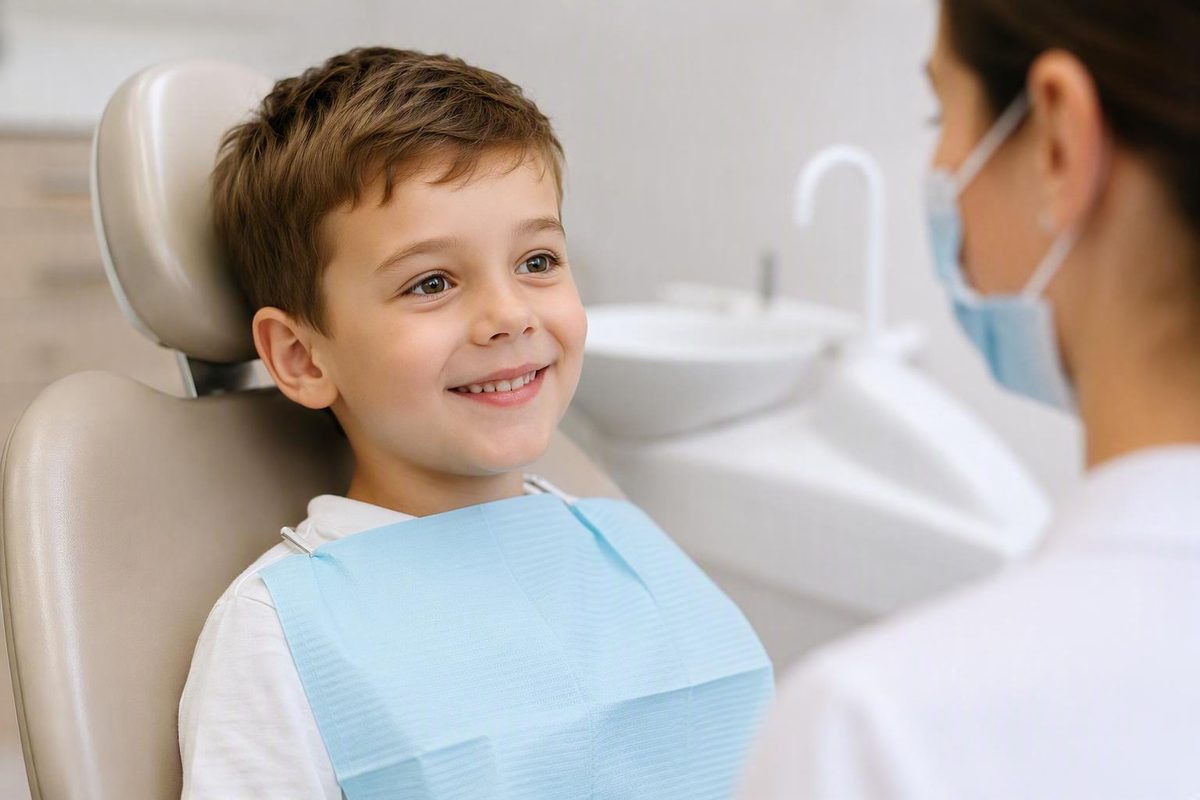
Losing a baby tooth early is a reason to arrange a dental evaluation, but it does not automatically mean a child needs a space maintainer. The appropriate response may be a custom appliance, monitored observation, or another plan based on the tooth involved, how soon its permanent successor is expected, the space that remains, and the child’s overall dental development.
This distinction matters because space maintainers in dentistry have a specific purpose: preserving an existing gap. They do not guarantee that a permanent tooth will erupt normally, that the teeth will remain perfectly aligned, or that orthodontic treatment will never be needed.
This article provides general reference information for parents and caregivers. It cannot determine what is appropriate for an individual child.
What a dental space maintainer does—and what it does not promise
A dental space maintainer is a custom appliance intended to hold the gap left when a primary—or “baby”—tooth is lost before the permanent tooth that will replace it is ready to erupt. Depending on the design, it may be made with metal, acrylic, or a combination of materials.
Primary teeth naturally occupy positions in a child’s developing dental arch. When one is lost at the expected time, its permanent successor may already be close to appearing. When it is lost much earlier, however, teeth next to the opening may move toward it, reducing the room available for the permanent tooth. The American Dental Association’s patient resource explains this space-preserving purpose and why a dentist may recommend a maintainer after premature primary-tooth loss (ADA overview of space maintainers).
Early loss can result from:
- Tooth decay that makes saving the tooth impractical
- An injury that dislodges or seriously damages the tooth
- A necessary extraction
These circumstances do not all create the same risk of space loss. Losing a front tooth is not necessarily equivalent to losing a primary molar, and two children who lose the same kind of tooth may still need different plans.
A space maintainer works mechanically. It occupies or spans the existing gap so neighboring teeth are less able to move into it. In that limited sense, the name is precise: the appliance maintains space.
It therefore should not be treated as a promise that:
- The permanent tooth will erupt along an ideal path
- Crowding or bite problems will never develop
- The child will not need braces
- No further dental treatment will be necessary
- The appliance can be placed and then ignored
The practical first step after premature tooth loss is professional assessment. A dentist can identify the missing tooth, examine the remaining space and neighboring teeth, and consider where the permanent successor is in its development. Early loss alone does not establish that an appliance is necessary.
When a dentist may consider treatment instead of observation
No, not every child who loses a primary tooth early needs a space maintainer. The decision depends on several factors considered together, not on one age or calendar-based threshold.
A dentist may assess:
- Which tooth was lost. Different primary teeth have different relationships to the developing permanent dentition.
- When the tooth was lost. The importance of a gap may depend partly on how long it is expected to remain.
- The permanent successor’s development. A tooth close to eruption presents a different situation from one at an earlier developmental stage.
- How much space remains. The dentist may look for narrowing of the gap or other changes in the arch.
- Whether neighboring teeth have moved. Movement toward the opening can affect the available options.
- The number and location of missing teeth. One isolated gap may require a different response from several gaps or spaces on both sides.
- The condition of possible supporting teeth. A fixed appliance needs suitable teeth or restorations to support it.
- The child’s ability to cooperate. This can influence whether a removable design can be worn consistently and handled properly.
- Other features of dental development. The bite, eruption pattern, and position of developing permanent teeth can all affect planning.
Age is relevant, but it is not sufficient on its own. Children of the same chronological age may be at different stages of dental development. Rules such as “more than six months before eruption” or “under a certain age” are therefore too simple to determine treatment without an examination. Expert-authored patient education likewise describes the decision as individualized rather than automatic (discussion of when a child may need a maintainer).
What an examination can show
A clinical examination allows the dentist to inspect the gap, the teeth on either side, the supporting gums, the bite, and the broader eruption pattern. The dentist may also compare the space with the corresponding area elsewhere in the mouth and look for evidence that adjacent teeth have changed position.
When clinically appropriate, radiographs may provide information that cannot be obtained by looking in the mouth alone. They may help confirm whether the expected permanent successor is present, estimate its position and developmental stage, and assess its relationship to nearby teeth.
Imaging is one part of decision-making, not an instruction that every child must undergo the same set of X-rays. The type and timing of any imaging should follow the treating professional’s assessment of what information is needed.
When observation may be considered
Monitored observation may be an option when the permanent successor appears close to eruption, enough space remains, or the overall assessment does not support placing an appliance. Observation does not mean ignoring the gap. It means the dentist has assessed the situation and intends to monitor development instead of intervening immediately.
Caregivers should not turn apparent closeness to eruption into a home diagnostic rule.
Research findings also have boundaries. The principal systematic review discussed in this article evaluated children with specified premature loss of primary molars. Its conclusions should not automatically be extended to every lost primary tooth, bite pattern, or developmental condition.
The main categories: fixed, removable, unilateral and bilateral
Space maintainers can be classified in more than one way. “Fixed” and “removable” describe how the appliance stays in the mouth. “Unilateral” and “bilateral” describe the area it is intended to serve.
These labels overlap. An appliance can be fixed and unilateral, fixed and bilateral, or removable. The category alone does not identify the best design for a child.
Fixed versus removable
A fixed space maintainer is cemented to one or more teeth. Because the child cannot routinely remove it, its function does not depend on remembering to put it in each day. It still requires careful cleaning, inspection, and professional follow-up.
A removable space maintainer can be taken out as directed, including for cleaning. Some resemble orthodontic retainers or acrylic partial appliances. Removability may make parts of the appliance and mouth easier to access, but it also means the device must fit properly, be worn consistently, and be handled carefully.
Unilateral versus bilateral
A unilateral appliance is generally intended to preserve an isolated space on one side of the mouth. Band-and-loop and crown-and-loop appliances are common examples.
A bilateral appliance spans more of the upper or lower arch or addresses spaces on both sides. Examples include a lower lingual holding arch and upper-arch designs such as the Nance appliance or transpalatal arch.
| Category | How it stays in place | Typical scope | Cooperation required | Practical strengths | Limitations | Monitoring considerations |
|---|---|---|---|---|---|---|
| Fixed unilateral | Cemented to a supporting tooth, commonly with a band or crown | Usually one isolated space | Daily wear does not depend on memory | Compact and remains in place between visits | Can loosen, break, shift, or become difficult to clean around | Check attachment, position, cleanliness, supporting tooth, and eruption |
| Fixed bilateral | Cemented to teeth on both sides of an arch | Multiple spaces, bilateral spaces, or broader arch preservation | Little daily wear compliance, but cleaning remains important | Addresses a wider area | More components and tooth surfaces require cleaning and inspection | Monitor attachments, appliance position, cleanliness, and developing teeth |
| Removable | Retained by fit, clasps, wires, or acrylic components | Selected single- or multiple-space situations | High; depends on consistent wear and careful handling | Can be removed for cleaning and may include artificial teeth | May be lost, displaced, poorly retained, uncomfortable, or worn inconsistently | Review fit, retention, wear, cleanliness, comfort, and development |
| Unilateral | Usually fixed, although the term describes scope rather than attachment | One side or one isolated gap | Depends on the design | Focused treatment area | Not intended for every multi-space situation | Confirm that the intended gap remains preserved |
| Bilateral | Commonly fixed across an arch, although removable designs may cover several spaces | Both sides or a larger part of an arch | Depends on the design | Can address a broader distribution of missing teeth | Wider hygiene and monitoring demands | Inspect the entire appliance and its relationship to multiple teeth |
These categories and their common uses are descriptive, not a hierarchy. A 2025 systematic review favored conventional fixed designs for longer-term stability and lower risk of loss, while removable Hawley-type appliances depended more heavily on cooperation and could present retention, comfort, or displacement limitations. That finding does not make fixed appliances universally preferable; anatomy, intended treatment duration, hygiene, supporting teeth, and the child’s needs still matter (2025 systematic review).
A situation-by-situation guide to common appliance designs
The following are common descriptions, not recommendations. Selecting an appliance requires examination of the child, the gap, the available supporting teeth, and the developing permanent teeth.
| Design | Commonly described situation | Attachment | Removable? | Cooperation needs | Distinguishing feature | Monitoring note |
|---|---|---|---|---|---|---|
| Band-and-loop | One missing primary molar or another isolated posterior space | Cemented band on a supporting tooth with a wire loop across the gap | No | Low for daily wear; cleaning and checks still matter | Simple fixed unilateral design | Inspect attachment, loop position, supporting tooth, cleanliness, and eruption |
| Crown-and-loop | Similar isolated space where the supporting tooth also has a crown | Wire loop attached to a cemented crown | No | Low for wear; cleaning remains important | Uses a crown rather than a separate band as the anchor | Monitor the crown, loop, neighboring tooth, and eruption |
| Distal shoe | Premature loss of a second primary molar before the first permanent molar erupts | Fixed to a supporting tooth, with an extension entering the extraction area | No | Requires close professional follow-up | Subgingival extension is intended to guide the unerupted first permanent molar | Review position, stability, cleanliness, and eruption carefully |
| Lower lingual holding arch | Several missing lower teeth or bilateral lower spaces | Lower molar bands connected by a wire along the inside of the lower arch | No | Daily wear does not depend on memory; cleaning remains necessary | Spans the lower dental arch | Monitor attachments, wire position, cleanliness, and developing teeth |
| Nance appliance | Selected bilateral or multi-space needs in the upper arch | Upper molar bands connected to an acrylic palatal component | No | Cleaning and inspection are required | Acrylic component rests against the palate | Check attachments, acrylic component, hygiene, and eruption |
| Transpalatal arch | Selected upper-arch or bilateral space-management situations | Usually banded to upper molars and connected across the palate | No | Cleaning and inspection are required | Connects the upper molars with a wire | Monitor fit, position, cleanliness, and developing teeth |
| Removable acrylic or Hawley-type maintainer | Selected temporary, multi-space, or replacement situations | Retained by acrylic, clasps, wires, or fit | Yes | High; relies on wear, retention, cleaning, and handling | May resemble a retainer and may include artificial teeth | Review fit, retention, comfort, wear, cleanliness, loss, or displacement |
These design descriptions reflect commonly used terminology and situations reported in pediatric dental education. They do not establish that a particular design is appropriate for a particular child (overview of appliance designs and selection factors).
Band-and-loop
A band-and-loop is a fixed unilateral appliance. A metal band is cemented around a supporting tooth, and a wire loop extends across the missing-tooth space toward the tooth on the other side. The loop acts as a mechanical barrier against closure of the gap.
It is commonly described for a single missing primary molar. Even in that apparently straightforward situation, suitability depends on the location of the gap, the supporting tooth, the room that remains, and the permanent successor’s development.
Crown-and-loop
A crown-and-loop serves a similar space-preserving purpose, but its loop is attached to a crown rather than a separate orthodontic band. It may be considered when the selected supporting tooth also requires that type of restoration.
This illustrates why the missing tooth is only one part of the decision. Two children may have similar gaps, but the condition of the potential anchor tooth may lead to different designs. Whether a tooth requires a crown is a separate clinical decision.
Distal shoe
A distal-shoe maintainer occupies a specialized category. It is commonly described for premature loss of a second primary molar before the first permanent molar has erupted. Unlike an ordinary loop that remains above the gumline, it has an extension that enters the extraction area and is intended to guide the unerupted permanent molar.
That extension is the design’s defining feature and the reason it requires especially careful professional monitoring. Practice-based patient education distinguishes the distal shoe from simpler maintainers and describes additional follow-up needs because it extends below the gumline (clinical description of distal-shoe maintainers).
A distal shoe is not automatically appropriate whenever a second primary molar is removed early. Its use requires individualized assessment of eruption status, the available support, and the child’s ability to return for monitoring.
Lower lingual holding arch
A lower lingual holding arch is a fixed bilateral appliance. Bands on lower molars are connected by a wire that follows the inside of the lower dental arch, behind the lower front teeth.
It is generally described for preserving space across the lower arch when several primary teeth have been lost, spaces occur on both sides, or broader arch preservation is intended. Because it relates to multiple teeth rather than one isolated gap, follow-up considers the entire appliance, its supporting teeth, cleanliness, and dental development.
Nance appliance and transpalatal arch
A Nance appliance is an upper bilateral design attached to molars, with an acrylic component that rests against the palate. It is used in selected situations where upper-arch space is being preserved.
A transpalatal arch is another fixed upper bilateral option. It usually connects the upper molars with a wire extending across the palate. The supplied evidence does not establish that one of these designs is categorically superior; selection depends on the clinical objective and the child’s anatomy.
Removable acrylic or Hawley-type maintainers
Removable maintainers may resemble retainers. Some include acrylic sections, clasps or wires, and artificial teeth. They may be considered in selected temporary or multi-tooth situations, including plans in which replacement of visible missing teeth is part of the objective.
Their removability can improve access for cleaning, but only if the appliance is cleaned and worn as directed. A device that is frequently left out cannot perform its space-preserving function consistently. Retention, comfort, displacement, damage, and loss are also practical considerations.
This is why apparently similar cases may lead to different recommendations. One child may have an isolated gap, a suitable supporting tooth, and a long wait before eruption. Another may have several spaces, a different eruption stage, limited remaining room, or difficulty managing a removable appliance. The visible gap is not the whole assessment.
From early tooth loss to a fitted appliance
The process begins with deciding whether an appliance is indicated at all. If it is, the broad sequence may include:
- Professional examination
- Assessment of dental and eruption development
- Radiographs when clinically appropriate
- Selection of a suitable appliance design
- An impression or digital scan
- Custom fabrication
- Fitting or cementation
- Instructions for care
- Ongoing monitoring
- Adjustment, repair, replacement, or removal when indicated
Examination and development assessment
The dentist first identifies the missing tooth and examines the opening, adjacent teeth, bite, supporting tissues, and other erupting teeth. This assessment may show whether the space has narrowed and whether a potential supporting tooth is suitable.
Calendar age provides context, but dental development is central to the decision. A recently lost primary tooth may have a permanent successor already advancing toward eruption—or one that remains at a much earlier stage.
Possible radiographs
When appropriate, radiographs may help the dentist:
- Confirm the presence and position of the permanent successor
- Estimate its developmental or eruption stage
- Evaluate its relationship to nearby teeth
- Assess the position of neighboring teeth
- Inform later monitoring and removal decisions
Not every child needs the same images or process. Imaging should address a clinical question and form part of a broader assessment rather than substitute for one.
Choosing an appliance
The design must match both the space-preservation objective and the available support. A band-and-loop relies on a suitable tooth that can accept a band. A crown-and-loop may be considered when the selected supporting tooth also requires a crown. Bilateral appliances require support across a wider part of the arch.
Removable appliances introduce questions about retention, expected wear, cleaning, and whether the child can follow instructions consistently. Fixed appliances reduce reliance on daily wear but still require cleaning and professional review.
Impression or digital scan and fabrication
If a custom appliance is selected, an impression or digital scan may be used to record the relevant teeth. A dental laboratory or clinical team then fabricates the device for the child’s mouth.
At fitting, the dentist checks the appliance’s position and relationship to the teeth. A fixed maintainer is cemented to its supporting tooth or teeth; a removable maintainer is fitted, and the family receives instructions for insertion, removal, cleaning, and wear. A pediatric dental-practice description outlines this examination-to-imaging-to-scan-to-placement workflow, although the exact sequence varies by appliance and clinic (example of the evaluation and fitting process).
An adjustment period may occur. Comfort, eating, speech, and the sensation of wearing an appliance vary between children and designs, so placement should not be described as universally painless or followed by adaptation within a fixed number of days.
Most importantly, placement is not the end of treatment. It begins a monitored period during which the appliance, supporting teeth, cleanliness, remaining space, and permanent successor are reassessed.
How long the appliance stays—and why follow-up matters
A child may wear a space maintainer for several months or for a few years. Duration depends on the permanent tooth’s development and eruption, the tooth that was lost, the appliance’s condition, and changes elsewhere in the mouth. Practice-based patient education describes this broad months-to-years range rather than one standard duration (overview of maintainer duration).
There is no universal removal date based solely on:
- The child reaching a certain birthday
- A fixed number of months passing
- The appliance remaining comfortable
- The gap looking unchanged to a caregiver
- The estimate originally given at placement
Dental development continues while the appliance is present. Teeth erupt, the mouth changes, and the permanent successor moves toward the oral cavity. An appliance that was appropriate when placed therefore still requires review over time.
What happens at follow-up
Monitoring allows the dentist to evaluate:
- Whether the appliance remains stable and in position
- Whether its components are intact
- Whether the appliance and surrounding teeth can be kept clean
- The condition of its supporting teeth
- Whether the intended space is being preserved
- How the permanent successor is developing or erupting
- Whether adjustment, repair, replacement, or removal is appropriate
Clinical examination may be sufficient at some visits. In other circumstances, radiographs may contribute information about the permanent tooth’s position or development.
The evidence supplied for this article does not establish one follow-up interval for every appliance and every child. Families should follow the schedule set by the treating professional.
When removal may occur
Patient-education sources describe removal in slightly different ways. Some refer to the permanent tooth approaching eruption, some to the beginning of visible eruption, and others to radiographic evidence that the tooth is ready. Together, these descriptions support a general principle rather than an exact rule: removal is timed according to monitored development.
A fixed appliance should not simply remain in place without continued review. The dentist must determine whether it is still serving its intended purpose as teeth develop and erupt.
Removal is generally performed by a dental professional. The area may still require observation afterward while the permanent tooth continues to emerge.
Daily care and what to do when something goes wrong
Care instructions vary by appliance design, so the treating dentist’s directions take priority.
Caregiver checklist
- Brush carefully around all components. Pay attention to bands, crowns, wires, acrylic edges, supporting teeth, and teeth next to the gap.
- Continue flossing as directed. A dental professional may demonstrate how to clean around components that ordinary floss cannot easily pass.
- Clean removable appliances as instructed. Use the method and products recommended for the specific material and design.
- Support consistent wear. A removable appliance performs its intended function only while it is being worn according to the prescribed plan.
- Handle removable devices carefully. Do not bend wires or clasps or attempt to alter the fit.
- Attend scheduled monitoring visits. Comfort alone does not show whether the appliance and developing teeth remain on course.
- Report important changes. Contact the treating professional if the appliance becomes loose, breaks, falls out, shifts, or causes persistent discomfort.
Children are commonly advised to avoid sticky, chewy, or hard foods that could loosen or damage an appliance, although exact restrictions may vary. They should also avoid manipulating a fixed appliance with their tongue or fingers. These measures are included in pediatric dental-practice guidance for fixed and removable maintainers (care guidance and signs of appliance problems).
Signs that warrant prompt contact
Contact the treating dental professional promptly if the appliance:
- Feels loose
- Breaks or bends
- Falls out
- Shifts from its previous position
- No longer appears to fit
- Causes persistent discomfort
Caregivers should not try to bend, reposition, adjust, or recement a fixed appliance at home.
The supplied evidence does not establish complication frequencies for individual designs or provide a detailed universal protocol for a component that may have been swallowed or inhaled. Do not rely on general online instructions in that situation; obtain professional guidance appropriate to the specific circumstances.
What the evidence can—and cannot—tell parents
Discussions of space maintainers often combine three different questions:
- Does the appliance preserve the intended gap mechanically?
- Does the appliance remain in place without being lost or failing?
- Does treatment prevent braces or other later interventions?
These questions are related, but they are not equivalent.
An appliance could remain intact without proving that it changes long-term orthodontic outcomes. Conversely, breakage, displacement, loss, or inconsistent wear could limit its ability to preserve space even if the design is mechanically suitable. A study measuring appliance survival cannot, by itself, prove that treatment prevents future braces.
What the 2025 review examined
A 2025 systematic review included 11 studies and 479 children ages 3–12 with specified premature loss of primary molars. The evidence comprised seven randomized clinical trials and four observational studies, and the review’s stated outcome centered on appliance survival rather than long-term avoidance of orthodontic treatment.
The authors favored conventional fixed appliances, including band-and-loop and lingual-arch designs, for longer-term stability and lower risk of loss. They described removable Hawley-type appliances as potentially suitable in selected or temporary situations but more dependent on cooperation, with possible limitations involving retention, comfort, and displacement (systematic review methods and findings).
Important limitations include:
- The evidence base contained only 11 studies and 479 children.
- Randomized and observational study designs were combined.
- The review question did not specify a comparator.
- Eligibility focused on specified premature loss of primary molars.
- Children with some dental conditions were excluded, limiting generalizability.
- The supplied findings did not provide pooled effect estimates, confidence intervals, or detailed design-specific failure rates.
- Appliance survival was the principal outcome, not avoidance of future orthodontic treatment.
Fixed appliances may therefore have a practical stability advantage in the circumstances studied, but this does not prove that they are best for every child. A removable option may still be appropriate where the intended duration, anatomy, hygiene access, replacement needs, and ability to cooperate support its use.
Why survival is not the same as long-term benefit
A maintainer that remains in place may carry out its immediate mechanical purpose: resisting movement into a gap. But appliance survival does not directly establish that the child will avoid:
- Braces
- Permanent-tooth impaction
- Extraction
- Oral surgery
- Bite correction
- Future space-regaining treatment
- Substantial dental expense
Most of the detailed practical information available to parents comes from dental-practice education pages. Such pages can help explain how common designs attach and what day-to-day care may involve, but they are not equivalent to independent guidelines or long-term comparative trials. This article therefore uses them for general descriptions while reserving stronger conclusions for the systematic review and ADA patient resource.
The balanced conclusion is straightforward: preserving an existing gap is the established aim of a space maintainer. The size of any long-term reduction in orthodontic treatment remains less certain from the evidence summarized here.
Frequently asked questions
Does every child who loses a baby tooth early need a space maintainer?
No. Early loss warrants professional evaluation, but the decision depends on the missing tooth, remaining space, neighboring-tooth movement, expected eruption timing, dental development, possible supporting teeth, and the practical demands of the proposed appliance.
A dentist may instead recommend monitored observation when the permanent successor is close to eruption or the overall assessment does not favor an appliance. Caregivers cannot determine that reliably from age or elapsed time alone.
Why does a distal-shoe space maintainer require closer monitoring?
A distal shoe has an extension that enters the extraction area below the gumline. It is commonly described for early loss of a second primary molar before eruption of the first permanent molar, with the extension intended to guide that permanent molar.
Because of this specialized design, its position and the tooth’s eruptive progress require careful professional monitoring. It is not automatically appropriate in every case fitting the general description.
Can a space maintainer guarantee that my child will not need braces?
No. A space maintainer is intended to preserve room that already exists. It cannot control every cause of crowding, abnormal eruption, tooth displacement, or bite problems.
Evidence about appliance survival should not be interpreted as proof that space maintenance prevents braces, extraction, impaction, surgery, or other future treatment.
What should I do if a space maintainer becomes loose, breaks or falls out?
Contact the treating dental professional promptly. Do not try to bend, adjust, reposition, or recement a fixed appliance at home.
If a component may have been swallowed or inhaled, obtain situation-specific professional guidance rather than relying on general online instructions.
How long does a dental space maintainer stay in place?
Wear may range from several months to a few years. Removal is based on the permanent successor’s development and eruption, the appliance’s condition, and clinical findings—not solely on the child’s age or a standard elapsed time.
Follow-up allows the dentist to monitor stability, cleanliness, supporting teeth, remaining space, and eruption. Clinical findings and, in some cases, radiographs may help determine when removal is appropriate.
Premature primary-tooth loss should ultimately be viewed as a reason for evaluation, not an automatic reason for treatment. If a space maintainer is selected, the priorities are careful cleaning, avoiding damage, attending follow-up visits, and reporting looseness, breakage, displacement, loss, or persistent discomfort. Preserving space is a reasonable treatment aim, but it is not a guarantee against future orthodontic care.
Decay Guide publishes general dental-health information; it is not a dental practice and does not diagnose or treat patients. Discuss an individual child’s situation with a qualified dental professional.