
Proven Ways to Prevent Cavities in Kids' Teeth Starting from Infancy
White or chalky spots may respond to better plaque removal, fluoride exposure and fewer daily sugar attacks. Brushing starts with the first tooth.
Why Preventing Cavities in Children’s Teeth Matters
Cavities are not a minor cosmetic issue. They are often described as the most common chronic disease of childhood in the United States, and the burden starts early: more than half of children ages 6 to 8 have had a cavity in at least one baby tooth, and more than half of adolescents ages 12 to 19 have had a cavity in at least one permanent tooth. Untreated cavities can cause pain and infection and may interfere with eating, speaking, playing, and learning, while fluoride varnish can prevent about one-third of cavities in baby teeth (CDC oral health tips for children).
That matters even before permanent teeth arrive. Baby teeth help children chew, speak clearly, get good nutrition, and hold space for the adult teeth that come later, so decay in them is not harmless or “temporary” just because those teeth eventually fall out (HealthyChildren.org guidance on preventing cavities in young children).
The practical reason prevention works is simple: cavities do not appear at random. They develop when plaque bacteria repeatedly get sugar or starch, produce acid, and have enough time on vulnerable tooth surfaces to pull minerals out of enamel. Parents cannot control every risk factor, but they can influence the ones that matter most every day: plaque removal, fluoride exposure, snack and drink timing, and getting professional prevention early when a child is higher-risk.
That is why the best prevention plan is usually not a special toothbrush, a trendy “natural” paste, or one perfect dental visit. It is a repeatable family routine. For most children, the highest-return habits are brushing twice a day with fluoride toothpaste, limiting frequent sugar exposure, avoiding bedtime bottles or cups with anything but water, establishing a dental home early, and using professional tools such as fluoride varnish or sealants when a dentist thinks they are warranted.
Prevention also matters because childhood decay tends to cluster. A child who has already had one cavity, early chalky white spots, crowded teeth, deep molar grooves, frequent snacking, low fluoride exposure, or trouble with brushing technique is more likely to keep having problems unless the routine changes. Catching that pattern early is much easier than treating it later.
Daily Brushing with Fluoride Toothpaste: The Foundation
Good oral care starts before the first tooth. Parents can clean a baby’s gums twice daily with a soft, damp cloth, and once the first tooth erupts, brushing twice a day becomes the new baseline (Keeping Your Child’s Teeth Healthy).
The fluoride question is where many parents get mixed messages. Pediatric and dental guidance commonly describes using a tiny rice-grain smear of fluoride toothpaste from the first tooth, then moving to a pea-sized amount for children ages 3 to 6. At the same time, the CDC advises parents to ask a doctor or dentist before using fluoride toothpaste under age 2, which is why it is reasonable to follow your child’s clinician for that early-infant detail rather than internet arguments (Keeping Your Child’s Teeth Healthy; CDC oral health tips for children).
Supervision matters longer than many families expect. Young children may be enthusiastic brush-holders long before they are reliable tooth-cleaners. They tend to miss the gumline, the inside surfaces, and the back molars, and they may swallow more toothpaste than intended. Practical pediatric guidance often advises helping or closely supervising until about age 7 or 8, even if the child wants more independence earlier (Cleveland Clinic tips for preventing cavities in children).
Fluoride toothpaste has the strongest at-home evidence base of any cavity-prevention tool. A 2023 Cochrane review summarized in a dental evidence guide reported a 24% reduction in cavities across 96 studies, and fluoride remains the benchmark against which alternatives are judged (fluoride toothpaste guide summarizing the Cochrane review). That does not mean brushing must be perfect to help. It means that regular fluoride exposure gives enamel repeated chances to remineralize after acid attacks instead of steadily losing ground.
A few details make daily brushing work better in real life:
- Brush twice a day, especially before bed.
- Aim the brush at the gumline and along all tooth surfaces, not just the visible fronts.
-
Use only the recommended amount of toothpaste for your child’s age.
-
If your child just had something acidic, such as citrus or soda, rinse with water and wait a bit before brushing. As explained in our guide to what daily brushing cannot fix, acid softens enamel temporarily, and brushing immediately can add abrasion.
One more point matters for parents who worry they are “not doing enough”: consistency beats intensity. Two ordinary, supervised brushings every day with the right amount of fluoride toothpaste will usually do far more than occasional long scrubbing sessions after a week of rushed routines.
Age-Specific Oral Care Routines for Babies to School-Age Kids
Parents often hear a pile of advice without a clear timeline. The routine becomes easier to follow when you think in stages rather than trying to memorize everything at once.
For babies, start oral care from birth. Wipe the gums twice daily, then begin brushing as soon as the first tooth appears. The first dental visit is commonly recommended by the first birthday or within about six months after the first tooth erupts, because the goal is prevention and coaching, not waiting for pain.
In this first stage, parents are mostly building habits. Babies do not have to “cooperate” for the routine to count. The point is to normalize cleaning, reduce plaque and milk residue on the gums and teeth, and make it easier to notice changes early. If brushing is brief and wiggly, that is still better than doing nothing.
For toddlers ages 1 to 3, the priorities are routine and exposure control. Brush twice a day with the age-appropriate small amount of fluoride toothpaste your clinician recommends, and do not let a bottle or sippy cup of milk or juice turn into a bedtime or nap-time comfort habit.
Toddlers are also the age when many cavity-promoting patterns sneak in: grazing on crackers, frequent juice, sweetened milk, and constant sipping from cups that seem harmless because they are not “candy.” Parents sometimes focus on dessert while missing the repeated exposure that comes from a child drinking or nibbling all day. In practice, that pattern can matter more than the occasional cookie.
For ages 3 to 6, move to a pea-sized amount of fluoride toothpaste. This is also when flossing becomes relevant for many children, because teeth start touching more tightly. Once two teeth touch, the toothbrush is no longer cleaning that contact area. Most children in this range still need hands-on brushing help or very close supervision, even if they can do parts of the routine themselves.
This preschool stage is often the best time to shift from “letting them try” to a two-step model: the child gets a turn, then the adult does the real cleaning. That protects independence without pretending a four-year-old has the dexterity of an adult.
Brushing twice daily with fluoride toothpaste still matters most, but now parents also need to watch for tight contacts that need flossing, new molars that may benefit from sealants, and the slow creep of “healthy” sticky snacks that sit on teeth longer than expected.
It also helps to understand that age labels are approximate. Some seven-year-olds brush very well; some nine-year-olds still need direct help. If a child cannot reliably clean every surface and spit out toothpaste, adult oversight is still doing important work.
Diet Choices to Limit Acid Attacks on Kids’ Teeth
Cavities are partly a hygiene problem, but they are also a timing problem. Johns Hopkins explains that bacteria in the mouth use sugars and starches from foods such as milk, soda, raisins, candy, fruit juice, cereals, and bread to make acids that break down enamel.
What surprises many parents is that frequency often matters more than the total amount. Early-decay guidance for children notes that repeated sugar exposure keeps restarting the acid cycle on the tooth surface, so a child who sips, grazes, or snacks all afternoon may create more cavity risk than a child who eats the same amount in a shorter, structured window.
That does not mean children can never have sweets, crackers, or dried fruit. It means the pattern around those foods matters. A piece of cake with dinner is usually different from nursing a juice box for an hour, falling asleep with milk in a bottle, or getting a steady stream of crackers between meals. Teeth recover between acid attacks; they do not recover well when attacks keep restarting.
The most useful diet changes are usually simple and sustainable:
- Limit grazing between meals.
- Keep sweets with meals rather than as repeated stand-alone snacks.
- Avoid bedtime bottles or cups unless they contain only water.
- Be careful with sticky or slow-clearing foods such as gummies, dried fruit, and crackers.
- Offer water after meals and snacks.
- Use snacks that clear faster or support saliva, such as cheese, yogurt, nuts when age-appropriate, apple slices, carrots, and other crunchy produce.
Parents sometimes ask whether “natural” sugars are safer. For teeth, the better question is whether the mouth bacteria can use the carbohydrate and how long it stays on the teeth. Raisins, fruit snacks, crackers, sweetened yogurt, and juice can all be tough on teeth even if they seem more wholesome than candy.
Tap water matters too. Community water fluoridation is described by the ADA as the single most effective public health measure to prevent tooth decay, with caries reductions of more than 25% in children and adults, and the CDC also notes that children living in fluoridated communities have fewer cavities than children whose water is not fluoridated (review of fluoride alternatives and adjuncts). If your family uses well water or you are unsure whether your tap water is fluoridated, it is worth bringing that up at a dental visit because it can change how much extra fluoride support your child may need.
The biggest dietary win, though, is often not eliminating one “bad” food. It is shrinking the number of daily acid events.
Flossing and Interdental Cleaning Basics
Flossing becomes relevant when teeth start touching, often around age 2 or 3. At that point, the toothbrush still cleans the front, back, and chewing surfaces, but it no longer reaches the contact area between neighboring teeth, which is where plaque and trapped food can sit unnoticed.
That is the main reason flossing enters the routine at all. It is not because every toddler suddenly needs a perfect adult flossing technique. It is because tooth contacts create a new place that bristles cannot reach.
At the same time, flossing deserves a realistic explanation. InformedHealth notes that floss and other interdental tools are useful for cleaning between teeth and for gum health, but they are not as clearly proven for cavity prevention as fluoride toothpaste is (InformedHealth review on preventing tooth decay in children and teenagers).
For parents, the practical takeaway is straightforward:
- Start flossing once two teeth touch.
-
Expect to help for years, not days.
-
Do not treat it as the main anti-cavity tool. Fluoride brushing and snack timing usually carry more of the prevention load.
The exact tool matters less than whether the plaque is actually being disrupted gently and consistently.
This is also an area where perfectionism is unnecessary. If your child resists, cleaning a few tight contacts well is better than pretending a rushed swipe across the front teeth counts as full flossing. The goal is coverage, not performance.
Professional Prevention: Dental Visits, Sealants, and Varnish
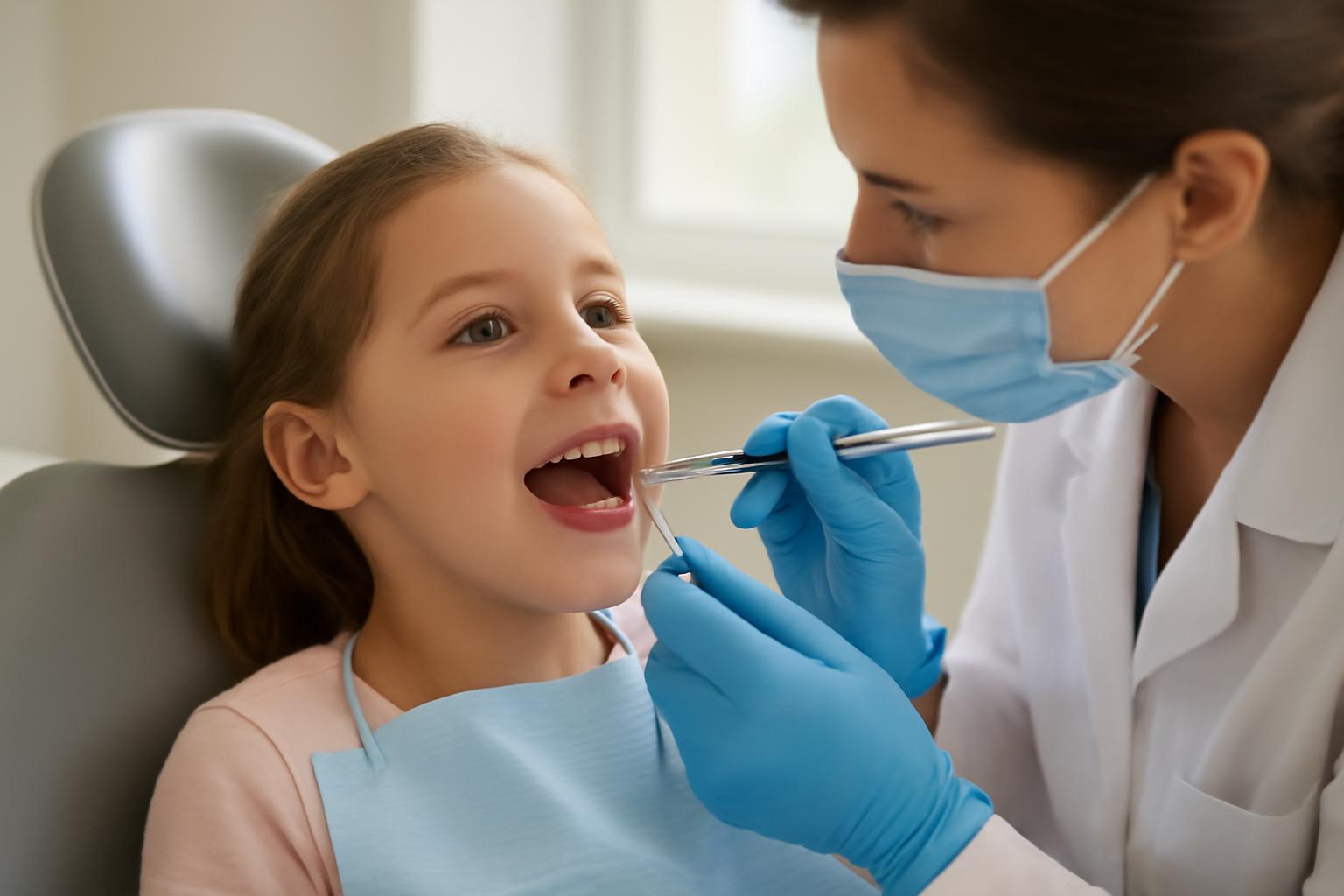
The first dental visit is supposed to start prevention early, not just respond to pain. A visit by age 1, or within about six months of the first tooth erupting, gives parents a chance to review brushing technique, fluoride exposure, feeding habits, and whether the child looks higher-risk for early decay.
After that first visit, many families hear “every six months” as if it were a law of nature. In practice, routine checkups are useful, but the ideal interval can depend on risk. Evidence reviews note that while dental checkups help detect problems early, studies do not show that a rigid six-month schedule benefits every child equally; some children may reasonably need closer follow-up and others less frequent visits (InformedHealth review on preventing tooth decay in children and teenagers).
That risk-based thinking matters. The point of a dental home is not just cleaning. It is matching the prevention plan to the child in front of you.
Two professional tools stand out because the evidence is strong. Fluoride varnish can prevent about 33% of cavities in primary teeth, and dental sealants on back teeth can prevent 80% of cavities.
Sealants are thin protective coatings painted into the grooves of molars, where food and bacteria tend to hide. They do not replace brushing, and they are not used on every surface. But in the deep pits and fissures where decay often starts, they can be one of the most efficient preventive steps a dentist offers. This is especially relevant when permanent molars first erupt.
Professional care also matters because some problems are hard to see at home. Children may not describe sensitivity clearly, and decay between teeth can progress before it becomes obvious in the mirror. A dentist can spot patterns parents miss and adjust the prevention plan before treatment becomes more invasive.
Early Decay Signs and Remineralization Potential
The earliest stage of decay often does not look like a hole. It looks like a white, chalky, dull area on enamel. That appearance matters because it can represent early demineralization rather than a fully developed cavity, and that stage may still be reversible if the damage is limited to enamel.
Parents should think of white spots as a warning window, not a guarantee that home care will fix everything. Once the surface collapses into a true cavity or the decay moves deeper, remineralization alone usually is not enough. As decay progresses, the color may shift from white to light brown and then darker brown or black, and pain or sensitivity to sweets, cold, or heat can suggest deeper involvement.
This is one reason cavities are easy for parents to underestimate. Some start between teeth where you cannot see them well. Some do not hurt at first. Some children describe the feeling vaguely or not at all. By the time there is obvious pain, the problem is often no longer early.
None of those signs automatically means a child needs a filling that day, but they do mean the tooth should be assessed.
While you are arranging that visit, the most useful home steps are the basics: make sure brushing is happening twice daily with the right amount of fluoride toothpaste, cut down the number of daily sugar exposures, stop bedtime milk or juice if it is happening, and keep the area as plaque-free as your child allows. Pediatric sources also note that early treatment options may include plaque removal, remineralization, supplemental fluoride, and sealants depending on the stage and location of the lesion.
The key idea is not that every white spot is an emergency. It is that early decay is the phase when small routine changes can still change the outcome. Later decay is the phase when prevention gives way to repair.
Adjuncts like Xylitol: Evidence and Caveats
Parents who are wary of fluoride often hear about xylitol as a more “natural” substitute. It is better understood as a possible add-on, not a replacement. Review-level guidance describes fluoride as the gold standard for caries prevention and rates the evidence for xylitol gum in children 5 and older as weak rather than strong (review of fluoride alternatives and adjuncts).
That cautious wording matches the research record. A systematic review comparing xylitol with fluoride found high clinical heterogeneity, no basis for a meta-analysis, and high risk of bias across the included trials, with possible publication bias as well (systematic review of xylitol versus fluoride trials). In plain language, xylitol may have some benefit, but the evidence is much less dependable than the evidence for fluoride.
Dose and frequency are the practical sticking points. Some dental reviews suggest roughly 5 to 10 grams a day spread across three or more exposures, usually after meals, for xylitol to have much chance of helping. That is best treated as practical dosing advice, not proof that xylitol works as well as fluoride (xylitol vs. fluoride for cavity prevention).
For families, the reasonable middle ground is:
- Keep fluoride toothpaste as the foundation.
- If you want to try xylitol, think of it as an adjunct for older children who can safely use gum or lozenges.
- Do not expect a token amount in the occasional “sugar-free” candy to matter much.
- Do not use xylitol as a substitute for brushing, fluoride, diet control, or dental visits.
This is one of those topics where the internet often sounds more certain than the evidence. The strongest, most repeatable prevention wins are still the least glamorous ones.
How much fluoride toothpaste for kids by age?
A common age-based guide is a smear about the size of a grain of rice for children under 3, then a pea-sized amount from age 3 through 6, with twice-daily brushing and adult supervision. The supervision part matters because the main risk is not the toothpaste touching the teeth; it is using too much or swallowing more than intended. If your child is very young and you are unsure about fluoride use, ask your dentist or pediatrician, since some guidance varies slightly in children under 2.
When is the first dentist visit for cavity prevention?
A standard prevention recommendation is by age 1 or within about six months of the first tooth appearing. That first visit is mainly about risk assessment and coaching: brushing technique, fluoride exposure, feeding habits, bedtime bottle use, and whether your child may benefit from extra prevention such as varnish or sealants later on. It is much easier to prevent cavities when a dental home exists before anything hurts.
Does fluoridated water help prevent kids’ cavities?
Yes. Fluoridated water is one of the best-supported population-level cavity prevention measures. An ADA-cited evidence summary describes community water fluoridation as the single most effective public health measure to prevent tooth decay and reports caries reductions of more than 25% in children and adults. If your family uses well water or filtered water and you do not know the fluoride level, it is worth asking about that specifically at a dental visit because it affects the rest of the prevention plan.
Can early white spots on kids’ teeth be reversed?
Sometimes. White or chalky spots can be an early sign of enamel demineralization rather than a full cavity, and this stage may respond to better plaque removal, fluoride exposure, and fewer daily sugar attacks. The best odds of reversal are when the lesion is still limited to enamel. Once the surface breaks down or the decay spreads deeper, home care alone is usually not enough. That is why new white spots are worth checking early instead of waiting to see whether they darken or become sensitive (Johns Hopkins overview of tooth decay in children; How to Prevent Cavities in Kids Before They Get Worse).
Are xylitol products a good fluoride substitute?
No. Current evidence does not support xylitol as a fluoride replacement. Review-level guidance still treats fluoride as the gold standard, while xylitol has only weak support as an adjunct in some older children. The systematic review data are especially cautious: the trials were too heterogeneous for meta-analysis and carried high risk of bias. If families use xylitol at all, it makes more sense as a supervised add-on to an already solid routine of fluoride brushing, sugar control, and dental care (systematic review of xylitol versus fluoride trials; review of fluoride alternatives and adjuncts).
Consistent evidence still points to the same core message: children’s teeth cavities prevention works best when families build a routine around twice-daily fluoride brushing, fewer repeated sugar exposures, fluoridated water where available, and early professional care when a child needs extra help. This article is general educational information, not an individual diagnosis or treatment plan. If your child already has pain, swelling, visible holes, or rapidly changing spots, get a dental evaluation for personalized care.