
When Flavored Sparkling Water Poses More Risk to Enamel
Flavored sparkling water can be tougher on enamel when acids or sugar are added. See what Purdue found and why sipping frequency matters.
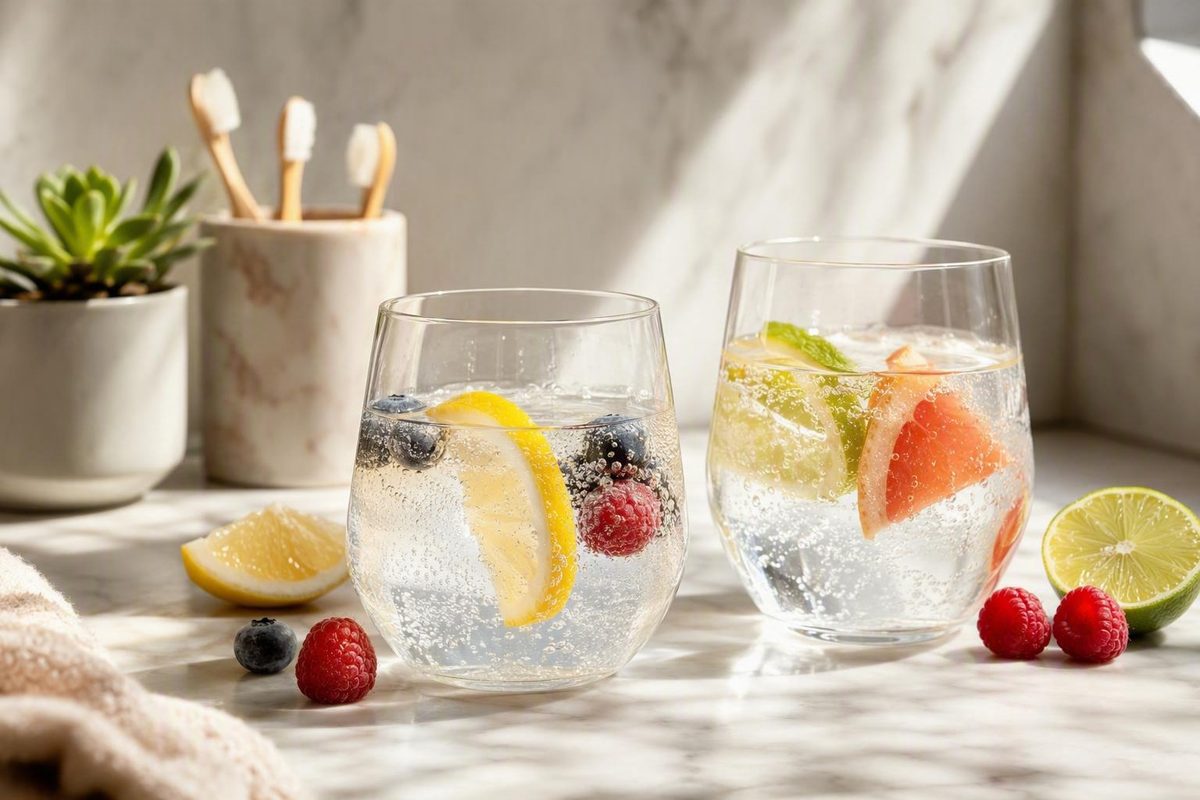
Flavored sparkling water can be worse for teeth than plain sparkling water when it contains citric acid, fruit juice, other added acids, or sugar. Plain, unsweetened sparkling water is generally a lower-concern choice. The recent Purdue study supports that verdict for plain and calcium-fortified sparkling water, but it did not test the acidic flavored cans at the center of the question.
Choose a drink and your daily exposure count; the tool separates measured findings from what remains unknown.
Compare what was measured with what remains unknown. The exposure control does not invent daily minutes below pH 5.5.
Select a heading to sort. Liquid pH and salivary response are different measurements.
| Still water | — | Control condition | Lowest routine concern |
| Plain unsweetened sparkling water | — | Yes; recovered near baseline in ~20 min | Generally low |
| Calcium-fortified sparkling water | — | Yes; recovered near baseline in ~20 min | Generally low in tested exposure |
| Citric-acid flavored sparkling water | ~3 in cited beverage data | — Not tested by Purdue | Greater erosion concern |
| Sugar-sweetened soda | — in supplied report | Greater, more persistent pH change | Higher combined concern |
A drink’s starting pH does not reveal total acidity, citrate concentration, calcium content, or long-term enamel loss.
Sources: Purdue 20-adult salivary-pH experiment reported by News Medical and the American Society for Nutrition; ADA consumer guidance; peer-reviewed commercial beverage-pH study. Values shown as ~ are approximate; — indicates a figure was not supplied.
Added Acids, Not Flavor Names, Create The Main Difference
Carbon dioxide dissolved in water forms weak carbonic acid. That makes plain sparkling water mildly acidic, but it does not make it chemically equivalent to lemon juice, a citric-acid drink, or soda (UCLA Health’s explanation of carbonation and acidity).
A plain product containing only carbonated water presents a different exposure from one containing carbonated water, citric acid, juice, and sugar. Depending on the recipe, a flavored drink may contain named food acids, citrus extracts, fruit juice, sugar, syrup, calcium, or a flavor system whose effect on acidity is not disclosed.
The American Dental Association describes plain sparkling water as generally acceptable while warning that citrus-flavored varieties often have higher acid levels. It identifies plain fluoridated water as the preferred routine beverage and notes that sparkling drinks with added sugar can contribute to cavities (ADA guidance on sparkling water and teeth).
Commercial beverage-pH data place some citric-acid flavored cans near pH 3. That is materially below the pH 5.5 enamel threshold used in the Purdue research. It does not prove that every citrus drink causes erosion, but it explains why findings from plain sparkling water cannot simply be extended to all flavored products.
Flavor names alone are unreliable. A lemon product may contain citric acid or juice, while another product may use a flavoring system without separately listed food acids. Berry, herbal, and other non-citrus flavors can also be acidic. The ingredient list is more informative than the picture or flavor name, though it still does not reveal the finished drink’s pH or total acidity.
Erosion And Cavities Are Separate Dental Problems
Enamel erosion is the chemical dissolution of tooth structure by acid. It does not require bacteria or sugar. A sugar-free drink can therefore have erosive potential if its formulation is sufficiently acidic.
Cavities usually involve oral bacteria metabolizing fermentable carbohydrates and producing acids. A sweetened sparkling drink can expose enamel to acid already in the beverage while supplying sugar that bacteria use to produce more acid.
This creates four practical categories:
| Drink Type | Erosion Concern | Sugar Pathway |
|---|---|---|
| Still fluoridated water | Lowest routine concern | No |
| Plain unsweetened sparkling water | Generally low | No |
| Sugar-free drink with added acid or juice | Potentially greater | No added-sugar pathway |
| Drink with acid and sugar | Higher combined concern | Yes |
“Unsweetened” does not mean neutral, while “acidic” does not necessarily mean sugary. Sugar-free labeling answers the cavity-related sugar question but does not establish that a drink is gentle on enamel.
Purdue Found A Short-Lived Change From Plain Sparkling Water
The Purdue experiment involved the same 20 adults drinking plain water, regular unsweetened sparkling water, calcium-fortified sparkling water, and sugar-sweetened soda. It was presented at NUTRITION 2026, held July 25–28, rather than published as a peer-reviewed paper in the material available for review.
The plain and calcium-fortified sparkling waters kept salivary pH above 5.5. Regular sparkling water lowered salivary pH at the two-minute measurement, while the calcium-fortified version produced a decrease at five minutes. In both conditions, salivary pH returned close to baseline within about 20 minutes.
Soda caused a greater and more persistent short-term change than plain water. These results support the limited conclusion that unsweetened sparkling water disrupts mouth acidity less than sugar-sweetened soda under the tested conditions (News Medical’s report of the 20-adult experiment).
A second report describes the same experiment, not an independent trial. It also says the sparkling-water conditions returned close to starting pH within about 20 minutes, while soda kept salivary pH lower than plain water at the early and 20-minute measurements (SciTechDaily’s report attributed to the American Society for Nutrition).
The study did not compare plain sparkling water with citric-acid flavored sparkling water. It measured saliva rather than enamel loss, involved a small sample, and did not assess cavities or long-term dental outcomes. Its reassuring result for the tested waters cannot establish that a flavored can near pH 3 behaves the same way.
It also does not provide a scientifically measured number of daily minutes below pH 5.5 for repeated sipping. The calculator above therefore reports that value as unknown rather than multiplying one short experiment into an unsupported daily estimate.
Beverage pH Screens For Acidity But Does Not Predict Damage Alone
In a study of 379 commercially available beverages, researchers measured every product’s pH three times. Ninety-three percent of the tested drinks had a pH below 4, although the sample covered numerous beverage categories rather than a direct plain-versus-flavored sparkling-water comparison (peer-reviewed beverage-pH study).
Lower pH generally signals greater potential for acid-driven mineral dissolution, but pH is only a screening measurement. Two drinks starting at the same pH may differ in acid type, citrate concentration, calcium content, total acidity, and interaction with saliva.
Citrate deserves particular attention because it can bind calcium, a component of tooth mineral. A single pH reading does not capture that behavior. This is why confident rankings such as “all lemon is worse than all berry” go beyond the available evidence.
Independent product-level comparisons would ideally measure pH, total acidity, citrate, mineral composition, and enamel effects under realistic exposure conditions. Those figures are not available for every flavored sparkling water. Without them, a label can support broad sorting but not a precise brand ranking.
Laboratory Enamel Results Do Not Reproduce Ordinary Drinking
Laboratory studies can show whether a formulation changes enamel under controlled exposure, but they cannot reproduce saliva flow, swallowing, meal timing, fluoride exposure, or the brief contact involved in normal drinking.
One study assigned 75 extracted premolars to a water control or carbonated-water groups differing in carbonation and calcium. Researchers immersed the specimens for 15 minutes three times daily over seven days. Most carbonated-water groups showed greater microhardness changes than the control, but the experiment focused on etched or sealed enamel relevant to orthodontic treatment and used an intensive exposure schedule (laboratory study of carbonated water and treated enamel).
The ADA also discusses extracted-tooth research in which sparkling water and ordinary laboratory water had about the same effect on enamel. Different enamel conditions and exposure designs make those findings unsuitable for direct comparison. Together, they show why a laboratory result should not be translated into “normal sparkling-water drinking damages everyone’s teeth.”
The evidence types answer different questions:
| Evidence | Useful For | Cannot Establish Alone |
|---|---|---|
| Beverage pH | Initial liquid acidity | Long-term enamel loss |
| Salivary pH | Short-term mouth response | Cumulative damage |
| Enamel laboratory test | Effects under fixed exposure | Ordinary human use |
The combined evidence supports a cautious spectrum: plain carbonation introduces mild acidity, added food acids can raise erosive potential, sugar adds a separate cavity mechanism, and repeated exposure may increase contact time. The size of the long-term difference between plain and flavored sparkling water remains uncertain.
The Ingredient List Can Separate Lower- And Higher-Concern Formulas
Start with added sugar. Sucrose, glucose, fructose, corn syrup, and other sugars or syrups mean the drink is no longer equivalent to plain unsweetened sparkling water from a cavity perspective.
Next, look for citric acid, malic acid, phosphoric acid, fruit juice, juice concentrate, or citrus extracts. These are reasonable signals of greater acidity, but their presence does not disclose concentration, pH, or total acidity. Their absence does not prove that the finished drink is neutral.
“Natural flavors” is inconclusive. The term does not reveal the complete flavor system or provide a dental measurement. A product listing only carbonated water and natural flavors may be closer to plain sparkling water than one listing citric acid and juice, but the label alone cannot confirm that.
Calcium may modify a drink’s behavior, as reflected in the calcium-fortified condition in the Purdue experiment. The available evidence does not provide a universal amount of calcium that makes an acidic flavored drink non-erosive.
A defensible label-based sort is:
- No sugar and no named acid: generally closer to plain sparkling water.
- Named acid, juice, or citrus extract without sugar: greater potential erosion concern.
- Sugar combined with acid or juice: combined erosion and cavity concern.
- Only “natural flavors”: acidity remains uncertain.
Repeated Sipping Extends The Exposure Pattern
The same can can create different contact patterns. Drinking it with lunch and returning to plain water creates a defined exposure. Taking small sips throughout the afternoon repeatedly reintroduces the beverage to tooth surfaces.
The Purdue result showed recovery close to baseline within about 20 minutes after the tested sparkling-water exposures. It did not test a new sip every few minutes or determine how long the mouth would remain below pH 5.5 after repeated flavored-water exposures. A daily threshold-minute estimate would therefore be speculative.
The ADA advises consuming acidic citrus-flavored sparkling water in one sitting or with meals rather than sipping it throughout the day. Avoiding swishing or holding the drink around the teeth also limits direct contact. Following it with plain water can help clear the mouth, but it does not neutralize the original formulation or guarantee that erosion will not occur.
Some guidance advises against brushing immediately after an acidic drink because recently softened enamel may be more vulnerable to abrasion. The supplied evidence does not establish a precise universal waiting period. What Daily Brushing Cannot Fix explains why brushing addresses plaque but does not directly reverse acid erosion.
Existing Enamel Wear And Dry Mouth Raise The Stakes
Saliva dilutes and clears acids, so reduced saliva can make repeated acidic exposures more concerning. Existing enamel wear, tooth sensitivity, and exposed root surfaces associated with gum recession also justify greater caution.
People with etched or treated enamel during orthodontic care may not respond exactly like people with intact untreated enamel. The extracted-premolar experiment supports that distinction, although it does not prove that sparkling water caused any individual’s symptoms.
Still fluoridated water remains the preferred routine beverage. If bottled, filtered, or sparkling water routinely replaces fluoridated tap water, the person may also lose a source of fluoride exposure that supports cavity prevention. That is a separate issue from the direct acidity of carbonation.
Plain Sparkling Water Remains The Better Fizzy Default
Plain, unsweetened sparkling water is generally preferable to sugar-sweetened soda and lower concern than a flavored product containing citric acid, juice, or sugar. The Purdue experiment reinforces that distinction but cannot answer for products it did not test.
Sugar-free flavored sparkling water is variable rather than universally safe or harmful. If it contains added food acids or citrus ingredients, treat it as a potentially more erosive choice even though it avoids the added-sugar cavity pathway.
Plain sparkling water also does not cause cavities through the classic bacterial cavity pathway in the same way as a sugary drink. Its mild carbonic acidity raises a separate erosion question. Choosing a plain formulation, drinking acidic varieties in a defined period, avoiding swishing, and keeping fluoridated still water in the routine address the differences the evidence actually supports.