
A Practical Routine for Home Care, Dental Visits, and New Symptoms
Brush twice daily for about two minutes, clean between teeth every day, follow a dentist-agreed visit schedule, and act on new symptoms.
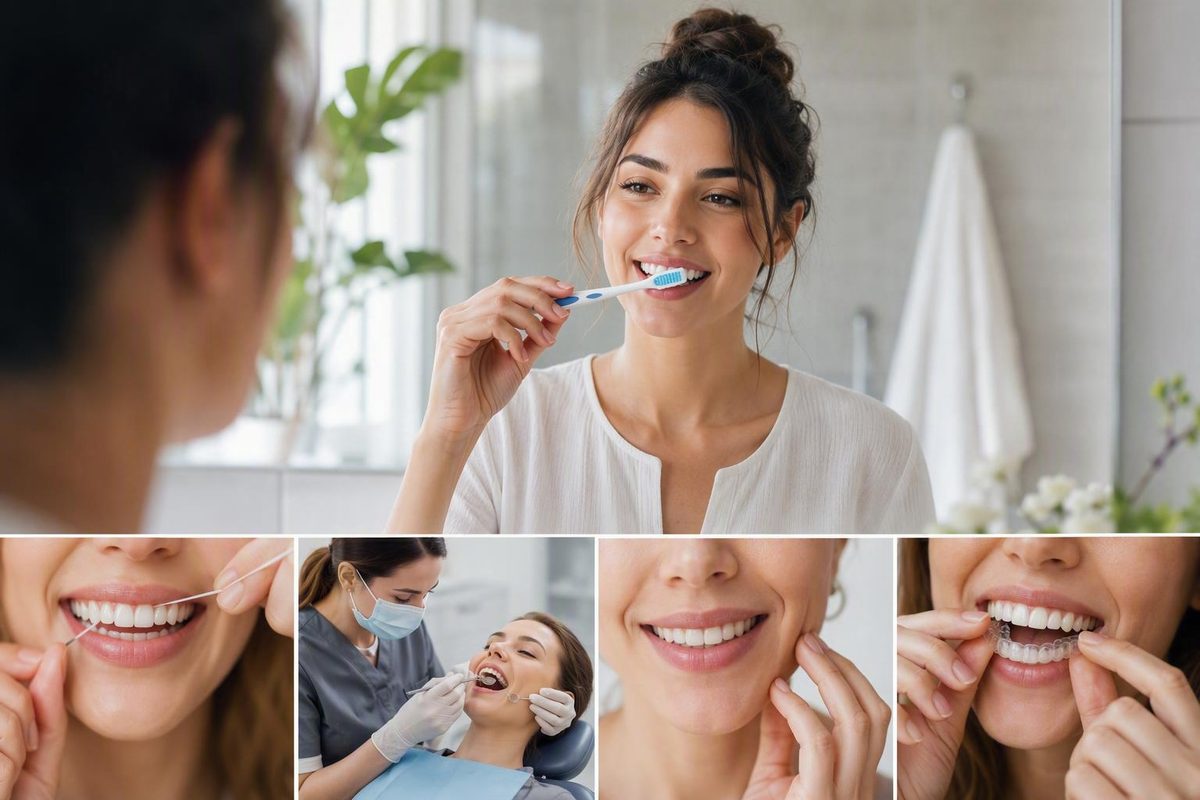
Routine dental care has four parts: brush twice daily for about two minutes with fluoride toothpaste, clean between your teeth every day, attend professional examinations and cleanings on schedules agreed with your dentist, and seek care between visits when new symptoms appear. It is not simply a matter of seeing a dentist every six months. A complete routine combines consistent home plaque control, risk-based professional assessment, and timely attention to problems.
Routine dental care at a glance
Use this four-part checklist:
- Brush twice a day: Brush for about two minutes with fluoride toothpaste and a soft-bristled toothbrush.
- Clean between teeth daily: Choose floss, an interdental brush, a holder, a threader, a pick, or a water flosser that you can use safely and consistently.
- Schedule professional care: Have dental examinations and professional cleanings as recommended for your oral health and risk. These services may follow different schedules.
- Respond to symptoms: Do not let a future routine appointment delay assessment of pain, swelling, persistent bleeding, a broken or loose tooth, or another new concern.
The brushing and interdental-cleaning recommendations are supported by the American Dental Association’s home-care guidance.
Routine dental care therefore includes both home care and periodic professional prevention and assessment. Daily cleaning controls plaque in the places your tools can reach. Professional visits provide an opportunity to review concerns and health changes, examine the teeth, gums, mouth, and oral tissues, assess risk, give preventive guidance, perform an indicated cleaning, and plan treatment if necessary.
These steps support plaque control and earlier identification of problems, but they cannot guarantee that cavities, gum disease, tooth loss, or dental treatment will always be avoided.
Important: This article provides general reference information, not a diagnosis, treatment plan, or personalized recall schedule. Decay Guide is an independent information publisher, not a dental practice, and does not provide individual dental advice.
The daily home-care checklist
A practical daily routine does not require many products. The core is careful brushing and interdental cleaning.
Brush twice daily for about two minutes. Use fluoride toothpaste and a soft-bristled toothbrush. Apply gentle pressure rather than scrubbing. Cover the outer, inner, and chewing surfaces of every tooth, and angle the bristles toward the gumline. For the inner surfaces of the front teeth, turning the brush vertically can make access easier. Replace a toothbrush or powered brush head every three to four months, or sooner if the bristles become matted or frayed, as advised in the ADA’s toothbrush guidance.
Clean between teeth once a day. Toothbrush bristles do not reliably clean every contact and space between neighboring teeth. The right interdental tool depends on the shape of those spaces, dental work or appliances, hand control, comfort, and whether you will use it regularly.
| Tool | Often practical for | Main consideration |
|---|---|---|
| String floss | Tight contacts between teeth | Technique-sensitive; ease it through rather than snapping it into the gums |
| Floss holder or threader | Limited reach, bridges, braces, or difficulty managing loose floss | Choose a design that reaches the relevant surfaces without forcing it |
| Interdental brush or pick | Larger spaces, exposed areas, or some appliances | Size matters; it should fit without being forced |
| Water flosser | Braces, implants, limited dexterity, or preference for powered cleaning | Technique and access still matter; use it consistently as directed |
No option is universally best. If one tool is painful, repeatedly catches, or cannot reach the intended area, ask a dental professional to demonstrate an alternative. Evidence varies by device and technique, so the practical choice is a method suited to your needs that you can perform regularly.
A manual toothbrush and a powered toothbrush can both remove plaque effectively when used properly. A powered brush may be easier for someone with arthritis, reduced grip or coordination, braces, or other dental appliances. Whichever type you use, good coverage, light pressure, and a repeatable routine matter more than buying the most elaborate model.
What home care can—and cannot—remove
Dental plaque is a sticky bacterial film associated with tooth decay and gum disease. Brushing and interdental cleaning are intended to disrupt and remove it regularly. If plaque remains, it can harden into calculus, commonly called tartar. Ordinary brushing cannot remove established tartar; that requires professional instruments and cleaning, according to NIDCR oral-hygiene guidance.
This is why careful home care and professional care are complementary rather than interchangeable. Brushing does not reliably clean every interdental surface, while a professional cleaning does not replace what must happen at home each day. Decay Guide’s article on what daily brushing cannot fix examines that distinction in more detail.
Existing dental work does not make a tooth immune to future problems. Teeth with fillings can develop decay elsewhere or around vulnerable margins, and exposed roots can decay as well.
Mouthwash is optional support, not a substitute for brushing or interdental cleaning. A fluoride or antimicrobial rinse may be useful for a defined problem or risk, but neither is a universal requirement. Ask what the product is intended to achieve, how it fits with your toothpaste, and whether it is appropriate for your age and oral health.
Daily cleaning works best alongside a few broader preventive habits:
- Limit frequent sugary snacks and drinks rather than focusing only on the total amount.
- Avoid tobacco.
- Moderate alcohol use.
- Drink fluoridated tap water where it is available and appropriate.
- Address persistent dry mouth with a dentist or another relevant health professional rather than simply trying more mouthwash.
These habits reduce preventable exposures, but they do not replace an examination when a tooth, gum, or oral-tissue problem develops.
What happens at a routine dental visit
A routine check-up commonly starts with your current concerns and relevant medical and dental history. The dentist may ask about medicines, symptoms, diet, tobacco and alcohol use, and how you clean your teeth. The clinical examination typically covers the teeth, gums, mouth, and other visible oral tissues. The findings inform a risk assessment, preventive advice, and the timing of the next review.
A “dental visit” can contain several distinct services. They do not all have to happen at every appointment.
| Service | Purpose | Automatic at every visit? |
|---|---|---|
| Examination | Review concerns and history; assess teeth, gums, oral tissues, and risk | No; timing follows the agreed recall plan |
| Professional cleaning | Remove deposits that home tools cannot adequately remove | No; frequency depends on clinical need |
| Dental X-rays | Assess areas or conditions not fully evaluated by visual examination alone | No; used when clinically indicated |
| Preventive fluoride | Provide additional protection for someone with a relevant decay risk | No; targeted to need |
| Restorative or periodontal treatment | Treat decay, damaged teeth, or gum disease | No; this is treatment, not the check-up itself |
X-rays should not be assumed at every visit or taken on one fixed timetable for everyone.
Likewise, a check-up is not the same as treatment. Fillings, extractions, and other restorative or periodontal procedures may need separate appointments. NHS guidance on dental check-ups explicitly distinguishes routine check-ups from treatment and emergency appointments.
Five useful questions to bring to a visit are:
- What is my current risk of cavities and gum disease?
- When should my next examination be?
- Does my professional-cleaning schedule differ from my examination schedule?
- Are dental X-rays indicated now, and why?
- Would additional fluoride or a different home-care product help with my specific risk?
How often should routine check-ups occur?
No—every person does not automatically need a dental check-up every six months. Six months may be appropriate for some people, but no single interval has been established as optimal for everyone. A dentist should set and periodically reconsider the interval using current oral health, previous disease, likely future risk, clinical findings, and response to care.
Public guidance also differs by jurisdiction:
| Guidance | Population | Stated approach |
|---|---|---|
| CDC consumer guidance, United States | Adults | Visit a dentist at least once a year |
| NICE-based NHS guidance, England | Adults | Risk-based recall of about 3 to 24 months |
| NICE-based NHS guidance, England | Under 18 | Recall interval up to 12 months |
The U.S. recommendation comes from CDC oral-health guidance for adults; the England ranges are described in NHS England’s explanation of NICE recall intervals.
The CDC’s annual advice is broad consumer guidance, not proof that exactly 12 months suits every adult. It also advises dental attendance for adults with dentures or complete tooth loss.
Under NICE-based guidance, the longest adult interval—24 months—is intended only for selected people who have repeatedly maintained good oral health. It is not a goal everyone should try to reach. People with greater needs may be recalled much sooner.
These recommendations come from different health systems and should not be treated as interchangeable coverage or access rules. More importantly, a table cannot determine your interval. Your next examination should be agreed after professional assessment.
The examination schedule and cleaning schedule also need to be separated. Someone may not need a cleaning at every examination, while another person may require cleaning or periodontal maintenance more often than a full recall examination. There is no single professional-cleaning frequency that applies to everyone.
Factors that can change your care schedule
Use the following as a discussion checklist, not a self-scoring diagnostic tool. Tell your dentist if any apply:
- active or recurrent cavities
- gum disease or a history of significant gum problems
- exposed roots or gum recession
- persistent dry mouth
- smoking or other tobacco use
- diabetes
- pregnancy-related gum or oral changes
- previous extensive dental disease
- difficulty brushing or cleaning between teeth
- braces, bridges, implants, dentures, or other complex appliances
These factors do not dictate one schedule by themselves. Their significance depends on the examination, disease activity, home care, medicines, health history, and whether the condition is stable.
People receiving care for gum disease may be seen more frequently. As one common example—not a universal rule—Cleveland Clinic describes visits every three to four months for many people with gum disease in its oral-hygiene overview. The appropriate interval can differ according to diagnosis, treatment phase, and response.
A person at higher risk of decay may also be offered professional fluoride or advised to use a targeted fluoride product. That decision should identify the specific goal, product strength, frequency, and duration rather than assuming everyone needs an extra rinse or high-fluoride toothpaste.
The following are discussion examples, not personal recommendations:
- A low-risk adult with stable findings and consistently good oral health may be offered a longer interval between examinations.
- Someone with active decay or gum disease may need treatment plus shorter reviews while the dental team evaluates the response.
- Someone with limited dexterity may benefit from adapted handles, a powered toothbrush, a floss holder, an interdental brush, or a water flosser.
Recall intervals are adjustable. They can be shortened if disease or risk increases and extended if oral health remains stable.
When not to wait for the next routine appointment
A recall date is for planned preventive assessment. It is not a safe-waiting deadline for a new symptom.
| Situation | Examples | What to do |
|---|---|---|
| Routine recall | No new concern; following an agreed examination or cleaning plan | Keep the planned appointment |
| Contact a dental professional promptly | Toothache, persistent bleeding gums, swelling, sensitivity, a loose or broken tooth, gum recession, persistent bad breath, jaw pain, or a mouth sore that does not resolve | Contact a dentist or local urgent dental service rather than waiting for recall |
| Seek emergency assessment | Swelling affecting breathing or swallowing, swelling near an eye, uncontrolled bleeding, serious facial trauma, or suspected jaw fracture | Use the appropriate emergency medical or dental service now |
The prompt-contact symptoms above are among the warning signs identified in Cleveland Clinic’s oral-hygiene guidance. Airway-threatening swelling, eye-area swelling, uncontrolled bleeding, serious mouth or facial injuries, and suspected facial or jaw fractures warrant emergency assessment under NHS 111 Wales dental emergency guidance.
This table guides the level of response; it does not diagnose the cause. Do not assign yourself a fixed “safe” waiting period based on symptom severity alone. A professional can determine whether you need urgent treatment, a prompt examination, or a standard appointment.
Access routes vary. Depending on where you live, urgent help may come from your dental practice, an out-of-hours dental line, a medical urgent-care service, or an emergency department.
A practical rule ties the routine together: keep daily care simple, follow a dentist-agreed schedule based on risk rather than the calendar alone, and never let a planned recall date delay assessment of a new symptom. At your next visit, ask separately when you need your next examination, professional cleaning, X-rays, and any targeted preventive measure.
How much fluoride toothpaste should a young child use?
Begin brushing when the first tooth erupts. For a child younger than 3, use a smear of fluoride toothpaste about the size of a grain of rice. From age 3, use a pea-sized amount. A caregiver should assist or supervise until the child can reliably spit out excess toothpaste, while following any different instructions from the child’s dentist. These amounts and supervision recommendations come from the ADA’s toothbrush guidance.
Do people with dentures or no natural teeth still need dental visits?
Yes. Dentures and complete tooth loss do not eliminate the need for professional oral examinations and screening for oral-health problems. The appropriate schedule is individualized, but the CDC advises adults—including people with dentures or no natural teeth—to visit a dentist at least annually.
Is a powered toothbrush better than a manual toothbrush?
Not universally. Manual and powered toothbrushes can both remove plaque effectively when used correctly. A powered brush may be easier for someone with limited dexterity, reduced grip, or dental appliances. The better choice is usually the soft-bristled brush that lets you reach all surfaces gently for about two minutes, twice a day, and that you will use consistently.