
Sugar's Path to Cavities: Bacteria Turn It Into Enamel-Eroding Acid
Frequent snacks, slowly sipped sweet drinks, and back-to-back carbs let plaque bacteria make acid again before the mouth returns to neutral.
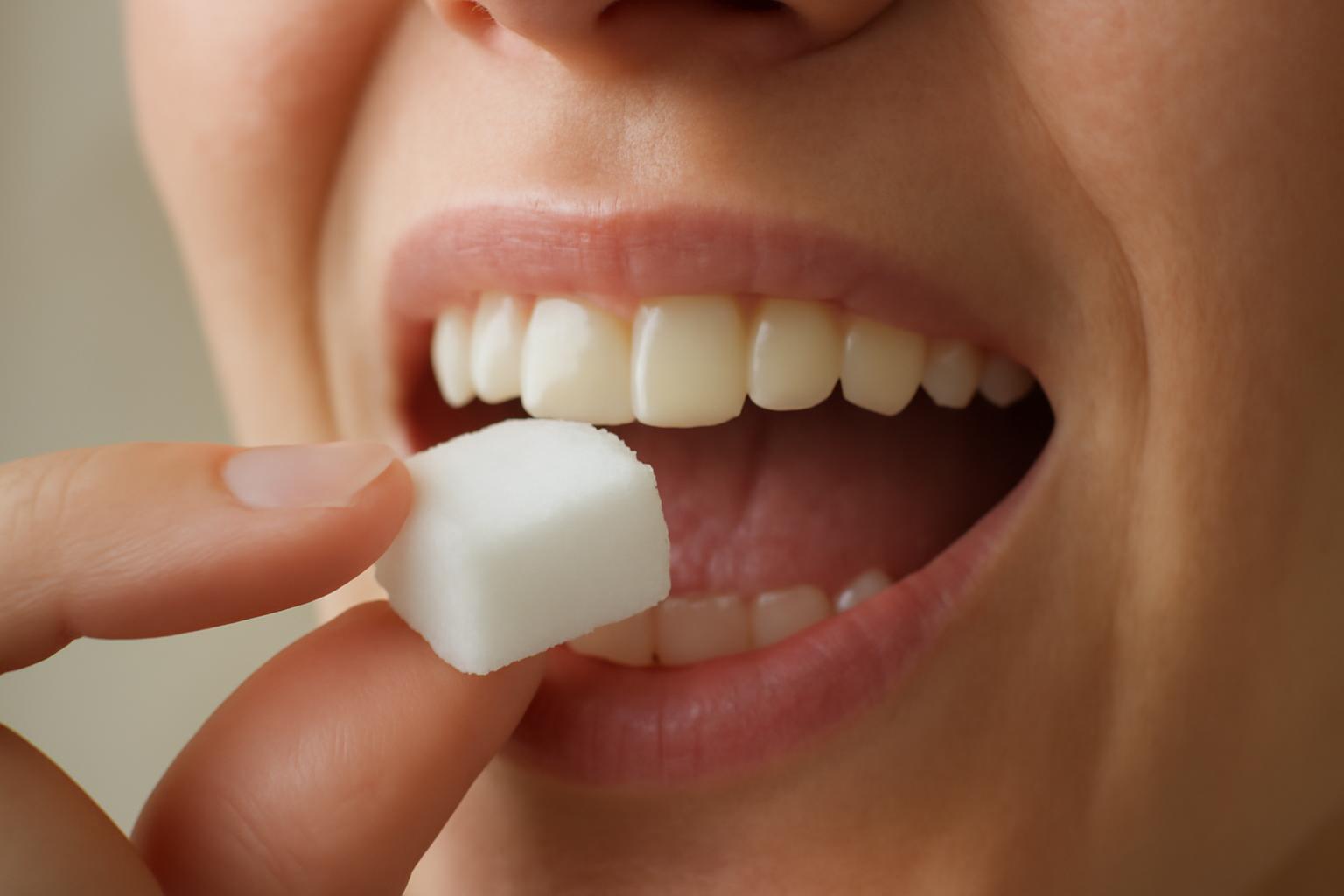
If you want to understand how sugar causes tooth decay, the shortest useful answer is this: sugar usually does not chemically bore holes into teeth by itself. The usual pathway is indirect. Plaque sits on the tooth surface, bacteria inside that plaque use sugars and other fermentable carbohydrates as fuel, and the acids they produce pull minerals out of enamel over and over until the tooth can no longer repair the damage fast enough.
That indirect route matters because it explains a very common frustration: some people brush faithfully and still get cavities. Brushing helps because it disrupts plaque, but cavities are not decided by brushing alone. They are decided by the balance between repeated acid attacks and the mouth’s ability to recover in between them. If the acid episodes come too often, or last too long, the repair side loses.
The simplest mental model is not just “sugar is bad.” It is sugar, plaque, pH, and time. Sugar feeds plaque bacteria. Bacteria make acid. Acid lowers pH. Low pH pulls mineral out of enamel. Saliva and fluoride push in the other direction by helping restore mineral. Tooth decay develops when the mouth spends more time in damage mode than in repair mode.
This general explainer comes from Decay Guide, and the about page explains the site’s focus on plain-language, general reference information rather than personal diagnosis.
What Is Tooth Decay and Sugar’s Indirect Role
Tooth decay, or dental caries, is the gradual breakdown of tooth structure. Acids attack the mineral in enamel first; if the process continues, the damage can move into dentine and eventually become a visible cavity. The key setting for all of this is plaque, the sticky bacterial film that constantly reforms on teeth.
That is why sugar’s role is important but not usually direct. When sugary foods or drinks are consumed, bacteria in plaque feed on that sugar and produce an acidic by-product. Over time, those acids attack enamel and can lead to the holes we call cavities, as described in Northwell Health’s overview of why sugar rots your teeth.
This also explains why “I brush, so why do I still get decay?” is not a contradiction. Brushing can remove and disrupt plaque, which is valuable, but it does not erase the fact that every sugary snack or drink can start another round of acid production. Cavities are therefore less like a single event and more like a running balance sheet: how often the tooth is being demineralized versus how much time it gets to recover.
Another useful distinction is between demineralization and cavitation. Early damage is often microscopic. Mineral leaves enamel before there is any obvious hole. A cavity is what happens when that earlier mineral loss becomes large enough, deep enough, and repeated enough that the structure can no longer hold its shape.
That slow progression is one reason the topic gets oversimplified. People often imagine sugar as a one-step cause: eat sweet food, get cavity. The real process has several stages in between, and each stage offers opportunities for either worsening or recovery. Understanding those stages makes the practical advice make more sense.
Plaque Bacteria: The Key Players
Plaque is not just food debris. It is a living biofilm: a dense microbial community attached to the tooth surface.
The chemistry matters as much as the cast of microbes. Free sugars are already available to plaque bacteria. Starches add to the problem in a different way: salivary amylase begins breaking them down in the mouth into smaller sugars that oral bacteria can then use. In the review Sugars and dental caries, dietary sugars and other fermentable carbohydrates are described as bacterial substrate that lowers plaque and salivary pH and starts demineralization, with starch breakdown by salivary amylase helping explain why the cavity story is broader than candy alone in the American Journal of Clinical Nutrition review on sugars and dental caries.
That helps explain why a mouth can respond badly not only to obvious sweets, but also to a pattern of crackers, sweetened cereal, chips, sports drinks, flavored yogurt, and other refined snack foods. What matters is whether usable carbohydrate keeps showing up.
This is also why the term fermentable carbohydrate matters. In everyday speech, “sugar” often stands in for all cavity-promoting foods. Scientifically, the picture is a little broader.
There is an ecological side to this as well. A mouth is always full of microbes, many of which are not causing obvious harm. The result is not just more bacterial activity, but a more cavity-friendly environment.
Acid Attacks: Demineralization Explained
Once plaque bacteria produce acid, the first effect is not usually a dramatic hole. It is mineral loss. Acid pulls calcium and phosphate out of enamel, weakening the surface and making it more porous. Repeated episodes can then turn that microscopic damage into clinically detectable decay. The University of Rochester Medical Center explains that when sugars or starches come into contact with plaque, acids form and repeated attacks break down the hard enamel surface of teeth in its overview of how food and plaque contribute to tooth decay.
That process is called demineralization, and it is central to understanding why early decay is sometimes reversible while later decay is not. If mineral is being lost but the enamel surface has not collapsed into a true cavity, the tooth may still regain strength. If the structure has already broken down into a hole, the body does not simply regrow the missing shape.
The mouth is not passive during all this. Saliva is constantly trying to stabilize conditions. It helps dilute sugars, buffer acids, and bring minerals back to areas that have started to weaken. Fluoride adds another layer of protection by helping repair early weakened enamel and making future mineral loss harder. Colgate’s educational summary describes this ongoing cycle of demineralization and remineralization and notes the role of saliva, calcium, phosphate, and fluoride in that repair process in its explainer on the effects of sugar on your teeth.
The real problem is repetition. One sugary exposure is not the same as a whole day of intermittent nibbling and sipping. Frequent snacking, sweet drinks consumed slowly, and back-to-back carbohydrate exposures give plaque bacteria repeated opportunities to produce acid before the mouth has settled back into a more neutral state. That is why decay risk is shaped not only by how much sugar is eaten, but by how often the teeth are challenged.
This is also the place where many people overestimate what brushing can do. Brushing is excellent at disturbing plaque. It is not a magic reset button for every acid episode. If the day is structured as coffee with sugar on the commute, a sweet snack at midmorning, soda after lunch, and mints all afternoon, the teeth may spend much of the day recovering from one low-pH episode only to enter another. That gap between plaque removal and chemical exposure is exactly what our guide to what daily brushing cannot fix tries to make clear.
A helpful way to picture decay is as a repeated tide going out and in. Acid attacks take mineral out. Saliva and fluoride bring some back. When the outward pulls are occasional, the shoreline mostly holds. When they are constant, the shoreline recedes.
Scientific Evidence: WHO and SACN Reviews
The mechanism is well established: plaque bacteria use sugar, produce acid, and acid demineralizes teeth. But mechanism alone is not the whole question. Public-health guidance also depends on whether sugar intake tracks with caries rates in real populations.
WHO’s current fact sheet describes dental caries as the world’s most common noncommunicable disease, affecting 2.5 billion people globally, including an estimated 2 billion people with caries in permanent teeth and 510 million children with caries in deciduous teeth. The same WHO guidance says limiting free sugars to less than 10% of total energy intake, and ideally less than 5%, minimizes caries risk across the life course, according to WHO’s fact sheet on sugars and dental caries.
For the evidence-quality question, the important summary in this evidence pack comes from Action on Sugar. It reports that a WHO-commissioned 2010 systematic review found moderate-quality evidence that higher sugars intake is associated with greater dental caries, and that caries is lower when free sugars intake stays below 10% of energy intake, with analysis suggesting additional benefit below 5%. The same summary says the UK Scientific Advisory Committee on Nutrition’s 2014 draft report found cohort evidence linking sugars-containing foods and beverages with higher caries incidence, especially in deciduous teeth, and that greater frequency of intake was associated with more decay. It also reports UK prevalence estimates of about 1 in 3 adults and nearly 1 in 4 children having dental caries in the review it summarizes on sugars and tooth decay.
“Moderate-quality evidence” is easy to misread if you are used to hearing “moderate” as faint praise.
That nuance fits everyday experience. Sugar raises risk, clearly and repeatedly, but it does not operate in a vacuum. Fluoride exposure, saliva flow, oral hygiene, access to dental care, social conditions, and past disease history all change how strongly the same diet shows up in different mouths. The big-picture evidence therefore supports a dose-response relationship without pretending every person will respond identically.
Another important point from the population evidence is that decay accumulates across the life course. A sugar pattern in childhood is not only about baby teeth or a temporary stage.
Amount, Frequency, and Free Sugars
People often ask whether total amount of sugar matters more than frequency. The practical answer is that both matter, and they matter for slightly different reasons. Amount affects how much fuel plaque bacteria receive overall. Frequency affects how many separate acid episodes the teeth have to endure.
That is why dental advice often sounds behavioral rather than purely nutritional. “Keep sweets to mealtimes” is not a moral rule. It is a timing rule. It tries to cluster sugar exposure into fewer windows so saliva has longer stretches to buffer acids and support repair.
In most guidance, the biggest concern is free or added sugars in foods and beverages, especially in heavily processed items and sweet drinks. Penn Dental Medicine notes that sugary drinks can contribute to tooth damage through both their sugar content and, in some cases, their own acidity, in its patient explainer on how sugary drinks affect teeth.
That drink-acidity point is relevant, but it needs to be kept in the right place. Direct beverage acidity is a separate route of enamel wear. The main cavity mechanism discussed in this article is still sugar feeding plaque bacteria, which then make acid on the tooth surface. Sugary soft drinks can be especially bad because they can combine both problems: available sugar for plaque bacteria and an already acidic drink.
Food form matters too. A sweet dessert eaten with dinner is not the same exposure as a sweetened coffee nursed for hours. A sticky snack that clings around the teeth is not the same as a food that clears quickly. Even when the total sugar looks similar on paper, the pattern of contact can be very different in the mouth.
This is why people can feel confused by labels alone. Nutrition numbers matter, but the cavity story is also about texture, clearance, and timing. A “not too much sugar” day can still be rough on enamel if it is broken into many small, lingering exposures.
The behavior that often causes trouble is not one obviously indulgent moment. It is the low-level all-day pattern: sweet tea refills, grazing on crackers, a flavored yogurt, energy drinks, cough drops, or candy from a desk drawer. None of those exposures has to look dramatic by itself. The damage comes from how persistently they keep the bacterial acid cycle going.
Added vs. Natural Sugars: Key Differences
People often want a clean moral split: added sugars are bad, natural sugars are good. Teeth do not work that neatly. But they usually arrive in a package that changes how the exposure behaves. Sunstar’s oral-health explainer notes that naturally occurring sugars in whole foods typically come with elements such as fiber, water, and nutrients, whereas added sugars in processed foods and beverages are more exposed and more problematic in practice in its discussion of how sugar affects tooth decay and oral health.
The most useful distinction, then, is not “natural means safe.” It is that food structure changes risk. Whole fruits usually require chewing, which stimulates saliva. Their water content can help with clearance. Dairy products may bring calcium and phosphate along with sugar. Those factors do not cancel out fermentable sugar, but they can change the net effect compared with many processed sweets and drinks.
This is also where everyday eating patterns matter. Most people do not sip apples over two hours the way they sip soda. They do not usually let plain yogurt wash slowly over their teeth the way they might with an energy drink. The context of consumption matters almost as much as the ingredient list.
Refined starches complicate the picture. They may not taste very sweet, but that does not make them neutral. Once starch begins to break down in the mouth, it can still contribute substrate that oral bacteria use. That is one reason the cavity discussion should never be reduced to candy alone.
At the same time, it would be misleading to say an apple and a soda are equivalent. They are not. The point is not sameness. The point is that “sugar exposure” has layers: form, stickiness, dilution, contact time, salivary response, and what else comes packaged with the carbohydrate.
A sensible summary is this: whole foods that contain natural sugars are often less cavity-promoting in context than processed foods and drinks rich in added sugars, but they are not magically exempt from the biology of plaque and acid.
Modulating Factors: Fluoride, Saliva, and Hygiene
If sugar intake automatically produced cavities in a fixed, predictable way, nearly everyone eating a modern diet would have the same decay history. They do not. One reason is fluoride. The American Journal of Clinical Nutrition review notes that caries incidence fell after the introduction of fluoride despite increases in sugar consumption, which is one reason sugar is best understood as a major driver within a larger system rather than as an isolated switch in the review on sugars and dental caries.
Fluoride does not make sugar harmless, but it shifts the balance toward repair. It strengthens enamel against future acid challenges and helps early demineralized areas recover. In plain terms, it makes the teeth less easy to dissolve and more able to rebound after minor attacks.
It dilutes sugars, buffers acids, and supplies minerals that help rebuild weakened enamel. A mouth with good salivary flow can often recover from minor, occasional exposures that might cause more trouble in a drier mouth. That is why the same diet can look different in different people.
Hygiene changes the battlefield too. Plaque that stays in place becomes a thicker, more organized biofilm, so the next sugar exposure lands in a more favorable setting for acid production. Brushing and interdental cleaning do not make sugar safe, but they reduce the amount and maturity of the bacterial film that turns sugar into acid.
Past history matters as well. A person with a pattern of repeated cavities is often not just having bad luck in isolated moments.
Social conditions shape outcomes too. WHO notes that dental caries disproportionately affects poorer and more vulnerable groups, and that untreated disease is especially common in low-income settings. So although the mechanism is universal, the burden is not.
Put together, these factors explain the familiar puzzle: two people can eat somewhat similarly, yet only one seems to develop repeated cavities. The answer may lie in fluoride exposure, saliva, plaque control, previous disease, or access to care rather than in sugar alone.
Does sugar directly dissolve tooth enamel?
Not usually. The usual pathway is indirect: bacteria in plaque feed on sugars and produce acids, and those acids attack enamel over time. Northwell Health explains that mouth bacteria convert sugary foods and drinks into an acidic by-product that attacks the tooth’s outer layer in its overview of why sugar rots your teeth.
How long does an acid attack last after sugar?
There is not one exact clock that applies to every mouth, and it is better not to pretend there is. The reliable takeaway is that acid attacks begin after sugars or starches contact plaque and can continue after you finish eating; repeated snacking or sipping restarts the process before the mouth has fully recovered. The University of Rochester Medical Center describes acids forming when sugars or starches meet plaque and notes saliva’s role in reducing those effects afterward in its explanation of how plaque, food, and saliva interact.
What’s the evidence quality on sugar-caries link?
Within this evidence pack, the key summary is that a WHO-commissioned 2010 systematic review found moderate-quality evidence linking higher sugars intake with greater dental caries, with lower caries below 10% of energy intake and possible added benefit below 5%. Action on Sugar also summarizes the SACN draft review as finding cohort evidence that sugars-containing foods and beverages increase caries incidence and that frequency matters in its page on sugars and tooth decay.
Are natural sugars in fruit safe for teeth?
“Safer in context” is more accurate than “safe.” Sugars in whole fruit are still fermentable, but whole foods usually come with water, fiber, and other features that change how the exposure behaves compared with many added-sugar foods and drinks. Sunstar makes that distinction in its discussion of natural versus added sugars and oral health.
Can fluoride reverse sugar-induced damage?
Fluoride can help reverse early damage by supporting remineralization of enamel that has been weakened but not yet broken into a true cavity. It does not regrow a missing chunk of tooth once a definite hole has formed. Colgate explains the role of fluoride in helping repair weakened enamel during remineralization in its overview of the effects of sugar on teeth.
Sugar causes tooth decay indirectly but powerfully. It feeds plaque bacteria; those bacteria make acid; the acid pulls mineral out of enamel; and repeated episodes eventually outpace the mouth’s ability to repair the surface. That basic mechanism is simple. What makes real life more complicated is everything that modifies it: amount, frequency, food form, fluoride exposure, saliva flow, plaque control, and access to care.
So the most accurate takeaway is not that sugar is the only cause of cavities, or that one sweet food inevitably creates one cavity. It is that sugar repeatedly shifts the mouth toward acid and away from repair. Do that often enough, for long enough, and tooth decay becomes much more likely.
If you spot an error or want to suggest a clarification, you can contact the editor.