
How to Recognize Gingivitis Before It Causes Lasting Damage
Recurring bleeding together with swelling, tenderness, or a change from your normal gum appearance deserves attention even when there is no pain.
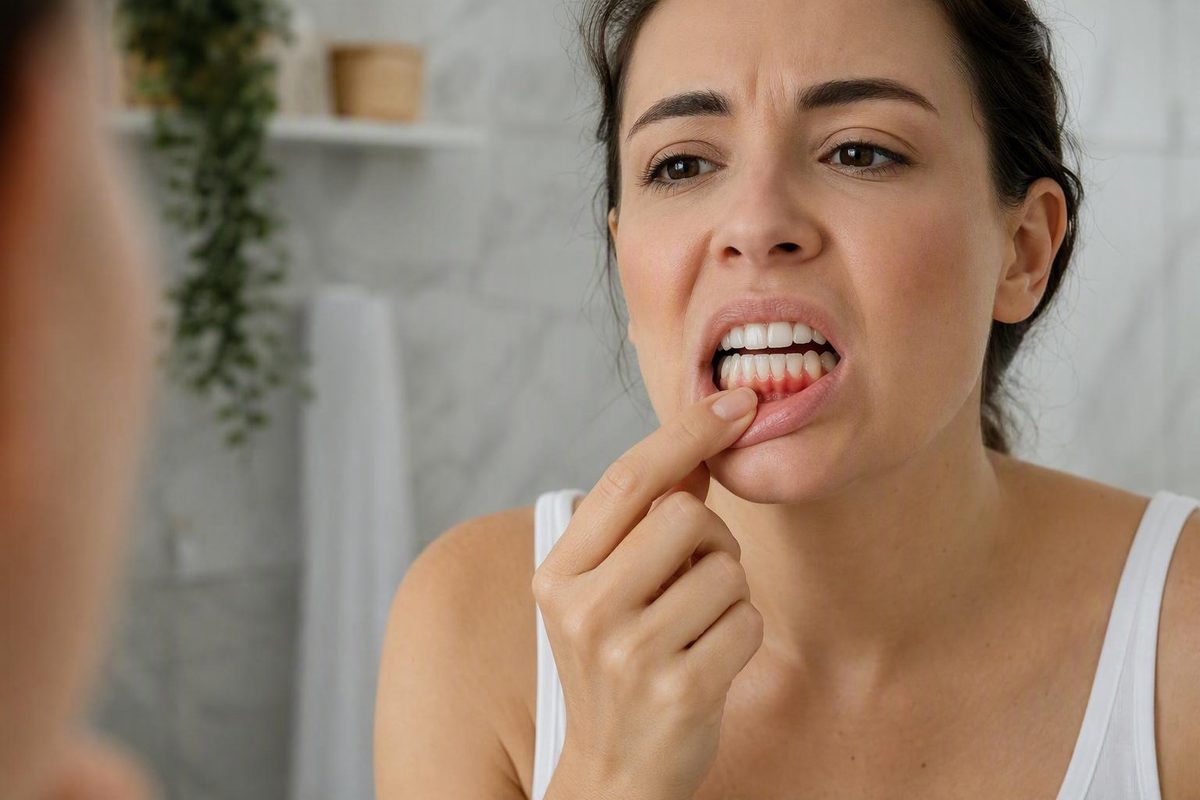
The short answer: bleeding, swollen gums may be an early warning
Gingivitis is the earliest and mildest stage of gum disease, and it often causes little or no pain. That means visible changes during cleaning may be more noticeable than discomfort, as explained in Cleveland Clinic’s overview of periodontal disease.
A small amount of blood on a toothbrush, floss, or in the sink is a warning sign, not proof that you have gum disease. Gums can also bleed after unusually forceful brushing, floss snapped against the tissue, or the first attempts at cleaning between teeth after a break. The pattern matters more than one isolated episode.
Watch for this early-warning cluster:
- Repeated bleeding during normal brushing or interdental cleaning
- Puffiness or swelling, particularly along the gumline
- A change from your usual gum color, rather than failure to match a universal shade
- Tenderness or soreness that persists or returns
Think in terms of combination, recurrence, and change. One spot of blood after vigorous flossing may reflect temporary irritation. Blood during gentle cleaning on multiple occasions, combined with puffy or tender gums, is more concerning.
No symptom can establish the cause by itself. If bleeding, swelling, tenderness, or another change persists, repeatedly returns, or worsens, arrange a dental examination rather than trying to diagnose the problem from appearance alone.
How healthy gums compare with inflamed gums
Healthy gums are generally firm and fit closely around the teeth. They should not look unusually enlarged or detached, and gentle routine cleaning should not repeatedly provoke bleeding.
Color varies naturally. Healthy gums may be light pink, dark pink, or brown, depending partly on natural pigmentation. “Pink” is therefore not a universal standard of health. The more useful question is whether your gums have become redder, darker, brighter, or otherwise different from their normal appearance. Mayo Clinic describes healthy gums as firm and snug around the teeth and recognizes this natural range in healthy gum color and appearance.
| Feature | Gums that appear healthy | Changes that may suggest inflammation |
|---|---|---|
| Fit around teeth | Firm and close-fitting | Puffy, enlarged, or appearing to pull away |
| Texture | Generally firm | Soft, swollen, or unusually smooth-looking |
| Color | The person’s usual light pink, dark pink, or brown | Redder, darker, or otherwise changed from usual |
| Sensation | Usually comfortable during normal cleaning | Tender, sore, or sensitive to touch |
| Bleeding | No recurring bleeding with gentle routine care | Bleeding easily or repeatedly during brushing or flossing |
This comparison is a screening aid, not a diagnostic test. Appearance can be influenced by cleaning technique, appliances, hormonal changes, medications, health conditions, and natural differences in pigmentation or texture.
When checking your gums, compare the same area under similar lighting and focus on what is new. One irritated spot next to an appliance or an area injured during flossing does not necessarily have the same explanation as puffiness or bleeding affecting several parts of the mouth.
Do not rely on color alone. Swelling, easy bleeding, tenderness, and a change in how closely the gums fit around the teeth provide more context than shade by itself. Gums that retain their usual color may still require attention if they repeatedly bleed or become swollen.
A symptom hierarchy: early warnings, related symptoms, and signs of progression
Gum-disease symptoms are often presented as one long list. That can make a late feature such as tooth mobility sound equivalent to a subtle early change such as bleeding during brushing. A three-level hierarchy is more useful.
| Level | Symptoms | How to interpret them |
|---|---|---|
| 1. Typical early-warning cluster | Repeated bleeding during routine brushing or flossing; redder-than-usual, swollen, puffy, or tender gums | These changes fit the usual pattern of gingival inflammation, particularly when several occur together |
| 2. Possible associated symptoms | Persistent bad breath or unpleasant taste; gum recession; tooth sensitivity | These may accompany gum disease but are less specific and can have other causes |
| 3. Possible signs of progression | Pus; loose or shifting teeth; new spaces; bite changes; painful chewing; deep periodontal pockets; bone loss | These are not ordinary first signs of gingivitis and may reflect damage beyond surface gum inflammation |
Gum disease does not follow one fixed symptom sequence. Some people first notice bleeding or swelling; others become aware of a problem during an examination. Early disease may also be painless or easy to overlook. The University of Illinois Chicago College of Dentistry describes bleeding, soreness, recession, sensitivity, and persistent bad breath as possible warning signs while emphasizing that symptoms may remain limited until disease is more advanced in its review of gum-disease warning signs.
The first level is the most relevant when looking for early gingivitis.
The second level adds context but is less specific. Gum recession can expose more of a tooth or its root, and sensitivity may occur when an exposed area reacts to temperature or touch. Recession may also be associated with aggressive brushing, while sensitivity can arise from exposed roots or enamel-related problems. Neither symptom should automatically be labeled early gingivitis.
Persistent bad breath is similarly nonspecific. It may accompany gum inflammation, but it can also have other oral causes. Its significance increases when it occurs with recurring bleeding, swelling, recession, or another gum change rather than as an isolated symptom.
Pus, loose or shifting teeth, new gaps, an altered bite, or pain while chewing belong in a more concerning category. Periodontitis can damage the tissues and bone supporting the teeth, and recognized symptoms include pus, mobility, new spacing, recession, bite changes, and painful chewing, as outlined in Mayo Clinic’s periodontitis guide.
The hierarchy is about probability and urgency, not a guaranteed timeline:
- Bleeding plus puffiness or tenderness raises suspicion of early inflammation.
- Bad breath, recession, or sensitivity adds context but remains nonspecific.
- Mobility, pus, bite changes, deep pockets, or bone loss raises concern about possible progression and warrants professional assessment.
Why gum disease can be present without pain
Yes, gingivitis can be present even when your gums do not hurt. Early gum disease often produces little or no discomfort, so relying on pain alone can mean overlooking visible bleeding, swelling, or changes in gum texture.
Pain and inflammation are not interchangeable. Inflamed tissue may become puffy and bleed when touched by a toothbrush or floss without causing a toothache or making eating uncomfortable.
Consider this pattern:
- Your gums bleed during gentle brushing on several occasions.
- The tissue between or around the teeth looks puffy.
- You can eat normally, and brushing does not hurt.
The absence of pain does not cancel the other signs. Recurring bleeding plus swelling deserves attention even if your mouth otherwise feels normal.
The opposite is also true: painful gums do not automatically mean gum disease. A localized injury, an appliance rubbing the tissue, or aggressive cleaning may cause soreness without representing gingivitis. Pain is one part of the pattern, not a reliable yes-or-no test.
Smoking can complicate symptom recognition because it may restrict blood flow in gum tissue and make bleeding less visible. A person who smokes should not assume that an absence of bleeding proves the gums are healthy. This is a caution about interpreting symptoms, not a diagnostic rule, as noted in the University of Illinois Chicago discussion of smoking and masked gum bleeding.
The practical lesson is to notice observable changes even when there is no discomfort: recurring blood during cleaning, persistent puffiness, altered texture, recession, or a change in how the gums fit around the teeth.
Bleeding and soreness can have causes other than gum disease
One episode of bleeding has several possible explanations. Excessive brushing pressure can irritate the gum margin. Floss that is forced or snapped downward can injure a small area. Stiff bristles may aggravate sensitive tissue, and someone restarting interdental cleaning may initially notice bleeding.
Temporary cleaning-related irritation is more likely when it is clearly associated with a particular event, confined to one small area, and improving rather than recurring or spreading. These are useful clues, not rules that can determine the cause.
Possible gingivitis becomes more plausible when bleeding:
- Happens repeatedly during gentle cleaning
- Affects several areas
- Returns after appearing to improve
- Becomes more noticeable
- Occurs with puffiness, tenderness, or a change in gum appearance
Other contributors to gum soreness or inflammation can include braces, retainers, dentures, or another appliance that rubs the tissue. Hormonal changes, medications, health conditions, vigorous cleaning, and stiff toothbrush bristles may also influence gum tenderness or bleeding. These overlapping possibilities are reasons not to self-diagnose; the distinction between brief irritation and persistent inflammatory changes is discussed in this overview of sensitive and inflamed gums.
Bad breath also requires caution. Odor that persists despite routine cleaning may accompany gum disease, but it can also be associated with tooth decay, dry mouth, diet, medications, or other conditions. Its presence does not identify one cause, according to this periodontal symptom overview.
There is no universal number of days after which bleeding automatically becomes gum disease. Instead, ask:
- Does it keep happening?
- Does it occur despite gentle technique?
- Is it affecting multiple areas?
- Are the gums also swollen, puffy, tender, or changed in appearance?
- Is the problem worsening rather than settling?
- Are there more concerning changes such as pus, marked swelling, mobility, or chewing pain?
Do not stop all cleaning simply because mild bleeding appears. Use gentle technique rather than scrubbing harder or forcing an interdental tool into the gums. If you are unsure about your technique or which tool fits the spaces between your teeth, a dental professional can demonstrate an appropriate approach.
Symptom patterns can raise or lower suspicion, but they cannot confirm a cause. Gingivitis, cleaning-related irritation, appliance problems, decay, medication effects, and other conditions may overlap in how they appear.
How plaque leads to gingivitis—and why tartar is different
Plaque is a sticky bacterial film that collects on teeth, including along the gumline. When it remains in contact with the gums, it can irritate the tissue and trigger inflammation. The gums may then become swollen, tender, redder than usual, and more likely to bleed during brushing or flossing.
The basic sequence is:
- Plaque accumulates on tooth surfaces and near the gumline.
- Gum tissue becomes inflamed, leading to puffiness, tenderness, or easy bleeding.
- Plaque left in place may harden into tartar, also called calculus.
- Established tartar cannot be removed with an ordinary toothbrush or floss.
Plaque and tartar are not interchangeable. Effective brushing and interdental cleaning can disrupt soft plaque in accessible areas. Once deposits harden into tartar, professional removal is required, according to the National Institute of Dental and Craniofacial Research.
This distinction explains why brushing harder is not the answer to every rough or discolored deposit near the gumline. Extra pressure can irritate the gums without removing hardened material.
For a broader explanation of the limits of home cleaning, see Decay Guide’s guide to what daily brushing cannot fix.
Plaque-related inflammation is common, but gum disease should not be framed solely as a personal failure. Some people are more susceptible even when they brush and clean between their teeth. Tobacco exposure, health conditions, medications, hormonal changes, genetics, and other individual factors can influence risk and tissue response.
Daily cleaning still matters. Someone may brush consistently and still need professional cleaning or assessment; bleeding does not establish that the person has been neglectful.
Gingivitis versus periodontitis: where reversibility changes
“Gum disease” covers conditions with different depths and consequences. The central distinction is between gingivitis, which is limited to inflamed gums, and periodontitis, which involves damage to the deeper tissues and bone supporting the teeth.
| Feature | Gingivitis | Periodontitis |
|---|---|---|
| Main tissues affected | Gum tissue | Gums plus deeper tooth-supporting tissues |
| Common signs | Bleeding, puffiness, swelling, tenderness, color change | May include recession, deep pockets, pus, mobility, spacing or bite changes, and chewing pain |
| Bone or attachment loss | Not present in uncomplicated gingivitis | May be present |
| Reversibility | Early plaque-related inflammation can often be reversed | Established attachment or bone loss is not reversed by ordinary brushing and flossing |
| Role of care | Professional assessment or cleaning plus effective daily hygiene | Professional management is needed to control disease and protect remaining support |
Early plaque-related gingivitis can often improve and reverse when plaque and tartar are addressed through appropriate professional care and effective daily oral hygiene. That qualification matters: reversibility applies before periodontal attachment or supporting bone has been lost. It is not a promise that every red or bleeding gum problem will resolve with home care alone.
If inflammation progresses to periodontitis, the gums may separate from the teeth and form deeper pockets where deposits collect. Supporting connective tissue and bone can be damaged. The condition can be managed, but established structural loss is not restored simply by brushing or flossing more often.
Cleveland Clinic distinguishes gingivitis without bone loss from later periodontal disease involving loss of supporting tissue and bone and limits reversibility to the earlier stage in its discussion of gum-disease stages and treatment.
This is why early recognition matters without requiring alarm. Repeated bleeding and puffiness do not mean permanent damage has already occurred. They suggest that the gums may be inflamed and that determining the cause is preferable to waiting for mobility, pus, or bite changes.
“Reversible” also does not mean “always manageable without a dentist.” Tartar cannot be removed at home, and only an examination can determine whether inflammation is confined to the gums or deeper support has been affected.
What to do next and what a dentist may check
If you notice mild bleeding, continue cleaning carefully rather than abandoning brushing and interdental care. Brush gently twice a day with a soft-bristled toothbrush, and clean between the teeth daily without snapping or forcing the tool into the gums. Consistent cleaning helps remove plaque; aggressive scrubbing may add irritation.
Arrange a dental examination when bleeding, swelling, tenderness, or persistent bad breath repeatedly returns, fails to settle, or becomes worse. You do not need to decide in advance whether the cause is gingivitis. A general dentist can perform the initial assessment and determine whether routine care, further investigation, or referral is appropriate.
Seek a more prompt dental assessment if you notice:
- Pus or drainage near a tooth or the gumline
- A loose or suddenly shifting tooth
- Significant pain while chewing
- Marked or rapidly worsening swelling
- New spaces between teeth or a noticeable bite change
These changes are not ordinary subtle first warnings. They do not establish a diagnosis or prove that gum disease is the cause, but they may reflect a problem requiring timely professional evaluation. Periodontal guidance identifies pus, mobility, bite changes, marked swelling, and chewing pain as reasons not to rely solely on watching and waiting in its discussion of concerning gum changes.
A gum assessment may include:
- Medical and dental history. The dentist may ask about symptom timing, oral-care habits, tobacco exposure, medications, health conditions, and previous treatment.
- Visual examination. The gums and teeth may be checked for swelling, bleeding, recession, color changes, plaque, tartar, and changes in fit around the teeth.
- Bleeding and inflammation checks. Gentle examination can identify areas that bleed readily or appear inflamed.
- Periodontal pocket measurements. A small probe may be used to assess the spaces between the teeth and gums.
- Mobility and recession assessment. The dentist may check whether teeth move and whether gum tissue has receded.
- X-rays when appropriate. Imaging may be used to assess supporting bone that cannot be evaluated from appearance alone.
The National Institute of Dental and Craniofacial Research describes gum-disease diagnosis as involving medical-history review, examination, pocket measurements, and sometimes X-rays to evaluate bone support in its periodontal disease guidance.
The purpose is not merely to attach a label to bleeding. It is to distinguish surface inflammation from tartar buildup, cleaning-related injury, an appliance problem, periodontitis, or another contributor—and to identify recession, mobility, deep pockets, or bone changes that cannot be judged in a mirror.
Frequently asked questions
Is bleeding while brushing or flossing always a sign of gum disease?
No. Recurring bleeding during routine cleaning is a common early warning of gingivitis, especially when the gums are also swollen, puffy, tender, or changed in color. One episode may instead follow forceful brushing, stiff bristles, floss snapped against the gums, or newly introduced interdental cleaning.
The pattern matters. Brief, localized irritation that improves differs from bleeding that repeatedly occurs during gentle cleaning or affects several areas. Persistent, recurring, or worsening bleeding should be assessed by a dentist.
Can you have early gum disease without pain?
Yes. Gingivitis and early periodontal disease often cause little or no pain. Bleeding, puffiness, and changes in gum texture may therefore be relevant even when brushing and eating remain comfortable.
Lack of pain is neither proof of health nor proof of disease. It simply means discomfort cannot be used as the only screening test.
Should you stop flossing if your gums bleed?
Mild bleeding is not generally a reason to stop cleaning between the teeth altogether. Continue carefully and avoid forcing or snapping floss into the tissue. The University of Illinois Chicago advises continued gentle flossing when gums initially bleed and recommends dental consultation if bleeding or other warning signs continue in its gum-disease guidance.
If bleeding is substantial, repeatedly returns, or occurs with marked swelling, pus, mobility, or significant pain, seek professional guidance rather than repeatedly irritating the area.
Can gingivitis be reversed?
Early plaque-related gingivitis can often be reversed before periodontal attachment or supporting bone is lost. Effective daily plaque removal is important, but professional assessment and cleaning may also be needed, particularly when tartar has formed.
The same reversibility claim does not apply to established periodontitis. Brushing and interdental cleaning can support periodontal management, but they cannot rebuild lost attachment or bone.
How does a dentist check for gum disease?
A dentist may review your medical and dental history, inspect the gums and teeth, check for inflammation or bleeding, measure periodontal pockets, assess recession and tooth mobility, and take X-rays when appropriate. Not everyone needs every step; the examination findings determine what further evaluation is necessary.
These checks help distinguish gingivitis from periodontitis, tartar buildup, cleaning-related irritation, and other possible causes. Online symptom descriptions cannot make that distinction.
Recurring bleeding together with swelling, tenderness, or a change from your normal gum appearance deserves attention even when there is no pain. Early gingivitis may be reversible, but symptoms cannot establish a diagnosis, and hardened tartar cannot be removed at home. Changes that persist, recur, worsen, or include possible signs of progression should be assessed by a dentist. Decay Guide provides general dental-health information, not diagnosis, treatment, or individualized advice.