
When a New Filling Feels Too Tall: What May Settle and What Usually Won’t
Temporary sensitivity may settle, but a tooth that contacts first is unlikely to self-correct; after numbness wears off, arrange a bite check.
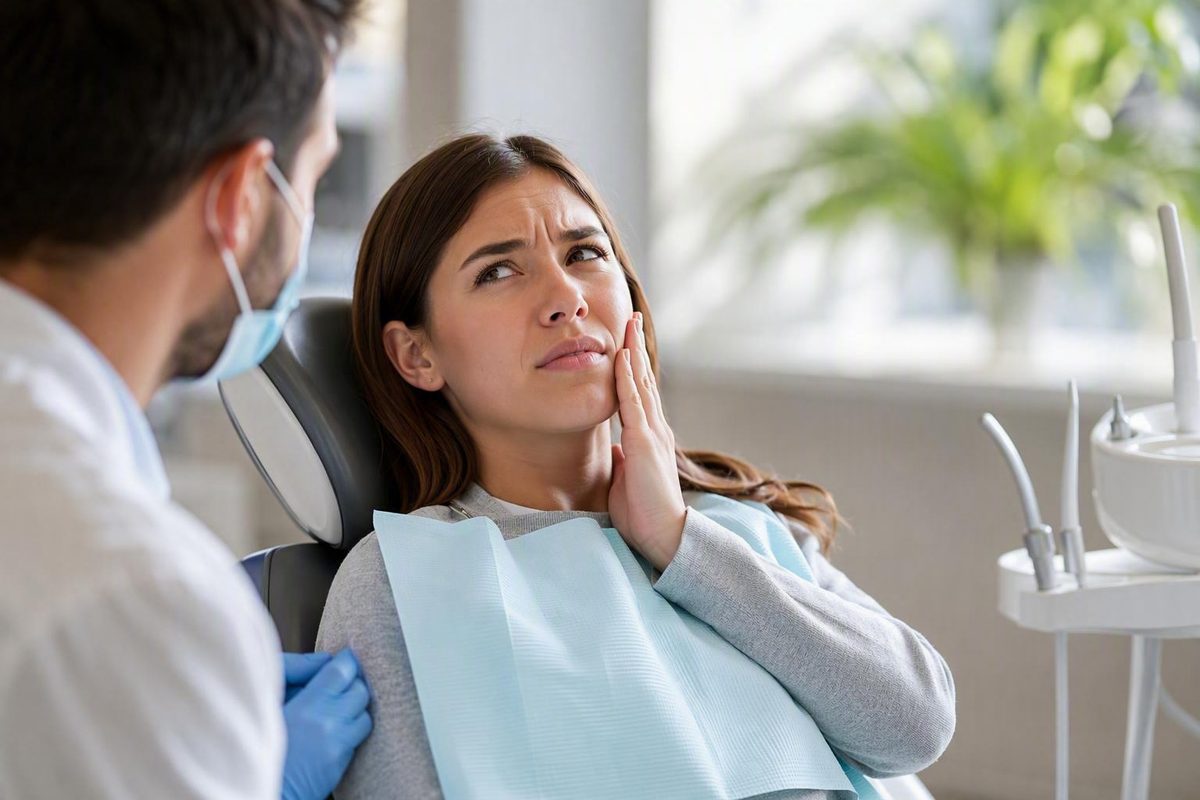
The short answer: the sensation may fade, but excess height usually does not
Will a high filling fix itself? If the filling is genuinely too high—meaning the restored tooth contacts before the rest of your teeth—it generally should not be expected to wear into the correct shape or reliably fix itself. A dentist can check the bite and, if necessary, remove a small amount of excess material.
That is different from a filling that merely feels unfamiliar. After treatment, several temporary changes can affect how the tooth or bite feels:
- Numbness can distort how you close your teeth.
- Mild post-treatment irritation can settle.
- Temporary sensitivity can improve.
- Jaw tension after treatment can ease.
- Your nervous system may become less focused on the new restoration.
These changes can make a tooth feel increasingly normal even though the filling itself has not changed shape. One dental-practice article makes this distinction explicitly: it says the bite and perception may adapt, rather than the filling material physically “settling” after treatment.
The most useful question is therefore not simply, “Does this filling feel different?” It is: “Does the restored tooth make a clear first contact?”
A vague awareness of the filling, brief cold sensitivity, or a mildly strange sensation that is steadily improving does not automatically mean the restoration is too tall. By contrast, repeatedly feeling the restored tooth strike its opposing tooth before the others suggests a mechanical bite imbalance. Localized pain during chewing makes that concern more significant.
Natural wear can occur to dental materials over time, so it would be too absolute to say that no filling can ever wear. The narrower and more useful conclusion is that normal chewing has not been shown here to correct a clinically meaningful high spot promptly, predictably, or safely. Practice guidance therefore advises against relying on chewing to make a noticeably high filling “settle” on its own.
There is an important evidence limitation. The available sources addressing this exact question are predominantly dental-practice articles, not independent clinical guidelines, systematic reviews, or peer-reviewed treatment recommendations. They consistently distinguish temporary sensitivity from genuine premature contact, but they do not support a precise probability of self-resolution or one waiting period that applies to everyone. The practical decision should instead depend on the trigger, severity, progression, effect on eating, and whether one tooth clearly hits first.
What dentists mean by a “high” filling
A “high filling,” “high bite,” or premature contact means that the restored tooth meets the tooth above or below it before the rest of the teeth come together.
Ordinarily, biting force is distributed across multiple contacts. If one filled tooth touches first, more of the force is directed through that location. Even a small amount of excess material can be noticeable because teeth and their supporting tissues are sensitive to changes in contact when the bite closes.
A high filling does not necessarily look like a large lump. Its surface may appear smooth and natural in a mirror while one point or ridge remains high enough to interfere with the bite. People commonly describe:
- One tooth feeling taller than its neighbors
- A bump or stop when the teeth close
- One tooth receiving the first impact
- Pressure focused on the restored tooth
- Difficulty bringing the teeth together normally
- A need to shift the jaw to find a comfortable position
- Pain during biting or chewing
The interference may be more obvious while eating than when gently bringing the teeth together.
The bite can also seem acceptable in the dental chair but feel wrong later. Local anesthetic makes it harder to reproduce and judge a natural bite, and a person may close cautiously or differently while numb. Once sensation returns and normal eating, speaking, and tooth contact resume, a missed high spot may become easier to recognize after the appointment.
This discussion concerns fillings. Crowns and other restorations can also affect bite contact, but their construction and adjustment are not necessarily identical. Advice about one type of restoration should not automatically be applied to every other kind of dental work.
High filling or normal sensitivity? Compare the symptom patterns
Symptoms after a filling can overlap. A high contact may cause pressure or sensitivity, but a tooth can also be sensitive when the filling’s height is correct. Symptoms can indicate what deserves attention; they cannot establish the diagnosis by themselves.
| Routine post-filling sensitivity | Likely premature bite contact | Symptoms needing prompt professional assessment |
|---|---|---|
| Brief sensitivity to cold, air, sweets, or pressure | The restored tooth consistently feels taller than the others | Severe or rapidly worsening pain |
| No single tooth obviously strikes first | One distinct point touches before the rest of the bite | Strong or persistent throbbing |
| Bite otherwise feels balanced | Localized pressure on the restored tooth | Swelling around the tooth, gum, or face |
| Symptoms are mild and gradually improving | Pain when biting, chewing, or tapping the tooth | Fever |
| Normal eating remains possible | Chewing feels altered or the jaw shifts to avoid the tooth | Bad taste or a bump on the gum |
| Sensation is mainly tied to a brief stimulus | Normal eating is difficult because the tooth receives the first impact | Inability to chew normally |
| Discomfort is not steadily intensifying | Jaw soreness or fatigue may accompany the uneven contact | Limited mouth opening |
| No persistent spontaneous pain | The problem is repeatable whenever the teeth meet | Symptoms that persist, recur, or worsen |
Pain caused by biting or tapping is more suggestive of a contact problem than brief temperature sensitivity. If closing or chewing repeatedly directs pain to one restored tooth—particularly when that tooth clearly hits first—the pattern is mechanically suspicious. Even so, biting pain does not prove that the filling is high because other dental problems can also hurt under pressure after a filling.
Temperature sensitivity alone is less specific. The filling procedure can temporarily irritate a tooth, especially when the original cavity was deep or close to the pulp, the living tissue inside the tooth.
The distinction is not absolute. A high contact can occur alongside temperature sensitivity, while pulp inflammation or a cracked tooth may also cause biting pain. Possible explanations for discomfort after a filling include:
- Temporary irritation associated with treatment
- A deep cavity or restoration close to the pulp
- Pulp inflammation
- A cracked tooth
- Infection
- Clenching or grinding
- Another problem with the filling
- Premature contact caused by excess filling height
Dental-practice guidance identifies these as overlapping possibilities and emphasizes that an examination is needed to determine the cause when symptoms do not improve.
Jaw soreness or headache may accompany an altered bite, particularly when someone changes how they close or chew. These are nonspecific symptoms, however. They do not prove that a filling is high and can have unrelated causes.
Pay attention to function without repeatedly provoking the tooth. Notice whether discomfort occurs during gentle closing, ordinary chewing, or both. There is no need to keep testing a painful tooth with hard food.
Professional assessment becomes more important when symptoms persist, worsen, recur after improving, interfere with eating, or do not fit a straightforward recovery pattern. The dentist may need to evaluate the tooth, filling, bite, pulp, gums, and surrounding structures rather than assuming that excess height is the only possible cause.
When to monitor briefly and when to contact the dentist
There is no well-supported waiting period that applies to every patient and symptom pattern. The supplied practice guidance ranges from suggesting contact within a day or two for a persistent uneven bite to recommending that mild, nonspecific sensations be observed for about a week. Those intervals are not derived from an independent clinical guideline, which is why symptom type and progression matter more than a rigid number.
First, wait until the anesthetic has fully worn off before deciding how the teeth meet, unless the treating dentist has given different instructions. While the mouth is numb, bite sensation and jaw movement may be unreliable.
Once normal sensation has returned, use the following decision path.
1. Does the bite feel balanced?
If the teeth seem to meet normally and there is only mild sensitivity to cold, air, sweets, or pressure, brief monitoring may be reasonable. Improvement matters more than an exact deadline: a routine post-treatment sensation should become less intrusive rather than steadily worse.
2. Does the restored tooth clearly hit first?
If one tooth consistently contacts before the others, call the treating dentist for a bite check. There is no need to wait for the filling to wear down or to endure an obviously uneven bite for a predetermined period.
3. Does chewing cause localized pain?
Pain focused on the restored tooth with each bite deserves professional review, especially if it changes how or where you can eat. The same applies if you must shift your jaw to avoid the tooth or cannot chew normally.
4. Are symptoms improving, stable, or worsening?
Mild symptoms that are steadily improving differ from pain that becomes stronger, lasts longer after a trigger, begins without a trigger, or returns after initially easing. Persistent, recurrent, or worsening pain needs reassessment even when no clear first contact is apparent.
5. Are warning signs present?
Seek prompt dental advice for severe or worsening pain, marked throbbing, swelling, fever, a bad taste, a gum bump, inability to chew, or restricted mouth opening. These signs are reasons for professional assessment, not proof of a particular diagnosis. Practice guidance specifically identifies worsening pain, swelling, fever, bad taste, a gum bump, and severe throbbing as reasons for prompt evaluation rather than continued observation.
In short:
- Still numb: reserve judgment about the bite unless symptoms are severe or your dentist instructed otherwise.
- Balanced bite with mild, improving sensitivity: monitor briefly.
- One tooth hits first, chewing causes localized pain, or eating is difficult: contact the treating dentist promptly for a bite check.
- Symptoms persist, recur, or worsen without an obvious high contact: arrange reassessment for other possible causes.
- Severe pain, swelling, fever, throbbing, bad taste, a gum bump, inability to chew, or limited opening: seek prompt professional advice.
Calling does not mean the filling must be adjusted. It allows the dental office to determine how quickly a check is appropriate. An examination may confirm a small high spot, show that the bite is already balanced, or indicate that the tooth needs a different evaluation.
What happens during a bite check and adjustment
A bite check usually begins with questions about timing and triggers. The dentist may ask:
- When did the discomfort begin?
- Did it become noticeable after the numbness wore off?
- Is it triggered by cold, sweets, pressure, tapping, closing, or chewing?
- Does the restored tooth seem to touch first?
- Can you eat normally?
- Is the discomfort improving or worsening?
- Does pain stop when the trigger is removed, or does it linger?
The dentist then examines the filling and checks how the upper and lower teeth meet. A common tool is articulating, or bite-marking, paper. When you close on this thin colored material, it marks contact points and helps identify an area that may be receiving excessive force.
If a high contact is confirmed, the dentist can selectively remove a small amount of filling material from that point. The restoration is then smoothed or polished, and the bite is checked again. Dental-practice guidance describes this as a commonly brief adjustment that is often possible without another anesthetic injection when only a small high spot is involved.
A small high spot does not automatically mean the entire filling must be removed and replaced. Selective reshaping is generally the described approach. That is not a guarantee that every case will be simple, painless, or completed without anesthesia; what is required depends on the restoration, tooth, symptoms, and examination findings.
Adjustment also cannot guarantee immediate or complete relief. Correcting the contact removes the continuing source of excess force, but irritated supporting tissues may remain tender afterward. If another condition is contributing to the pain, changing the bite may not resolve it.
Persistent symptoms should not lead to repeated removal of filling material without confirming that a high contact remains. Once the bite is judged acceptable, the dentist may need to assess the restoration more broadly, evaluate the pulp, look for a crack or infection, or consider clenching and grinding.
What to do—and not do—while waiting for an appointment
Do not sand, file, grind, scrape, drill, or otherwise attempt to reshape the filling yourself.
Home filing removes material without showing whether the resulting contact is balanced. Dental-practice guidance therefore warns against trying to grind or file a high filling and recommends professional bite marking and adjustment instead of self-treatment.
Do not deliberately chew ice, nuts, hard candy, or other hard foods on the restoration in an attempt to wear it down. Forceful chewing is not a controlled correction method and repeatedly loads the uncomfortable contact.
While awaiting assessment, avoiding forceful or hard chewing on the painful tooth is a reasonable comfort measure. It is not a treatment for the cause and should not be used as a substitute for evaluation when the tooth clearly hits first or normal eating is difficult.
It may help to note:
- Whether the restored tooth seems to contact first
- Whether the sensation occurs during gentle closing, chewing, or both
- Whether cold, air, sweets, pressure, biting, or tapping triggers pain
- Whether pain stops promptly or lingers
- Whether symptoms are improving, stable, or worsening
- Whether normal chewing is possible
- Whether swelling, throbbing, fever, a bad taste, or a gum bump has appeared
- Whether you are aware of clenching or grinding
These observations can help you describe the problem, but they cannot diagnose it. Avoid repeatedly tapping, clenching, or biting on the tooth merely to test it.
This general guidance also does not establish whether a particular medication is appropriate for you. Medication decisions depend on individual health factors and advice from a qualified clinician or pharmacist.
Why waiting indefinitely can prolong the problem
When one restored tooth contacts first, closing and chewing repeatedly direct disproportionate force through that point. Practice sources describe this as a potential source of irritation to the periodontal ligament—the supporting tissue around the tooth—as well as the restoration or jaw muscles when the contact remains uneven.
Possible effects include:
- A bruised or tender feeling around the tooth
- Greater sensitivity to pressure
- Pain while biting or chewing
- Jaw fatigue from changing how you close
- Continued awareness of the restoration
- Added stress or wear on the filling
Dental-practice sources also mention cracks, pulp irritation, headaches, premature restoration wear, and jaw-joint or muscle symptoms as possible associations. These should not be presented as inevitable outcomes. The supplied evidence does not establish how often serious complications occur, how much excess height creates meaningful risk, or how long a high contact must remain before risk changes.
This is not a reason to panic about every unusual feeling after treatment. A tooth that feels mildly different, has no clear early contact, and is becoming more comfortable does not necessarily face ongoing damage.
The practical point is more modest: an obvious mechanical interference can be checked directly. There is little benefit in enduring persistent chewing pain or trying to force the filling to wear when a dentist can determine whether the contact is excessive. That visit may reveal a small high spot, but it may also show that the bite is balanced and another cause needs attention.
“Do not wait indefinitely” does not mean that every sensation is an emergency:
- Mild, improving sensitivity with a balanced bite may be monitored briefly.
- A repeatable first contact or localized chewing pain deserves a bite check.
- Severe, worsening, or systemic symptoms deserve prompt professional advice.
If the tooth still hurts after adjustment
Correcting a high contact removes that mechanical source of excess force. It does not necessarily make irritated tissues comfortable immediately.
The available practice sources give inconsistent, uncited estimates for how quickly discomfort should improve. Some describe rapid relief; others say tenderness can continue after adjustment. Those sources do not justify a dependable healing deadline for everyone.
What matters is the direction of symptoms. The first-contact sensation and chewing discomfort may improve after correction, but the course varies. Persistent, recurrent, or worsening pain should be reassessed rather than attributed automatically to residual tissue irritation.
Possible explanations include:
- A remaining or different premature contact
- Irritation associated with a deep restoration
- Pulp inflammation
- A crack
- Infection
- Clenching or grinding
- Another problem with the filling
- An unrelated problem in the same area
Symptoms alone cannot reliably distinguish these possibilities. A clinical examination is needed.
Do not assume that every lingering symptom means more filling material should be removed. Practice guidance likewise notes that continued or returning pain after adjustment may indicate another condition requiring evaluation rather than further automatic grinding.
The overall answer remains two-part: temporary sensitivity or an unfamiliar feeling may settle, but a tooth that genuinely contacts first should not be expected to correct itself reliably. Once numbness has worn off, an obvious early contact, localized chewing pain, difficulty eating, or worsening symptoms warrants a dental bite check. Severe pain, swelling, fever, throbbing, bad taste, a gum bump, inability to chew, or limited mouth opening calls for prompt professional advice.
A bite adjustment usually targets a small contact point rather than requiring automatic replacement of the filling. If pain persists after the contact has been corrected, the tooth needs reassessment for other possible causes.
These conclusions reflect a consistent pattern across dental-practice sources, not a formal clinical guideline or systematic review. Decay Guide publishes general dental information; it is not a dental practice, does not diagnose or treat patients, and does not provide individualized dental advice.
Frequently asked questions
Can chewing normally wear down a high filling?
Dental materials may wear over time, but normal chewing should not be treated as a reliable or controlled way to correct a filling that is genuinely too high. You cannot determine whether chewing is reducing the correct point, balancing the bite, or simply continuing to overload the tooth.
If the restored tooth clearly strikes first, arrange a bite check instead of deliberately chewing on it. Do not attempt to accelerate wear with hard foods.
What is the clearest sign that a filling is too high?
The clearest sign is premature contact: the restored tooth repeatedly meets its opposing tooth before the rest of the teeth come together.
A tall feeling, localized pressure, pain when biting, and altered chewing support that possibility. Symptoms alone cannot confirm it; a dentist must examine the filling and check the bite.
Should I wait a week before calling about an uneven bite?
No universal seven-day rule is supported by the supplied evidence. Practice recommendations differ, and none of the available sources constitutes an independent clinical guideline.
Once numbness has worn off, call the treating dentist if one tooth clearly hits first, chewing is painful, or eating is difficult. Brief monitoring may be reasonable when the bite feels balanced and sensitivity is mild and clearly improving.
Does adjusting a high filling hurt or require another injection?
Dental-practice sources describe many bite adjustments as brief and often possible without anesthesia because only a small amount is removed from the high contact. That does not mean adjustment is always painless or that an injection is never required.
The appropriate approach depends on the filling, tooth, sensitivity, amount of adjustment needed, and whether the dentist identifies another problem. A small high spot usually calls for selective reshaping and polishing rather than automatic replacement of the whole filling.
Why does my tooth still hurt after the filling was adjusted?
The supporting tissues may remain irritated after the excessive contact is removed. Correcting the mechanical problem stops continued overload but does not guarantee immediate relief.
Persistent, recurrent, or worsening pain may also have another cause, such as pulp inflammation, a deep restoration, a crack, infection, clenching, grinding, or another filling problem. The tooth should be reassessed rather than repeatedly reduced without confirming that the bite remains high.