
How to Read the Timing and Pattern of Pain After a Filling
A changed bite, no meaningful improvement, symptoms still significant at roughly two to four weeks, or pain that worsens or disrupts eating deserve dental review.
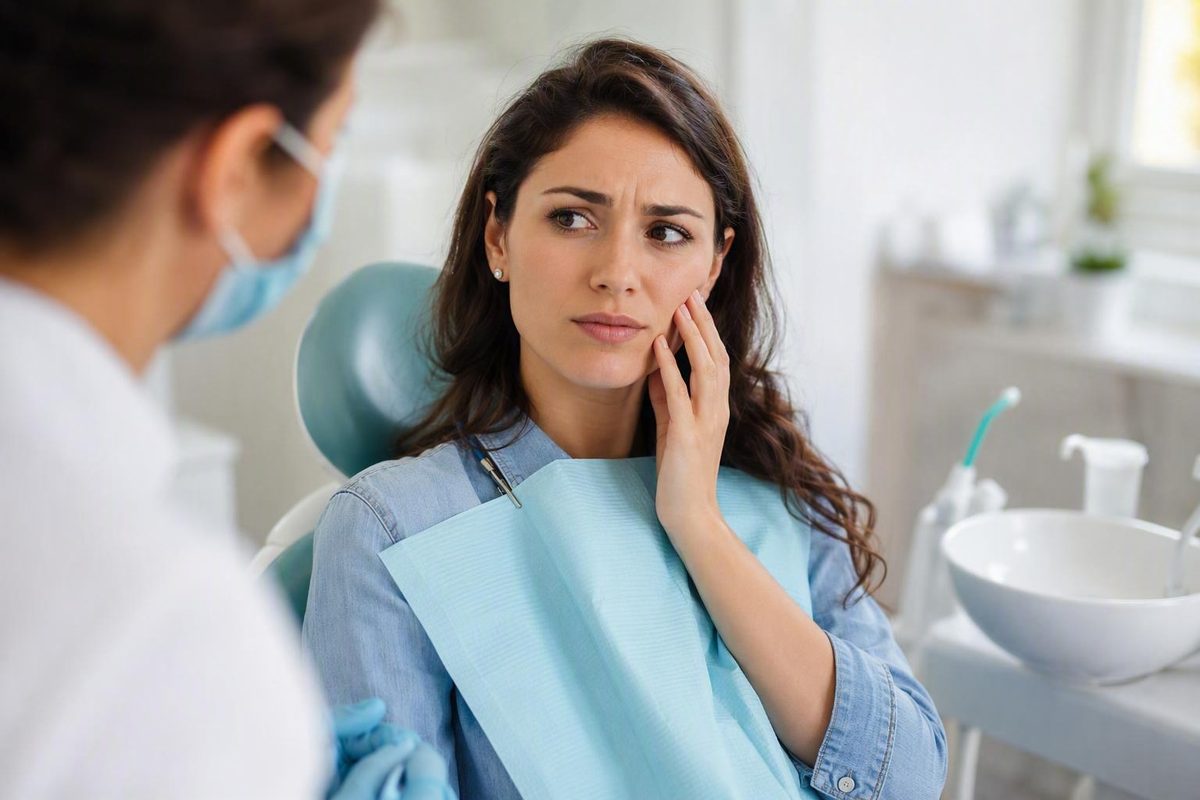
The short answer: when sensitivity can be monitored and when it needs attention
A sensitive tooth after a filling does not automatically mean something has gone wrong. The most useful clues are what triggers the sensation, how long it lasts, whether your bite has changed, and whether the overall trend is improving.
Use these three pathways:
- Monitor mild symptoms that are improving. Brief sensitivity caused by cold, heat, sweets, acidic foods, air, chewing, or pressure can occur after a filling. It is more reassuring when the sensation stops soon after the trigger and becomes less frequent or intense.
- Contact the treating dentist. Arrange a review if the restored tooth seems to hit first, your bite feels newly uneven, symptoms are not meaningfully improving, the filling feels damaged, or pain interferes with eating.
- Seek prompt dental assessment. Do not simply wait out severe or spontaneous pain, persistent throbbing, pain that wakes you at night, swelling, fever, discharge, a bad taste or foul odor, or feeling generally unwell. These findings do not confirm a particular condition, but they make routine home monitoring less appropriate. Medically reviewed guidance similarly recommends prompt assessment for extreme or worsening pain, difficulty eating, fever, or swelling after a filling (Medical News Today).
Routine recovery is more likely to produce a short reaction to a recognizable stimulus. Pain that lingers after the stimulus has gone, begins without a trigger, becomes stronger, or limits normal eating is less consistent with a tooth that is simply settling.
This distinction helps with triage, but it is not a diagnosis. No symptom checklist can reliably distinguish temporary nerve irritation from a high filling, crack, damaged restoration, pulp condition, recurrent decay, or infection. Several of these problems can cause similar reactions to temperature or pressure.
Decay Guide is an independent general-information publisher, not a dental practice. This article cannot diagnose the tooth or provide individualized treatment advice, consistent with Decay Guide’s stated editorial and clinical scope. If you are uncertain about a symptom—or it is severe enough to concern you—contact a qualified dentist.
What post-filling sensitivity can feel like
“Sensitive” and “painful” are often used interchangeably, but the experiences can differ.
Sensitivity is commonly described as a sharp, sudden response to a recognizable trigger. The tooth may react when you drink cold water, breathe in cool air, eat something sweet, or place pressure on it. The sensation may disappear quickly after the trigger ends.
Broader tooth pain may feel dull, sore, persistent, throbbing, or difficult to localize. It may continue after a hot or cold item is gone or begin when you are not eating, drinking, or touching the tooth. This difference helps a dentist understand the pattern, but it cannot identify the cause by itself.
Commonly reported triggers include:
- Cold drinks, chilled food, or cold air
- Hot foods or drinks
- Sweet or acidic foods and beverages
- Chewing
- Biting pressure
Why a stimulus can produce a sharp response
Enamel covers the outside of the tooth. Beneath it is dentin, which contains microscopic channels leading toward the pulp—the central area containing nerve and blood-vessel tissue. When dentin is disturbed or exposed, temperature and chemical stimuli can be transmitted inward and experienced as a sudden jolt. Removing decay and preparing a tooth for a restoration can also irritate tissue near the pulp, especially when the treated area is deep (Kirkwood Family Dental).
This does not mean every sharp reaction after treatment is technically “dentin hypersensitivity.” Nor should every lingering sensation be labeled “pulpitis.” Those terms describe different mechanisms or clinical conditions. A dentist may need to examine the restoration, check the bite, test the tooth, and consider its treatment history before reaching a diagnosis.
The location of discomfort also matters. Gum tissue near the tooth can feel tender after dental work, and the jaw may feel sore from remaining open during the procedure. Those experiences differ from a clear reaction arising in the treated tooth when it encounters cold, sweetness, or biting pressure. This article focuses primarily on tooth-triggered symptoms rather than generalized gum or jaw soreness.
When the location is unclear, record what reliably reproduces the sensation. “The lower right side hurts” is useful, but “cold water causes a short, sharp response in the newly filled molar” gives the dentist more specific information.
How long a filled tooth may remain sensitive
There is no universal recovery deadline.
Many supplied patient-education sources describe improvement within several days to approximately two weeks. Others allow two to four weeks, particularly after a large or deep restoration. For example, one dental-practice guide distinguishes general discomfort lasting up to about a week from temperature sensitivity that may remain for two to four weeks (Forest & Ray).
These ranges are general context, not guarantees. A tooth does not have to improve by the same amount every day, and a minor fluctuation cannot prove either normal recovery or a complication.
The more informative question is: What direction are the symptoms moving?
A reassuring trend may include:
- Fewer reactions during the day
- Less intense sensitivity to the same trigger
- Episodes that end more quickly
- Greater comfort when eating
- Less awareness of the tooth between triggers
A less reassuring trend includes:
- No meaningful improvement
- Increasing intensity or frequency
- Pain continuing longer after each trigger
- New spontaneous or nighttime pain
- Increasing difficulty chewing
- New swelling or systemic symptoms
Recovery may be influenced by the cavity’s depth, how close treatment came to the pulp, how much tooth structure was treated, whether the tooth was sensitive beforehand, and whether it has undergone previous procedures. A deep filling may cause a more noticeable or longer-lasting response because treatment occurred closer to the pulp. That fact alone does not establish permanent nerve injury or a need for root-canal treatment.
Published clinic guidance uses inconsistent follow-up thresholds, ranging from approximately one week to four weeks. Severity and progression should therefore take priority over the calendar. Contact the dentist if symptoms worsen at any point, fail to show meaningful improvement, remain significant at roughly two to four weeks, interfere with eating, or accompany a changed bite. One practice guide similarly recommends review when sensitivity continues beyond two to four weeks and identifies sharp pain, swelling, increasing sensitivity, and biting pain as reasons to call sooner (JM Dental of Westbury).
Do not wait for a time threshold if the restored tooth clearly contacts first or marked pain occurs whenever you bite. Suspected excess filling height requires a professional bite check and should not be altered at home.
What the pain pattern may suggest—and what it cannot prove
Pain patterns can help determine the appropriate next step. They cannot confirm why the tooth hurts.
| Pattern | Possible explanations—not a diagnosis | Appropriate next step |
|---|---|---|
| Brief cold, hot, sweet, acidic, or air sensitivity that is becoming milder | Temporary dentin or pulp irritation after treatment | Monitor the trend and temporarily avoid triggers that cause discomfort |
| Mild pressure sensitivity that is steadily settling | Temporary procedural irritation | Continue monitoring if eating remains comfortable |
| The restored tooth seems to touch first or the bite feels newly uneven | A high or uneven filling is one possibility | Contact the treating dentist for a bite check |
| Sharp pain while biting or localized chewing pain | A high filling, crack, pulp irritation, restoration damage, or another structural issue may cause overlapping symptoms | Avoid hard chewing on the tooth and arrange dental assessment |
| Temperature pain that lingers after the trigger | More substantial pulp irritation or another dental problem is possible | Contact the dentist rather than relying only on home care |
| Pain without a trigger, nighttime waking, or persistent throbbing | A pulp condition, structural problem, recurrent decay, or another complication may be present | Seek prompt dental assessment |
| Swelling, fever, discharge, bad taste, foul odor, or feeling unwell | Infection is one possibility, but an examination is needed | Obtain prompt dental assessment |
| New pain weeks or months after the tooth was comfortable | Filling deterioration, new or recurrent decay, a crack, grinding, bite pressure, or a nerve problem may be involved | Schedule an examination rather than treating it as immediate post-procedure sensitivity |
Brief trigger-related sensitivity and pain associated with an uneven bite are both recognized post-filling patterns, but neither identifies the cause without an examination (Medical News Today). Severe or worsening pain, nighttime pain, swelling, fever, and a damaged filling are among the patterns for which dental review is advised (Logan Dental Care).
Brief temperature sensitivity
A short cold or heat response that ends promptly and becomes less noticeable is generally more reassuring than pain that lingers. Temporary irritation of dentin or tissue near the pulp may explain it, particularly after deeper treatment.
Even this apparently straightforward pattern is not diagnostic. The reason to monitor it is that its direction is favorable—not because a cold response proves the tooth is healthy.
Pain when biting
Sharp pain during chewing, especially with a sense that the treated tooth touches first, makes a high filling one reasonable possibility. A restoration that stands slightly above the surrounding biting surface can concentrate pressure on that tooth.
Cracks, pulp irritation, restoration damage, and other structural conditions can also hurt under pressure. Tell the dentist when the pain occurs and whether the tooth feels as though it contacts before the others rather than assuming that the restoration only needs reshaping.
Lingering, spontaneous, nighttime, or throbbing pain
Temperature pain that continues after the food or drink is gone, pain that begins without a trigger, nighttime waking, and persistent throbbing are less consistent with routine recovery. They merit prompt contact with a dentist.
These patterns do not prove irreversible pulp damage. The distinction between reversible and irreversible pulp inflammation is a clinical judgment informed by examination, response testing, treatment history, and sometimes imaging. Duration alone cannot settle it.
Swelling or systemic symptoms
Swelling, fever, discharge, bad taste, foul odor, or feeling generally ill should increase the urgency of dental assessment. These findings can accompany infection, but they do not confirm it without an examination.
Referred pain
The tooth that seems to hurt is not always the source. Dental discomfort can be perceived in another tooth or nearby area, a phenomenon known as referred pain. This further limits the reliability of self-diagnosis based only on location and sensation (Parramatta Green Dental).
Why a tooth can become sensitive after a filling
Possible explanations range from temporary procedural irritation to conditions requiring treatment. The order below is practical rather than a ranking of how often each cause occurs.
Temporary procedural irritation
To place a filling, the dentist removes decayed or damaged tooth structure and prepares the remaining area for restoration. This work can disturb dentin and irritate tissue close to the pulp. The result may be a temporary response to cold, heat, sweetness, air, or pressure.
This explanation becomes more reassuring when symptoms are mild, dependent on a trigger, and fading. It becomes less sufficient when pain intensifies, occurs spontaneously, or limits normal function.
A deep or large restoration
When decay extends close to the pulp, treatment necessarily occurs closer to sensitive internal tissue. The resulting irritation can be more pronounced and may take longer to settle.
Depth is only one piece of information. A deep filling does not mean the nerve has been permanently injured, and it does not make root-canal treatment inevitable. The symptom trend and clinical findings matter more than the word “deep” by itself.
A high or uneven filling
A restoration can be slightly higher than the surrounding biting surface. This may not become apparent until anesthesia wears off and normal chewing resumes. The treated tooth may feel as though it meets first, and repeated pressure may produce soreness or sharp biting pain.
A dentist can check how the teeth meet and reshape the restoration if excess height is confirmed. Biting pain alone does not establish that this is the cause.
A crack in the tooth or restoration
A crack can cause localized discomfort under chewing pressure or during temperature changes. Depending on its location and extent, it may be difficult to see or reproduce without an examination.
Do not try to diagnose a crack by repeatedly biting hard objects. If chewing consistently produces localized pain, reduce pressure on the tooth and arrange a dental review.
A loose, worn, or damaged restoration
A restoration that has fractured, loosened, or deteriorated may be associated with pressure sensitivity or exposure of underlying tooth structure. Contact the dentist if the filling feels loose, a piece appears to be missing, or pain develops after an initially comfortable period.
Residual or recurrent decay
Decay may remain near a difficult-to-treat area, or new decay may develop around an older restoration. Symptoms alone cannot show whether decay is present or how far it extends. Visual examination and, when clinically indicated, an X-ray may form part of the assessment.
Pre-existing sensitivity or previous treatment
A tooth that was already sensitive may not become symptom-free immediately after restoration. Previous fillings, repeated procedures, cracks, grinding, and the tooth’s condition before treatment can all complicate interpretation.
Tell the dentist whether the tooth hurt before the filling, what triggered it, and whether the current sensation feels the same or different.
Pulp inflammation
The pulp can become irritated or inflamed after trauma, deep decay, or repeated treatment. Dentists may describe pulp conditions as reversible or irreversible, but readers cannot reliably make that distinction from pain triggers or duration alone.
Brief stimulus pain and prolonged spontaneous pain can guide the level of concern, yet those patterns overlap with other problems.
A material-related reaction
A reaction related to a procedural or filling material is possible but uncommon. Ordinary cold or pressure sensitivity should not be assumed to be an allergy. It is only one possibility among several mechanical, structural, and pulpal explanations.
The supplied evidence also does not support claiming that composite, amalgam, ceramic, gold, or another material is generally the most likely to cause post-filling sensitivity. Filling depth and the condition of the tooth are often more useful considerations than material alone. Deep fillings, high restorations, pulp irritation, loose or broken fillings, and uncommon material reactions are all described as possibilities in dental patient guidance (Hove Dental Clinic).
The special case of pain when biting or an uneven bite
Pain under pressure deserves separate attention because a bite issue may be identifiable during a dental examination but cannot be corrected safely through home care.
Practical clues include:
- The restored tooth seems to meet before the surrounding teeth.
- Your bite has felt newly uneven since the procedure.
- Chewing consistently produces a sharp or pressure-related sensation.
- The tooth feels sore after meals or clenching.
- You cannot bring your teeth together in the usual way.
A filling that is slightly too high can receive extra force each time the teeth meet. The problem may become noticeable only after anesthesia has worn off and you can feel your natural bite accurately. Dental guidance identifies a high restoration as a possible source of chewing pain and notes that a dentist may adjust its height after checking the bite (Aquario Dental).
Still, “it hurts when I bite” does not prove the filling is high. A crack, inflammation inside the tooth, restoration damage, or another structural issue may feel similar. An examination is particularly important when pain is sharp, localized, reproducible, or worsening.
Contact the dentist who placed the restoration and describe whether the tooth hits first and whether the pain occurs with every meal.
At the visit, the dentist may check where the teeth contact when you close or move your jaw. If excess restoration height is confirmed, the dentist may smooth or reshape the relevant area. Adjustment should not be assumed to eliminate every symptom; continuing pain may require further evaluation.
Conservative ways to reduce mild sensitivity while monitoring it
Home measures may make a mildly sensitive tooth easier to live with while you watch the trend. They do not correct a high filling, repair a crack or damaged restoration, or treat a serious pulp condition or infection.
Reduce avoidable triggers
Temporarily avoid foods and drinks that reliably provoke the tooth, including:
- Very cold drinks or frozen food
- Very hot drinks or meals
- Highly acidic foods and beverages
- Sweet items
- Hard or crunchy foods
- Foods that require prolonged or forceful chewing
The goal is not to create a permanent restrictive diet. It is to avoid repeatedly provoking a recently treated tooth while determining whether symptoms are settling.
Choose softer foods
Softer foods may reduce pressure on the tooth. If comfortable, chew on the other side temporarily. Do not force yourself to use the treated tooth simply to test whether it has improved.
Difficulty eating despite these adjustments is a reason to call the dentist rather than continue self-management.
Keep cleaning the area gently
Continue brushing and cleaning around the tooth rather than avoiding it altogether. Use gentle pressure and take care around tender gum tissue. Stopping oral hygiene will not identify or correct the cause of the sensitivity.
If the restoration feels loose or damaged, avoid manipulating it and contact the dentist.
Consider desensitizing toothpaste
Desensitizing toothpaste is commonly suggested for mild sensitivity. Follow the product label and do not expect immediate or guaranteed relief. Reduced sensitivity also does not prove that an underlying structural problem has resolved.
Pause whitening products
Whitening products may aggravate sensitivity, so consider pausing them while the treated tooth settles. If whitening was prescribed or professionally supervised, ask the treating dental professional when to resume.
Be cautious with pain medicine
If you use an over-the-counter pain medicine, follow its label. Ask a dentist, pharmacist, or other qualified clinician if you are uncertain whether it is suitable for you.
Pain relief does not correct bite interference, repair a crack, reseal a damaged filling, or treat pulp or infectious disease. Avoiding temperature extremes, using gentle brushing, limiting hard-to-chew foods, pausing whitening products, and using desensitizing toothpaste are presented as temporary comfort measures rather than substitutes for evaluation.
Salt-water rinses, fluoride treatments, clove oil, cold compresses, mouthguards, and named toothpaste brands are sometimes suggested in general dental content. The supplied evidence does not establish them as proven treatments specifically for post-filling sensitivity, so they should not replace an examination when warning signs are present.
When to contact a dentist and what may happen at the follow-up
Call the dentist who treated the tooth if any of the following apply:
- Symptoms are worsening rather than settling.
- There has been no meaningful improvement.
- Sensitivity remains significant at roughly two to four weeks.
- Pain makes eating difficult.
- The restored tooth appears to hit first.
- Your bite feels newly uneven.
- Biting causes marked or consistently localized pain.
- The filling feels loose, cracked, chipped, or otherwise damaged.
- New pain begins after the tooth was initially comfortable.
- You are unsure whether the sensation is coming from the treated tooth.
Use greater urgency for:
- Severe pain
- Pain occurring without a trigger
- Persistent throbbing
- Pain that wakes you at night
- Swelling
- Fever
- Discharge
- A bad taste or foul odor
- Feeling generally unwell
These signs cannot establish a diagnosis remotely. They do make routine monitoring less appropriate. Guidance on post-filling symptoms likewise identifies worsening pain, persistent symptoms, difficulty eating, swelling, fever, sharp biting pain, and bite changes as reasons for professional review (JM Dental of Westbury).
If the tooth clearly contacts before the others or every bite causes marked pain, contact the dentist sooner rather than waiting for a calendar threshold. The appropriate next step is a bite and restoration check, not an attempt to alter the filling at home.
Delayed pain is a different pattern
Pain that first appears weeks or months after a comfortable filling is not typical immediate procedural sensitivity. Possible explanations include deterioration or loosening of the restoration, recurrent or new decay, a crack, grinding, concentrated bite pressure, or a nerve-related problem. Dental-practice guidance similarly lists additional decay, a cracked filling, grinding, bite issues, and nerve problems among possible explanations for delayed pain (Mooney Dental).
Delayed pain does not reveal which explanation is correct. It means the tooth should be assessed as a new problem rather than assumed to be completing its original recovery.
Prepare a brief symptom log
Before calling or attending the appointment, record:
- The filling date
- When sensitivity or pain began
- Whether the tooth was painful before treatment
- The exact triggers: cold, heat, sweets, acid, air, chewing, or biting
- How long each episode continues after the trigger ends
- Whether pain occurs without a trigger
- Whether it wakes you at night
- The severity and effect on eating
- Whether the tooth contacts first
- Any swelling, fever, discharge, bad taste, or odor
- Whether the filling feels loose or damaged
- Whether the overall trend is improving, unchanged, or worsening
Specific observations are more useful than trying to name the condition yourself. For example, “Cold causes a brief twinge that is milder than last week” describes a different pattern from “Cold starts pain that continues after the drink is gone and now wakes me at night.”
What the dentist may check
A follow-up may include:
- Reviewing when symptoms began and what triggers them
- Comparing current symptoms with those present before treatment
- Examining the tooth and restoration
- Checking whether the teeth meet evenly
- Testing the tooth’s response to cold or another stimulus
-
Assessing discomfort with pressure or tapping
-
Taking an X-ray when clinically indicated
An X-ray may help identify decay around or beneath a filling or reveal other indirect findings relevant to the assessment. A post-filling evaluation may combine symptom history, examination, bite checking, response testing, and imaging according to the clinical situation (Kirkwood Family Dental).
Possible outcomes include continued monitoring, adjustment of the bite, repair or replacement of the restoration, or further investigation and treatment. Symptoms alone cannot predict which outcome will be appropriate.
Root-canal treatment is one possible response when serious pulp involvement has been clinically established. It is not the automatic consequence of a deep filling, temporary sensitivity, or one particular pain trigger.
Frequently asked questions
Is cold sensitivity normal after a filling?
Brief cold sensitivity can occur after a filling, particularly when treatment has disturbed dentin or occurred close to the pulp. It is more reassuring when the sensation ends shortly after the cold is removed and becomes milder or less frequent over time.
Contact the dentist if cold pain is worsening, continues after the trigger, occurs with spontaneous or nighttime pain, remains significant without improvement, or makes eating and drinking difficult. Cold sensitivity alone cannot distinguish temporary irritation from a bite problem, crack, damaged restoration, or pulp condition.
Why does my filled tooth hurt only when I bite down?
One possibility is that the filling sits slightly higher than the surrounding biting surface, causing the restored tooth to receive extra pressure. Clues include a tooth that seems to meet first or a bite that has felt uneven since treatment.
Biting pain can also occur with a crack, pulp irritation, restoration damage, or another structural problem. Contact the treating dentist for a bite and restoration check rather than attempting to alter the filling or waiting for it to wear down.
Does sensitivity after a deep filling mean I need a root canal?
No. A deep filling can cause temporary sensitivity because treatment occurred closer to the pulp, but depth and sensitivity do not by themselves establish permanent nerve damage.
Root-canal treatment is only one possible response when serious pulp involvement is confirmed through clinical assessment. A dentist may consider the pain pattern, symptom trend, previous condition of the tooth, response tests, examination findings, and imaging before recommending further treatment. Dental guidance likewise notes that deep fillings can irritate the nerve while reserving root-canal treatment for clinically established severe pulp involvement (Hove Dental Clinic).
Why has a filled tooth started hurting weeks or months later?
Pain beginning after an initially comfortable period is less likely to be immediate post-procedure sensitivity. Possible explanations include a loose, worn, or cracked restoration; recurrent or new decay; a tooth crack; grinding; concentrated bite pressure; or a nerve-related condition.
Those possibilities overlap in how they feel. Arrange an examination, especially if the pain is worsening, occurs without a trigger, affects chewing, or accompanies swelling or systemic symptoms (Mooney Dental).
What information should I give my dentist about post-filling sensitivity?
Tell the dentist:
- When the filling was placed
- When symptoms began
- Whether the tooth hurt before treatment
- What triggers the sensation
- How long it lasts after the trigger ends
- Whether pain occurs spontaneously or at night
- Whether biting causes pain
- Whether the restored tooth contacts first
- Whether symptoms are improving, unchanged, or worsening
- Whether there is swelling, fever, discharge, bad taste, or a damaged filling
- How the symptoms affect eating and daily activity
A clear description of timing, triggers, duration, bite changes, and progression helps the dentist choose appropriate examination and testing steps.
The practical rule is based on trend and pattern, not a rigid deadline. Mild, brief sensitivity that is steadily settling may be monitored. A changed bite, no meaningful improvement, significant symptoms lasting roughly two to four weeks, or pain that worsens or disrupts eating deserves dental review. Severe or spontaneous pain, persistent throbbing, swelling, fever, discharge, bad taste, foul odor, or feeling unwell warrants prompt assessment. Only an examination can distinguish temporary irritation from a bite problem, damaged restoration, crack, pulp condition, recurrent decay, or infection.