
A Cold-Sensitive Crown: How to Read the Pattern Without Self-Diagnosing
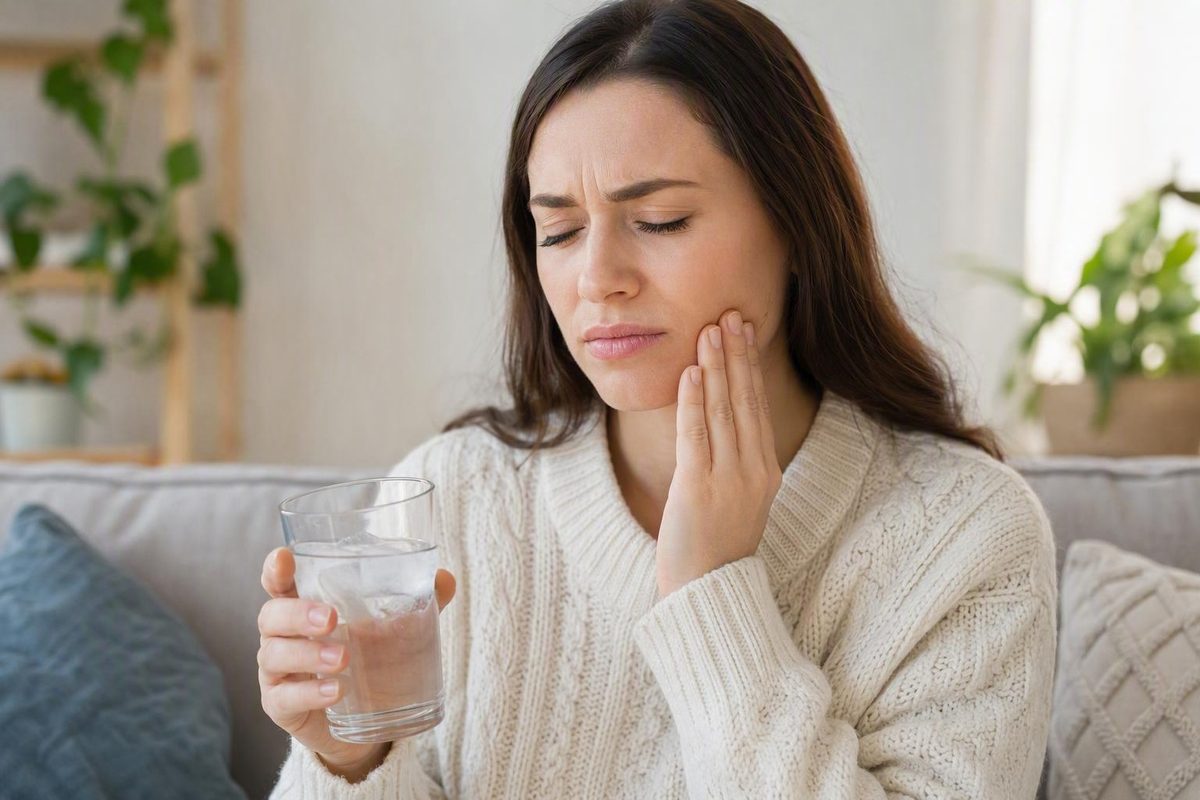
The short answer: a new crown can react to cold, but the pattern matters
Mild cold sensitivity can occur shortly after a tooth is prepared for a crown or after the crown is cemented. This is especially plausible when the natural tooth still contains living pulp—the soft tissue inside the tooth that responds to temperature.
A quick “zing” from cold water or air that stops promptly and becomes less noticeable over time is generally presented as less concerning than pain that lingers, starts without a trigger, wakes you at night, or gets progressively worse. Those distinctions are useful for deciding when to contact a dentist, but they cannot identify the underlying cause by themselves.
Arrange a dental review if pain:
- Continues after the cold source is gone
- Becomes more intense or frequent
- Starts without an obvious trigger
- Wakes you from sleep
- Interferes with eating
- Occurs when you bite or release your bite
- Appears alongside swelling, discharge, fever, or crown movement
These patterns are among the warning signs identified in the supplied dental-practice guidance, although that guidance is not an independent clinical guideline and should be treated as provisional rather than diagnostic advice about post-crown sensitivity.
There is no well-supported universal deadline for cold sensitivity after a crown. The supplied practice articles offer estimates ranging from a few days to a couple of weeks, with some allowing several weeks. One practice article emphasizes that improvement over time matters more than reaching a particular day on the calendar in its overview of cold sensitivity after crown placement.
That makes the direction of change more useful than a rigid countdown:
- Improving: A weaker, shorter, or less frequent response is generally more reassuring.
- Unchanged: Sensitivity that is not settling deserves a call to the treating dentist, particularly if it affects normal eating.
- Worsening: Increasing, lingering, spontaneous, nighttime, or biting-related pain should be assessed promptly.
Temporary irritation, exposed dentin, bite interference, a crown-fit problem, decay, a crack, and unhealthy pulp can produce overlapping sensations. Even when pain seems to come from the crowned tooth, an examination may be needed to confirm the source.
Why a tooth can still feel cold beneath a crown
A crown covers a tooth, but it does not necessarily make the tooth biologically inactive. Unless the tooth has undergone root canal treatment, it may retain living pulp that can react to temperature.
Before placing a crown, a dentist removes some of the tooth’s outer structure to create room for the restoration. That work can temporarily irritate the pulp, particularly when the tooth was already heavily filled, cracked, decayed, or otherwise compromised. Irritation does not automatically mean permanent damage. The more useful question is whether the response is settling or developing a more concerning pattern.
Another possible pathway is exposed dentin. Dentin lies beneath enamel and contains microscopic tubules extending toward the inner part of the tooth. If dentin is exposed near a crown margin, around a receding gumline, or during the temporary-crown stage, temperature changes may produce a sharp response. A dental-practice explanation of crown fitting describes both tooth preparation and dentin tubules as possible reasons for short-term sensitivity after crown treatment.
The gums may also be tender after the procedure. Work near the gumline and the cementation process are presented in the supplied sources as possible short-term contributors. These are possibilities, not conclusions that can be reached from cold sensitivity alone.
It is also important to separate temperature pain from pressure pain. Living pulp can produce a thermal response, while soreness during biting may involve the bite, the tissues supporting the tooth, a crack, or another problem. The sensations can overlap, so a person’s description of “crown pain” does not establish which structure is responsible.
That is why repeatedly provoking the area cannot replace a dental examination.
Match the symptom pattern to the appropriate next step
Use this as a limited triage guide, not as a diagnostic tool. It summarizes warning patterns described in the supplied dental-practice sources; it is not a comprehensive emergency-medicine framework.
| Level | Pattern | Appropriate next step |
|---|---|---|
| Monitor while improving | A brief cold twinge soon after crown preparation or cementation; pain ends promptly when the cold is removed; sensitivity is becoming weaker or less frequent; no swelling, spontaneous pain, looseness, or meaningful chewing difficulty | Reduce temperature triggers, keep the area gently clean, and watch the overall trend |
| Arrange prompt dental review | Cold pain lingers; symptoms fail to improve or become worse; pain starts without a trigger, interrupts sleep, or interferes with eating; the tooth hurts when biting; the crown feels high, loose, or unstable | Contact the treating dentist or another qualified dentist for an assessment rather than waiting for a fixed deadline |
| Seek urgent dental assessment | Swelling, fever, pus or discharge, a bad taste associated with swelling, or severe and escalating throbbing pain | Seek urgent professional dental assessment; these signs should not be treated as routine adjustment symptoms according to the supplied crown-pain guidance |
Brief cold pain
A momentary sharp response that ends with the trigger and gradually improves is generally the least concerning pattern described by the supplied sources. It can be consistent with temporary irritation after preparation or exposed dentin, particularly soon after treatment.
Continue to watch the trend rather than repeatedly testing the tooth. If the symptom stops improving, affects eating, or develops additional features such as biting pain or crown movement, contact the dentist.
Lingering or spontaneous pain
Pain that continues after cold has been removed is more concerning than a split-second twinge. The same applies to pain that begins by itself, becomes progressively stronger, or wakes you at night.
These patterns justify assessment of the tooth, crown, bite, and surrounding tissues. They do not prove that the pulp is permanently damaged, and they do not establish that root canal therapy will be necessary.
Pain when biting
If the crowned tooth seems to meet its opposing tooth before the rest of your teeth come together, the crown may have premature contact—a “high bite.” Other possible clues include pressure, soreness after chewing, or biting discomfort that began soon after placement.
Biting pain is not proof of a high crown. Crown-fit problems, inflammation, a crack, or another structural issue may feel similar. Pain when releasing the bite is also worth reporting. A dentist needs to examine the tooth before deciding whether a bite adjustment or another treatment is appropriate.
Swelling or escalating throbbing
Swelling, fever, pus or discharge, or a bad taste associated with swelling should not be treated as an ordinary adjustment symptom. Severe, escalating throbbing also warrants urgent dental assessment.
The supplied evidence supports prompt professional assessment for these dental warning signs, but it comes from practice-based educational pages rather than an independent emergency-care guideline. This guide therefore does not attempt to classify every possible medical emergency.
Symptoms alone cannot determine whether the eventual solution will be a bite adjustment, crown work, decay treatment, or root canal therapy. Several different problems can produce similar pain.
Temporary crown, new permanent crown, or an older crown: timing changes the possibilities
The type and age of the crown provide useful context, but they do not establish the diagnosis.
While wearing a temporary crown
A temporary crown protects a prepared tooth while the final restoration is being made. The supplied sources describe temporary crowns as having a less definitive fit or cement seal than final crowns, which may allow more temperature sensitivity during this stage in an explanation of temporary-crown sensitivity.
Possible contributors include:
- Recent tooth preparation
- Exposed dentin near the margin
- A temporary seal that does not fully block temperature changes
- Gum or cement irritation
- Movement or looseness
- Excessive biting pressure
Commercial oral-care guidance also identifies sensitivity to hot and cold as a possible issue while wearing a temporary crown and advises avoiding sticky foods that could disturb it during the temporary-crown period.
If the temporary crown feels mobile, avoid chewing on that side and call the dental office for instructions. Self-care may reduce stimulation, but it cannot correct a loose restoration or an abnormal bite.
After final cementation
With a newly cemented permanent crown, possible explanations include residual irritation from preparation, temporary gum or cement irritation, exposed dentin near a margin, bite interference, or a fit problem.
A mild cold response that is fading is different from pain that is intensifying, lingering after the stimulus, or combining with chewing pain. Pay particular attention to whether the bite feels different once local anesthesia has worn off. If the crowned tooth appears to touch first, request a bite check rather than assuming the sensation will necessarily resolve on its own.
Sensitivity that begins months or years later
New sensitivity under an older crown is less consistent with immediate recovery from placement. Possibilities described in the supplied material include:
- Gum recession exposing a sensitive root surface
- A loose, worn, chipped, or damaged crown
- Changes at the crown margin or cement seal
- Decay beneath or beside the crown
- Grinding or clenching
- A crack in the tooth
- Changes in pulp health
- A problem in a nearby tooth
A dental-practice review of delayed sensitivity lists recession, decay, crown loosening or damage, and deterioration in pulp health among the possibilities requiring examination when an older crown becomes temperature-sensitive.
Do not assume that the crown material is responsible. The evidence pack does not establish that any one material is inherently superior for preventing sensitivity. Fit, seal, bite, remaining tooth structure, gum position, and the tooth’s condition before treatment may all matter.
How crown fit and bite can contribute
A crown must fit both the prepared tooth and the overall bite. A problem in either relationship may create symptoms.
Possible clues to premature bite contact include:
- The crowned tooth feels as though it touches first
- Chewing produces pressure or soreness
- The tooth feels bruised after meals
- Biting pain began shortly after crown placement
- The bite feels uneven or unfamiliar
A dentist can mark where the teeth contact and determine whether the crown is receiving excessive pressure. If premature contact is the problem, the dentist may adjust the biting surface. That possibility is one reason persistent pain should not automatically be equated with a need for root canal treatment.
Possible reasons to request a fit assessment include:
- Detectable crown movement
- A visible edge or gap
- Food repeatedly trapping around one area
- New difficulty chewing
- A change in how the crown feels against the tongue
- A crown that appears to shift during chewing
Practice-based guidance describes a loose or poorly fitting crown as a possible source of movement, food trapping, bacterial entry, and discomfort in its discussion of crown pain and fit. These clues warrant professional assessment, but they do not allow a person to confirm leakage, decay, or a defective margin at home.
Overlap remains important. A high crown may produce biting soreness, but inflammation or a crack can produce similar symptoms. A loose crown may trap food, but food trapping alone does not prove decay. The examination determines how the clues fit together.
Low-risk ways to reduce mild sensitivity while monitoring it
When symptoms are mild, brief, and improving—or while you wait for a dental appointment—the goal is to reduce triggers without neglecting the tooth.
Moderate the temperature
Choose lukewarm or room-temperature foods and drinks temporarily. Avoid ice water, frozen desserts, very hot drinks, and rapid alternation between hot and cold.
This may reduce repeated stimulation, but it does not treat the underlying cause.
Reduce chewing pressure
Chew on the other side if the crowned tooth is sore under pressure. Softer foods may be more comfortable for a short period. Avoid hard foods if biting aggravates the tooth, and avoid sticky foods if the crown is temporary or may be loose.
Pay attention to naturally occurring symptoms rather than repeatedly chewing on the tooth to check whether the pain is still present.
Keep cleaning gently
Continue brushing instead of avoiding the crowned tooth. Use a soft toothbrush and light pressure around the gumline, and continue careful cleaning between the teeth.
Gentle oral hygiene, moderate-temperature foods, and temporary avoidance of hard or sticky foods are among the conservative measures described in the supplied practice guidance for mild post-crown sensitivity.
If cleaning appears to move the crown or causes repeated problems at the same margin, stop relying on home care and contact the dentist.
Consider sensitivity toothpaste
A fluoride or desensitizing toothpaste used according to its label may help some forms of sensitivity.
Toothpaste cannot correct:
- A high bite
- A loose or poorly fitting crown
- A crack
- Decay
- Infection
- Pulp that cannot recover
The supplied sources do not establish that one brand or active ingredient is best specifically for post-crown sensitivity.
Be cautious with pain medicines
This guide does not recommend a particular pain medicine or dose. Over-the-counter medicines can have contraindications, interactions, allergy risks, and other limitations. If you are uncertain whether a product is suitable—particularly because of pregnancy, another medical condition, or other medicines—ask an appropriate clinician or pharmacist and follow the product label.
Comfort measures are a bridge while mild symptoms settle or while care is arranged. They are not a substitute for assessment when pain lingers, worsens, disrupts sleep, affects eating, or occurs with swelling or crown movement.
What a dentist may check—and how treatment depends on the cause
A follow-up commonly starts with the history of the symptom. Useful details include:
- When the sensitivity began
- Whether it started with the temporary or permanent crown
- Whether the tooth had symptoms before treatment
- What triggers the pain
- How long it lasts after cold is removed
- Whether it hurts during biting or bite release
- Whether pain occurs without a trigger
- Whether it interrupts sleep
- Whether the pattern is improving, stable, or worsening
The dentist may assess the bite, inspect the crown margins, check for movement, and examine the gums and nearby teeth. Depending on the situation, the evaluation may also include temperature or pressure testing and dental X-rays.
Treatment depends on the suspected cause and may include:
- Adjusting premature bite contact
- Managing an exposed or sensitive area
- Treating irritated gum tissue
- Recementing the crown
- Replacing a poorly fitting or damaged crown
- Treating decay
- Monitoring a pulp that appears capable of recovering
- Performing root canal therapy if the clinical findings indicate that the pulp cannot recover
A dental-practice overview describes this range from bite adjustment and crown work to decay treatment or root canal therapy, depending on examination findings rather than sensitivity alone in its discussion of treatment options.
Persistent sensitivity does not automatically mean that the crown has failed. It also does not automatically mean root canal treatment is needed. A bite problem and significant pulp disease can both hurt, but they require different treatment.
What if the tooth already had root canal treatment?
The supplied evidence supports that narrow point but does not adequately establish a complete differential diagnosis for pain perceived around such a crown.
One practice article notes that temperature sensitivity is less likely after the nerve has been removed in its discussion of crowns after root canal treatment.
Make a short symptom log before the appointment
Record the following once or twice a day rather than continually provoking the tooth:
- Date of onset
- Temporary or permanent crown
- Approximate age of the crown
- Cold, heat, sweet, air, or pressure trigger
- Duration after the trigger stops
- Pain during biting or bite release
- Spontaneous pain
- Sleep disruption
- Swelling, discharge, or bad taste
- Crown looseness or movement
- Whether the overall trend is improving
This information cannot diagnose the cause, but it can make the clinical history clearer and more useful.
The evidence has limits: use the guide for triage, not diagnosis
Most of the topical material available for this article comes from dental-practice marketing pages. One source is a commercial toothpaste page. Few provide independent clinical citations for their proposed recovery periods, symptom thresholds, or product recommendations.
Repetition across commercial pages is not the same as independent confirmation. If several practices say sensitivity lasts “a few days,” “two weeks,” or “several weeks,” that does not establish a universal recovery period. It also does not show how often post-crown sensitivity occurs or how accurately any one symptom predicts pulp damage.
Important uncertainties include:
- The exact expected duration of mild sensitivity
- How reliably temporary- and permanent-crown symptoms differ
- How strongly lingering cold pain predicts whether the pulp can recover
- How effective desensitizing toothpaste is specifically after crown placement
- Whether crown material has meaningful clinical importance after accounting for fit, seal, bite, preparation, and prior tooth condition
- Which home-observed clues best distinguish bite interference, a crack, decay, leakage, and pulp disease
- How symptoms around a previously root-canal-treated crowned tooth should be interpreted
Because the supplied evidence does not include an independent emergency-care guideline, this article does not attempt to provide a complete medical-emergency classification. Its escalation advice is limited to the dental warning signs directly represented in the available sources.
Decay Guide publishes general reference information. It is not a dental practice and cannot determine crown fit, pulp health, decay, cracks, infection, or the true source of an individual’s pain.
The practical conclusion is straightforward: judge cold sensitivity after a crown by its pattern and direction, not by one universal countdown. A short twinge that steadily improves may fit temporary recovery. Lingering, worsening, spontaneous, nighttime, biting-related, or swelling-associated pain deserves professional assessment. Reduce triggers, keep the area gently clean, record what is happening, and contact a dentist when the trend suggests that continued waiting is no longer appropriate.
Frequently asked questions
How long is cold sensitivity normal after a crown?
There is no universal, evidence-based cutoff in the supplied material. Dental-practice estimates range from several days to several weeks, but those estimates are inconsistent and are not validated clinical deadlines. Improvement over time is more informative than a particular date according to one practice overview.
A brief cold twinge soon after treatment is more compatible with routine recovery when it stops promptly and steadily becomes weaker or less frequent. Contact a dentist if the symptom fails to improve, becomes worse, lingers after cold exposure, interferes with eating, wakes you at night, or occurs with biting pain, swelling, or crown movement.
Does lingering cold pain mean I need a root canal?
Lingering cold pain can justify prompt evaluation, but it does not determine the diagnosis or treatment. A dentist may need to evaluate the temperature response, biting response, crown fit, margins, gums, nearby teeth, and X-rays before deciding what is happening as outlined in the supplied clinical-practice discussion.
Depending on the findings, treatment could range from monitoring or a bite adjustment to crown work, decay treatment, or root canal therapy. Persistent sensitivity is not automatic proof of crown failure or permanent pulp damage.
Can a crown that is too high cause cold sensitivity or pain when biting?
A crown that contacts the opposing tooth before the rest of the bite may create excessive pressure and cause soreness or pain when biting. Some people notice that the crowned tooth “hits first” or feels bruised after chewing. A dentist can check the contact points and adjust premature contact when appropriate as described in guidance on new-crown sensitivity.
A high bite may contribute to symptoms, but biting pain is not diagnostic. Inflammation, a crack, and other dental problems can produce overlapping sensations, so the crown should be examined rather than assumed to be the cause.
Why did an older crown suddenly become sensitive to cold?
Sensitivity that starts months or years after placement is less consistent with immediate post-procedure irritation. Possibilities described in the supplied sources include gum recession and exposed root surface, a loose or damaged crown, changes at the margin or cement seal, decay, grinding, a crack, changes in pulp health, or sensitivity from a nearby tooth in this review of delayed crown sensitivity.
These possibilities cannot be distinguished reliably at home. Arrange a dental assessment, particularly if the sensitivity lingers, worsens, affects chewing, or occurs with looseness, swelling, discharge, or spontaneous pain.
Can a crowned tooth hurt if it already had root canal treatment?
Yes, pain may still be perceived around a crowned tooth that has undergone root canal treatment.
A dentist needs to examine the crown, bite, surrounding area, and nearby teeth to determine where the symptom is coming from.