
What Post-Root-Canal Pain Should Feel Like—and When to Call
Mild pressure or biting sensitivity can sometimes extend into the second week, provided the sensation is steadily fading.
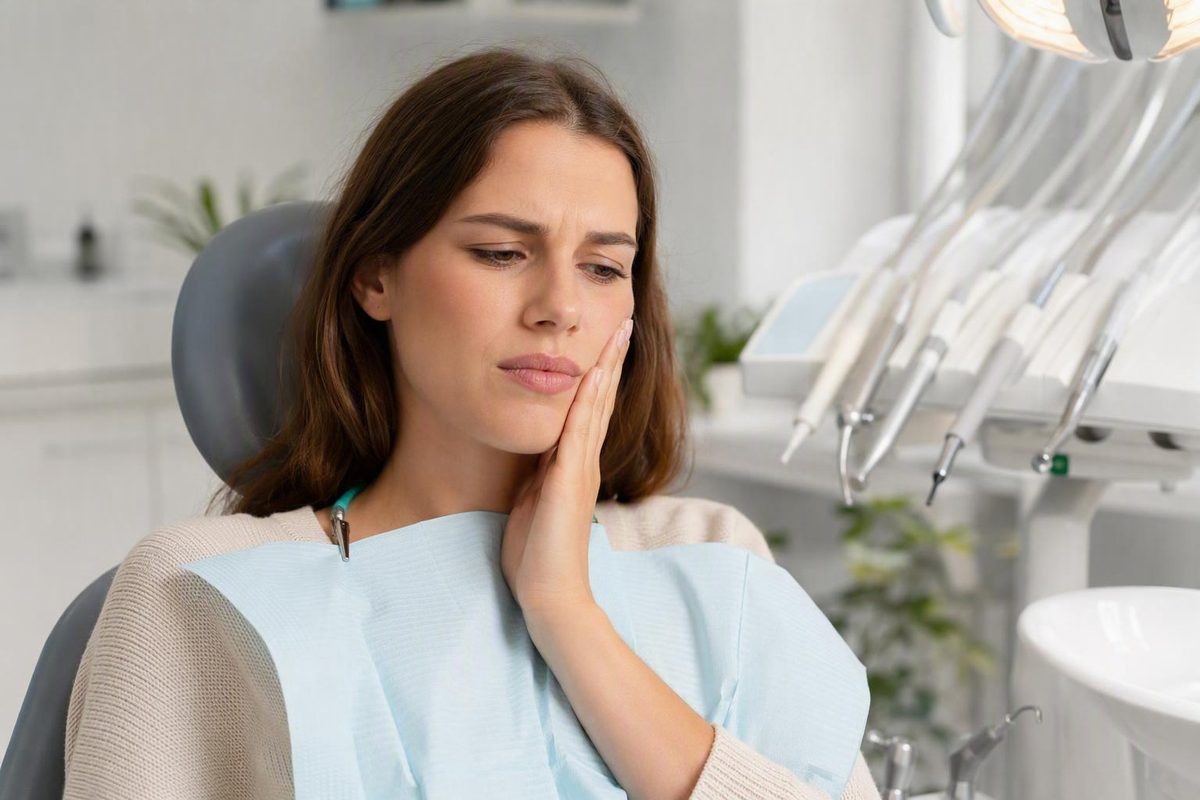
The short answer: a few days of soreness, usually much better within a week
Mild soreness, pressure, or tenderness after a root canal commonly lasts two to three days, although this is a typical range rather than a deadline that applies to everyone. Discomfort often becomes noticeable as the local anesthetic wears off and may be most pronounced during the first 24–48 hours. Some people have little or no pain after treatment. A dental-practice recovery guide describes the commonly reported two-to-three-day pattern.
Most people are substantially more comfortable within about a week. Cleveland Clinic says root-canal recovery generally takes less than one week and advises contacting the provider if pain lasts beyond a week or worsens, especially if it becomes throbbing. See Cleveland Clinic’s root-canal recovery guidance.
Mild pressure or biting sensitivity can sometimes extend into the second week if it is steadily fading. That does not mean every symptom lasting two weeks is routine: unchanged, escalating, or disruptive pain needs assessment. One endodontic-practice guide reports that complete resolution of sensitivity can take up to two weeks in some cases.
There is no guaranteed day on which every treated tooth should feel completely normal. “Recovery” may refer to pain relief, disappearance of biting sensitivity, return to ordinary function, completion of the permanent restoration, or deeper healing around the root. Those are different endpoints. The tooth’s condition before treatment, the procedure’s complexity, whether treatment takes more than one appointment, the restoration in place, and individual healing can all affect the experience.
The most useful questions are therefore:
- Is the discomfort mild and manageable?
- Is it becoming less noticeable from day to day?
- Or is it severe, unchanged, worsening, or returning after improvement?
Mild tenderness that steadily fades is generally more reassuring than pain that escalates—even when both occur within the same nominal recovery window.
Decay Guide provides general dental information. It is not a dental practice and cannot diagnose an individual reader’s symptoms or determine what treatment that person needs. Its editorial boundary and scope should not be mistaken for individualized clinical care.
A practical recovery timeline from the first day through week two
Think of this timeline as a range, not a promise. Follow the instructions from the dentist or endodontist who treated you if they differ from general guidance.
First few hours: Your mouth, lip, cheek, or tongue may remain numb as the local anesthetic wears off. Follow your clinician’s instructions about when to eat or drink. The American Association of Endodontists advises against chewing or drinking hot or cold liquids during the first hour after treatment. Review its post-treatment instructions.
First 24–48 hours: Manageable aching, chewing tenderness, pressure sensitivity, mild gum soreness, jaw stiffness, or limited swelling can occur. Jaw discomfort may come from holding your mouth open rather than from the tooth itself. Symptoms may be noticeable, but they should not be rapidly intensifying.
Days 2–3: A dull ache or tenderness when biting may remain. The trend is more useful than the mere presence of discomfort: symptoms should be stable or starting to improve, not becoming stronger each day.
Days 3–7: Soreness should be noticeably lower, and most discomfort should be fading. Light pressure sensitivity may remain, particularly when the tooth is used for chewing.
After one week: Most people should be substantially more comfortable. Contact the treating dentist or endodontist if pain is not clearly improving, is worsening, or disappeared and then returned.
During week two: Mild pressure or biting sensitivity that continues to fade may represent the tail end of recovery. Pain that is unchanged, escalating, or interfering with eating, sleep, or ordinary activity needs professional assessment rather than further calendar-watching.
This day-by-day pattern is consistent with patient guidance describing tenderness during the first several days, fading soreness through the first week, and a need for review when symptoms remain unchanged or worsen. A published dental-practice timeline outlines that progression.
Feeling comfortable does not necessarily mean that every deeper healing process is complete. Inflammation in tissues around the root may continue resolving after symptoms settle, and changes in the surrounding bone or tissues can remain visible on follow-up imaging for months. Symptom recovery and radiographic healing are different endpoints. A root-canal recovery guide distinguishes early symptom relief from longer-term tissue and bone healing.
Recovery may also feel less linear when treatment is being completed over several appointments or when a temporary restoration remains in place. If you are uncertain whether your symptoms fit the expected stage of your treatment, ask the treating office rather than applying a generic timeline rigidly.
Which sensations can be part of normal short-term recovery?
“Pain” can refer to several different sensations after root-canal treatment. Separating them can make the pattern easier to describe and evaluate.
Tooth tenderness: The treated tooth may feel bruised or sore when touched. This can happen because tissues surrounding the root remain inflamed even though pulp and nerve tissue were removed from inside the tooth.
Biting or pressure sensitivity: Chewing places force on the ligament and other tissues supporting the root. Temporary inflammation there can make biting uncomfortable. This pattern is more reassuring when the sensitivity becomes milder each day.
Gum tenderness: The gum near the treated tooth may feel sore following the procedure. Mild, localized tenderness should settle rather than spread or intensify.
Jaw-muscle soreness: Holding the mouth open during treatment can fatigue the jaw muscles. The resulting ache may be felt near the treated tooth without originating inside it. Mild jaw soreness can last a few days.
Swelling: Limited swelling is reported during the first few days in some patient guidance. It should not be dismissed automatically, however. Visible, persistent, or increasing swelling warrants contact with the treating office.
A different sensation from neighboring teeth: A treated tooth may feel somewhat different from other teeth for a time. That observation alone does not prove there is a problem, but it also does not make every unusual sensation harmless. Note whether it is fading, triggered by biting, associated with swelling, or accompanied by the return of earlier symptoms.
Across these categories, use an improving-pattern test. Manageable symptoms that become milder are generally more consistent with short-term recovery. Severe symptoms, or symptoms that remain unchanged or worsen, deserve assessment.
Normal, monitor, or call: how to judge the pattern
This table is a triage aid, not a diagnostic tool. Professional guidance advises contacting the treating office for severe pain or pressure lasting more than a few days, visible swelling, an uneven bite, an allergic medication reaction, loss of a temporary restoration, or return of pretreatment symptoms. The American Association of Endodontists lists these reasons for prompt contact.
| Expected if improving | Contact the treating office promptly | Requires individualized clinical direction |
|---|---|---|
| Mild aching during the first few days | Severe pain or pressure lasting more than a few days | Which pain medicine, if any, is medically appropriate for you |
| Light pressure or chewing tenderness | Pain that intensifies after initially settling | Whether examination, imaging, bite adjustment, restoration work, retreatment, or another procedure is appropriate |
| Mild gum soreness near the treated tooth | Pain that does not respond to the clinician-approved measures you were told to use | Whether antibiotics are indicated based on clinical findings |
| Jaw fatigue or stiffness after holding the mouth open | Persistent or increasing visible swelling | How to manage symptoms between appointments when treatment is incomplete |
| A slightly different feeling from the treated tooth that is fading | Fever, drainage or pus, bad taste or odor, or a gum boil | How to protect or restore a tooth after the temporary material is assessed |
| Mild sensitivity that becomes less noticeable over time | Return of symptoms experienced before treatment | |
| Pain beyond about one week that is not clearly improving | ||
| An uneven bite or a tooth that feels higher than nearby teeth | ||
| A temporary filling or crown that comes out | ||
| A suspected allergic medication reaction |
Worsening symptoms deserve attention even if the root canal was performed only a few days ago. Being inside a usual recovery window does not make severe or escalating pain routine.
Conversely, reaching day seven does not automatically mean that every remaining sensation proves a complication. Faint pressure sensitivity that continues to fade is different from an unchanged, disruptive ache. The former may continue to settle; the latter should be assessed.
Contact the treating office if pain is not responding to the measures you were instructed to use. Medication changes and treatment decisions require individualized advice rather than trial and error.
Visible swelling, drainage, fever, a gum boil, bad taste or odor, and returning pretreatment symptoms can have several explanations. Report them promptly, but do not try to decide from symptoms alone whether you have an infection, crack, untreated canal, or treatment failure.
Why does the tooth hurt mainly when you bite?
Pain only when biting does not automatically mean that the root canal failed.
The pulp and nerve tissue are removed from inside the tooth during root-canal treatment, but the ligament, bone, and other tissues surrounding the root can still sense pressure. Temporary inflammation in these tissues can make chewing uncomfortable. When that is the explanation, discomfort should generally become less pronounced as the area settles.
Another possibility is an uneven temporary filling, crown, or other restoration. If the treated tooth contacts first—or feels taller than neighboring teeth—it may receive extra force whenever you close your mouth. Repeated pressure can sustain tenderness.
Report the problem if:
- The treated tooth clearly feels higher than nearby teeth.
- Your bite feels obviously uneven.
- You experience sharp pain with each bite.
- Chewing pain is unchanged or worsening.
- Biting pain occurs with swelling or returning pretreatment symptoms.
An examination may show that the restoration needs attention, but symptoms alone cannot confirm that it is high.
It is therefore unwise to assume that all bite-related pain has a simple alignment cause—or that an adjustment will necessarily resolve it. Mild biting tenderness that fades day by day is more reassuring than pain that remains unchanged, intensifies, or returns after the tooth had become comfortable.
How to protect the tooth and manage discomfort safely
Your treating dentist’s or endodontist’s instructions should take priority because that clinician knows whether treatment is complete, what restoration is in place, and which medicines are appropriate for you.
In general:
- Choose softer foods early in recovery. Avoid hard, sticky, or crunchy foods and heavy chewing on the treated tooth.
- Protect a temporary restoration. A tooth with a temporary filling or crown should not be treated as fully restored. Avoid forceful biting until the permanent restoration is completed and your clinician clears ordinary use.
- Clean gently. Continue brushing and flossing, taking care around a sore area rather than abandoning oral hygiene.
- Do not repeatedly test the tooth. Biting hard to see whether it still hurts can continue to irritate pressure-sensitive tissues.
- Complete follow-up care. Pain relief does not mean treatment is finished. Arrange the permanent crown or other final restoration as directed.
The American Association of Endodontists recommends gentle brushing and flossing, avoiding hard foods and heavy biting until the tooth is cleared for use, and completing the final crown after root-canal treatment and follow-up appointments. These instructions are especially important while a temporary restoration is present.
Over-the-counter pain medicine may help some people, but it should be used only when medically appropriate and according to both the product label and the treating clinician’s instructions. A general article therefore cannot provide a universal dose, drug combination, or alternating schedule.
Some patient-care guidance also suggests a cold compress against the outside of the face for short-term soreness or limited swelling. It may provide comfort, but it does not treat an underlying complication or remove the need for assessment if symptoms increase. General recovery guidance discusses medication precautions, cold compresses, soft foods, and protection of the treated tooth.
Antibiotics are not a substitute for evaluating persistent pain. Whether they are appropriate depends on clinical findings and must be decided by a qualified clinician; do not assume that lingering tenderness alone means they are needed. Endodontic patient guidance describes antibiotics as potentially appropriate when infection is present rather than as routine pain relief.
Protect the tooth until restoration is complete. A permanent crown or other final restoration is part of completing care, not an optional step made unnecessary because the pain has stopped.
What persistent, returning, or late pain can—and cannot—tell you
Persistent pain does not automatically prove that root-canal treatment failed.
Possible categories of explanation include:
- Residual inflammation in tissues around the root
- An uneven bite or another restoration problem
- Lingering infection
- An untreated canal
- Leakage around a restoration
- A crack
- Pain arising from another tooth, the jaw, or a non-dental source
This is not a self-diagnosis checklist. Several conditions can cause similar symptoms, and more than one issue may exist at the same time.
Symptoms alone cannot tell you whether you need a bite adjustment, additional restoration work, retreatment, or a different type of care.
It is useful to distinguish two patterns:
- Continuing pain: The tooth never became comfortable after treatment.
- Returning pain: Symptoms improved or disappeared, then came back later.
Both merit professional review, especially when pain is significant or accompanied by swelling or other warning signs. Neither pattern identifies its cause by itself.
Pain lasting six months or longer has been reported in a minority of patients and may have dental or non-dental origins. A review published in 2010 discussed the persistent-pain literature but emphasized methodological limitations, uncertainty, and restricted generalizability. Its older estimates should not be treated as a current universal risk for every root-canal patient. Read the review archived by PubMed Central.
Felt pain and radiographic healing are also different. A person may become comfortable while bone or tissue changes continue to resolve for months. Conversely, continuing pain cannot be interpreted solely from the number of days that have passed or from assumptions about what an X-ray would show.
Follow-up allows the treating professional to compare symptoms with examination findings, the condition of the restoration, and imaging when indicated.
What to report when you contact the treating office
A concise description can help the dentist or endodontist determine what kind of evaluation is needed. Before calling, note:
- When the pain began: Did it start as the anesthetic wore off, several days later, or after a pain-free interval?
- Its direction: Is it improving, unchanged, worsening, or returning?
- Its pattern: Is it constant, intermittent, throbbing, or triggered mainly by biting?
- Its effect: Is it manageable, or does it interfere with eating, sleep, or ordinary activity?
- Your bite: Does the tooth feel higher than neighboring teeth or contact first?
- The restoration: Is the temporary filling or crown intact? Has any part loosened or fallen out?
- Associated signs: Is there visible swelling, fever, drainage, pus, bad taste or odor, or a gum boil?
- Earlier symptoms: Have the symptoms present before treatment returned?
- What you have used: Which clinician-approved aftercare measures or medicines have you tried, and did they help?
- The treatment stage: Was the root canal completed in one visit, or is it being performed over several appointments?
- The final restoration: Has the permanent crown or filling been placed?
These observations can help the treating professional decide whether you need a bite check, restoration assessment, examination, imaging, or another form of follow-up. They cannot substitute for an examination and should not be used to choose treatment on your own.
Is pain three days after a root canal normal?
It can be. A dull ache, mild pressure sensitivity, or tenderness when biting may still be present on day three. The reassuring feature is that it is manageable and becoming less noticeable rather than intensifying.
Contact the treating office if pain is severe, worsening, accompanied by visible swelling or fever, or not responding to the measures your clinician approved. Do not dismiss escalating symptoms simply because day three falls within a commonly described recovery range.
Can a root canal tooth still be sensitive after one or two weeks?
Mild sensitivity can sometimes continue into the second week if it is steadily fading. Most people should nevertheless be substantially more comfortable within about one week.
Pain that remains unchanged, worsens, returns after improvement, or occurs with swelling or other warning signs should be assessed. At two weeks, continuing symptoms should not be assumed harmless based only on a general timeline.
Why does my root canal tooth hurt only when I bite down?
Pressure on inflamed tissues around the root can cause temporary biting tenderness even though nerve tissue was removed from inside the tooth. An uneven temporary filling or crown is another possibility, especially if the treated tooth feels taller or contacts first.
You cannot determine the cause from symptoms alone. Report sharp pain with each bite, a clearly uneven bite, worsening tenderness, swelling, or symptoms that are not fading.
What should I do if my temporary filling or crown comes out?
Contact the treating dentist or endodontist promptly and follow their instructions.
Until you receive individualized direction, protect the area from hard, sticky, or heavy chewing. Loss of a temporary filling or crown is a recognized reason to contact the treating office.
Does prolonged pain mean the root canal failed?
No. Prolonged pain can have several possible explanations, including residual inflammation, bite or restoration problems, lingering infection, an untreated canal, leakage, a crack, or pain from another dental or non-dental source. Pain alone does not prove treatment failure or identify what should happen next.
The practical rule is straightforward: mild tenderness that becomes less noticeable each day commonly fits the expected recovery pattern, and most people are substantially better within about a week. Do not rely on the calendar when pain is severe, worsening, returning, or accompanied by swelling, fever, drainage, an uneven bite, or loss of a temporary restoration. Contact the treating dentist or endodontist for an assessment, because lingering pain has several possible causes and cannot be diagnosed from symptoms alone.