
Why Does My Tooth Filling Hurt After Months? Possible Causes and When to Seek Care
Pain that never stopped may stem from filling placement or pulp response. New pain after pain-free months suggests a crack, decay, filling shift or another tooth.
Overview
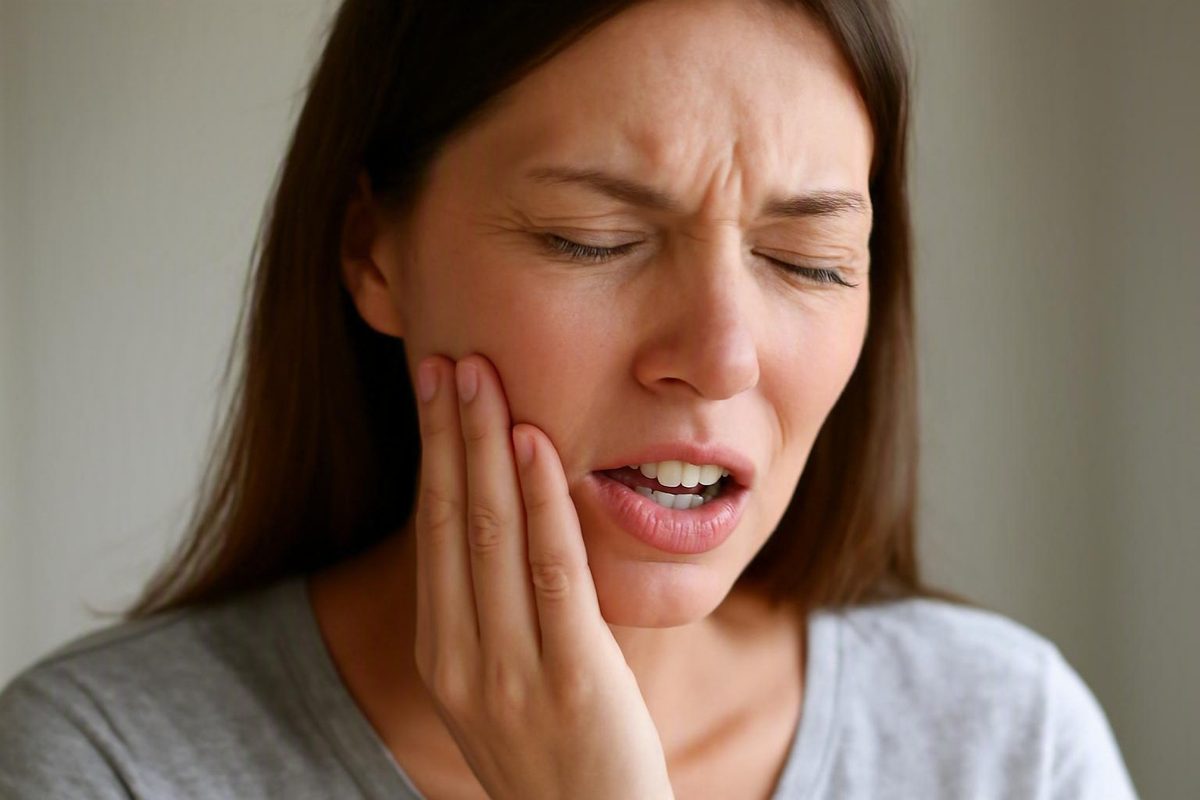
Pain in a filled tooth months after treatment is not typical post-procedure sensitivity, and it warrants a dental examination. The most plausible explanations include an uneven bite, a cracked or leaking filling, recurrent decay or infection, pulp (nerve) inflammation, grinding pressure, or pain referred from another source — but symptoms alone cannot tell you which one applies to your tooth.
Ordinary post-filling sensitivity is short-lived. Sources disagree on the exact window — one dental practice describes mild discomfort lasting up to two weeks, while another puts typical resolution at two to four weeks — but none of them treats pain persisting or appearing months later as part of normal healing. As one practice puts it plainly, pain six months after a filling is not normal and may point to bite misalignment, cracks, or secondary decay under the filling.
One distinction is worth settling before you call the dentist, because it changes the history you report. Sensitivity that never fully resolved after the procedure is a different story from pain that started after a symptom-free interval. Continuous discomfort since the appointment may relate to how the restoration was placed or how the pulp responded to treatment, while pain that begins after months without symptoms suggests something has changed — a crack, new decay, a shifting filling, or a problem in a nearby tooth. Neither timeline is a diagnosis, but reporting it accurately helps your dentist narrow the search faster.
The rest of this article organizes the plausible causes, explains what your pain pattern can and cannot tell you, and sets out how quickly to seek care.
Possible causes of pain months after a filling
The recurring causes fall into a handful of categories rather than one long undifferentiated list: mechanical pressure from a bite that no longer meets evenly, structural failure of the filling or tooth, inflammation of the pulp inside the tooth, decay or infection around or beneath the restoration, overload from grinding or clenching, and pain referred from somewhere other than the filled tooth. These categories are useful for understanding — not for self-diagnosis, because they overlap. A cracked filling can irritate the pulp; grinding can crack a filling; decay under a restoration can eventually infect the nerve. Several categories can be active in the same tooth at once, which is exactly why professional assessment matters.
High filling or uneven bite pressure
A filling that sits even slightly too high can throw off your bite and concentrate extra force on that tooth every time you chew. One dental practice describes it directly: a filling higher than your natural bite puts extra pressure on the tooth when chewing, which can result in long-term discomfort or pain rather than a problem that fades on its own.
This cause is worth understanding because it is often one of the simpler ones to correct — mild bite problems can usually be fixed with a quick adjustment at the dental chair. But the timing matters for interpretation. A high filling typically causes discomfort from early on, so if your tooth was comfortable for months and then began hurting when you bite, bite height alone is a less complete explanation, and something may have changed in or around the tooth.
There is also an important boundary here: pain when biting down is not specific to a high filling. The same practice notes that sharp pain on biting can indicate either a high filling or a crack, and the two look identical from the patient’s side. A dentist distinguishes them by checking bite contacts, examining the restoration, and using biting tests — which is why a biting-pain complaint should prompt an examination rather than an assumption that a simple adjustment will fix everything.
Cracks, leakage, wear, recurrent decay, or infection
Fillings do not last forever, and a restoration that has cracked, loosened, worn down, or lost its seal can stop protecting the tooth months or years after placement. A cracked or leaking filling allows bacteria and food particles to sneak in, possibly leading to further decay or even oral infection, as one practice explains — and that process can begin quietly, well after the tooth felt fully settled.
The mechanism is straightforward. A filling seals the prepared cavity against bacteria. When cracks or fractures form — from chewing forces, grinding, or ordinary wear — bacteria and food debris can enter the tooth through those gaps and cause pain in the filled tooth. Bacterial penetration under or around the filling can then lead to new decay, sometimes called recurrent or secondary decay, in the tooth structure the filling was meant to protect. If that decay progresses toward the pulp, infection becomes possible.
Two boundaries keep this category honest. First, pain does not prove infection: a leaking filling can cause sensitivity without any infection being present, and possible warning signs of infection include swelling, a bad taste, pus, or fever — though infection can be present without them — covered in the urgency section below. Second, structural problems are not always visible or palpable to you. A hairline crack or marginal leak may only be detectable through examination, imaging, and targeted testing. What you can usefully report is any change you have noticed: a rough edge, a sensation that the filling has shifted, food catching where it did not before, or new sensitivity to sweets.
Pulp or nerve inflammation
The soft tissue inside your tooth — the pulp, which contains the nerve — can become inflamed, and this is one of the most important possibilities to have assessed when a filled tooth hurts months later. Deep decay that required drilling close to the nerve puts stress on the pulp and exposes it to inflammation, so teeth that had large or deep fillings carry more of this risk than teeth with small, shallow ones.
Pulp inflammation exists on a spectrum, and the distinctions matter for treatment. In the American Association of Endodontists’ diagnostic terminology, reversible pulpitis describes inflammation expected to resolve once the cause is managed: discomfort appears when a stimulus such as cold or sweet is applied and goes away within a couple of seconds after the stimulus is removed, and the pain is not spontaneous. Symptomatic irreversible pulpitis, by contrast, describes an inflamed pulp that is incapable of healing; its characteristics may include sharp pain on thermal stimulus, lingering pain often lasting 30 seconds or longer after the stimulus is removed, unprovoked spontaneous pain, and referred pain — and the AAE notes that deep caries and extensive restorations are among the common causes.
Treat these labels strictly as clues, not as self-applicable diagnoses. The AAE’s current pulpal diagnosis guidance shows that pulp conditions can present with anything from no symptoms to severe spontaneous pain, and that assessment relies on thermal testing, comparison with control teeth, percussion, and radiographs. What you should do is note the pattern — how long pain lingers after hot or cold, whether it ever appears unprovoked, whether it wakes you at night — and report it, because that history is one of the primary tools a dentist uses to assess pulp status.
Grinding, clenching, and pain from another source
Two frequently overlooked possibilities deserve their own category: pressure habits that overload the tooth, and pain that only seems to come from the filled tooth. Grinding your teeth (bruxism) or clenching your jaw puts extra pressure on a filling and can cause cracks or fractures over time. One practice describes the mechanism in more detail: the constant pressure of grinding can wear down fillings, causing them to crack, shift, or lose their tight seal — which then feeds back into the structural and decay problems described above. Because grinding often happens during sleep, many people do not know they do it; morning jaw soreness or a partner’s report can be the only hints.
The second possibility is referred pain. As one dental practice notes, nearby teeth, sinuses, and even jaw tension can create confusing signals — you feel pain in one tooth, but the problem is somewhere else. This matters practically: if your pain is vague, moves around, is hard to pin to a single tooth, or coincides with sinus congestion or jaw fatigue, say so at your appointment. That description steers the dentist toward comparing neighboring teeth and checking non-dental sources rather than focusing only on the restoration you suspect.
The boundary for both: neither grinding nor referral can be confirmed from symptoms alone, and a filled tooth that hurts can still have its own independent problem even in a person who grinds.
What pain patterns can—and cannot—tell you
Your pain pattern is genuinely useful information — for your dentist. It narrows the questions worth asking, but it cannot identify the cause, because different conditions produce overlapping patterns. The matrix below summarizes what each common pattern plausibly suggests and, just as importantly, what it does not prove. Treat it as preparation for an appointment, not as a diagnostic tool.
| Pain pattern | Plausible clues (per supplied sources) | What it does NOT prove |
|---|---|---|
| Sharp pain when biting down | A high filling or a crack — one practice names both as likely candidates for sharp biting pain | Does not tell you which of the two it is; a bite adjustment will not fix a crack |
| Brief “zing” to hot, cold, or sweet that fades within seconds | Milder sensitivity; consistent with the AAE’s description of reversible pulpitis, where discomfort resolves within a couple of seconds of removing the stimulus | Does not prove the pulp is healthy; only pulp testing against comparison teeth can assess that |
| Temperature pain that lingers or worsens | A deeper issue; the AAE associates lingering pain of 30 seconds or more after stimulus removal with irreversible pulp inflammation | Does not by itself confirm irreversible pulpitis or the need for a root canal — testing and imaging are required |
| Spontaneous or throbbing pain, sometimes worse when lying down | Possible significant pulp inflammation or infection; persistent throbbing pain is flagged by practice sources as a warning sign | Does not confirm infection; severity and cause must be established by examination |
| Vague, shifting, or hard-to-locate pain | Possible referred pain — nearby teeth, sinuses, or jaw tension creating confusing signals | Does not rule out a real problem in the filled tooth |
Two overarching cautions apply to every row. First, the same tooth can show more than one pattern — biting pain plus lingering cold sensitivity, for example — and the combinations overlap across causes. Second, the AAE’s diagnostic framework makes clear that a probable diagnosis cannot be reached without comparing the tooth in question with adjacent and contralateral teeth under controlled testing, something no one can do on themselves at home. Use the matrix to describe your symptoms precisely; leave the conclusion to the examination.
How soon to seek dental or medical help
Persistent pain months after a filling always deserves professional evaluation — the only real question is how fast. Based on the supplied evidence, three action levels cover the realistic situations:
- Book a prompt dental examination for pain that has persisted, returned, or newly appeared months after a filling — even if it is mild or intermittent. Practice sources are consistent that prolonged pain might mean a problem that needs attention, and dental checkups are the safest choice for lasting issues. Do not wait for the pain to become severe; a small crack or early recurrent decay is easier to treat than an infected pulp.
- Seek urgent dental assessment if you suspect an infection or abscess. NHS guidance on dental abscess lists warning symptoms including intense toothache, redness inside or outside the mouth, a bad taste, a swollen face or jaw, swollen glands in the neck, difficulty opening the mouth and chewing, and a high temperature — and advises asking for an urgent dentist appointment if you think you have an abscess. Practice sources agree: immediate dental attention is important for symptoms like fever, swelling, or pus. Note that the NHS specifically advises against going to a general medical practice for this, because dental treatment is needed.
- Get emergency medical help if the situation escalates beyond the mouth. The NHS instructs people to call emergency services or go to an emergency department if they are finding it hard to breathe, speak, or swallow; have a swollen or painful eye or sudden eyesight problems; have a lot of swelling in the mouth; or find it hard to open the mouth. These signs suggest spreading infection and are treated as a medical emergency, not a wait-for-the-dentist problem.
Because service names, phone numbers, and access routes vary by country, use whatever urgent dental and emergency pathways operate where you live. The thresholds themselves — persistent pain, suspected infection, and airway- or eye-related warning signs — translate across systems. The practical takeaway: months-later filling pain is never a “watch it for another few months” situation, and worsening pain with swelling or fever moves you up a tier the same day.
How a dentist may identify and treat the cause
Because so many causes produce overlapping symptoms, the dental visit follows a structured pathway: your history first, then examination and targeted testing, and only then a treatment decision. This is worth understanding in advance for two reasons — it explains why no article (including this one) can tell you what your tooth needs, and it helps you arrive prepared with the details that make the assessment faster and more accurate.
History, examination, bite tests, pulp tests, and imaging
The assessment starts with your account of the problem. The AAE’s endodontic diagnosis protocol describes taking a medical and dental history covering past and recent treatment, then characterizing the chief complaint: how long it has lasted, the duration of pain episodes, location, onset, triggering stimuli, what relieves it, whether it refers elsewhere, and what medications have been tried. This is exactly why the onset distinction from the overview — continuous since the filling versus new after a symptom-free interval — is worth reporting precisely.
The clinical examination then checks the visible and testable ground: soft tissues, periodontal status, caries, and restorations (the AAE protocol specifically asks whether restorations are defective or newly placed). Practice sources describe the same essentials from the patient’s side — checking bite alignment, filling integrity, and nerve response, and taking X-rays where indicated.
Targeted tests separate the categories that symptoms cannot. Pulp testing with cold, heat, or an electric pulp tester assesses the nerve’s response; percussion and palpation check the tissues around the root; a biting test (the AAE protocol names a Tooth Slooth device) reproduces biting pain in a controlled way that can help localize a crack. Crucially, results are compared against adjacent and contralateral teeth, because a response only means something relative to normal teeth in the same mouth. Radiographs — the AAE protocol lists periapicals, bitewings, and cone-beam CT where warranted — look beneath the restoration for decay, root changes, and bone involvement.
Even with all of this, no single test reveals every crack or cause on the first pass. Some problems declare themselves over time, and a dentist may monitor a borderline finding rather than treat immediately.
Treatment depends on what the examination finds
The treatment follows the finding, not the symptom label — which is the honest answer to the question most readers bring to this article: does persistent filling pain mean I need a root canal? No. It means you need an examination, after which the treatment could be anything from a five-minute adjustment to pulp treatment, depending on what is actually wrong.
The supplied evidence supports a bounded set of pathways. If the bite is uneven, mild bite problems can usually be fixed with a quick adjustment. If the restoration itself has failed, damaged or leaky fillings may need to be replaced. If grinding is overloading the tooth and restoration, addressing that pressure protects both the current filling and its replacement — otherwise the same forces that cracked or shifted the first filling will work on the next one. If recurrent decay is found, the affected structure is treated and the tooth re-restored.
Root canal treatment sits at the end of this pathway, not the beginning. Practice sources describe root canals as typically recommended when pain is due to infection in the tooth’s nerve, and note that a dentist will evaluate the tooth and perform necessary tests to determine whether the pulp is infected before recommending one. The AAE’s pulpal diagnosis table reflects the same logic: interventions range from no treatment or monitoring, through pulp protection, to pulpotomy or root canal treatment, depending on the severity of symptoms and objective findings. Persistent pain raises the question; testing answers it.
Temporary comfort measures while waiting for care
While you wait for your appointment, the goal is comfort without self-deception: nothing you do at home repairs a failed filling, removes decay, or treats an infection. The supplied evidence supports a small set of low-risk measures drawn from practice sources and NHS self-care advice for dental pain:
- Eat soft foods (the NHS suggests examples like soup, scrambled eggs, mashed potatoes, and yoghurt) and avoid chewing on the affected tooth.
- Avoid very hot or very cold food and drink, and steer clear of very sweet or acidic foods that trigger the pain; one practice specifically advises skipping icy drinks and frozen treats until discomfort subsides.
- Keep the area clean gently — the NHS recommends a soft toothbrush; one practice suggests rinsing with warm salt water to reduce inflammation and keep the area clean.
- A toothpaste formulated for sensitivity may ease temperature-triggered discomfort.
Non-prescription pain relievers can help manage pain in the interim — practice sources mention ibuprofen, and the NHS lists ibuprofen or paracetamol as options, while noting that children under 16 should not take aspirin. If you use any of these, follow the product label exactly. The NHS is emphatic that you should not take more than the recommended dose of any painkiller: a higher dose will not make it work better, but it can be very dangerous. The supplied evidence does not cover contraindications, drug interactions, pregnancy, or specific health conditions, so if any of those may apply to you, check suitability with a pharmacist or clinician before taking anything.
The final boundary is the most important one. Feeling better on painkillers does not mean the underlying problem has improved — a leaking filling still leaks and an inflamed pulp can still deteriorate while the symptoms are masked. Use these measures to stay comfortable until the appointment, not as a reason to postpone it. If the pain worsens, swelling appears, or any of the urgent warning signs from the care-urgency section develop while you wait, escalate rather than medicate.