
Is Filing Your Teeth With a Nail File Safe?
A nail file can permanently remove tooth enamel. Learn the risks, why painless filing is not safe, and what to do if you have already tried it.
How this site is written
Decay Guide is written by a health writer, not by a dentist, and no article here has been reviewed by a clinician. We work from public patient-education sources — the NHS, the CDC, the American Dental Association and hospital patient guides — and link to them so you can check what we say. Figures such as pocket depths are quoted as the educational benchmarks those sources use, not as thresholds you can apply to yourself. Nothing here replaces an examination.
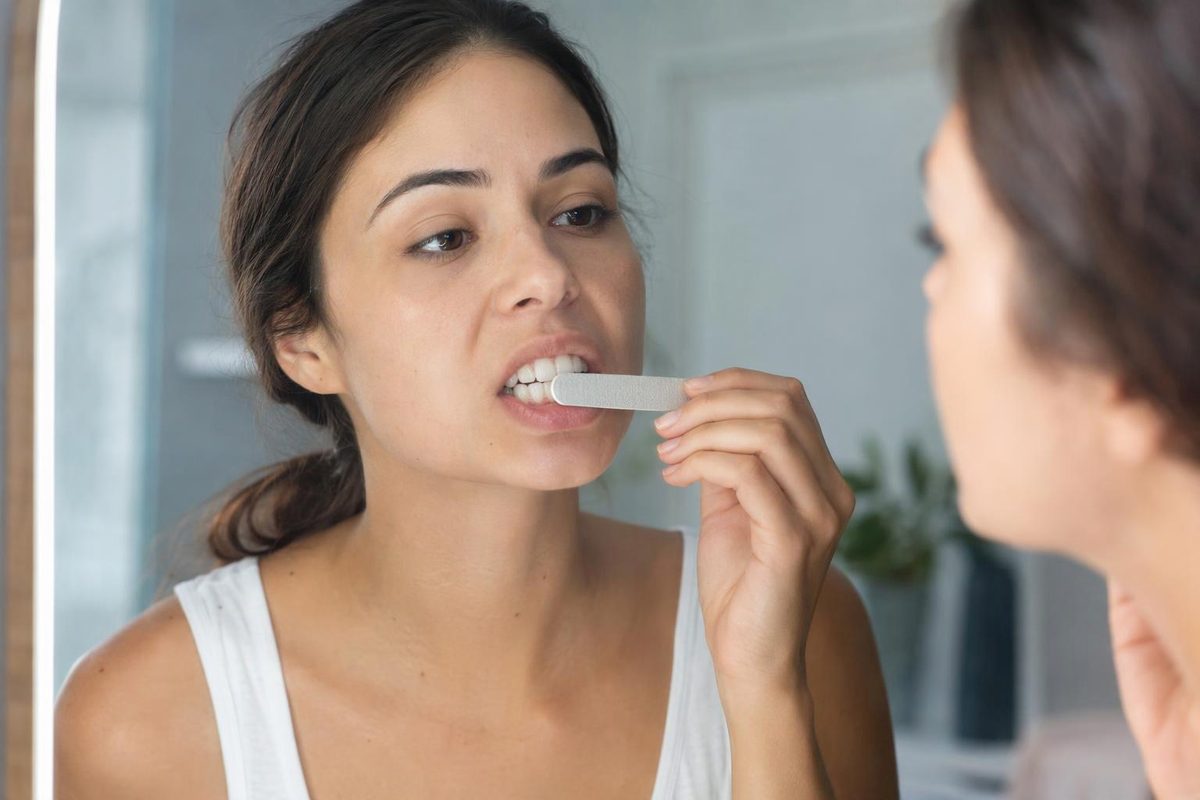
No. Filing your teeth with a nail file is not a safe way to smooth a chip or even out your smile. It removes tooth structure permanently, and removing too much enamel can cause sensitivity, increase decay risk and change how your teeth meet. The American Association of Orthodontists warns against DIY filing, including the nail-file trend seen on social media.
Professional tooth contouring also removes enamel, but only after a dental assessment and with controlled tools. It is not a procedure to copy at home.
Why even painless filing can cause damage
Enamel is the hard outer covering of a tooth. Beneath it is dentin, a softer layer that is more vulnerable to cavities and sensitive to temperature and sweets when exposed. Enamel thickness varies between teeth and across different parts of the same tooth; a mirror cannot tell you how much protective structure remains. Cleveland Clinic explains these risks of tooth shaving.
DIY filing can cause:
- Permanent shortening or an unwanted shape. Removed enamel does not grow back. Trying to correct one uneven edge by filing neighboring teeth removes still more structure.
- Sensitivity and greater cavity risk. Removing too much enamel can expose dentin. That does not mean every filed tooth will develop a cavity, but it reduces protection.
- Cracks or bite problems. Incorrect filing can damage tooth structure or affect the way upper and lower teeth come together. The AAO identifies both as risks.
Lack of pain is not a safety check. Enamel itself has no nerves, so removing it may not hurt while it is happening. Cleveland Clinic’s enameloplasty guidance explains why professionally controlled enamel removal is usually painless—and why DIY filing should still be avoided.
There is no safe home technique to offer here. Using a new file or making only a few passes does not resolve the central problem: you cannot judge the safe amount to remove.
If you have already filed your teeth
Stop filing rather than trying to make the edges match. Arrange a dental assessment and explain which teeth you filed and any changes you noticed. A painless result does not establish that no damage occurred, but it also does not mean extensive treatment is inevitable.
While waiting:
- Continue gentle brushing with a soft-bristled toothbrush and fluoride toothpaste, consistent with Cleveland Clinic’s care guidance after enamel removal.
- If the tooth is sore, choose soft foods, avoid chewing on it and avoid very hot, cold or sweet foods that provoke pain. These are NHS measures for easing toothache while awaiting care, not repairs for lost enamel.
- If a piece broke off, keep it in milk or saliva and take it to the dentist; sometimes a fragment can be reattached. A chipped, cracked or broken tooth warrants a dental visit.
Contact a dentist promptly for persistent pain, pain when biting, swelling, fever or a bad taste. Seek emergency medical care if swelling makes breathing, swallowing or speaking difficult, or extends around the eye or neck. These are NHS dental warning signs.
Fluoride can help remaining enamel regain minerals lost during early decay. That process—remineralization—does not rebuild an edge physically filed away. The NIDCR explanation of early decay reversal concerns mineral replacement, not regrowth of missing tooth structure.
Safer options for an uneven edge
A dentist may consider limited enameloplasty, also called tooth contouring, for a small shape irregularity. Beforehand, they assess tooth health and remaining structure; during treatment, they check the bite and polish the surface. It still permanently removes enamel and is not suitable for every tooth. Cleveland Clinic describes the assessment and procedure.
For a chip or short edge, composite bonding may add tooth-colored resin instead of shortening adjacent teeth. If the issue is tooth position or how teeth meet, orthodontic treatment may be more appropriate than filing. The AAO describes these alternatives.
The useful first step is finding out why the edge looks uneven—not removing more of it.
Decay Guide provides general dental information, not individual diagnosis or treatment advice.