
Is Coffee Bad for Your Teeth? Stains, Sugar and Enamel
Coffee can stain teeth, while added sugar raises cavity risk. Learn what uncertain erosion evidence means and which habits reduce avoidable risk.
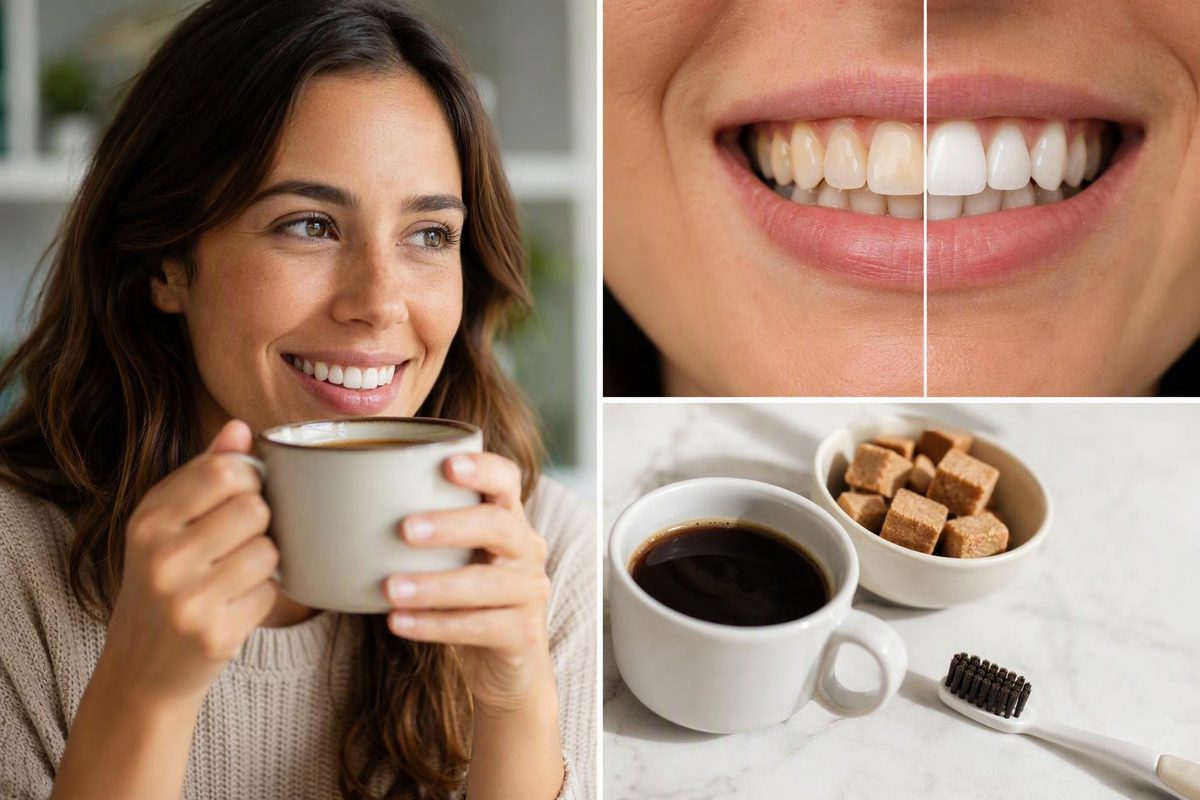
Coffee can stain teeth, but staining is not the same as tooth damage. For cavity risk, added sugar and repeated sipping are important concerns. Coffee’s effect on enamel erosion is less certain: laboratory findings vary and do not establish how much damage ordinary coffee drinking causes.
The useful distinction is between three processes: surface staining, bacterial tooth decay and acid erosion.
Coffee stains do not necessarily mean decay
Coffee contains colored compounds called chromogens, which attach to the outer enamel surface. That can gradually change how teeth look without proving that enamel has been lost or a cavity has formed. The American Dental Association identifies coffee as a common source of tooth staining. ADA: teeth whitening
Surface stains can be reduced with stain-removal toothpastes. These work through mild abrasives; they do not change the tooth’s underlying color the way peroxide bleaching does. Whitening also does not repair decay or replace missing enamel, and it does not whiten crowns, veneers or fillings. ADA: whitening options
That distinction matters: making a tooth look whiter is not evidence that it is healthier.
Sugar changes the cavity risk
Tooth decay occurs when plaque bacteria use sugars to produce acids. Repeated acid attacks can cause enamel to lose more minerals than saliva and fluoride replace. Early decay may be stopped or reversed before a hole forms; once tooth structure has broken down into a cavity, it cannot simply grow back. NIDCR: the tooth decay process
A sweetened coffee therefore presents a different cavity concern from unsweetened coffee. Table sugar, sweetened syrups and sugary creamers add fuel for this bacterial process. Sipping a sweet coffee throughout the morning creates repeated sugar exposures—even if the drink seems like only one serving. The ADA specifically warns about sipping sugary drinks for long periods. ADA: foods and drinks that can damage teeth
Choosing unsweetened coffee removes the added-sugar contribution. It does not eliminate every possible dental concern, including staining.
Does coffee erode enamel?
Erosion is acid-related tooth wear that does not depend on bacteria. It is different from decay, and tooth structure lost through erosion is irreversible. Acid exposure, saliva and drinking patterns all help determine risk. ADA: dental erosion
Coffee-specific laboratory findings need careful interpretation:
- In one study testing 60 substances, coffee did not cause a statistically significant reduction in enamel surface hardness during the short exposures tested. Laboratory study of erosive potential
- Another study using extracted teeth in a simulated oral environment reported reductions in calcium and phosphate measurements after instant-coffee exposure. However, those changes were not statistically significant, and hardness changes were not significant after correction for multiple comparisons. The authors suggested potential erosion, but the results do not firmly establish it. Laboratory beverage study
These experiments used different methods and exposure times. Neither tells us how much enamel a person will lose from a daily cup. Coffee’s acidity alone is not enough to predict its real-world effect, and the evidence does not justify treating every coffee as equivalent to soda or citrus juice.
Habits that reduce avoidable risk
- Reduce added sugar. Check syrups and creamers rather than judging only how sweet the coffee tastes.
- Avoid stretching a sweetened drink over hours. Having it with a meal instead of repeatedly between meals limits the pattern of sugar exposures described above.
- Rinse with plain water afterward. Water rinsing is a simple step after acidic beverages; it does not replace brushing. ADA: dietary-acid precautions
- Keep the usual cleaning routine. Brush gently twice daily with fluoride toothpaste and a soft-bristled brush, and clean between teeth daily. Extra force is not the answer to coffee stains. ADA: brushing guidance
There is no need to add a brushing session after every cup. The ADA’s dietary-acid guidance recommends waiting an hour before brushing after acidic foods and rinsing with water after acidic meals or beverages. Applying that delay after coffee is a cautious timing approach, not proof that every coffee causes significant erosion. ADA: dietary-acid precautions For a morning routine, see brushing before or after breakfast.
When coffee causes pain
Pain with hot or iced coffee can reflect sensitivity from several causes, including decay, a cracked tooth, worn enamel or an exposed root. It does not establish that coffee caused the problem. Persistent or recurring sensitivity deserves a dental assessment rather than simply switching drinks or whitening the tooth. ADA: sensitive teeth
Decay Guide is an independent information publisher, not a dental practice. This article provides general information, not an individual diagnosis or treatment plan.