
Do Toothbrush Sanitizers Work? Fewer Germs, Unproven Health Benefits
UV toothbrush sanitizers can reduce bacteria, but better dental health is unproven. See what the evidence shows and how to care for your brush.
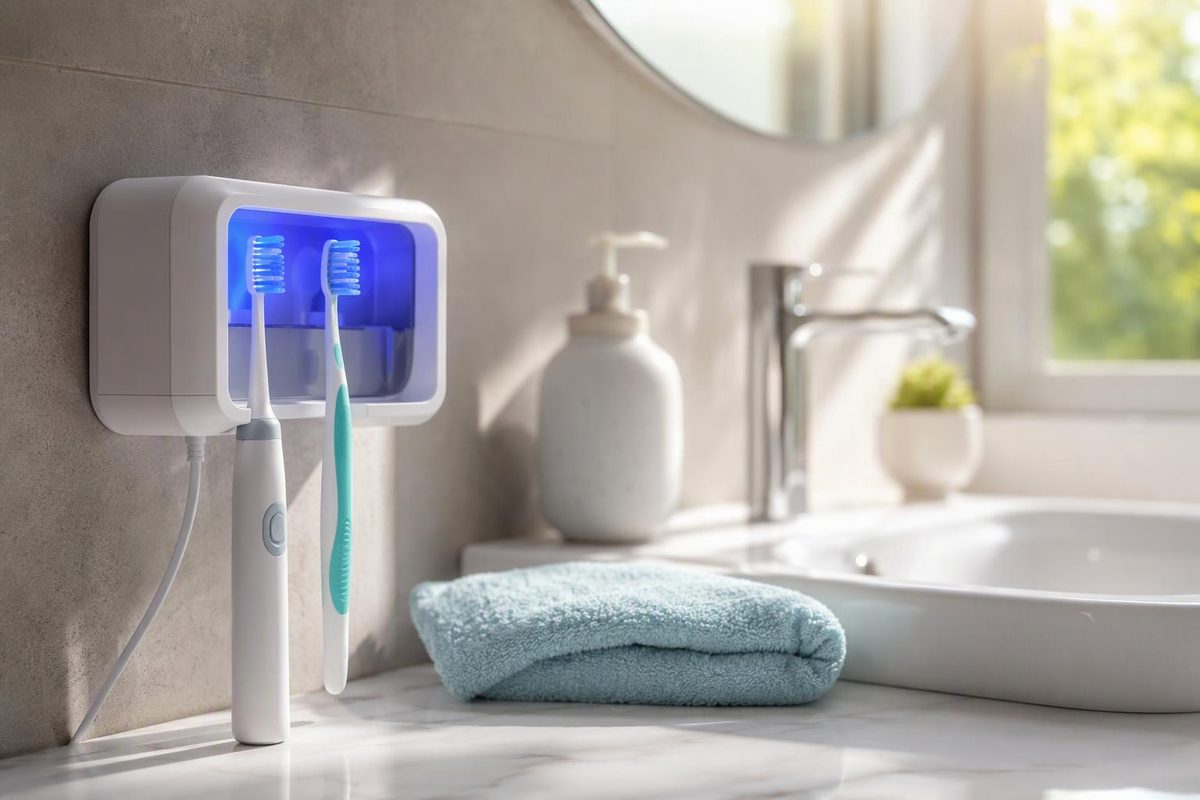
Toothbrush sanitizers can reduce bacteria on a brush, but that is not the same as preventing cavities, gum disease or illness. UV devices have shown antibacterial effects in studies, with substantial variation in results. For routine home care, a sanitizer is an optional extra—not an established dental-health necessity.
The American Dental Association (ADA) notes that toothbrushes harbor bacteria, but there is no evidence that those bacteria cause adverse health effects. Its basic care recommendations are to rinse the brush, let it air-dry upright and replace it regularly. ADA toothbrush guidance
What the research actually shows
The research below addresses a narrow question: How many bacteria can researchers recover from a toothbrush after treatment? It does not establish whether users subsequently develop fewer cavities or healthier gums.
A 2026 systematic review included 41 studies of toothbrush disinfection, including eight randomized controlled trials. It searched for studies published from 2000 through 2024. UV treatment significantly reduced bacterial load compared with controls. However, results varied widely, and the authors rated the overall certainty of evidence as very low because of inconsistency and risk of bias. That supports “can reduce contamination,” not “every device reliably delivers the same result.” 2026 systematic review and meta-analysis
Individual studies also show why a result should not be applied to every product. In a small laboratory study published in 2010, researchers contaminated 20 toothbrush heads with human saliva and compared a UV travel sanitizer with antiseptic solutions and water. The UV device reduced bacteria that grow in oxygen compared with the control, but the antiseptic solutions performed better overall under those test conditions. This was a test of one device—not proof that all UV sanitizers are ineffective. Original laboratory study
A claim such as “kills 99.9% of germs” therefore needs context: which organisms, on what surface, using which cycle? Even an accurate laboratory reduction does not establish that the brush is sterile or that the user will have fewer dental problems.
Why a cleaner brush is not the same as cavity prevention
Cavity prevention concerns what happens on the teeth, not simply what remains on the toothbrush. Bacteria in dental plaque use sugars and starches to produce acids. Repeated acid exposure removes minerals from enamel, while saliva and fluoride help replace them. Sanitizing a brush does not address that whole process. NIDCR explanation of tooth decay
The ADA recommends brushing twice daily for two minutes with fluoride toothpaste. That has a more direct role in plaque removal and decay prevention than adding a sanitizer. A sanitizer should not displace brushing or cleaning between the teeth. ADA brushing recommendations
Brush care without a sanitizer
The ADA’s routine recommendations are straightforward:
- Rinse thoroughly after each use to remove remaining toothpaste and debris.
- Store upright and allow the brush to air-dry. Keeping a moist brush in a closed container encourages more microbial growth than leaving it exposed to air.
- Do not share toothbrushes. Sharing can exchange bodily fluids and microorganisms.
- Replace the brush approximately every three to four months, or sooner if the bristles are matted or frayed. Sanitizing does not restore worn bristles.
- Do not microwave the brush or put it in the dishwasher. High heat may damage it.
These recommendations apply whether or not a sanitizer is used. ADA toothbrush-care guidance
If you choose to buy one
Look for evidence about the specific device, clear operating instructions and compatibility with your brush head—not just a broad claim about UV technology. For U.S. shoppers, the ADA recommends looking for a toothbrush sanitizer cleared by the FDA. That recommendation should not be read as proof of cavity prevention. ADA guidance
Follow the device’s safety instructions and avoid exposing eyes or skin to its UV source. The FDA has warned that certain open UV disinfecting wands can cause eye or skin injuries within seconds. That warning is about those wands, not a finding that every enclosed toothbrush sanitizer is unsafe. FDA consumer warning
The practical buying decision is whether reduced brush contamination is worth the cost and extra upkeep to you. Better dental health remains an unproven benefit.
Decay Guide publishes general dental-health information and is not a dental practice. This article is not individual medical or dental advice.