
Are Apples Good for Teeth? Healthy Food, Not a Toothbrush
Whole apples are a reasonable snack, but they do not replace brushing. Learn what saliva, natural sugars and acidity mean for your teeth.
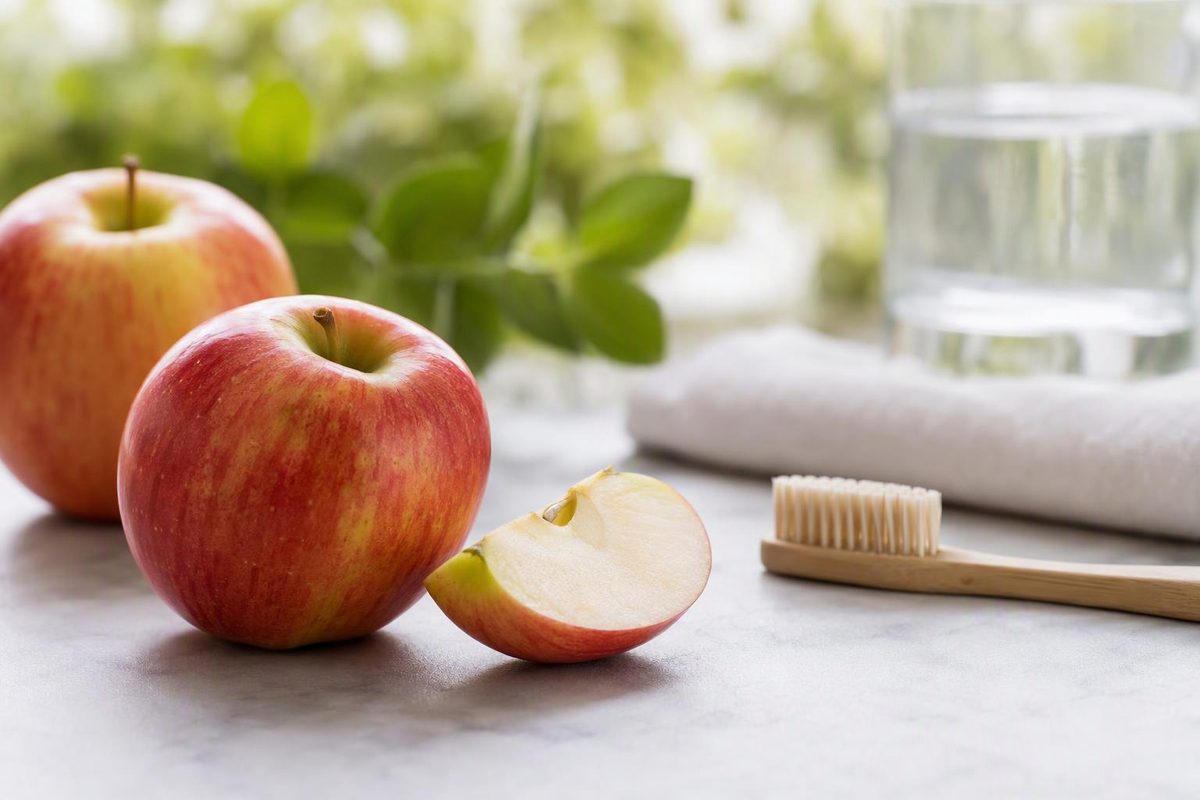
Whole apples can be part of a tooth-friendly diet, but they are not a reliable way to clean teeth or prevent cavities on their own. They provide fibre, and chewing stimulates saliva. They also contain natural sugars and acids, so a healthy food is not necessarily harmless to enamel under every eating pattern.
There is no general reason to avoid whole apples for dental health. UK preventive dental guidance recommends fresh fruit as a between-meal snack, while distinguishing it from juice, smoothies and dried fruit. The useful distinction is apples as food—not apples as dental care. UK healthier-eating guidance
Do apples actually clean teeth?
The crunchy texture can make teeth feel cleaner, but that sensation does not establish that an apple has removed dental plaque—the sticky bacterial film on teeth.
Research on apple chewing and plaque removal has produced conflicting results. In a 2018 crossover study, 20 healthy young adults ate a Golden Delicious apple on one occasion and brushed with water, without toothpaste, on another. Participants went without routine oral hygiene for 24 hours before and after each intervention. Apple chewing did not show reliable mechanical plaque removal. It temporarily reduced the proportion of viable bacteria in saliva, but that measure returned to baseline after 24 hours. A short-lived change in salivary bacteria is not proof of cavity prevention. Original study in PLOS ONE
Importantly, the researchers cautioned that the immediate rise in their plaque score could partly reflect apple residue or saliva-derived material taking up the plaque-disclosing dye—not simply more bacterial plaque. Differences in participants, apple varieties and measurement methods may help explain why studies disagree. This small study supports rejecting the “natural toothbrush” claim, not declaring apples bad for teeth. Study discussion and limitations
Saliva helps, but sugar and acid still matter
Saliva washes away food and buffers acids. ADA explanation of diet and saliva
Its calcium and phosphate, together with fluoride, also help replace minerals lost from enamel. These protective processes happen throughout the day; eating an apple does not substitute for fluoride toothpaste. NIDCR explanation of the decay process
Two different processes are relevant:
- Tooth decay: plaque bacteria use sugars to produce acids. Repeated acid attacks can cause mineral loss and eventually a cavity.
- Dental erosion: acids already present in foods or drinks act directly on tooth tissue, without bacteria needing to make them.
Apples contain both natural sugars and acids. That does not mean one apple will cause either problem. Frequency of exposure, saliva and the rest of the diet matter. Erosion can eventually cause irreversible loss of tooth structure, which is distinct from early decay that may remineralize while the surface remains intact. Apple study background, ADA guidance on erosion
An apple cannot fill a hole or regrow missing enamel. See why a hole changes whether decay is reversible.
Whole apples are different from apple juice
“Natural sugar” does not make every apple product equivalent. UK guidance excludes sugars within whole fresh fruit from its definition of free sugars, but includes sugars naturally present in fruit juice, smoothies and purées—even without added sugar.
For cavity prevention, that guidance recommends fresh fruit as a snack and keeping juice, smoothies and dried fruit to meals. Fruit juice also presents an erosion concern because of its acidity, especially with frequent consumption. UK dietary guidance, ADA erosion guidance
How apples fit into everyday dental care
- Choose whole fruit rather than treating apple juice as an equivalent snack. Whole apples are a reasonable option; sipping juice repeatedly extends sugar and acid exposure.
- Avoid prolonged grazing. Meals stimulate more saliva, and repeated eating throughout the day gives teeth less time between acid exposures. Fresh fruit remains a recommended snack when one is needed. ADA diet guidance
- Drink or rinse with water afterward. The ADA recommends water with food or rinsing after acidic foods and drinks. This helps manage exposure; it does not remove the need for brushing. ADA erosion guidance
- Keep the usual cleaning routine. Brush twice daily with fluoride toothpaste and clean between teeth daily. An apple is not a replacement for either task. ADA diet and dental-health guidance
Decay Guide is an independent information publisher, not a dental practice. This article provides general information, not an individual diagnosis or treatment plan.