
A Loose-Feeling Permanent Tooth Deserves a Prompt Check
Possible causes include gum disease, injury, grinding or clenching, and pregnancy-related changes; a knocked-out permanent tooth needs emergency care.
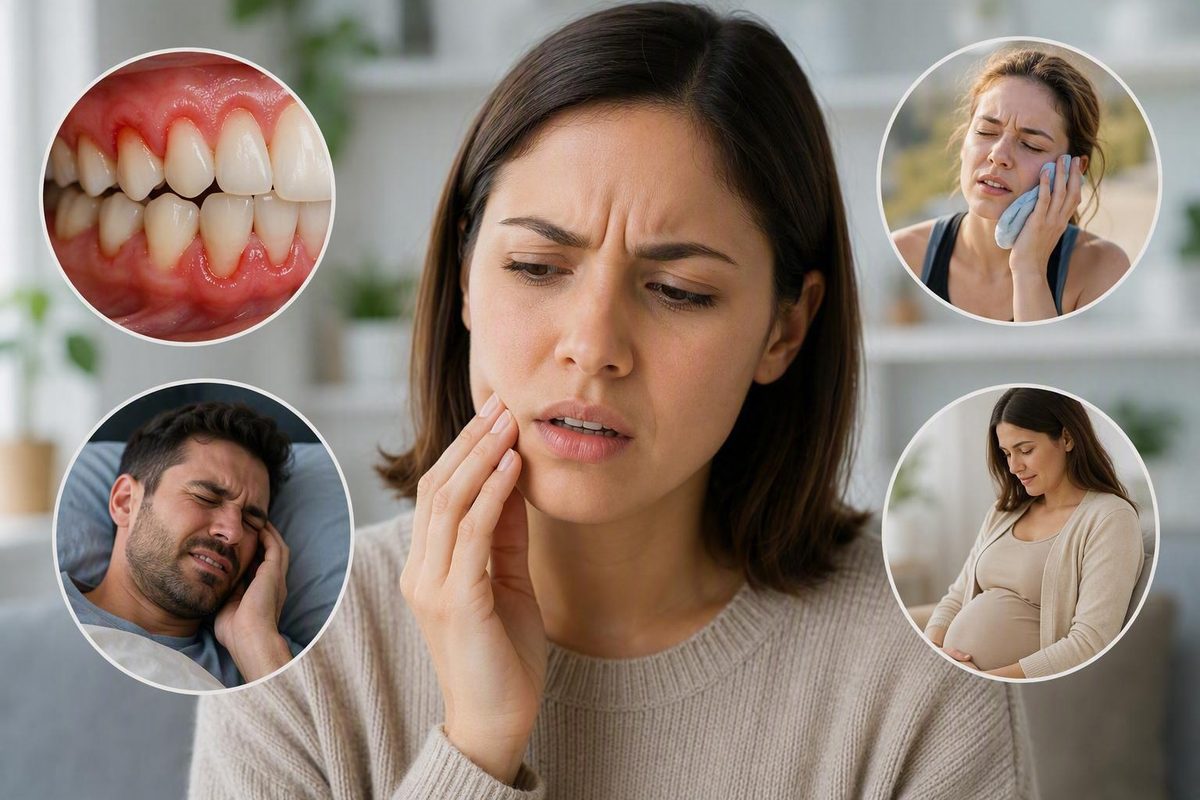
A loose-feeling permanent tooth should be examined promptly by a dentist, even if it does not hurt. Possible causes include gum disease, an injury, grinding or clenching, and pregnancy-related tissue changes. The sensation alone cannot identify the cause—or confirm that the tooth is clinically mobile. A partially or fully knocked-out permanent tooth requires immediate emergency dental care. Depending on the cause and remaining support, treatment may include cleaning, bite management, a mouth guard, splinting, periodontal treatment, surgery, or extraction; looseness does not automatically mean the tooth must be removed. Cleveland Clinic outlines the causes and treatment options for loose permanent teeth.
The short answer: arrange a dental examination
Loose baby teeth are generally expected as permanent teeth prepare to replace them. Looseness in a permanent tooth is different: it can indicate an injury or a condition affecting the gums, supporting ligaments, bone, or bite.
A tooth can also feel loose without showing measurable movement. Only a dental examination can establish whether it is clinically mobile and determine why the sensation is occurring.
| Situation | What it may mean | What to do |
|---|---|---|
| Loose baby tooth following the usual childhood pattern | Generally expected tooth replacement | Monitor it and follow the child’s usual dental-care plan |
| Loose-feeling permanent tooth without a recent injury | Possible gum, bite, clenching, or other dental problem | Arrange a prompt dental appointment, even if it is painless |
| Partially or fully knocked-out permanent tooth | Dental emergency | Seek immediate emergency dental care |
For a partially or fully knocked-out permanent tooth, stabilization has the best prospects when care begins quickly, ideally within about one hour. Do not wait for a routine appointment. Cleveland Clinic describes this emergency threshold and timing.
If a permanent tooth became loose or changed position after another type of injury, contact a dentist urgently and describe what happened. The available guidance does not establish one universal emergency timetable for every degree of traumatic mobility, so the dental team should determine the appropriate response.
For a painless loose-feeling tooth without a recent injury, arrange a prompt assessment rather than waiting for pain to develop. Earlier diagnosis may leave more options for stabilizing or retaining the tooth, although no outcome can be guaranteed.
Notice when the sensation occurs and report any related symptoms, but leave deliberate mobility testing to the dentist.
Four supported causes and the clues that may accompany them
The following clues can help you give the dentist a useful history. They overlap and should not be treated as diagnostic rules.
| Possible cause | What may be happening | Clues worth reporting |
|---|---|---|
| Periodontitis | Inflammation has damaged tissues and bone supporting the tooth | Red, swollen, tender, or bleeding gums; recession; persistent bad breath; chewing discomfort; shifting teeth; changed bite |
| Dental trauma | A blow or other injury has loosened or displaced the tooth | Recent impact; displacement; bleeding; discoloration; a bite that suddenly feels different |
| Grinding or clenching | Chronic excessive bite forces may contribute to mobility over time | Known or suspected grinding or clenching; discomfort when biting |
| Pregnancy-related changes | Hormonal changes may temporarily affect tooth-supporting tissues | Looseness arising during pregnancy, possibly with gum inflammation or bleeding |
Periodontitis can damage the ligaments and bone that hold teeth in place. Trauma can loosen one or more teeth, while chronic grinding or clenching may contribute to mobility over time. Changes in estrogen and progesterone during pregnancy may temporarily affect tooth-supporting tissues, but pregnancy should not be used to dismiss mobility, bleeding, swelling, pain, or bite changes. These causes and accompanying signs are described in Cleveland Clinic’s Loose Tooth: Causes & What To Do.
The clues cannot prove the cause. A dentist must compare the history and symptoms with findings from the examination and any necessary imaging.
How gum disease can progress to tooth mobility
Gum disease can loosen permanent teeth when it progresses far enough to damage their support. The simplified sequence is:
- Bacterial plaque accumulates around the teeth and gumline.
- Plaque that remains can harden into tartar.
- Bacteria and inflammation affect the surrounding gums.
- Advanced inflammation damages deeper supporting tissues and bone.
- With less support, teeth may loosen, shift, or eventually require removal.
Only a dentist or dental hygienist can remove hardened tartar. Early plaque-related gingivitis may improve with effective brushing and flossing. Periodontitis is different because it affects deeper supporting structures and requires professional management. The National Institute of Dental and Craniofacial Research explains this progression and the need for professional treatment.
Warning signs may include gums that bleed, look red or swollen, feel tender, or have pulled away from the teeth. Persistent bad breath, pain while chewing, sensitive or shifting teeth, and a changed bite may also occur.
Oral hygiene is only part of the picture. Tobacco use, diabetes, older age, genetics, stress, certain illnesses or medications, and hormonal changes are associated with periodontal risk, progression, or healing.
What a dentist may check
The examination is intended to answer two separate questions: Is the tooth actually moving, and what is causing the problem?
This documents the mobility pattern, but the pattern alone cannot establish a diagnosis.
A gum assessment may include checking for inflammation, bleeding, recession, and tartar, as well as measuring the spaces between the gums and teeth. Healthy periodontal pockets are usually 1 to 3 millimeters deep. Deeper measurements can indicate periodontal disease when considered with bleeding, attachment changes, mobility, and X-ray findings. NIDCR identifies pocket measurements, mobility checks, medical-history review, and X-rays as parts of gum-disease diagnosis and treatment planning.
Expect questions about recent blows or falls, grinding or clenching, pregnancy, tobacco use, health conditions, and medications. Tell the dentist when the sensation began, whether it is changing, and whether you have noticed bleeding, swelling, discoloration, chewing discomfort, or a different bite.
This workup is why a symptom checklist or home “wiggle test” cannot determine whether the appropriate treatment is periodontal care, bite management, stabilization, or another approach.
Treatment depends on what caused the looseness
A loose permanent tooth does not automatically require extraction. Some teeth become more stable after the underlying problem is controlled, but the outlook depends on the cause, severity, remaining support, and how quickly treatment begins.
For periodontal disease, care may start with professional cleaning. If deeper deposits and inflammation are present, scaling and root planing may be used to clean below the gumline and smooth the root surfaces. Treatment may also involve medication or an oral rinse, while advanced disease may require periodontal surgery. These options are described in NIDCR’s periodontal treatment guidance.
If grinding, clenching, or an uneven bite is overloading the tooth, treatment may include adjustment of specific bite contacts or a professionally selected mouth guard.
After an injury, a dentist may stabilize or splint the tooth while the supporting tissues heal. Some injuries require surgery. The appropriate treatment depends on the type of injury, displacement, condition of the tooth, and time since the event.
Extraction may be considered when the dentist determines that the tooth cannot be retained. Cleaning, splinting, bite adjustment, a mouth guard, or surgery cannot guarantee that a mobile tooth will be saved, but prompt diagnosis may preserve more treatment options. Cleveland Clinic’s loose-tooth guidance describes these cause-dependent approaches.
How to protect the area while waiting for care
Until the appointment, focus on limiting irritation rather than trying to tighten or diagnose the tooth.
Do:
- Choose softer foods that require less biting force.
- Consider a warm salt-water rinse or an antibacterial mouth rinse while awaiting care.
- Contact the dental office if the movement or accompanying symptoms worsen.
- Seek immediate emergency dental care for a partially or fully knocked-out permanent tooth.
Do not:
- Test or wiggle the tooth repeatedly with your fingers or tongue.
- Bite hard foods with the affected tooth.
- Eat hard, crunchy, sticky, or chewy foods that place additional force on it.
- Assume that reduced pain means the supporting tissues have recovered.
- Delay professional evaluation in the hope that home care will correct the problem.
Rinses, mouthwash, softer foods, and improved brushing cannot tighten a mobile tooth, remove hardened tartar, or rebuild lost supporting bone. They are temporary supportive measures rather than substitutes for diagnosis or treatment, as reflected in Cleveland Clinic and NIDCR patient guidance.
A loose-feeling permanent tooth should be examined promptly. If it was partially or fully knocked out, seek emergency dental care immediately. Looseness does not inevitably mean extraction, but a dental examination is necessary to determine whether cleaning, bite management, splinting, periodontal treatment, surgery, or another approach is appropriate.
Scope note: Decay Guide publishes general reference information. It is not a dental practice and does not diagnose or treat individual readers.