
What a Routine “Prophy” Cleaning Actually Involves
A routine prophy may take roughly 45 to 60 minutes. Unlike a deep cleaning, it does not treat established periodontitis.
Dental prophylaxis, defined in plain language
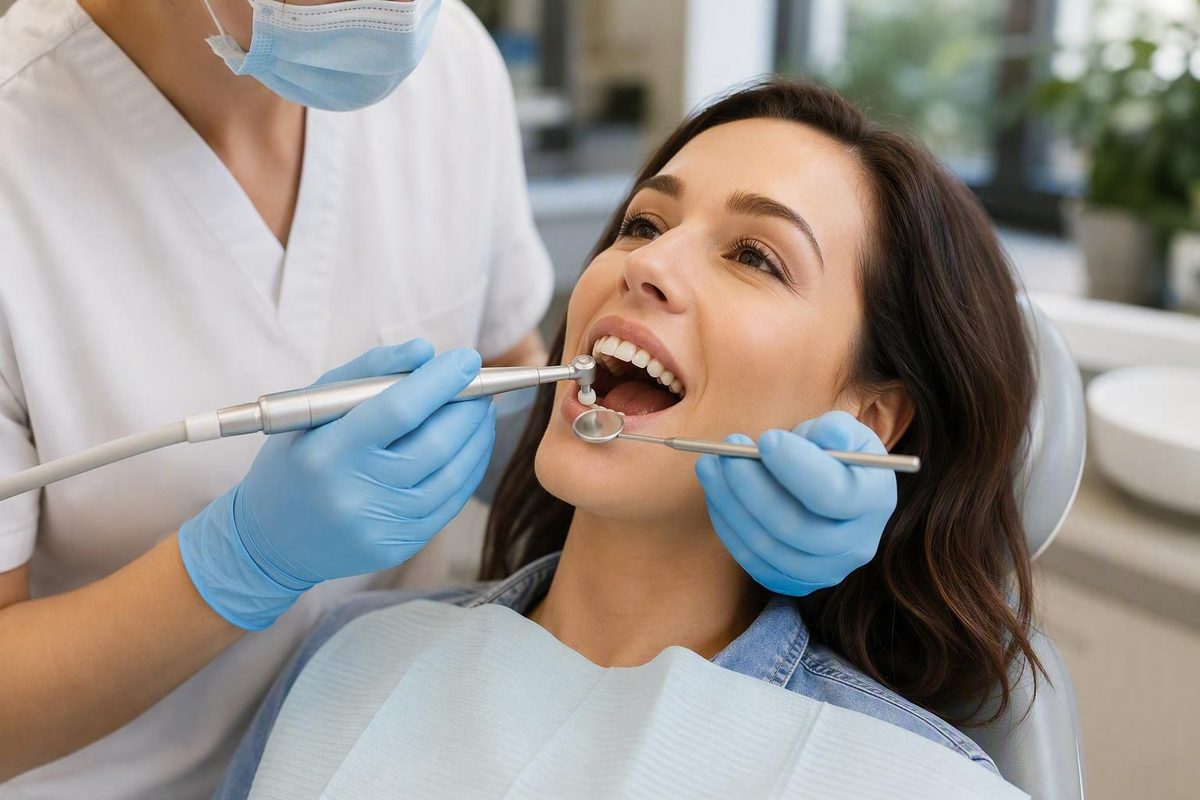
Dental prophylaxis—often shortened to “prophy”—is a professional preventive teeth cleaning performed by a dentist or dental hygienist. In everyday dental use, it generally means what patients call a regular or routine cleaning.
“Prophylaxis” broadly refers to prevention. In dentistry, the procedure is intended to help maintain oral health by removing plaque, hardened tartar—also called calculus—and some external surface stains. Scaling and polishing are its central components, although flossing, an examination, and home-care guidance may occur during the same visit. Delta Dental’s consumer guide to dental cleanings similarly describes routine cleaning as the professional removal of plaque, tartar, and bacteria.
A routine prophy is generally associated with preventive care for someone who does not have active periodontal disease requiring a different procedure. That qualification matters because “cleaning” is an informal umbrella term: prophylaxis, scaling and root planing, periodontal maintenance, and full-mouth debridement do not have the same purpose.
The practical distinction is between maintenance and treatment:
- A routine prophy removes accumulated deposits to help maintain oral cleanliness.
- Scaling and root planing treats periodontal areas beneath the gumline and affected root surfaces.
- Periodontal maintenance provides continuing specialized care after periodontal treatment.
- Full-mouth debridement may be used when extensive deposits prevent an adequate examination.
A dental professional selects the appropriate category after evaluating the teeth, gums, periodontal tissues, and pattern of buildup. The appointment name alone cannot establish which procedure a person needs.
Terminology at a glance
- Prophy: An abbreviation for dental prophylaxis, usually meaning a routine professional preventive cleaning.
- Plaque: A soft, sticky bacterial film that forms on teeth.
- Tartar or calculus: Plaque that has hardened through mineralization and cannot be removed by ordinary brushing.
- Scaling: Removal of plaque and calculus with hand or powered dental instruments.
- Polishing: Use of polishing paste with a rotating cup or brush to remove some remaining plaque and external stains and leave tooth surfaces feeling smoother.
A prophy is one part of preventive oral care. The term does not mean that the procedure can guarantee freedom from cavities or gum disease, reverse established periodontitis, or replace diagnosis and treatment.
This article provides general reference information. It cannot determine whether an individual needs prophylaxis, periodontal treatment, debridement, or another service.
Why professional cleaning is still useful when you brush
The principal reason professional cleaning remains useful is the difference between plaque and tartar.
Plaque is a soft bacterial film that brushing and interdental cleaning can disrupt. Tartar is mineralized plaque. Once it has hardened, ordinary brushing and flossing cannot remove it; a dentist or hygienist must use specialized instruments. The Georgia Dental Hygienists’ Association’s explanation of professional prophylaxis likewise distinguishes the professional removal of soft and hardened deposits from routine home care.
Buildup can remain on surfaces that are difficult to clean effectively or see clearly at home. Professional scaling removes deposits that home care has missed or can no longer remove.
Prophylaxis is not a guarantee against oral disease. A periodic cleaning cannot repair a cavity, restore periodontal support that has already been lost, or substitute for appropriate treatment when periodontal disease is present.
Cleaning is not the same as whitening
Polishing can remove some external, or extrinsic, stains from tooth surfaces. Removing these deposits may make teeth look cleaner or somewhat brighter.
A prophy is not bleaching or professional tooth whitening. It does not intentionally change the underlying color of the tooth structure, so it may have little visible effect on discoloration that surface polishing cannot remove.
Cleaning may help some causes of bad breath
Plaque, food debris, calculus, and oral bacteria can contribute to unpleasant breath. Removing these materials may improve breath in some cases, but persistent bad breath has other possible explanations. Improvement is therefore not guaranteed, and bad breath alone does not establish that someone has periodontal disease.
The effects of cleaning are also temporary. Plaque can accumulate again after tooth surfaces have been cleaned, which is why prophylaxis complements rather than replaces brushing with fluoride toothpaste and cleaning between the teeth.
The division of labor is straightforward:
- Home care regularly disrupts plaque.
- Professional cleaning removes hardened deposits and buildup that home care has missed.
- Dental examination evaluates conditions that cleaning alone cannot diagnose or treat.
Each serves a different purpose. Smooth, polished teeth immediately after an appointment do not eliminate the need for continued daily care.
What typically happens during a prophylaxis appointment
A prophylaxis visit is better understood as a flexible sequence than as a guaranteed checklist. Practices organize appointments differently, and the components depend on medical history, current oral health, previous treatment, and which additional services are clinically appropriate.
A typical visit may proceed as follows.
- History review
The hygienist or another team member may ask about changes in health, medications, pregnancy status, recent diagnoses, symptoms, or dental treatment. This information can affect how the mouth is evaluated and how care is planned.
- Initial examination
The dentist or hygienist may inspect the teeth, gums, tongue, and other oral tissues. This initial assessment helps identify areas requiring closer evaluation and determine whether a routine prophy is appropriate.
- Periodontal assessment when indicated
A periodontal probe may be placed around the teeth to measure the spaces between the teeth and gums and help assess gum health. The clinician may also record bleeding, inflammation, recession, and deposits. Probing is a possible assessment step, not necessarily an identical part of every visit, as shown in Colgate’s walkthrough of a prophylaxis appointment.
- Scaling
Scaling is the core deposit-removal stage. The clinician uses hand instruments, ultrasonic instruments, or a combination of the two to remove plaque and calculus from accessible tooth surfaces and around the gumline.
Hand instruments permit controlled work on particular surfaces. The selection depends on the deposits present and the clinician’s judgment.
Routine scaling around the gumline should not be confused with treatment of affected root surfaces or periodontal sites. That deeper therapeutic work belongs to a different clinical category.
- Polishing
The clinician may use a mildly abrasive paste with a rotating rubber cup or brush. Polishing can remove some residual plaque and external stains and make tooth surfaces feel smoother.
Although polishing is common, it can be modified or limited. The clinician may selectively polish particular surfaces or avoid areas where the technique is not appropriate.
- Professional flossing or interdental cleaning
Flossing is a common finishing step. Another interdental method may be used where standard floss is unsuitable.
- Dentist’s examination
A dentist may examine the mouth before or after the cleaning. The examination, symptoms, clinical findings, and any available images can guide recommendations for further evaluation or treatment.
Cleaning can improve visibility, but it cannot by itself establish whether an area represents decay, a defective restoration, periodontal disease, or another condition.
- Home-care guidance and follow-up plan
The dentist or hygienist may explain where deposits were concentrated and discuss brushing, fluoride toothpaste, floss, interdental brushes, or another suitable cleaning aid.
The clinician may also explain when to return and whether the next appointment is expected to involve another prophy, periodontal maintenance, or separate treatment.
The order may change. An examination or X-rays might occur before scaling in one practice and after it in another. The term “prophylaxis” describes the preventive cleaning itself, not every administrative or clinical activity completed during the appointment.
Which services are optional or based on clinical need
Scaling and deposit removal are central to prophylaxis. Several other services may accompany a cleaning, but none is automatically included at every appointment.
Dental X-rays
Dental X-rays can reveal certain problems that are not adequately visible during a visual examination. They are not necessarily taken at every cleaning.
The timing may depend on age, symptoms, current oral health, existing disease, previous findings, and assessed risk. Images already available to the practice may also affect whether new ones are useful. Cleaning frequency and X-ray frequency are therefore separate decisions.
Receiving X-rays does not turn a prophy into a different cleaning procedure. The relevant question is whether the images are needed for the clinical evaluation.
Fluoride treatment
A topical fluoride treatment may be offered or recommended as an additional preventive service. It is not an inherent or defining part of every prophy.
Patients should follow the directions given for the particular product used rather than assuming that every fluoride treatment has the same restrictions.
Sealants
Dental sealants may also be discussed or provided separately. Applying a sealant is not part of scaling or polishing and does not define a prophylaxis appointment.
A cleaning visit may be a convenient time to provide another preventive service, but the services should not be treated as interchangeable.
Examination and screening activities
An appointment described as a “cleaning and exam” may contain substantially more than the prophy itself. Depending on the patient and practice, the visit may include:
- A medical- and dental-history update
- A visual and tactile oral examination
- Periodontal measurements
- Oral-cancer screening
- X-rays or clinical photographs
- Evaluation of existing fillings, crowns, implants, or other dental work
- Discussion of symptoms and relevant risk factors
- Personalized home-care instruction
These activities may occur during the same appointment because they complement preventive care, not because every one is technically part of scaling and polishing.
Polishing
Polishing is commonly included, but it need not be performed identically on every tooth or for every patient. The clinician may limit polishing, change the technique, or omit an area according to clinical judgment. A medically reviewed overview of dental prophylaxis notes that the procedure can vary with the person’s oral health and that polishing need not be indiscriminate.
No single optional service determines which cleaning a person needs. Fluoride treatment does not turn prophylaxis into periodontal therapy, while periodontal probing does not by itself mean that scaling and root planing is required. The overall examination findings guide the classification and treatment plan.
Prophylaxis versus deep cleaning and periodontal maintenance
Not every professional dental cleaning is the same. The labels reflect different purposes, treatment areas, and periodontal circumstances.
| Procedure | Primary purpose | General patient context | Typical scope |
|---|---|---|---|
| Prophylaxis (prophy) | Preventive removal of plaque, calculus, and some surface stains | Generally associated with healthy gums and no active periodontal disease requiring treatment | Scaling on accessible tooth surfaces and around the gumline, commonly followed by polishing |
| Scaling and root planing (deep cleaning) | Treat periodontal areas | Used when evaluation identifies periodontal disease requiring treatment beneath the gumline | Removal of deposits from periodontal sites and treatment of affected root surfaces |
| Periodontal maintenance | Provide continuing specialized care after periodontal treatment | Used for a person with a history of treated periodontal disease | Reassessment and recurring deposit removal above and below the gumline, with attention to periodontal sites |
| Full-mouth debridement | Remove extensive deposits that obstruct an adequate examination | Considered when heavy buildup prevents proper evaluation | Initial broad removal of obstructive deposits, followed by examination and selection of any further care |
Prophylaxis is preventive maintenance
A routine prophy is generally intended for a mouth that does not show active periodontal disease requiring root treatment. It removes plaque and calculus from accessible tooth surfaces and around the gumline and commonly includes polishing.
It means that the professional evaluation has not identified a periodontal condition requiring a different treatment category.
Scaling and root planing treats periodontal areas
Scaling and root planing—often called a deep cleaning—is not simply a longer version of a routine prophy. It has a therapeutic purpose: treating periodontal areas beneath the gumline and addressing affected root surfaces. A dental-practice explanation of regular versus deep cleaning describes the same basic distinction between preventive cleaning and treatment for periodontal disease.
Root planing is not a routine component of prophylaxis. Calling both procedures “cleanings” can obscure the difference on appointment descriptions, treatment plans, or insurance documents, but the services are not interchangeable.
A prophy also should not be presented as reversing established periodontitis or rebuilding supporting bone that has already been lost. Once periodontal disease has been diagnosed, treatment goals and monitoring differ from those of ordinary preventive cleaning.
Periodontal maintenance is continuing specialized care
Periodontal maintenance commonly follows active periodontal treatment. It is intended to monitor and maintain a mouth with a history of periodontal disease rather than treating that history as irrelevant after initial therapy.
These appointments may include assessment of gum health and periodontal sites, along with removal of deposits above and below the gumline. The classification can reflect the need for continuing specialized care after prior treatment.
Full-mouth debridement serves another purpose
Extensive calculus can sometimes prevent an adequate view of the teeth and gums. Full-mouth debridement may then be used to remove obstructive deposits so that a proper examination can take place.
Debridement is not another name for a routine prophy or deep cleaning. After the mouth can be evaluated, the dental professional determines whether prophylaxis, periodontal treatment, restorative care, or another service is indicated.
How the cleaning type is selected
Bleeding, inflammation, heavy calculus, periodontal pockets, recession, deposits on root surfaces, or loss of supporting bone may prompt further periodontal assessment. No single symptom or measurement quoted in a general article can establish the correct procedure.
The clinician considers the pattern and location of findings, relevant images, health history, previous periodontal treatment, and the condition of the tissues. One dental-practice comparison of prophy and alternative cleanings likewise emphasizes examination before selecting prophylaxis, debridement, scaling and root planing, or periodontal maintenance.
If the recommended service differs from what was expected, useful questions include:
- What findings make a routine prophy insufficient?
- Is the recommendation for active periodontal treatment or continuing maintenance?
- Which areas of the mouth are affected?
- What does the proposed procedure include?
- What monitoring is likely to be needed afterward?
These questions clarify the purpose of care without relying on the ambiguous word “cleaning.”
How often dental prophylaxis may be recommended
Twice-yearly cleaning is a familiar convention, but it is not a mandatory schedule that fits every person. The appropriate interval depends on current oral health and assessed risk rather than the passage of exactly six months.
Relevant considerations may include:
- Gum health and periodontal history
- Previous cavities and current cavity risk
- The amount and rate of plaque or calculus accumulation
- Age
- Medical history
- Smoking
- Diabetes
- Pregnancy
- Weakened immunity
- Effectiveness of home care
These factors are not a self-scoring checklist. One factor does not automatically dictate a specific schedule, and apparently effective brushing does not by itself prove that less frequent professional assessment is appropriate.
Some people may be advised to return sooner because of gum-disease history, frequent cavities, smoking, pregnancy, diabetes, weakened immunity, or other clinical concerns. Colgate’s reviewed educational guide identifies these as factors that can influence preventive-visit timing.
Periodontal disease changes the question. Someone with active disease may need scaling and root planing, while someone who has completed periodontal treatment may need periodontal maintenance. Scheduling an ordinary prophy more often does not make it equivalent to either service.
X-ray timing is a separate decision. A person may have a cleaning without new images, while images may be needed at a visit that is not primarily for prophylaxis. Radiographic timing concerns the information required for evaluation; cleaning timing concerns professional assessment, deposit removal, and maintenance.
Instead of asking only, “Do I need a cleaning every six months?” it may be more useful to ask:
- What is my current cleaning classification?
- Which findings determine my return interval?
- Is the recommendation based on gum health, cavities, buildup, or another concern?
- Would changes in my health or symptoms alter the schedule?
- Is my next visit for prophylaxis, periodontal maintenance, or another procedure?
A dentist or dental hygienist who has examined the mouth can answer these questions in context. A general article cannot assign an individual schedule.
Time, comfort, recovery, and continuing home care
A routine prophylaxis appointment may take roughly 45 to 60 minutes, but that is a reference range rather than a fixed promise. Delta Dental gives 45 to 60 minutes as a typical duration while noting that individual cleaning needs vary.
The appointment may be shorter or longer depending on:
- The amount and location of calculus
- Whether the patient is new to the practice
- History updates and examination needs
- Periodontal assessment
- Whether X-rays are taken
- Comfort breaks
- Added services such as fluoride, sealants, or photographs
Appointment length alone does not establish which procedure was performed. The treatment description and clinical findings are more informative than time.
Can a prophy hurt?
Comfort varies. Scaling may be more uncomfortable around sensitive teeth, inflamed gums, or substantial calculus.
Severe, persistent, or worsening symptoms should not automatically be dismissed as a normal effect; they warrant guidance from the treating dental office.
Patients concerned about comfort can tell the clinician before or during the procedure. The clinician may be able to adjust the technique, change instruments, pause, or discuss appropriate comfort measures.
What happens afterward?
Most people can resume ordinary activities after an uncomplicated cleaning, subject to the dental professional’s instructions. Directions may differ if fluoride or another service was provided.
Teeth often feel smoother after scaling and polishing, and areas where deposits were removed may feel different to the tongue. Any unexpected or concerning change should be discussed with the dental office rather than diagnosed from sensation alone.
Home care still matters between visits
Professional cleaning has temporary effects. Plaque can return, and calculus can form again. Continued home care is therefore necessary even when teeth look and feel clean after the appointment.
Complementary habits include brushing with fluoride toothpaste and cleaning between the teeth with an appropriate interdental method. The most suitable tools can vary, so individualized technique should be discussed with the treating dental professional.
Frequently asked questions
Is dental prophylaxis the same as a regular teeth cleaning?
Usually, yes. In routine dental use, “prophylaxis,” “prophy,” and “regular cleaning” generally refer to preventive professional cleaning centered on removing plaque and calculus, commonly followed by polishing.
The wording can be confusing because “cleaning” is also used informally for other procedures. A prophy is not the same as scaling and root planing, periodontal maintenance, or full-mouth debridement.
Does dental prophylaxis hurt or cause sensitivity?
It may cause pressure or brief discomfort, but experiences vary. Temporary sensitivity or mild gum tenderness can occur, especially when substantial buildup has been removed.
Severe, persistent, or worsening pain should not automatically be assumed to be routine. Contact the treating dental professional for advice based on the procedure and symptoms.
Can a prophylaxis cleaning remove tartar or whiten teeth?
A prophy removes plaque and hardened tartar with professional instruments. Polishing can also remove some external surface stains.
It is not a whitening or bleaching treatment. Removing surface deposits may make teeth appear cleaner or brighter, but prophylaxis does not intentionally change their underlying natural color.
Is dental prophylaxis the same as antibiotic prophylaxis?
No. Dental prophylaxis usually refers to preventive professional cleaning. Antibiotic prophylaxis is a separate practice in which antibiotics are used before certain dental procedures for selected patients when clinically indicated. A medically reviewed overview of dental prophylaxis distinguishes this practice from routine cleaning.
Antibiotics are not an automatic part of a prophy. Whether they are appropriate requires an individual medical and dental assessment.
Can prophylaxis treat gum disease?
A routine prophy removes plaque and calculus and helps maintain oral cleanliness, but it is not a substitute for treatment of established periodontitis.
When periodontal disease affects sites beneath the gumline or root surfaces, scaling and root planing or another periodontal treatment may be indicated. Specialized periodontal maintenance may follow treatment. The appropriate procedure requires evaluation of the gums and supporting structures.
The practical takeaway
Dental prophylaxis is the technical term for a routine preventive professional cleaning centered on removing plaque and hardened tartar, commonly through scaling and polishing. It can also remove some external stains, but it is not tooth whitening.
The two most important limits are simple: a prophy does not replace daily home care, and it is not interchangeable with treatment for periodontal disease. Appointment components and return intervals should reflect clinical need.
Questions about persistent symptoms, procedure selection, or personal risk require evaluation by a qualified dentist or dental hygienist. Decay Guide provides general dental information and does not diagnose or treat patients.