
What You Can Clean at Home—and What Needs a Professional
If the material remains fixed, rough, or crust-like after normal cleaning, it may be tartar and should be assessed professionally.
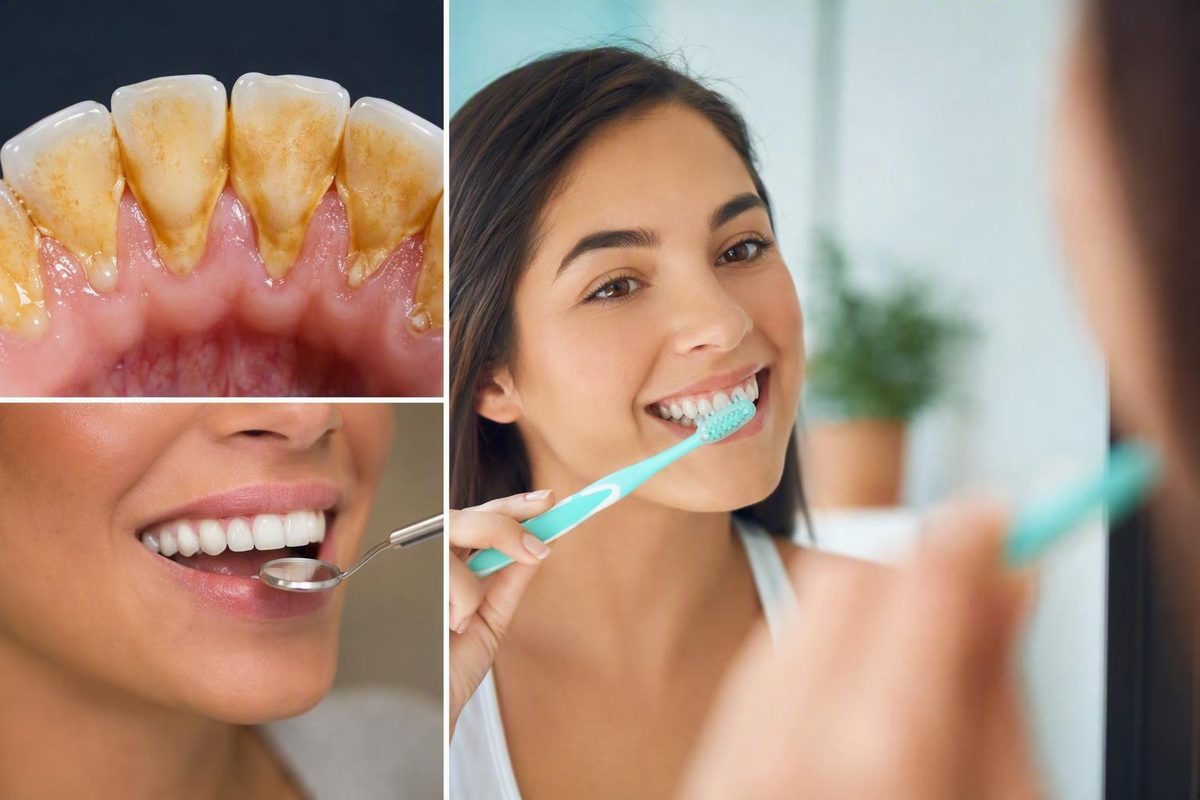
Cleaning plaque off teeth usually depends on consistent, gentle home care—not force, scraping, or a supposed “deep-clean” remedy. The first step is identifying what kind of buildup you may be dealing with.
Soft plaque can generally be disrupted with brushing and interdental cleaning. A hard, fixed deposit may be tartar, also called dental calculus, which ordinary home cleaning cannot safely remove. If buildup remains after normal brushing and cleaning between the teeth, do not scrub harder or pick at it. Arrange a dental assessment instead.
Start here: Is the buildup plaque or tartar?
Use this simple decision path:
- A soft or sticky film that comes away with ordinary brushing and interdental cleaning: more consistent with plaque.
- A hard, rough, or crust-like deposit that stays fixed to the tooth: may be tartar and should be assessed professionally.
- A colored spot, line, or patch that you cannot identify: do not assume it is plaque or tartar based on appearance alone.
Plaque is a soft bacterial film that forms on teeth and along the gumline. It may feel fuzzy or sticky, particularly later in the day. Because it is soft, brushing can remove it from accessible tooth surfaces, while floss or another suitable interdental tool can disrupt it between teeth.
Tartar is plaque that has hardened, or mineralized. It can form above or below the gumline and adheres much more firmly to the tooth. Unlike soft plaque, tartar generally cannot be removed with a toothbrush or floss; a dentist or dental hygienist uses professional instruments to remove it. The Cleveland Clinic’s overview of dental calculus explains this distinction between removable plaque and hardened tartar.
A rough ridge near the gumline or a crust-like deposit that remains after brushing can be a clue. Tartar may appear yellow, tan, brown, or black, but color is not diagnostic.
Do not respond to uncertainty by increasing brushing pressure. Harder brushing does not turn tartar back into removable plaque. Do not pick at a deposit with your fingernail, a pin, a metal instrument, or an improvised scraper.
The practical threshold is simple: clean the area gently as part of your normal routine. If the film comes away, continue regular plaque control. If a hard deposit remains, have a dental professional identify it rather than escalating home treatment.
Why plaque keeps returning even after a thorough cleaning
Plaque control is repeated maintenance, not permanent removal. Oral bacteria interact with saliva and food particles, allowing another film to develop after the teeth have been cleaned. Feeling a coating later does not necessarily mean your previous brushing session failed.
The useful goal is to disrupt plaque regularly before it contributes to inflammation, enamel damage, or hardened deposits. Some areas collect plaque more readily because they are difficult to reach:
- Along the gumline
- Between adjacent teeth
- Around crowded or rotated teeth
- Behind the last molars
- Around braces, bridges, and other dental work
- In spaces that the chosen interdental tool does not fit effectively
This is why a mouth may feel mostly clean while particular areas repeatedly remain coated. More pressure is rarely the answer. A systematic routine and an interdental tool suited to the space are more useful.
Plaque bacteria can produce acids after exposure to fermentable carbohydrates, including sugars and starches. Repeated acid exposure can damage enamel and contribute to cavities. UnitedHealthcare’s plaque and tartar guide describes plaque as a film formed from bacteria, saliva, and food particles and associates uncontrolled buildup with cavities and inflamed or bleeding gums.
Plaque that is not removed can mineralize into tartar, but there is no reliable universal countdown that applies to every person and every tooth surface in the supplied evidence. Saliva, oral hygiene, tooth position, and other conditions vary. Rather than relying on a supposed deadline, clean effectively every day.
Once tartar develops, its rough surface can make it easier for more plaque to accumulate. This can create a frustrating cycle: brushing removes the new soft film but leaves the hardened base behind. Professional removal addresses the existing calculus, while daily home care controls the plaque that continues to form.
A safe twice-daily routine for removing soft plaque
For routine plaque control, brush twice daily for two minutes with fluoride toothpaste and a soft-bristled toothbrush. Clean between the teeth once daily. These measures remove or disrupt soft plaque but do not make hardened tartar detachable. Cigna’s plaque and tartar guidance supports this home-care routine and the distinction between plaque that can be managed at home and tartar that generally needs professional removal.
A practical brushing routine looks like this:
- Use a soft-bristled toothbrush. Choose a brush that is comfortable and allows you to reach all accessible surfaces.
- Apply fluoride toothpaste. The bristles mechanically disrupt soft plaque, while fluoride toothpaste helps protect against tooth decay.
- Divide the mouth into sections. For example, clean the upper and lower teeth in turn, moving consistently from one side to the other.
- Cover every accessible surface. Include the outer, inner, and chewing surfaces rather than concentrating only on the visible front teeth.
- Pay deliberate attention to the gumline and back teeth. These areas are easy to rush past.
- Use gentle, controlled contact. The purpose is complete plaque disruption, not grinding against the teeth or gums.
- Stop trying to scrub away anything that stays hard and fixed. A persistent rough ridge or crust-like deposit is a reason to seek professional assessment.
There is no need to turn brushing into a technical pressure-measurement exercise based on generalized online instructions. Tooth position, gum condition, restorations, dexterity, and brush design can all affect what is comfortable and workable. A dentist or dental hygienist can demonstrate an approach suited to your mouth if you repeatedly miss an area or experience discomfort.
Complete, repeatable coverage matters more than force. Moving too quickly can mean cleaning the same easy surfaces while neglecting the inside surfaces, back molars, or gumline. Following the same route through the mouth at each session can make omissions less likely.
If your gums bleed, do not respond by brushing aggressively. Plaque-related gum inflammation can be associated with bleeding, but bleeding can also have other causes. Persistent or recurrent bleeding should be discussed with a dentist or dental hygienist rather than managed through harder brushing or prolonged avoidance of the area.
A gentle routine performed morning and evening is a better plaque-control strategy than waiting until the teeth feel heavily coated and then trying to scour them clean.
Clean between teeth once a day: choosing a practical tool
A toothbrush does not adequately clean every surface between neighboring teeth. Cleaning between the teeth once daily is therefore a separate core step, not merely an optional extension of brushing.
Several tools can disrupt soft plaque in interdental areas. None is automatically best for every person:
- String floss or dental tape may work well where tooth contacts are close. Guide the material through the contact without snapping it into the gums, then clean against the side of each neighboring tooth.
- Floss picks may be more manageable for people who find conventional floss difficult to handle. Their usefulness depends on whether the fixed section can be positioned against both sides of the space.
- Interdental brushes may be practical for larger spaces or around braces and bridges. The brush should fit the space without being forced.
- Water flossers, also called oral irrigators, may be useful where access, dental work, or limited dexterity makes other methods difficult.
The available evidence does not establish that a water flosser universally replaces string floss for every person or every space. It is better treated as one possible interdental method whose suitability depends on the user and the area being cleaned. A secondary evidence review from Medical News Today discusses water flossers as plaque-control aids while retaining daily interdental cleaning as part of established home care.
The best choice is a tool that fits your spaces, dental work, comfort, and ability—and that you can use consistently. A person with tight contacts may prefer floss, while someone with larger spaces may obtain better contact from an interdental brush. Someone with limited dexterity may find a floss pick or water flosser easier to manage.
If a tool repeatedly causes pain, cannot enter without force, or is difficult to position, ask a dentist or dental hygienist for help selecting and using an alternative. Do not solve access problems by pushing or pulling harder.
The supplied evidence does not establish a clinically decisive rule about whether interdental cleaning must happen before or after brushing. Choose an order you can remember and sustain.
Electric brushes, mouthwash, and other add-ons: what they can and cannot do
Separate the essentials from the optional additions.
The foundation is:
- Brushing twice daily for two minutes with fluoride toothpaste
- Cleaning between the teeth once daily
- Using a gentle, systematic approach
- Seeking professional assessment for deposits or symptoms that home cleaning does not resolve
Possible adjuncts include:
- Electric toothbrushes
- Mouthwash
- Water flossers
- Floss picks
- Interdental brushes
Some secondary evidence suggests that powered toothbrushes, particularly certain oscillating models, may improve average plaque-removal and gingivitis outcomes compared with manual brushes. That does not establish that an electric brush is categorically superior for every user. The same secondary review of home plaque-control methods emphasizes that hardened tartar still requires professional removal.
A well-used manual brush can be effective, while a poorly used electric brush can repeatedly miss the same areas. Choose according to comfort, access, cost, and whether the device helps you clean consistently.
Mouthwash is also an adjunct, not a substitute for brushing or interdental cleaning. Depending on its formulation, a rinse may provide fluoride, have an antibacterial role, or address another defined need. Swishing does not physically disrupt attached deposits in the same way as brushing and interdental cleaning, and mouthwash cannot rinse hardened tartar off a tooth.
There is no single mouthwash type or schedule that is right for everyone. Formulations and purposes differ, and individual factors may affect the choice. If you want a rinse for a particular concern, ask a dental professional rather than assuming that the strongest-tasting product cleans most effectively.
Formulated baking-soda toothpaste and loose household baking soda are not interchangeable. Secondary evidence concerning manufactured toothpastes does not establish that dipping a toothbrush into loose powder or preparing an unmeasured homemade mixture is safe or effective. Abrasive intensity is not a reliable measure of cleanliness.
Oil pulling should not replace fluoride toothpaste, brushing, interdental cleaning, or professional tartar removal. The secondary evidence available in the source pack reports that reliable evidence supporting oil pulling for plaque or tartar removal is lacking. A practice that changes how the mouth feels is not necessarily removing attached plaque effectively, and it does not make hardened calculus detachable.
Why DIY tartar scraping and household remedies are the wrong next step
Do not use a home dental scaler, metal scraper, sharp object, or consumer ultrasonic device to attack a hard deposit.
Professional instruments may look simple, which can make home scraping seem reasonable.
Misuse of home scalers or ultrasonic tools can injure gum tissue, scratch tooth surfaces, contribute to gum recession and exposed roots, cause sensitivity, injure the lips or tongue, contribute to infection, or push deposits beneath the gumline. Colgate’s safety discussion of home plaque scrapers and dental scalers explains that trained dental hygienists use sharp manual or ultrasonic instruments with controlled positioning and visibility.
Professional training matters because tartar removal is not like scraping residue from an inert surface. The clinician must assess the tooth and surrounding tissues rather than simply apply a sharp edge to a rough spot.
Household remedies are not a substitute for professional scaling. The supplied evidence does not support using vinegar, strawberries, sesame seeds, or DIY dental kits to remove tartar. Colgate’s guidance on attempted tartar removal at home advises professional care instead of these tools and supposed natural remedies.
Lack of evidence for a remedy is not proof that every use will cause an injury. It does mean the method should not be presented as a safe or effective way to detach hardened calculus.
If ordinary brushing and interdental cleaning do not remove the material, stop escalating home treatment. Continue cleaning the surrounding area gently, but leave the fixed deposit alone and arrange a dental assessment.
What professional tartar removal involves
A dentist or dental hygienist assesses where buildup is present and whether there are signs of gum inflammation or a deeper periodontal problem. The clinician may use specialized manual instruments, ultrasonic instruments, or both to remove plaque and tartar from tooth surfaces and, when clinically appropriate, beneath the gumline.
A routine professional cleaning may involve:
- Examining the teeth and gums
- Removing accessible plaque and hardened deposits
- Cleaning between the teeth
- Polishing selected surfaces when appropriate
Professional cleaning can include instrument-based deposit removal followed by flossing and polishing. Polishing mainly addresses residual surface roughness or some external stain; it is not the step responsible for removing every deposit, nor does it reverse deeper gum damage. The Cleveland Clinic describes professional tartar removal and related treatment options in its clinical overview.
Routine scaling and polishing should not be confused with scaling and root planing. Scaling and root planing is a deeper periodontal procedure that may be considered when deposits extend under the gums or when periodontal disease is present. It is not automatically part of every standard cleaning.
More advanced gum disease may require treatment beyond routine cleaning. The appropriate procedure depends on examination findings such as the location of deposits, gum condition, tooth support, symptoms, and relevant health history. An online article cannot determine whether a particular person needs routine scaling, scaling and root planing, periodontal surgery, or another intervention.
Useful questions for the clinician include:
- Is this a routine cleaning or periodontal treatment?
- Is the tartar mainly above or below the gumline?
- Are there signs of gingivitis or a deeper periodontal problem?
- Which areas am I consistently missing at home?
- Which interdental tool fits those areas?
- How should my follow-up interval be determined?
Professional cleaning removes existing hardened deposits. It does not stop plaque from forming again, so brushing and interdental cleaning remain necessary afterward.
When buildup or gum symptoms should be assessed
Arrange a dental assessment if a hard deposit remains after normal brushing and interdental cleaning, particularly if it appears to extend along or beneath the gumline.
Other reasons to discuss the problem with a qualified dental professional include:
- Persistent or recurrent gum bleeding
- Red, swollen, or tender gums
- Dental or gum pain
- Gum recession
- A loose tooth
- Ongoing bad breath
- A dark, discolored, or rough area that you cannot identify
Persistent bad breath, pain, swelling, and bleeding gums are among the symptoms for which dental consultation is recommended in Cigna’s educational guidance.
Plaque, tartar, and gum inflammation can accompany bleeding or bad breath, but neither symptom proves that tartar is present. Diagnosis requires more than matching a symptom to an online description or photograph.
Do not diagnose decay, tartar, gingivitis, periodontitis, or infection based only on color or texture. A rough surface may be calculus or another dental issue.
This guidance is symptom-based, not a prediction about which diagnosis or procedure applies to you. Decay Guide is an independent information publisher, not a dental practice, and does not diagnose or treat readers, as explained on its About page. A dentist or dental hygienist who can examine your mouth is the appropriate person to distinguish plaque from tartar, decay, periodontal disease, or another condition.
Keeping plaque manageable after cleaning
A sustainable prevention routine is uncomplicated:
- Brush twice daily for two minutes with fluoride toothpaste and a soft-bristled toothbrush.
- Clean between the teeth once daily with a tool suited to your spaces and abilities.
- Use optional products only for a defined purpose.
- Attend professional examinations and cleanings at an interval based on your needs.
- Ask for help if particular areas remain difficult to clean.
Frequent sugary or starchy foods and sweetened drinks provide repeated opportunities for plaque bacteria to produce acids that can damage enamel. Limiting repeated exposure can support plaque control, but no particular diet eliminates the need for physical cleaning.
Frequency matters as well as the amount consumed at one sitting. Choosing water more often and reducing the number of sweet or starchy eating occasions may help, but diet does not replace brushing and interdental cleaning.
Avoid tobacco. Tobacco use is associated with oral-health problems and may stain existing deposits, making color an even less reliable way to identify what is on a tooth.
Persistent dryness may be associated with medications, health conditions, tobacco, alcohol, or other factors. A dental-practice overview of plaque control and dry mouth identifies dryness as a factor that may increase plaque retention. Discuss continuing dry mouth with a dentist or medical professional, and do not stop prescribed medication based on general dental information.
Anatomy and dental appliances also affect cleaning. Crowded teeth, braces, bridges, and larger spaces may require different interdental tools. That does not mean everyone with dental work needs the same device; the tool should fit the actual space and be usable without force.
Professional-cleaning frequency should reflect individual risk and clinical findings. Gum health, cavity history, smoking, medical history, dry mouth, previous periodontal disease, home-care effectiveness, and the rate of tartar formation may influence the recommended interval. Twice-yearly cleaning is common, but it is not a universal requirement.
The realistic goal is not to eliminate plaque forever. Plaque naturally reforms. The goal is to disrupt it regularly and thoroughly enough to reduce the chance that it contributes to cavities, gum inflammation, or hardened tartar.
The central decision remains simple: a removable soft film calls for gentle twice-daily brushing and daily interdental cleaning. A hard deposit that stays fixed calls for professional assessment, not harder scrubbing or home scraping. Persistent bleeding, swelling, pain, recession, loose teeth, or ongoing bad breath should also be evaluated by a qualified dental professional.
Can plaque be removed from teeth at home?
Yes. Soft plaque can usually be disrupted at home through twice-daily brushing with fluoride toothpaste and daily cleaning between the teeth. If the material remains fixed, rough, or crust-like after normal cleaning, it may be tartar and should be assessed professionally. Colgate’s plaque and tartar guidance makes the same distinction between removable plaque and hardened deposits.
Can brushing remove yellow or brown tartar?
Ordinary brushing and flossing generally cannot remove plaque once it has hardened into tartar. Yellow, tan, brown, or black coloration may occur with tartar, but color alone cannot identify the deposit. A persistent colored area should be examined rather than scrubbed harder.
Can a water flosser replace string floss for plaque removal?
Not universally. A water flosser is a possible interdental aid and may be practical for difficult access, dental appliances, or limited dexterity. The suitable method depends on the spaces being cleaned and the user’s ability; a dentist or dental hygienist can help determine whether floss, an interdental brush, a water flosser, or a combination is appropriate.
Is it safe to use a dental scraper or ultrasonic cleaner at home?
Unsupervised use is not recommended. Home scalers, sharp metal instruments, and consumer ultrasonic devices can be misused in ways that damage teeth or gums or push deposits beneath the gumline. If a hard deposit does not come away through normal brushing and interdental cleaning, leave it alone and arrange professional assessment.
How often should tartar be removed professionally?
There is no single cleaning interval that is right for everyone. Twice-yearly professional cleaning is common, but the appropriate schedule depends on oral-health needs and a dental professional’s assessment. Factors may include gum health, cavity risk, smoking, medical history, previous periodontal problems, home care, and how rapidly deposits form.