
Professional Teeth Cleaning Removes Tartar, but It Is Not a Cure-All
What professional teeth cleaning removes, what happens during one, how routine and deep cleaning differ, and why timing should be individualized.
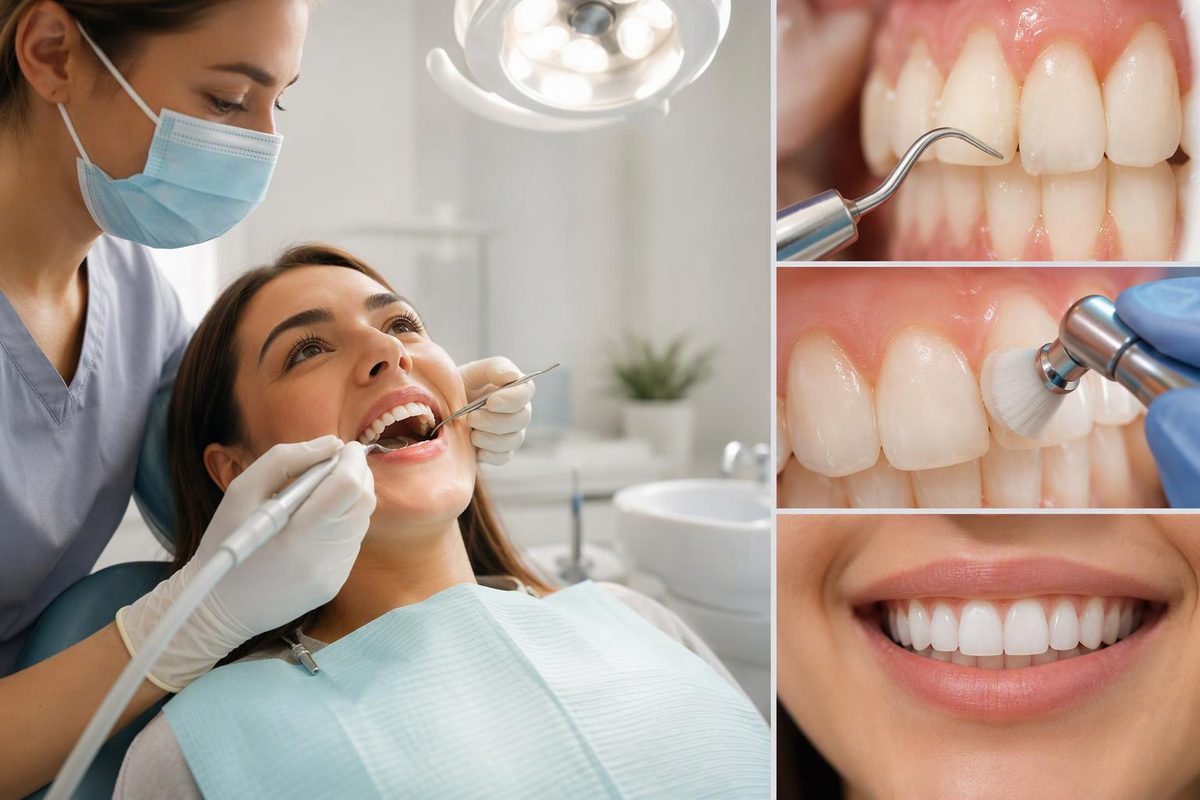
A professional teeth cleaning removes plaque, hardened tartar and some surface stains from the teeth. It can leave the teeth feeling smoother and make difficult areas easier to keep clean, but it does not fill cavities, rebuild missing enamel or reverse bone loss from periodontitis.
The type of cleaning matters. A routine preventive cleaning is not interchangeable with the deeper treatment used for established gum disease.
What happens during a routine cleaning?
A dentist or dental hygienist first determines whether a routine cleaning is appropriate. The cleaning itself commonly includes:
- Scaling: Hand instruments or an ultrasonic scaler loosen and remove deposits from tooth surfaces and around the gumline. An ultrasonic instrument may produce vibration, water spray and a high-pitched sound.
- Polishing: A rotating cup or brush and polishing paste remove some remaining plaque and external stain. Polishing is not the same as bleaching teeth.
- Cleaning between teeth: Floss or another interdental tool may be used to clear loosened material from between teeth.
- Preventive care when indicated: Fluoride varnish or another fluoride treatment may be offered according to cavity risk; it is not automatically part of every cleaning.
“Scaling and polishing” describes the removal of plaque, calculus—another name for tartar—debris and staining with dental instruments and polishing paste, according to a Cochrane review of routine scale and polish. A cleaning may occur alongside an examination, but the exam serves a different purpose: checking the teeth, gums and other oral tissues. See what happens at a dental checkup for that broader visit.
Why brushing cannot remove tartar
Plaque is a soft bacterial film that can usually be disrupted with brushing and cleaning between the teeth. If plaque remains, some of it can mineralize into firmly attached tartar. The National Institute of Dental and Craniofacial Research states that tartar requires removal by a dentist or dental hygienist. Harder brushing at home is not a substitute and can irritate the gums or exposed root surfaces.
If you are unsure which deposit you are seeing or feeling, the practical differences are covered in plaque vs. tartar.
Removing tartar gives daily cleaning a better starting point, but it does not make home care optional. Plaque begins collecting again after the visit, so brushing with fluoride toothpaste and regularly cleaning between teeth remain important.
Routine cleaning and “deep cleaning” are different
A routine preventive cleaning, also called prophylaxis or a scale and polish, removes deposits when there is no established periodontitis requiring active treatment. Dental prophylaxis is explained separately here.
A deep cleaning, usually called scaling and root planing, is used to treat periodontal disease rather than simply provide a more thorough polish. NIDCR describes it as a deep cleaning of affected teeth and notes that people with periodontal disease need professional treatment as well as continued daily care (NIDCR).
The choice is based on gum findings, not on whether someone requests an “extra thorough” cleaning. Assessment may include bleeding, gum recession, tooth mobility, medical and tobacco history, gum-pocket measurements and, when indicated, X-rays for supporting bone loss. NIDCR says pockets in a healthy mouth are usually 1–3 mm, while deeper pockets can be a sign of periodontal disease. No single reading establishes a diagnosis by itself.
Does professional cleaning hurt?
A routine cleaning may cause pressure, vibration or brief sensitivity, especially where tartar is heavy or roots are exposed. Inflamed gums may bleed during cleaning. Treatment below the gumline can be less comfortable, so the dental team may discuss pain control or divide treatment into visits.
Tell the clinician before treatment if you have sensitive teeth, dental anxiety, a medical condition affecting bleeding or healing, or medicines that may matter to dental care. Do not stop prescribed medicine on your own.
After an uncomplicated routine cleaning, eating is generally possible when the mouth feels comfortable. Instructions change if fluoride was applied or local anesthetic was used; follow the specific advice given and avoid chewing while numb. See eating after a teeth cleaning for the treatment-specific differences.
How often is professional cleaning needed?
There is no single cleaning interval that fits everyone. The plan should reflect the examination findings, tartar accumulation, home cleaning and risk factors. For gum disease, these include tobacco use, diabetes, age and genetics, among other health factors identified by NIDCR. Someone being treated for periodontitis also has different needs from someone with healthy gums.
Evidence does not support treating six-monthly scaling as a universal biological rule. A Cochrane review included two studies with 1,711 adults without severe periodontitis who regularly attended UK dental practices. Over two to three years, it found little or no difference between scheduled six-monthly, 12-monthly and no scheduled scale-and-polish groups in gingivitis, pocket depth or oral-health-related quality of life. More frequent cleaning produced small reductions in tartar, but the clinical importance was uncertain (Cochrane).
Those findings do not automatically apply to people with periodontitis, irregular access to care or substantial risk factors. The useful question is not “How often does everyone need a cleaning?” but “What interval fits these findings and risks?”
What a cleaning cannot repair
Professional cleaning can remove deposits and some external stain. It cannot:
- close a cavity or replace missing tooth structure;
- regenerate enamel that has physically worn or eroded away;
- restore bone already lost to periodontitis;
- fix a cracked or loose tooth;
- guarantee that bleeding, bad breath or sensitivity will disappear; or
- change the underlying color of teeth as bleaching can.
Persistent or heavy gum bleeding, swelling, pus, worsening pain, loose teeth or difficulty chewing needs dental assessment rather than repeated cleaning alone. These findings can have several causes, and cleaning should follow the diagnosis—not stand in for one.