
Veneers or Composite Bonding: Understanding the Key Differences for Smile Improvements
Bonding suits small, isolated changes, while veneers suit broader, multi-tooth redesigns. Conventional veneer prep commonly removes about 0.5 mm of enamel.
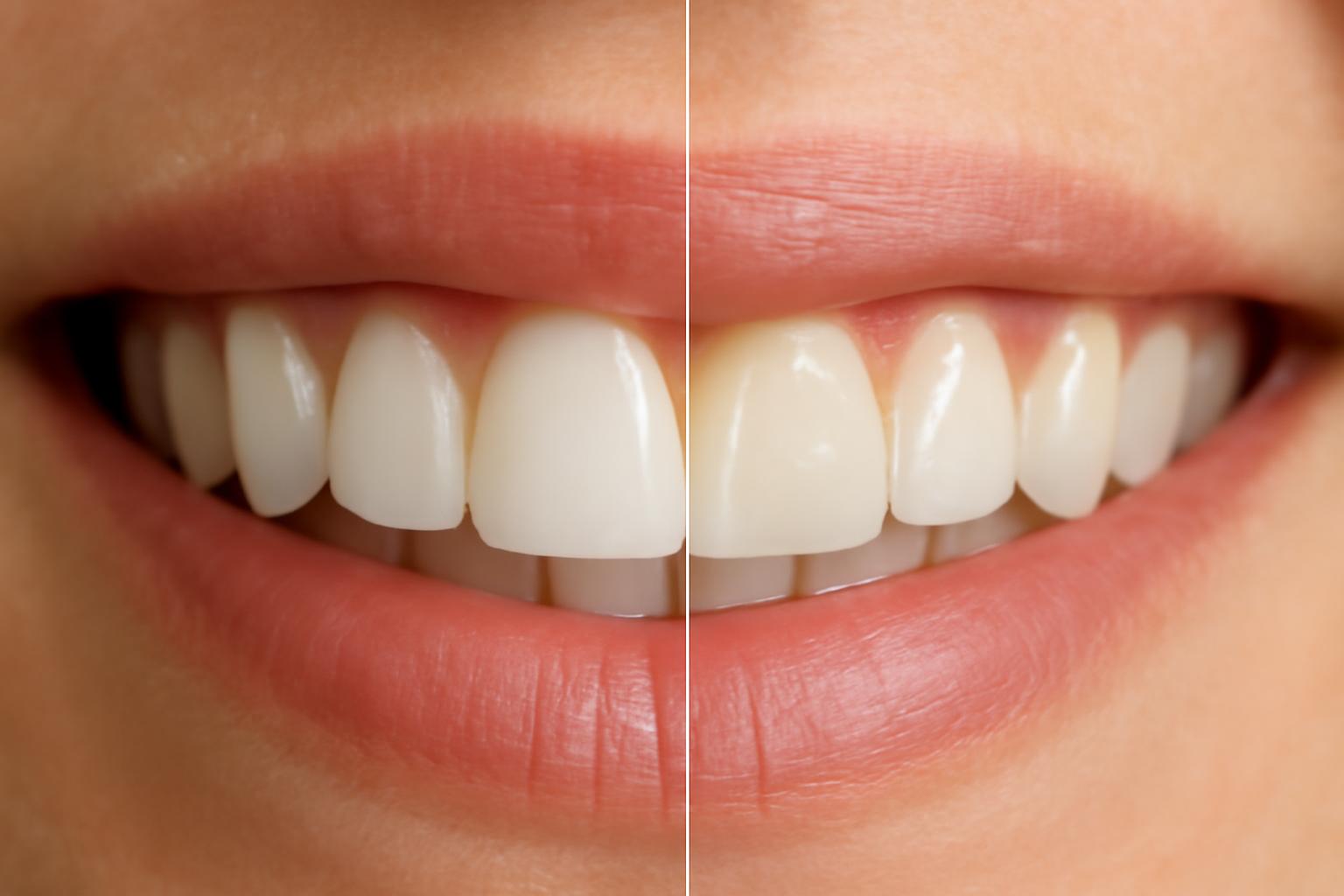
When people compare veneers vs composite bonding, they are usually comparing two ways to improve the look of visible teeth without changing every tooth in the mouth. Both are used for issues like chips, small gaps, uneven edges, shape differences, and discoloration. But they are not interchangeable. They differ in material, workflow, tooth preparation, commitment level, and how well the result tends to hold up over time.
This comparison also needs one clarification up front: in ordinary patient discussions, “veneers” usually means custom porcelain or ceramic veneers, while “composite bonding” means direct resin added to the tooth in the chair. Some dentists also talk about composite veneers, which are resin-based and sit somewhere between simple bonding and porcelain veneers. For clarity, this article is mainly comparing direct composite bonding with porcelain or ceramic veneers, because that is the distinction most people mean when they search the topic. Bupa’s overview describes that broad split clearly: bonding adds tooth-colored resin directly, while porcelain veneers are thin lab-made shells bonded to the front of the tooth in a more involved process (Bupa).
If you just want the fast scan, the pattern is simple. Composite bonding is usually the quicker, more conservative, lower-commitment option for smaller cosmetic changes. Veneers are usually the more involved, more permanent option for broader and more uniform smile changes, and they are generally described as more stain-resistant than bonding (Bupa).
That quick summary is useful, but it is not enough to choose well. The better option depends on how many teeth are involved, how noticeable the change needs to be, how much enamel preservation matters to you, how much maintenance you are willing to accept, and whether the tooth is healthy enough for cosmetic treatment in the first place. That last point matters more than many comparison pages admit: cosmetic dentistry can change appearance, but it should not be used to paper over untreated decay, unstable enamel, gum disease, or bite problems.
What Is Composite Bonding?
Composite bonding is a cosmetic dental procedure in which a dentist places a tooth-colored composite resin directly onto the tooth, shapes it by hand, hardens it with a curing light, and polishes it so it blends with the surrounding teeth. Cleveland Clinic describes dental bonding as a one-visit cosmetic treatment used to repair chips, fill gaps, or change the shape and color of a tooth (Cleveland Clinic).
The direct, chairside nature of bonding is what makes it distinct. In a typical bonding case, there is no separate laboratory stage. The dentist works on the tooth during the appointment itself: choosing a shade, preparing the surface as needed, applying the resin, shaping it, curing it, and refining the finish. That makes bonding feel more immediate and more adjustable than a restoration that has to be designed and fabricated elsewhere.
In practical terms, bonding is commonly discussed for minor cosmetic corrections. That can include a small chip on a front tooth, a slight space between teeth, an edge that looks uneven, a tooth that appears a little short or pointed, or a limited area of discoloration. It can also be attractive when the person wants improvement but is not ready to commit to a more extensive cosmetic plan across several front teeth.
Another reason bonding is popular is that it is usually described as conservative with tooth structure. The resin is added to the tooth rather than replacing the visible front surface with a separate shell. Depending on the case, preparation may be very limited. That is why bonding is often framed as a minimally invasive option and as a treatment that may preserve more natural enamel than conventional veneers.
That said, “conservative” does not mean casual. Bonding still depends heavily on case selection, color matching, shaping skill, and the condition of the tooth underneath. A small cosmetic repair on healthy enamel is one thing; trying to disguise a bigger structural or bite problem with resin is another. In other words, bonding is simple in concept, but not every visible flaw is a good bonding case.
What Are Veneers?
Veneers are thin shells attached to the front surface of teeth to change how they look. In most general comparisons of veneers vs composite bonding, veneers usually mean custom porcelain or ceramic shells that are made to a specific design and then bonded to the prepared tooth. Bupa describes veneers as very thin shells of porcelain or composite bonded to the front of the tooth, with porcelain veneers custom-made in a laboratory and typically requiring more than one appointment.
Because veneers cover more of the visible front surface than a small bonded repair usually does, they are often considered when the cosmetic change needs to be broader, more uniform, or more coordinated across several teeth. That may include more noticeable staining, worn front edges, uneven lengths, shape inconsistencies, or a set of front teeth that the patient wants to make look more symmetrical overall.
The terminology can get messy here. Some practices use “veneers” mostly to mean porcelain or ceramic restorations. Others also discuss composite veneers, which are resin-based and may be done directly in the office. That matters because composite veneers can behave more like an expanded bonding treatment than like a conventional porcelain veneer case. Still, for a basic consumer comparison, the main contrast is usually direct composite bonding versus porcelain or ceramic veneers.
The custom nature of veneers is central to how they work. The dentist prepares the tooth, records the desired form, and then a lab fabricates the veneer to match that plan. That extra design stage is part of why veneers are often associated with smile makeovers and multi-tooth cosmetic cases.
Veneers also involve a different kind of commitment. A person considering bonding may be thinking about adding material to improve a limited defect. A person considering conventional veneers is often considering a redesign of the visible front surface of one or more teeth, usually with some permanent preparation involved. That does not make veneers automatically better. It makes them a different category of decision.
Procedure Differences: Bonding vs Veneers
The bonding process is usually straightforward. Aspen Dental describes it as a one-visit treatment in which the dentist selects a shade, roughens the tooth surface, applies a conditioning liquid, places the resin, shapes it, cures it with a special light, and then polishes the result. Aspen also notes that anesthesia is often unnecessary for routine cosmetic bonding because the preparation is limited (Aspen Dental).
A conventional veneer case involves more steps. Dental comparison sources consistently describe veneer placement as requiring tooth preparation first, then impressions or scans, then lab fabrication, and later bonding of the finished veneer to the tooth. One commonly repeated summary from Elmsleigh House Dental Clinic describes that preparation as removal of about 0.5 millimeters of enamel from the front of the tooth before the veneer is made and placed (Elmsleigh House Dental Clinic).
That workflow difference matters in ways patients actually feel. Bonding is usually done in one sitting because the final material is built directly on the tooth. Veneers usually take at least one additional stage because something custom has to be designed and fabricated before final placement. In some practices and cases, temporary veneers may be used while the permanent ones are being made.
The difference in preparation also explains the difference in commitment. Bonding is commonly described as the lower-prep option because the dentist often adds material with little or no significant enamel reduction. Conventional porcelain veneers are usually described as the more permanent choice because once enamel has been removed to seat the restoration properly, the tooth has been irreversibly altered. That is why many comparisons frame bonding as a lower-commitment cosmetic change and veneers as a more definitive one.
Comfort and logistics also differ. For a modest bonded repair, the appointment may be relatively short and simple. Veneers may still be routine from the dentist’s perspective, but they involve more planning, more decisions about shape and shade, more technical steps, and usually more time between start and finish. For some patients, that extra design control is the whole appeal. For others, it is exactly what makes veneers feel like more than they want.
A useful way to think about the procedures is this: bonding is usually additive and immediate, while veneers are usually planned, fabricated, and then bonded into place. If your cosmetic concern is small, those differences may feel decisive. If your concern spans several front teeth and you want a coordinated result, the extra veneer workflow may feel proportionate rather than excessive.
Durability and Stain Resistance Comparison
Across dental comparison sources, the overall pattern is consistent: porcelain veneers are usually described as more stain-resistant and more durable than direct composite bonding, while bonding is more likely to stain, chip, dull, or need maintenance sooner. Cottage Grove Dental Care, for example, notes that bonding is more prone to staining from coffee, tea, and red wine and more vulnerable to damage from habits such as grinding, chewing ice, or biting nails, whereas porcelain veneers resist staining better and generally hold up longer with proper care (Cottage Grove Dental Care).
That broad comparison does not mean veneers are invincible. Veneers can still chip, debond, or fail. They still depend on the tooth underneath, the way the teeth meet, day-to-day habits, and how well the restoration was planned and placed. A person who clenches, grinds, chews hard objects, or neglects dental care can create problems with either option.
It also does not mean bonding is flimsy or pointless. Bonding can work well for years, especially when the cosmetic change is small and the forces on the tooth are reasonable. What the evidence pack supports is a trend, not a guarantee: if you compare direct composite bonding with porcelain veneers in general consumer guidance, veneers are usually presented as the option with better color stability and stronger long-term resistance to visible wear.
Maintenance tends to follow the same pattern. Bonding may need polishing, touch-ups, or repair sooner. Veneers may hold their look longer, but if one is significantly damaged, the solution can be more involved than a quick chairside adjustment. That is one of the real tradeoffs in this comparison: bonding is often easier to modify, while veneers usually ask for less frequent cosmetic upkeep.
A careful reader should notice something important here. Durability is not just a material issue. It is also a case-selection issue. A tiny bonded addition on the edge of one tooth may fail for different reasons than a veneer spanning the front surface of another tooth. Bite forces, edge position, grinding habits, and how many teeth are being changed all influence outcome. So the honest conclusion is not “veneers good, bonding bad.” It is that veneers usually win on stain resistance and long-term appearance stability, while bonding often wins on simplicity, enamel preservation, and ease of initial treatment.
Cost and Time Factors
In general, composite bonding is the lower-cost and faster option, while veneers cost more and usually take longer. Parthenon Dental’s comparison explains that bonding is generally less expensive because it is done directly in one visit without the impressions and laboratory fabrication that typically come with porcelain veneers (Parthenon Dental).
That difference in fee structure reflects more than material alone. Veneers usually involve more planning, lab work, more clinician time, and more than one appointment. In some cases there are temporaries, more shade and shape decisions, and more coordination before the final result is delivered. Even without quoting prices, the pattern is clear: veneers usually ask for a bigger commitment of money, time, and process.
Bonding is attractive partly because of how quickly it can produce a visible change. If the issue is a small chip, a minor edge defect, or a slight shape imbalance on one tooth, that improvement may be achievable in a single sitting. For people who want faster cosmetic change, or who are not yet sure they want a permanent alteration, that speed matters.
Upfront price, however, is only part of the decision. A lower initial fee does not automatically mean lower lifetime cost if the bonded area later needs more polishing, repair, or replacement. Likewise, a higher veneer fee does not automatically make veneers “worth it” for a small localized problem that could be managed conservatively. The practical question is usually not “Which is cheaper?” but “Which level of treatment fits the size and visibility of what I want to change?”
Costs also vary by how many teeth are treated, the complexity of the case, and the practice setting. That is one reason broad online comparisons can only go so far. They are good at explaining patterns; they are weak at telling any one person what their own case will require.
Suitability: Which Issues Fit Each Treatment?
Composite bonding is usually the better fit for small, localized cosmetic corrections. Think a minor chip, a slight edge irregularity, a small gap, a single tooth that looks a little short, or a modest area of discoloration. Because the material is placed directly where it is needed, bonding makes the most intuitive sense when the problem is limited in size and limited to one tooth or one part of a tooth.
Veneers are more often considered when the goal is broader and more uniform change. That can mean several front teeth with shape differences, more obvious wear, staining that needs more than whitening, or a desire to create a more consistent smile line across multiple visible teeth. When someone wants coordinated changes to several teeth at once, veneers often offer more design control over the overall look.
Some dental comparisons also present bonding as a lower-commitment starting point for people who want to test a cosmetic idea before deciding on something more permanent. Shedd Family Dental, for example, explicitly describes bonding as a conservative first step for single-tooth fixes or for people who want to try a change before committing to veneers (Shedd Family Dental).
But suitability is not just about what the flaw looks like in the mirror. Tribeca Dental Studio’s comparison makes that point directly by noting that a dentist evaluates tooth condition, bite, and enamel before recommending resin-based cosmetic treatment (Tribeca Dental Studio).
A tiny chip on a stable tooth is not the same as a tiny chip on a tooth that is chipping because of bite stress. The appearance is only the starting point.
A good decision framework is to ask four questions: How big is the defect? How many teeth are involved? How important is enamel preservation? How much maintenance tolerance do I have? Small, isolated, enamel-preserving, lower-commitment cases lean toward bonding. Multi-tooth, highly visible, more uniform makeover cases lean toward veneers. Real cases often sit between those poles, which is why the exam matters more than the marketing label.
It is also worth saying plainly that neither treatment is a status symbol and neither is universally superior. Bonding is not merely the “cheap version” of veneers, and veneers are not automatically the “best” answer to every visible flaw. They are different tools for different scales of cosmetic change.
Pros, Cons, and Maintenance Tips
The comparison becomes easier when you stop asking which treatment is “better” in the abstract and start asking what each one is good at. Consumer dental guidance is fairly consistent on this point: bonding is usually quicker, more conservative, and easier to do in a single visit, while porcelain veneers are usually more stain-resistant and better suited to broader cosmetic redesigns (Aspen Dental).
Composite bonding - Pros: usually quicker, usually less expensive up front, often conservative with tooth structure, and useful for focused cosmetic fixes. - Cons: more likely to stain, chip, dull, or need touch-ups over time; less suited to large, highly uniform smile changes.
Veneers - Pros: stronger color stability, better stain resistance, more control over shape and symmetry across multiple teeth, and often a better fit for broader smile makeovers. - Cons: more involved process, higher upfront cost, and usually a permanent commitment when conventional enamel preparation is required.
Maintenance overlaps more than many marketing pages suggest. Both options still depend on ordinary oral care: brushing, cleaning between teeth, regular dental reviews, and avoiding using teeth as tools. If the surrounding gum tissue is unhealthy or decay is developing around the tooth, the cosmetic material does not cancel that out. Bonded resin and veneers are cosmetic surfaces attached to living teeth, not replacements for dental health.
One practical point people often miss is shade planning. Bonded material does not whiten after it has been placed, so shade selection matters before treatment. Gentle Dental states that bonded teeth cannot be whitened the way natural teeth can, which is why color planning matters in advance (Gentle Dental).
The habits that damage cosmetic work are also similar. Grinding, clenching, chewing ice, biting nails, and opening things with your teeth can shorten the life of either option, even if bonding is usually described as the more vulnerable of the two. If you want a cosmetic result to last, the maintenance conversation should include habits and bite forces, not just brushing and flossing.
And brushing, while essential, is not the whole maintenance story. As Decay Guide explains in What Daily Brushing Cannot Fix, brushing disrupts plaque but cannot clean between teeth, remove tartar, or solve every non-bacterial dental problem. That matters here because cosmetic dental work still sits in the same mouth as the rest of your dental biology.
Important Considerations Before Choosing
Cosmetic comparisons can make the decision sound cleaner than it is. In reality, the right choice depends on lifestyle, budget, timeline, staining habits, bite forces, and the scale of the change you want. A material that looks ideal in a before-and-after gallery may feel like the wrong choice later if it does not fit how you use your teeth or how much maintenance you are willing to accept.
Healthy teeth and gums matter before either treatment is treated as a cosmetic solution. Cleveland Clinic notes that other dental problems may need to be addressed first, and Gentle Dental similarly frames candidates for bonding or veneers as people with good oral health and realistic expectations (Cleveland Clinic).
That point also explains why this topic belongs, somewhat cautiously, in a broader oral-health context. Cosmetic work is never only cosmetic if active disease is present. A chip might reflect bite stress. A dark tooth might have a structural or pulpal cause. A gap might be stable, or it might be changing. A worn edge might reflect grinding. And a cosmetic defect on a tooth with decay, compromised enamel, or gum inflammation is not just an appearance issue anymore.
Readers should also be skeptical of neat lifespan promises. The evidence pack contains wide ranges from clinic and provider pages, and those pages often have commercial incentives. The safest conclusion is not a hard number. It is that outcomes vary with case selection, material, technique, hygiene, habits, and follow-up care. Personalized examination is more useful than a generic online estimate.
As explained on Decay Guide’s About page, this site publishes general reference information and does not give individual advice. That is especially important here. Veneers and bonding can look similar in a marketing photo, but the right choice depends on the tooth, the bite, the gums, and the goal in front of an actual dentist.
With that in mind, a few common questions usually come up next.
Is composite bonding reversible compared to veneers?
Composite bonding is often described as more reversible or at least lower-commitment than conventional veneers because it usually requires little or no significant enamel removal. Shedd Family Dental’s comparison makes that contrast directly, describing bonding as reversible while porcelain veneers require enamel removal and are not reversible in the same way.
The important nuance is that “more reversible” is not the same as “nothing is ever done to the tooth.” Surface preparation may still be needed in some bonding cases. So the safest wording is that bonding is usually the less committed option, especially when compared with conventional veneers that require permanent enamel reduction.
Can bonding or veneers stain over time?
Yes. Both can change appearance over time, but not equally. Gentle Dental describes veneers as more durable and more stain-resistant than bonding, while noting that bonding can discolor over the years and that both treatments still require care.
In practical terms, stain resistance is one of the clearest routine advantages porcelain veneers tend to have over direct composite bonding. That does not make veneers maintenance-free. It means they are usually described as holding color better than bonding resin under the same everyday exposures.
Which is better for a single chipped front tooth?
For a small, isolated chip, many general dental comparisons discuss bonding as a common conservative option because it can often be applied directly to one tooth with minimal preparation. Parthenon Dental, for example, frames bonding as especially accessible for minor repairs, while presenting veneers as more appropriate for broader smile changes and multi-tooth cosmetic redesigns.
But that is still only a general pattern, not a rule or treatment recommendation. A chipped front tooth may call for a different answer if there is difficult color matching, repeated bite trauma, more extensive wear, or deeper structural compromise. The phrase to focus on is “small, isolated chip”. Once the case stops being small or isolated, the comparison changes.
Do veneers require enamel removal?
Conventional porcelain or ceramic veneers usually do. A commonly cited summary from dental comparison sources is that veneer preparation removes about 0.5 mm of enamel from the front of the tooth before the veneer is fabricated and bonded in place (Elmsleigh House Dental Clinic).
In ordinary consumer discussions, veneers generally imply some permanent enamel reduction.
How many visits for each procedure?
Bonding is commonly completed in one visit because the resin is applied and shaped directly on the tooth. Aspen Dental describes veneers as the more involved process that commonly takes two to three visits, since the teeth are prepared first and the final restorations are placed later after records and lab fabrication.
The exact timeline still varies by practice and case. But the broad pattern is stable across sources: bonding is usually the faster chairside procedure, while veneers usually involve at least one additional stage before final placement.
Veneers and composite bonding can both improve the look of teeth, but they ask for different tradeoffs. Bonding is usually the simpler, quicker, more conservative route for limited cosmetic fixes. Veneers usually offer more uniform cosmetic control and better stain resistance, but they also involve more preparation and more commitment. Neither is automatically right just because it is more durable, less expensive, or more popular online.
And because this is still a dental-health decision, not just a style choice, the appearance question should come second to the health question. If a tooth has decay, unstable enamel, gum problems, or bite issues, the cosmetic comparison is not the first thing that needs solving. This article is general reference information only, not diagnosis or advice about your own teeth. A qualified dentist needs to assess the tooth, the gums, the bite, and the reason the cosmetic problem exists before deciding whether bonding or veneers makes sense.