
Recognize Decay Signs Without Relying on Tooth Pain
Understand painless decay, toothache, sensitivity and visible spots, why symptoms cannot confirm a cavity, and which swelling or infection signs need urgent care.
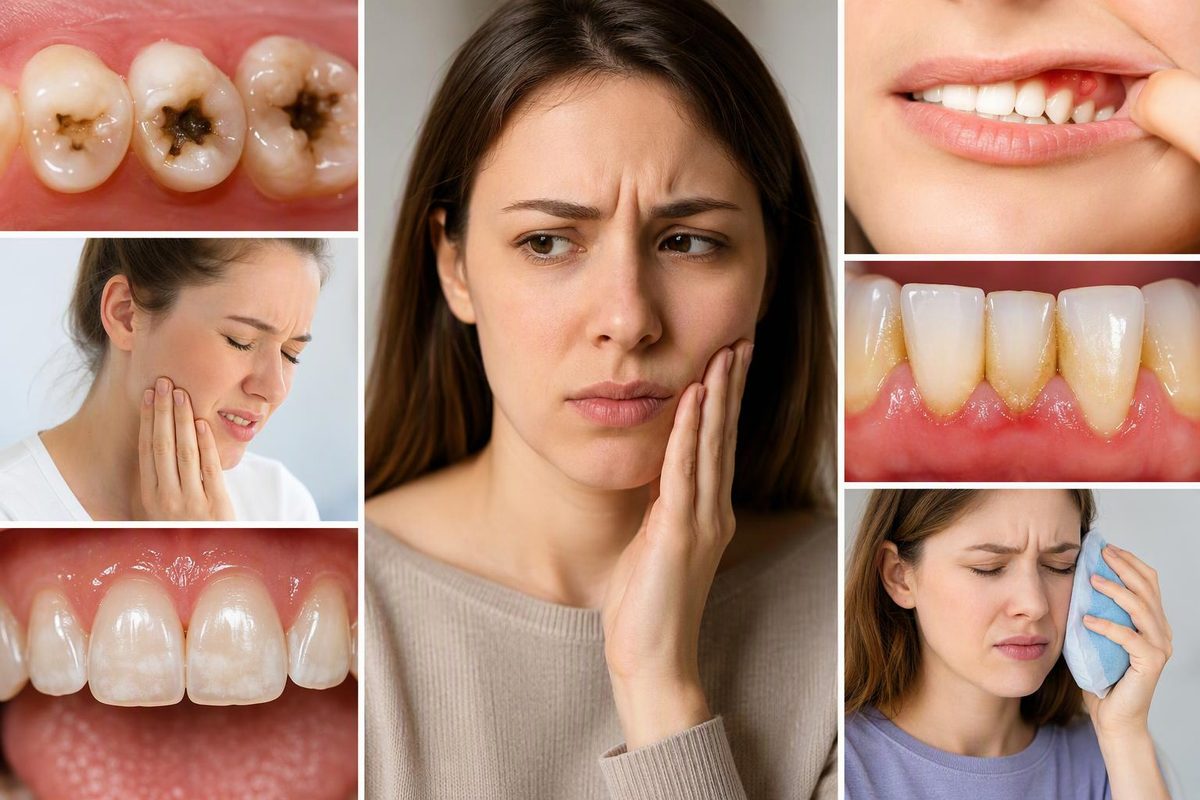
Symptoms of tooth decay can include toothache and sensitivity to hot, cold or sweet foods; visible signs can include white, brown or black spots or a hole. Early decay usually has no symptoms, so a painless tooth can still need treatment. The National Institute of Dental and Craniofacial Research (NIDCR) distinguishes early, often symptom-free decay from advancing decay that can cause pain or sensitivity.
Symptoms are what you feel. Signs are changes you can see or a dentist can detect. Neither a symptom checklist nor tooth color alone confirms a cavity. Toothache, recurring sensitivity or a suspected hole warrants a dental appointment; swelling or signs of infection can require more urgent care.
Choose the change you have noticed; use the result to identify the appropriate care route, not to diagnose decay.
Find the Appropriate Care Route
If signs overlap, select the most urgent category. This is not a diagnosis.
Keep Regular Dental Check-Ups
Early decay usually has no symptoms. No pain or visible change does not rule it out.
Emergency signs: difficulty breathing, speaking or swallowing; substantial mouth swelling; a swollen or painful eye; sudden vision problems; or difficulty opening the mouth. Seek emergency medical care immediately.
Possible abscess signs: intense tooth or gum pain, facial or jaw swelling, fever, or a bad taste. If you suspect an abscess, seek urgent dental assessment; not every sign has to be present.
View All Care Routes Without Using the Selector
| Noticed Change | Care Route |
|---|---|
| No symptoms or visible changes | Keep regular dental check-ups; early decay may be painless. |
| Unexplained white, brown or black spot | Arrange dental assessment; color alone cannot identify decay. |
| Toothache, recurring sensitivity or suspected hole | Arrange a dental appointment rather than waiting for stronger symptoms. |
| Suspected abscess | Seek urgent dental assessment. |
| Any emergency sign listed above | Seek emergency medical care immediately. |
Sources: NIDCR tooth decay guidance; NHS tooth decay and dental abscess guidance. Care routes do not confirm a cavity or exclude other conditions.
Common Symptoms and Visible Signs of Decay
The NHS tooth decay guidance lists toothache, sensitivity, discolored spots and holes as possible features of decay. They describe different kinds of change, not a sequence that every tooth follows. A tooth does not have to show all of them before decay is present.
| Change | What You May Notice | What It Cannot Tell You |
|---|---|---|
| Toothache | Pain in a tooth | The cause or depth of decay |
| Sensitivity | Sharp pain with hot, cold or sweet foods | Whether decay is responsible |
| Discolored spot | A white, brown or black area | Whether the mark is a cavity |
| Visible hole | A break in the tooth surface | How much treatment is needed |
Toothache and Sensitivity Are Reasons for Assessment
Toothache means pain in a tooth. Sensitivity can feel like sharp pain when eating or drinking something hot, cold or sweet. Both can occur as decay advances, but neither gives a reliable measurement of how much tooth structure has been affected.
The useful distinction is between noticing a symptom and identifying its cause. You can report that a tooth hurts or reacts to cold; a dentist must assess why. Calling every sensitive tooth a cavity overlooks other dental problems. Calling sensitivity harmless because it is not constant makes the opposite mistake: it dismisses a symptom without establishing its cause.
Recurring sensitivity warrants an appointment rather than waiting for it to become a stronger toothache. The examination may identify decay, another cause of sensitivity, or more than one problem. The symptom alone cannot make that distinction.
White, Brown and Black Spots Need Interpretation
A white spot can develop when enamel—the hard outer covering of a tooth—loses minerals. NIDCR describes this as a possible early sign of decay before a hole forms. That makes a white area worth assessing, even if the tooth feels normal.
White does not automatically mean early decay, however. White flecks can also reflect excessive fluoride intake during tooth development. Foods and drinks can cause surface staining. These alternative explanations are described in Cleveland Clinic’s discoloration guidance.
Brown or black marks also need interpretation rather than a diagnosis based on color. The question is not simply whether a mark is light or dark, but whether the tooth has mineral loss, structural damage or another explanation for its appearance. Our guide to stains versus cavities explains why appearance alone is not enough.
A photograph or mirror check can help you describe the location of a mark. It does not establish what the mark represents. A painless dark spot cannot be dismissed as staining solely because it does not hurt, and a white spot cannot be assumed to be reversible decay solely because of its color.
A Visible Hole Is Different From a Color Change
Decay can break down the tooth surface and form a cavity. A suspected hole therefore warrants a dental appointment even without pain. Unlike a color change, a hole raises the question of missing tooth structure rather than appearance alone.
Seeing a hole still does not tell you how deep the damage extends or which treatment is appropriate. The surface you can see is only part of the assessment. Conversely, not seeing a hole does not establish that the tooth is free of decay: early mineral loss may occur before a cavity forms, and a dentist may detect changes that are not obvious in a mirror.
Sensitivity Does Not Prove You Have a Cavity
Decay is one possible cause of sensitivity, not the only one. The American Dental Association (ADA) also lists fractured teeth, worn fillings, gum disease, worn enamel and exposed roots.
These alternatives matter because the same complaint—such as pain with a cold drink—does not identify one specific dental problem. Sensitivity is useful information for the dentist, but it is not a substitute for examining the tooth and surrounding tissues.
| Possible Problem | Relevant Distinction |
|---|---|
| Tooth decay | Involves acids made by bacteria |
| Enamel erosion | Involves acids not made by oral bacteria |
| Fracture or worn filling | Can also cause sensitivity |
| Gum disease or exposed roots | Can also cause sensitivity |
Enamel Erosion and Decay Have Different Causes
Enamel erosion is damage from acids not produced by oral bacteria, such as dietary or stomach acids. It can expose dentin—the layer beneath enamel—and cause sensitivity. Decay, by contrast, involves acids made by bacteria. The ADA’s erosion guidance explains this distinction.
Sensitivity therefore cannot tell you whether enamel has been affected by bacterial decay or by erosion. Describing every acid-related tooth problem as a cavity blurs two different processes. A dental examination is needed to identify the problem rather than choosing a diagnosis from the trigger alone.
Gum Symptoms Do Not Confirm Tooth Decay
Bleeding, red or swollen gums are signs associated with gum disease, not proof of a cavity. Bad breath and a bad taste can also occur with gum disease, according to the NHS gum disease guidance.
Those symptoms deserve their own assessment. They should not be used to confirm or exclude decay in a nearby tooth. A person may have more than one dental problem, so identifying gum symptoms does not settle whether decay is also present.
A bad taste is particularly dependent on context. It can occur with gum disease, but it is also listed among possible signs of a dental abscess. A bad taste accompanied by intense tooth or gum pain, facial or jaw swelling, or fever calls for a different level of concern than using taste alone as a cavity test.
No Pain Does Not Mean No Decay
Early decay usually causes no symptoms. Waiting for toothache therefore waits for a sign that may be absent while decay is already developing. Feeling normal is reassuring about how the tooth feels, not proof that its surface and internal structure are healthy.
NIDCR describes staining, soft or sticky areas, holes and X-ray findings as parts of detecting decay. Dentists assess the tooth surface and may take X-rays to detect decay that is not obvious from symptoms or a mirror check. The assessment uses evidence that a person cannot obtain simply by checking for pain.
This also explains why regular check-ups remain useful when teeth feel normal. An appointment prompted by symptoms and a check-up without symptoms serve different purposes: one investigates a noticed change, while the other can assess teeth before a problem becomes noticeable.
Pain has limits in the other direction, too. A painful tooth does not establish the depth of decay or prove that a filling is the required treatment. The cause of the pain and the condition of the tooth still need to be identified.
The Treatment Boundary Is Mineral Loss Versus a Hole
The key distinction is whether there is early mineral loss in an intact surface or actual structural breakdown. NIDCR’s explanation of cavity formation describes how early decay may be stopped or reversed before a hole forms, while a cavity represents permanent damage that requires dental repair.
| Tooth Condition | What That Means for Treatment |
|---|---|
| Early decay before a hole | May be stopped or reversed with fluoride and control of contributing factors |
| A formed cavity | Missing tooth structure does not regrow through brushing; a filling is commonly needed |
| Deeper decay | May require treatment beyond a filling |
“Early decay can be reversed” does not mean that every visible spot will disappear with home care. The spot first needs to be identified, and the tooth needs assessment for whether its surface remains intact. Color alone cannot establish that boundary.
Likewise, “the tooth does not hurt” is not a reason to assume that brushing can repair a hole. Brushing does not replace missing tooth structure. A painless cavity can still require a filling, while pain itself does not determine which treatment is needed. See why tooth condition, not pain, decides whether a filling is needed.
Dental Symptoms That Should Not Wait
Toothache, recurring sensitivity or a suspected hole warrants a dental appointment rather than waiting for stronger symptoms. A new or unexplained spot also deserves assessment because appearance cannot establish whether it is staining, early decay or another change.
The urgency changes when symptoms suggest infection or threaten breathing, swallowing, vision or mouth opening. The following distinctions follow NHS dental abscess guidance; they are care-routing guidance, not a way to diagnose an abscess yourself.
Suspected Abscess Needs Urgent Dental Assessment
A dental abscess is a pocket of pus caused by infection. Possible signs include intense tooth or gum pain, facial or jaw swelling, fever, or a bad taste. These signs do not all have to occur together.
Seek urgent dental assessment if you suspect an abscess. Do not wait for every listed sign to appear, and do not use the absence of a visible hole to dismiss swelling or intense pain. The urgent concern is the possible infection, not whether you can confirm decay at home.
A bad taste alone does not establish an abscess, just as sensitivity alone does not establish a cavity. The combination of changes and a dental assessment determine what is happening. Facial or jaw swelling and fever are not simply additional boxes on a routine cavity checklist.
Emergency Signs Need Immediate Medical Care
Seek emergency medical care immediately for difficulty breathing, speaking or swallowing; substantial mouth swelling; a swollen or painful eye; sudden vision problems; or difficulty opening the mouth. These signs take priority over trying to decide whether the original problem was decay.
An ordinary dental appointment is not the appropriate response to these emergency features. If several symptoms overlap, follow the most urgent care route rather than the least concerning symptom. The tool above cannot diagnose the cause or rule out an emergency.
If there are no symptoms, keep regular dental check-ups rather than treating silence as proof of healthy teeth. If there is a change, describe what you feel or see without assuming its cause. The decision that matters is whether the tooth needs routine assessment, urgent dental care or immediate medical care—not whether a symptom list can label it a cavity.
Decay Guide is an independent information publisher, not a dental practice. This article provides general information, not an individual diagnosis or treatment plan.