
Why Your Teeth May Feel More Sensitive During Pregnancy—and What to Do
By the Decay Guide editorial team. This article provides general information, not an individual diagnosis or treatment plan.
The short answer: pregnancy can contribute, but sensitivity is not automatically a pregnancy symptom
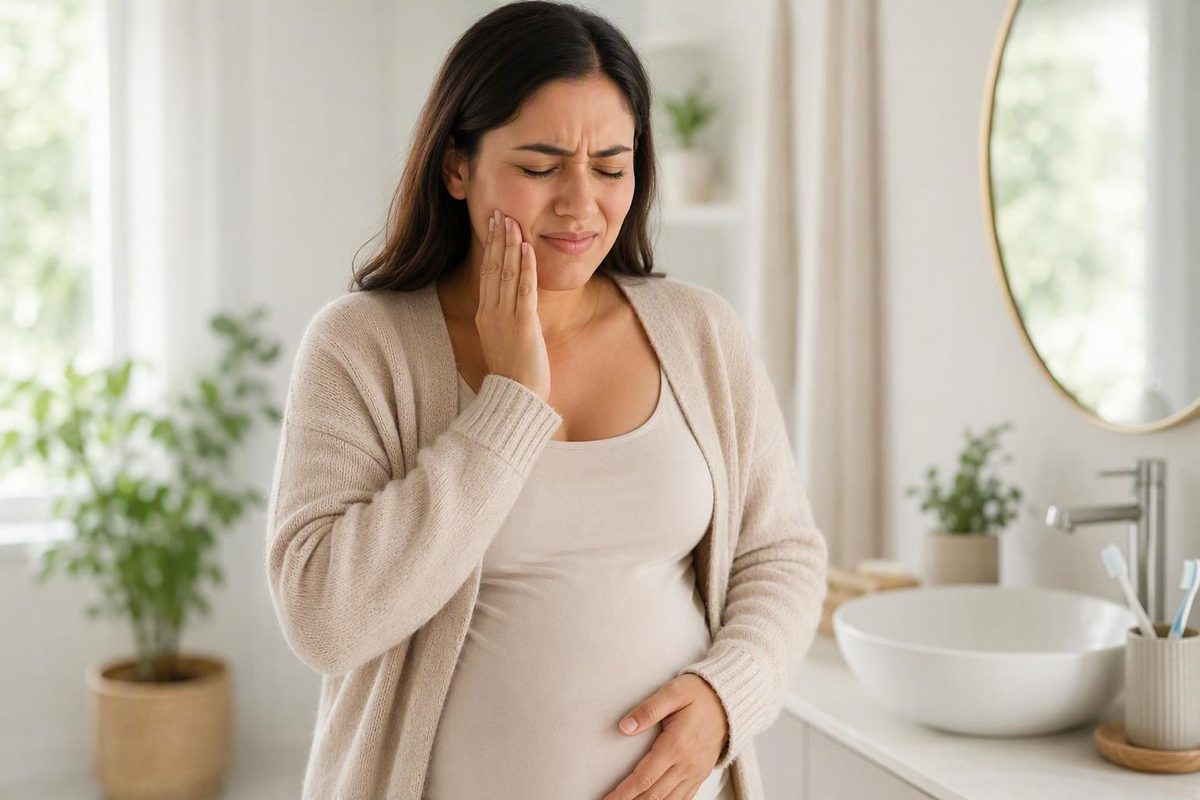
Pregnancy can create conditions that make the teeth or gums feel more sensitive, but it does not inherently damage teeth. New dental pain should not automatically be attributed to hormones or accepted as unavoidable. Pregnancy changes the risk context through bodily changes, vomiting or reflux, eating patterns, and oral-care difficulties rather than directly causing poor oral health in every pregnant person, according to Better Health Channel’s government health information.
The clearest hormonal effect is on the gums. Gum tissue can become more reactive to plaque, leading to redness, swelling, tenderness, or bleeding. Because the gums surround the teeth, inflamed tissue may feel like tooth soreness even when the discomfort is not coming from inside a tooth.
Typical tooth sensitivity is a brief, sharp sensation triggered by cold or hot foods and drinks, sweets, acidic foods, or sometimes cold air. It often occurs when dentin—the layer beneath the enamel or root covering—is less protected. Cavities can cause similar reactions, however, so the sensation alone does not establish the cause.
Sensitive teeth are also not a dependable early sign of pregnancy. Many dental problems can produce sensitivity, and some pregnant people experience none at all. If pregnancy is possible, use an appropriate pregnancy test and seek medical guidance when needed rather than interpreting dental discomfort as confirmation.
Useful questions include:
- Does the discomfort affect several teeth or one particular tooth?
- Is it a quick response to a clear trigger, or does it linger?
- Do the gums look swollen or bleed?
- Does the tooth hurt when you bite?
- Is the pain worsening or occurring without a trigger?
- Is there swelling, fever, pus, or drainage?
These patterns can help determine urgency, but they cannot provide a diagnosis. A dental examination may still be needed to distinguish exposed-dentin sensitivity from gum inflammation, erosion, decay, a crack, a damaged filling, or infection.
How pregnancy can change the conditions around your teeth and gums
Pregnancy can contribute to sensitive teeth indirectly through several overlapping pathways. This does not mean that pregnancy hormones directly expose dentin or irritate the nerves inside teeth.
Pregnancy gingivitis. Changing hormone levels can make gum tissue more sensitive to irritation from plaque. The gums may become red, swollen, tender, or prone to bleeding during brushing or interdental cleaning. A peer-reviewed review of oral care in pregnancy describes this increased gingival response while emphasizing the importance of plaque and existing inflammation.
Vomiting and reflux. Morning sickness, repeated vomiting, and heartburn can expose teeth to stomach acid. Repeated exposure may gradually erode enamel, leaving the underlying tooth structure less protected and more responsive to cold, heat, sweets, or acidic foods. Sensitivity after vomiting does not by itself prove that permanent enamel loss has occurred, but frequent exposure deserves attention.
Changes in eating patterns. Eating or sipping more frequently can increase the number of times teeth encounter sugar or acid, particularly when snacks and drinks are sweet or acidic. Cravings do not automatically cause cavities. Risk can rise, however, when frequent exposure occurs alongside plaque accumulation, vomiting, dry mouth, or difficulty cleaning the teeth.
Dry mouth. Some pregnant people experience reduced saliva or a persistent dry-mouth sensation. Ongoing dryness can increase the conditions that favor tooth decay and oral infection, as explained in the U.S. Health Resources and Services Administration’s pregnancy guidance.
Disrupted oral care. Nausea, fatigue, gum bleeding, gagging, or an aversion to toothpaste can make brushing and interdental cleaning difficult. Avoiding sore or unpleasant areas may feel reasonable in the moment, but allowing more plaque to collect can intensify gum inflammation and increase decay risk.
Grinding or clenching. Grinding or clenching can make teeth, fillings, chewing muscles, or the jaw feel sore. These problems are not unique to pregnancy, so tooth soreness during pregnancy should not be attributed to clenching without an assessment.
Several pathways may occur at once. Someone experiencing frequent vomiting might also brush less because toothpaste triggers nausea, sip acidic drinks to manage symptoms, or develop dry mouth. Pregnancy has not directly “weakened” the teeth in that situation, but it has changed the surrounding conditions.
A persistent myth holds that a developing baby removes calcium directly from the pregnant person’s teeth. It does not. Formed teeth do not act as a calcium supply for the fetus. The peer-reviewed pregnancy oral-care review specifically rejects the traditional belief that every pregnancy costs a tooth because calcium is taken from maternal teeth.
Is the discomfort coming from a tooth, the gums, or another dental problem?
The way pain behaves can help you decide how quickly to seek care. It cannot conclusively identify the cause because exposed dentin, decay, cracks, gum recession, damaged restorations, and inflamed gums can produce overlapping symptoms.
| Pattern | Possible explanations | Appropriate next step |
|---|---|---|
| Brief, sharp discomfort across several teeth when consuming something cold, hot, sweet, or acidic | Exposed-dentin sensitivity, enamel wear, gum recession, or recent acid exposure are possible. These are among the recognized non-cavity causes of sensitivity described by a dental-practice review. | Use gentle preventive care, reduce triggers, and arrange an examination if the problem persists, worsens, or remains unexplained. |
| Red, swollen, tender, or bleeding gums, especially without a temperature trigger | Plaque-related gingivitis or pregnancy-associated gum inflammation may be responsible. Gum soreness can also be perceived as tooth soreness because the tissues are adjacent, as explained in this dentist-authored discussion of pregnancy sensitivity. | Continue cleaning gently and arrange dental care if the inflammation persists, is substantial, or makes oral hygiene difficult. |
| Sensitivity centered on one tooth, pain that lingers after a trigger, spontaneous toothache, or pain when biting | Possibilities include decay, a crack, local recession, a damaged filling, or another localized problem. Symptoms can overlap too much to separate these causes at home. | Arrange a dental assessment rather than relying only on sensitivity toothpaste. |
| An early cavity causes no pain, followed later by sensitivity or toothache | Early decay may be painless; progressing decay can cause sensitivity, continuous aching, or pain without an obvious trigger, according to this comparison of cavities and sensitive teeth. | Book an examination. Neither the presence nor absence of sensitivity can rule decay in or out. |
| Tender teeth or jaw muscles on waking, with signs of tooth wear or clenching | Grinding or clenching may be contributing, but a crack, damaged restoration, or bite problem may also need consideration. Pregnancy-related sensitivity guidance lists grinding as one possible contributor rather than a pregnancy-specific diagnosis. | Ask a dentist to assess the teeth, restorations, bite, and jaw. |
Generalized, momentary pain from a cold drink is more consistent with ordinary sensitivity than a spontaneous toothache that remains after the drink is gone. “More consistent with” does not mean “confirmed.” Sensitivity can affect one tooth, and a cavity can respond to cold or sweets.
Likewise, one sensitive tooth does not automatically mean there is a cavity. Worn enamel, local gum recession, a small crack, an old filling, or recent dental work can produce a localized reaction. Persistent one-tooth symptoms need assessment because these causes cannot reliably be separated at home.
During an examination, a dentist may look for:
- Enamel wear or erosion
- Exposed dentin or tooth roots
- Gum recession
- Plaque-related inflammation
- Early or established decay
- Cracks in a tooth
- Loose, worn, or damaged fillings and crowns
- Pain related to the bite
- Signs of infection
The dentist may also ask whether the pain is brief or lingering, what triggers it, whether you have been vomiting, and whether it hurts to chew. These details guide the examination but do not replace it.
What to do after morning sickness or reflux
Do not brush immediately after vomiting. Stomach acid can temporarily soften the enamel surface, and brushing during that period may add mechanical abrasion.
A practical after-vomiting routine is:
- Rinse your mouth. Plain water is the simplest option.
- Spit out the rinse. Do not deliberately swallow it.
- Wait before brushing.
- Brush gently. Use fluoride toothpaste and a soft-bristled toothbrush.
- Avoid aggressive scrubbing. Extra pressure may aggravate tender gums or worn areas.
A diluted baking-soda rinse is another option. Mix one teaspoon of baking soda into one cup of water, rinse, and spit it out. It is a rinse, not a drink, and it does not treat a cavity, crack, infection, or enamel already lost.
Credible sources do not give one identical brushing delay. Some guidance recommends waiting at least 30 minutes after vomiting before brushing. Colgate’s pregnancy oral-health article uses that interval. Other government-backed guidance recommends waiting one hour; Better Health Channel gives that instruction after vomiting.
The evidence provided does not establish that one interval is conclusively best in every situation.
Rinsing cannot rebuild enamel already lost, repair decay, or replace a dental examination. Its purpose is to reduce immediate acid contact before normal cleaning resumes.
Repeated vomiting, severe reflux, or an ongoing inability to brush consistently increases the need for coordinated care. Discuss persistent vomiting or reflux with your pregnancy-care clinician, and ask a dentist how to reduce dental exposure. This is especially important if vomiting repeatedly interferes with hydration, nutrition, or oral hygiene.
A low-risk daily routine for reducing sensitivity and protecting enamel
A simple routine can reduce avoidable irritation while you arrange professional care for symptoms that need assessment.
Brush gently twice a day. Use fluoride toothpaste and a soft-bristled toothbrush. Forceful scrubbing can aggravate tender gums, recession, or exposed areas.
Clean between the teeth every day. Toothbrush bristles do not fully clean the contact areas between neighboring teeth. Use a gentle interdental method that you can tolerate consistently.
Keep cleaning bleeding gums gently. Bleeding may make you want to avoid the area, but leaving plaque in place can worsen inflammation. Use light pressure rather than abandoning oral hygiene. Persistent, heavy, or unexplained bleeding should be assessed.
Adapt the toothbrush if gagging is a problem. A smaller, soft manual toothbrush may be easier to tolerate than a large brush head or an electric brush. It may also help to brush when nausea is less intense, pause when needed, and avoid pushing the brush abruptly toward the back of the mouth.
Stay hydrated. Regular water intake may help when your mouth feels dry and can clear residues after eating. Persistent or severe dry mouth, particularly when it interferes with eating or oral care, should be discussed with a clinician.
Reduce the frequency of sugary and acidic exposure. Total intake matters, but so does how often teeth are exposed. Choose water between meals where possible.
Temporarily reduce triggers. Avoid very hot or icy foods if they reliably cause pain. A straw may reduce contact between some drinks and sensitive front teeth, but it does not make a sugary or acidic drink harmless. Do not swish acidic drinks around the mouth.
Consider a non-branded desensitizing toothpaste. Used as directed, it may help ordinary sensitivity associated with exposed dentin. It cannot fill a cavity, seal a crack, replace a failed filling, or treat an infection. As Decay Guide explains in its article on what daily brushing cannot fix, home cleaning has important limits when a structural dental problem is already present.
If pain is localized, persistent, lingering, bite-related, or worsening, do not use temporary symptom relief as a reason to postpone an examination.
Product formulations vary. If you have questions about a particular toothpaste, rinse, or ingredient during pregnancy, ask a dentist, pharmacist, or obstetric clinician familiar with your medical history. A general article cannot guarantee that every formulation is suitable for every person.
The central routine remains straightforward: brush gently twice daily with fluoride toothpaste and a soft brush, and clean between the teeth daily, consistent with pregnancy oral-care recommendations summarized in the cited guidance above.
When to book a dentist—and when the problem is urgent
Book a dental appointment when sensitivity:
- Persists despite gentle home care
- Repeatedly returns
- Becomes more intense or frequent
- Has no clear explanation
- Is centered on one tooth
- Lingers after a hot or cold trigger ends
- Occurs spontaneously
- Is associated with pain when biting
- Appears near a broken tooth, filling, or crown
These patterns may reflect decay, a crack, a damaged restoration, gum recession, enamel wear, or inflammation within a tooth. Finding the cause is more useful than spending weeks masking a problem that home care cannot correct.
Seek prompt or urgent professional care for:
- Severe dental pain
- Swelling of the face, jaw, or gums
- Fever accompanying dental symptoms
- Pus or visible drainage
- Other signs that an infection may be present or spreading
These warning signs require professional assessment rather than continued home monitoring, as emphasized in dentist-authored pregnancy sensitivity guidance.
Temporary improvement does not prove that the underlying problem has resolved. A desensitizing product may also reduce a symptom without treating its cause.
Tell the dental team that you are pregnant. Share your approximate stage of pregnancy, medical conditions, allergies, and current medicines. This allows the team to consider positioning, imaging, treatment, and any necessary coordination with your pregnancy-care clinician.
The U.S. Health Resources and Services Administration recommends arranging a dental appointment when oral-health concerns are present or when the last dental visit was more than six months ago. That is a general preventive prompt, not a reason to wait when pain is severe, worsening, localized, or accompanied by signs of infection.
Dental care during pregnancy is usually possible
Pregnancy is not, by itself, a reason to avoid necessary dental care. Examinations and cleanings can generally proceed, and necessary X-rays, local numbing medicines, fillings, crowns, and root-canal treatment are generally considered safe during pregnancy.
Necessary treatment should not be postponed solely in the hope that delivery will make the problem disappear. Untreated decay can progress, cracks can worsen, and infection may spread. The balance involved in treating a known dental problem is different from the decision to have an elective or cosmetic procedure.
It is not the only period in which necessary treatment can take place. Dental visits and many treatments can occur throughout pregnancy, with individual decisions based on the condition and the patient’s circumstances.
Procedure-specific decisions depend on:
- The diagnosis and urgency
- The stage and circumstances of the pregnancy
- Medical history and current medicines
- The type and likely length of the procedure
- The ability to sit or recline comfortably
- Whether infection or worsening damage is present
Routine examination, cleaning, necessary imaging, and local treatment should be distinguished from decisions involving antibiotics, pain medicines, nitrous oxide, IV sedation, or general anesthesia. Those may require individualized coordination between the dentist and obstetric clinician. A pregnancy dental-care overview similarly notes that treatment decisions should account for medical history, pregnancy stage, urgency, and patient comfort.
This does not mean that every medicine, dose, anesthetic, or procedure is suitable for every pregnant patient. It means that dental care can usually be planned safely and that pregnancy should prompt communication—not automatic delay.
Will the sensitivity go away after delivery?
It might, depending on the cause.
Pregnancy-associated gum inflammation may improve after delivery as hormonal conditions change. Sensitivity-related complaints may also settle if vomiting, reflux, dry mouth, frequent snacking, gagging, or disrupted oral care improves. Persistent gum inflammation or sensitivity still needs dental assessment; improvement after birth is possible, not guaranteed, as reflected in this discussion of sensitivity during and after pregnancy.
Structural dental problems are different. The following will not necessarily resolve after delivery:
- Enamel already lost through erosion
- Gum recession and exposed roots
- Cavities
- Cracked teeth
- Broken or leaking fillings
- Infection
Do not postpone assessment of persistent, localized, worsening, or severe symptoms because delivery is approaching. Waiting may allow a treatable problem to progress. The same applies if pain briefly improves: changes in intensity do not confirm healing.
If symptoms continue after pregnancy, arrange reassessment even if they were initially thought to reflect hormonal or behavioral changes. Pregnancy can alter the conditions around the teeth and gums, but it is not a dental diagnosis. An examination may be needed to identify the actual source.
Frequently asked questions
Can sensitive teeth be an early sign of pregnancy?
Sensitive teeth may occur during pregnancy, but they are not a reliable early sign and cannot confirm pregnancy. Enamel wear, exposed roots, gum inflammation, decay, cracks, damaged fillings, recent dental work, and acid exposure can all cause similar discomfort.
Use a pregnancy test and appropriate medical follow-up rather than relying on tooth symptoms.
Is fluoride toothpaste safe to use while pregnant?
Government pregnancy oral-health guidance recommends brushing twice daily with fluoride toothpaste. Use the product as directed and spit it out after brushing.
If you have an allergy, a medical condition, difficulty avoiding swallowing toothpaste, or a concern about a particular formulation, ask a dentist, pharmacist, or obstetric clinician for individualized guidance.
How long should I wait to brush after vomiting—30 minutes or one hour?
Recommendations vary between at least 30 minutes and one hour. The central point is not to brush immediately after stomach acid reaches the teeth.
Rinse and spit first, wait approximately 30 to 60 minutes, and then brush gently with fluoride toothpaste and a soft toothbrush. Plain water is suitable for rinsing. A mixture of one teaspoon of baking soda in one cup of water is another option, but it should be spat out and cannot repair existing erosion or dental disease.
Does one sensitive tooth mean I have a cavity?
No. A cavity is one possibility, but one sensitive tooth can also reflect exposed dentin, local gum recession, a crack, an old or damaged filling, enamel wear, or recent dental treatment.
Arrange an examination if the sensitivity persists, worsens, lingers after the trigger, occurs spontaneously, or is accompanied by pain when biting.
Does a developing baby take calcium from the mother’s teeth?
No. A developing baby does not remove calcium directly from formed maternal teeth.
Pregnancy can change gum inflammation, diet, vomiting or reflux, saliva, and oral-care habits. Those changes may affect dental risk, but the traditional claim that every pregnancy costs a tooth because the fetus takes calcium from maternal teeth is a myth.
Brief sensitivity across several teeth that occurs only with clear triggers may improve with acid protection, gentle fluoride brushing, daily interdental cleaning, hydration, and reduced trigger exposure. Pregnancy, however, is not a sufficient explanation for every painful tooth.
Localized, lingering, persistent, worsening, or severe symptoms—and any swelling, fever, pus, or drainage—need professional assessment. Necessary dental care is generally possible during pregnancy.
Decay Guide publishes general dental-health information; it does not diagnose, treat, or provide an individual care plan.