
You Can Exchange Oral Bacteria Without Catching Gum Inflammation
Available evidence gives no sound basis for advising every couple to stop kissing when one partner has inflamed gums.
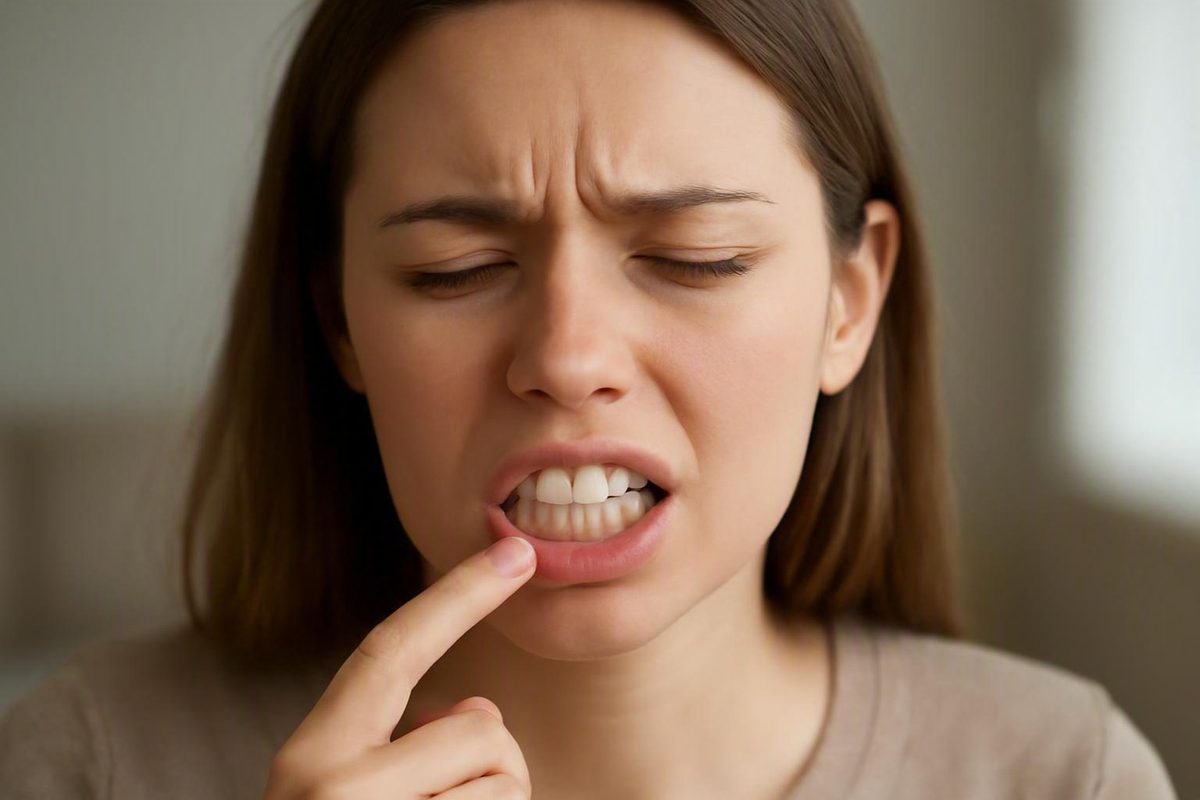
The short answer: gingivitis is not conventionally contagious
Gingivitis itself is not generally considered communicable in the way a cold or influenza is. It is gum inflammation associated with plaque buildup, not a condition that passes intact from one person to another. Oral bacteria associated with gingivitis may nevertheless be exchanged through saliva, including during kissing or when people share oral-contact items. Receiving those bacteria does not mean the recipient will develop inflamed gums (Cleveland Clinic’s gingivitis overview).
The practical answer to “Is gingivitis communicable?” is therefore qualified:
- Oral bacteria may be exchanged between people.
- Bacterial exchange is not the same as direct transmission of gum inflammation.
- Exposure does not establish that gingivitis will develop.
- Plaque accumulation, plaque removal and individual susceptibility remain important to the outcome.
The language used by consumer-health and dental sources is not always consistent. One reviewed consumer-health article describes the contagiousness question as debated, but its explanation distinguishes gingivitis from the possible saliva-based transfer of associated bacteria. It also provides no reliable numerical estimate of the risk after kissing or sharing an object (GoodRx’s discussion of gingivitis and bacterial spread).
The supplied evidence likewise does not define a contagious period for gingivitis. That should be understood as a limitation of the available information, not proof that every kind of saliva contact has been studied and ruled harmless.
The most defensible answer is straightforward: gingivitis is not conventionally contagious, although bacteria associated with it can be exchanged between mouths.
Why transferable bacteria do not make gingivitis a transferable disease
Gingivitis means inflammation of the gums. It is the earliest stage of gum disease, before the deeper tissue and bone damage associated with periodontitis.
The usual process begins with plaque, a thin bacterial film commonly found where the teeth and gums meet. When plaque remains at the gumline, the gums may become red, swollen and prone to bleeding. An evidence-based overview hosted by the National Library of Medicine identifies bacterial plaque as the most common cause of gingivitis and describes effective oral hygiene as central to prevention (InformedHealth.org’s overview of gingivitis and periodontitis).
A simplified sequence is:
- Bacteria are already present in the mouth, and additional bacteria may sometimes be encountered through saliva.
- Bacteria contribute to plaque forming on tooth surfaces.
- Plaque remains around the gumline when it is not adequately disrupted and removed.
- The gums respond to retained plaque with inflammation.
- That inflammatory state is gingivitis.
Gingivitis is therefore not a single pathogen that moves intact from one person to another. It is the resulting inflammatory condition in the affected person’s own gums.
This distinction also helps put newly encountered bacteria in context. The mouth already contains a complex community of microorganisms. Whether a particular bacterium was already present or recently introduced, its relevance to gingivitis depends partly on the conditions that allow plaque to remain near the gums.
Think of it as the difference between exposure and outcome. Exposure means contact with bacteria. Gingivitis is the outcome that may develop when plaque accumulates and the gums respond with inflammation. One does not automatically establish the other.
The supplied evidence does not determine how long transferred bacteria remain in another person’s mouth, how often they permanently alter the oral microbial community or whether a particular encounter caused inflammation that appeared later. Claims about those questions would go beyond what the sources show. The relationship between retained plaque and gum inflammation is much better established.
Kissing, cups, utensils, and toothbrushes: what the evidence supports
Activities involving direct oral contact or saliva may exchange oral bacteria. Examples described in the supplied dental education material include:
- Kissing
- Sharing cups, glasses or bottles
- Sharing forks, spoons or other eating utensils
- Sharing toothbrushes
- Sharing mouthguards or similar oral appliances
These are possible routes of bacterial exposure, not proof that the activities directly transmit gingivitis. A periodontal practice describes kissing and sharing toothbrushes, utensils, glasses or bottles as possible routes while also acknowledging that exposure does not automatically cause gum inflammation (South Texas Periodontics on saliva and oral-bacteria exchange).
The practical implications vary by activity.
Kissing: Kissing can exchange oral bacteria, but the available sources do not quantify how often relevant bacteria transfer or how often gingivitis follows. They also do not establish ordinary kissing as a demonstrated major cause of the condition. There is consequently no sound basis in the evidence pack for advising every couple to stop kissing whenever one partner has inflamed gums. Persistent symptoms are better addressed through plaque control and appropriate dental care.
Cups, bottles and utensils: These items may carry saliva between users, creating an opportunity for bacterial exchange. That possibility does not mean one sip from another person’s bottle will cause gingivitis. Washing reusable drinkware and utensils between users is a proportionate hygiene measure. Occasional sharing should not be portrayed as a major established cause of gum disease because the supplied evidence does not demonstrate that.
Toothbrushes: A toothbrush directly contacts teeth, plaque, gums and saliva. Keeping it personal is therefore a sensible hygiene rule. That recommendation does not depend on claiming a known transmission rate or saying that toothbrush sharing is proven to be riskier than kissing.
Mouthguards and other oral appliances: These items also make prolonged contact with the mouth. Each person should use their own appliance and follow its cleaning instructions. This is a general hygiene precaution, not evidence that the appliance transmits gingivitis as an intact disease.
The available sources do not quantify the likelihood of bacterial transfer for any of these activities, nor do they calculate the probability that exposure will lead to clinically recognized gingivitis. A dental-practice discussion of shared silverware similarly treats saliva transfer as possible while stating that gingivitis itself is technically not contagious (Sound Dentistry on gingivitis and shared items).
The evidence also does not establish whether bleeding gums materially alter person-to-person risk. Bleeding is a sign that the gums may need attention, but it should not be used to infer that gingivitis has become blood-borne or directly transmissible.
A calm household response is enough: keep personal oral-care items personal, wash reusable tableware and focus on the gum inflammation rather than treating ordinary social contact as a defined infectious hazard.
What determines whether exposed gums become inflamed
The central question is not simply whether bacteria enter the mouth. It is whether plaque remains around the teeth long enough to provoke inflammation, together with the affected person’s susceptibility.
This can be understood as a host-and-environment process:
- Exposure: Oral bacteria are already present and may also be exchanged between people.
- Local environment: Plaque may remain at the gumline.
- Plaque removal: Brushing and interdental cleaning may or may not remove it adequately.
- Host response: People can differ in their susceptibility to gum inflammation.
- Outcome: Gingivitis may or may not develop.
Consistent plaque control changes the environment in which both resident and newly encountered bacteria operate. Brushing disrupts plaque on accessible tooth surfaces, while cleaning between teeth addresses areas a toothbrush may miss.
Supported factors associated with greater gum-disease susceptibility include:
- Smoking
- Diabetes
- Hormonal changes associated with pregnancy
- Certain medications
- Reduced immune function
- Individual differences in susceptibility
Smoking, diabetes, pregnancy-related hormonal changes, certain medicines and individual susceptibility are among the factors identified in an evidence-based overview of gingivitis and periodontitis. That source also emphasizes plaque removal as a central preventive measure (InformedHealth.org on causes and risk factors). Immune-system weakness is discussed as a possible susceptibility factor in the supplied clinical and dental education material, although the communicability evidence remains limited.
A risk factor is not a diagnosis. A person who smokes, has diabetes, is pregnant or takes a relevant medication does not necessarily have gingivitis. Nor does a risk factor prove that bacteria from a partner caused existing inflammation. It means the person’s oral environment or inflammatory response may make gum problems more likely or harder to control.
Likewise, reduced immune function should not be interpreted as a simple formula in which exposure inevitably produces disease. People with health conditions or medications that may affect their gums should seek guidance appropriate to their circumstances rather than relying on general transmission advice.
The supplied evidence does not establish that repeated exposure is more consequential than one encounter, provide rates of transmission within families or prove that a partner’s bacteria caused a specific case. People in the same household may share routines and other circumstances as well as microorganisms. Similar gum problems among family members do not, by themselves, demonstrate contagion.
Signs of gingivitis—and signs the problem may be more advanced
Common signs of gingivitis include:
- Red gums
- Swollen or puffy gums
- Tender or sore gums
- Gums that bleed easily during brushing or cleaning between teeth
- Persistent bad breath
Gingivitis often causes little or no pain, and some people notice few symptoms. Red, swollen and bleeding gums are common signs, while professional cleaning and improved home plaque control are typical parts of management (Cleveland Clinic on gingivitis symptoms and treatment).
One instance of bleeding does not provide enough information to diagnose gingivitis. A recurring pattern of bleeding—especially when accompanied by redness, swelling, tenderness or persistent bad breath—deserves attention. Diagnosis requires more than matching one symptom to a list.
Symptoms also cannot reveal where particular bacteria originated. If someone notices bleeding gums after kissing a partner with gingivitis, the timing alone does not establish transmission. The inflammation may reflect plaque that was already accumulating or another issue that requires assessment.
Early gingivitis must be distinguished from periodontitis. Gum recession, damage to tooth-supporting bone and loose teeth should not be portrayed as routine signs of uncomplicated early gingivitis. Those changes may indicate a more advanced periodontal problem.
Arrange a professional dental evaluation if:
- Bleeding or swelling persists
- Symptoms recur frequently
- Tenderness or discomfort worsens
- The gums appear to be receding
- A tooth feels loose
- Persistent bad breath occurs alongside gum changes
- You are unsure whether the symptoms are gingivitis or something else
A general article cannot determine the cause or severity of an individual’s symptoms. A dental professional can examine the gums and supporting tissues, assess plaque and tartar, and determine whether treatment is needed.
A practical response for partners and households
When someone close to you has gingivitis, prioritize plaque control and appropriate care rather than fear of ordinary social contact.
A practical household plan includes the following measures.
Brush thoroughly twice a day. Give consistent attention to all accessible tooth surfaces and the gumline.
Clean between the teeth daily. Use an interdental method appropriate for your teeth so that plaque is not left in areas ordinary brush bristles may miss.
Keep oral-care items personal. Do not share toothbrushes, mouthguards or other appliances intended for use inside one person’s mouth.
Wash tableware and drinkware between users. Normal washing is a proportionate response for reusable cups, bottles and utensils. Gingivitis does not need to be treated as though it had a defined infectious period requiring special household disinfection.
Avoid tobacco. Smoking is a supported gum-disease risk factor, independently of any concern about saliva exchange.
Encourage care for the person with symptoms. Ongoing inflammation is better addressed through effective plaque removal and professional evaluation than through efforts to eliminate all saliva contact. Brushing twice daily and cleaning between teeth daily are standard preventive practices described in dental patient education (More Smiles Dental Spa’s gingivitis prevention guidance).
These measures do not require mouthwash as a person-to-person transmission control. The supplied evidence does not establish mouthwash as necessary or proven to prevent bacterial exchange between partners. Anyone using a rinse for a specific oral-health reason should follow advice appropriate to that reason.
The evidence pack also does not support one universal dental-visit interval for every person. The appropriate follow-up should be based on the individual’s symptoms, oral health and professional guidance.
Avoiding shared toothbrushes is a hygiene precaution, not an admission that gingivitis itself is directly transmissible. The main household objective is to reduce avoidable sharing of oral-care items while keeping attention on plaque at the gumline.
Why early gingivitis deserves attention even though it is not contagious
Gingivitis matters because it is an early and often manageable stage of gum disease—not because the affected person should be viewed as an infectious threat.
When plaque causes early gum inflammation, effective plaque removal can often allow the gums to recover. Professional cleaning or other dental care may also be needed, particularly when symptoms persist or hardened deposits are present. Home care alone should not be presented as a guaranteed cure for every case.
Plaque and tartar are related but not interchangeable:
- Plaque is a soft bacterial film that can be disrupted through thorough daily cleaning.
- Tartar, also called calculus, is hardened material that ordinary brushing cannot effectively remove and that requires professional removal.
This distinction helps explain why inflamed gums may persist even after someone improves their brushing. Better daily cleaning can limit new plaque accumulation, but it cannot remove tartar already attached to the teeth. For a fuller explanation of that boundary, see what daily brushing cannot fix.
Persistent or untreated gingivitis may progress to periodontitis, although progression is not inevitable in every case. Periodontitis affects the deeper tissues that support the teeth. It can damage supporting tissue and bone and may eventually contribute to tooth loosening. Plaque can be removed through thorough cleaning, whereas hardened tartar requires professional removal; the same evidence-based overview also distinguishes gingivitis from deeper periodontal damage.
Timely attention is valuable because early inflammation is generally more manageable than damage involving deeper supporting structures. The reason to act is to protect the gums, bone and teeth—not to prevent the affected person from “infecting” everyone around them.
What remains unknown about person-to-person risk
The evidence supports possible saliva-based exchange of oral bacteria, but it does not provide an absolute probability of developing gingivitis afterward.
Important unresolved questions include:
- How often are bacteria relevant to gingivitis transferred during kissing?
- How frequently do cups, utensils, toothbrushes or mouthguards transfer those bacteria?
- How long do newly encountered bacteria remain in another person’s mouth?
- Does repeated exposure matter more than one encounter?
- Do bleeding gums materially change the likelihood of transfer?
- How often does bacterial exchange meaningfully alter the recipient’s oral microbial community?
- What proportion of gingivitis among partners or families, if any, can be attributed to exchanged bacteria rather than plaque control and shared circumstances?
Much of the direct discussion of communicability in the supplied evidence comes from consumer-health or dental-practice education pages. Some do not cite primary transmission studies, and their headlines may be more categorical than the explanations in the body. One periodontal practice, for example, describes possible saliva-based exposure routes but does not provide a transmission probability or establish that an exposed person will develop gingivitis.
The evidence is firmer on the underlying disease process:
- Gingivitis is inflammation of the gums.
- Bacterial plaque commonly accumulates near the gumline.
- Inadequate plaque removal promotes inflammation.
- Smoking, diabetes, pregnancy-related changes, some medications and other susceptibility factors can affect risk.
- Gingivitis may be subtle or painless.
- Persistent gingivitis may progress to periodontitis.
- Effective plaque removal and professional care when needed are central responses.
The absence of a numerical estimate matters. Claims such as “one kiss is safe,” “repeated kissing is dangerous” or “a shared toothbrush is a specific number of times riskier” cannot be justified from the supplied information. Nor should repetition of the same claim across multiple dental blogs be treated as proof of scientific consensus.
The qualified conclusion remains the strongest one: gingivitis is not directly communicable like a cold or influenza. Associated oral bacteria may be exchanged, but subsequent gum inflammation is neither direct nor inevitable.
Frequently asked questions
Can I get gingivitis from kissing someone who has it?
Kissing may exchange oral bacteria, including bacteria associated with plaque and gum inflammation. That does not mean kissing transfers gingivitis as an intact condition or that the recipient will necessarily develop it. The available material describes possible bacterial exchange but provides no numerical estimate of the chance of gingivitis after kissing (Pioneer Periodontics on saliva-based bacterial transfer).
Rather than treating ordinary affection as the primary problem, maintain effective plaque control and encourage a partner with persistent gum symptoms to obtain appropriate dental care.
Can gingivitis spread through a shared cup, fork, or bottle?
A cup, fork or bottle may carry saliva between users, so oral-bacteria exchange is possible. Gingivitis itself is not transferred as an intact inflammatory condition, and using an item after someone else does not establish that your gums will become inflamed.
Wash reusable cups, bottles and utensils normally between users. That is sensible hygiene, but occasional sharing should not be presented as a proven major cause of gingivitis.
Should people ever share a toothbrush or mouthguard?
No. Toothbrushes and mouthguards should be personal items because they make direct contact with the mouth, saliva, teeth and gums. Keeping them personal is a straightforward hygiene precaution; it does not mean either item has a scientifically established gingivitis-transmission rate (GoodRx on possible saliva-contact routes).
Clean and store oral appliances according to their instructions. Seek professional advice if an appliance is damaged, no longer fits or appears difficult to keep clean.
Can gingivitis be reversed before it becomes periodontitis?
Early gingivitis can often be reversed when plaque is removed consistently and professional care is obtained when needed. Brushing and daily interdental cleaning can disrupt soft plaque, but hardened tartar requires professional removal. Home care alone cannot be guaranteed to resolve every case (Greenwood Dental’s overview of early gingivitis and oral hygiene).
Persistent bleeding, swelling, tenderness or bad breath should be evaluated. Gum recession or loose teeth deserve prompt professional attention because they are not routine features of uncomplicated early gingivitis.
The bottom line
Gingivitis is not something people ordinarily catch from one another, although oral bacteria can be exchanged through saliva. Focus less on fear of casual contact and more on effective plaque removal, personal toothbrushes and mouthguards, normal washing of shared tableware, supported risk factors and professional evaluation for persistent symptoms.
Decay Guide is an independent information publisher, not a dental practice. This article provides general information and does not diagnose, treat or offer personalized dental advice.