
Does Ozempic Cause Cavities? What the Evidence Shows
Ozempic is not an established direct cause of cavities. Learn what studies show and how dry mouth, vomiting and reflux can affect teeth.
How this site is written
Decay Guide is written by a health writer, not by a dentist, and no article here has been reviewed by a clinician. We work from public patient-education sources — the NHS, the CDC, the American Dental Association and hospital patient guides — and link to them so you can check what we say. Figures such as pocket depths are quoted as the educational benchmarks those sources use, not as thresholds you can apply to yourself. Nothing here replaces an examination.
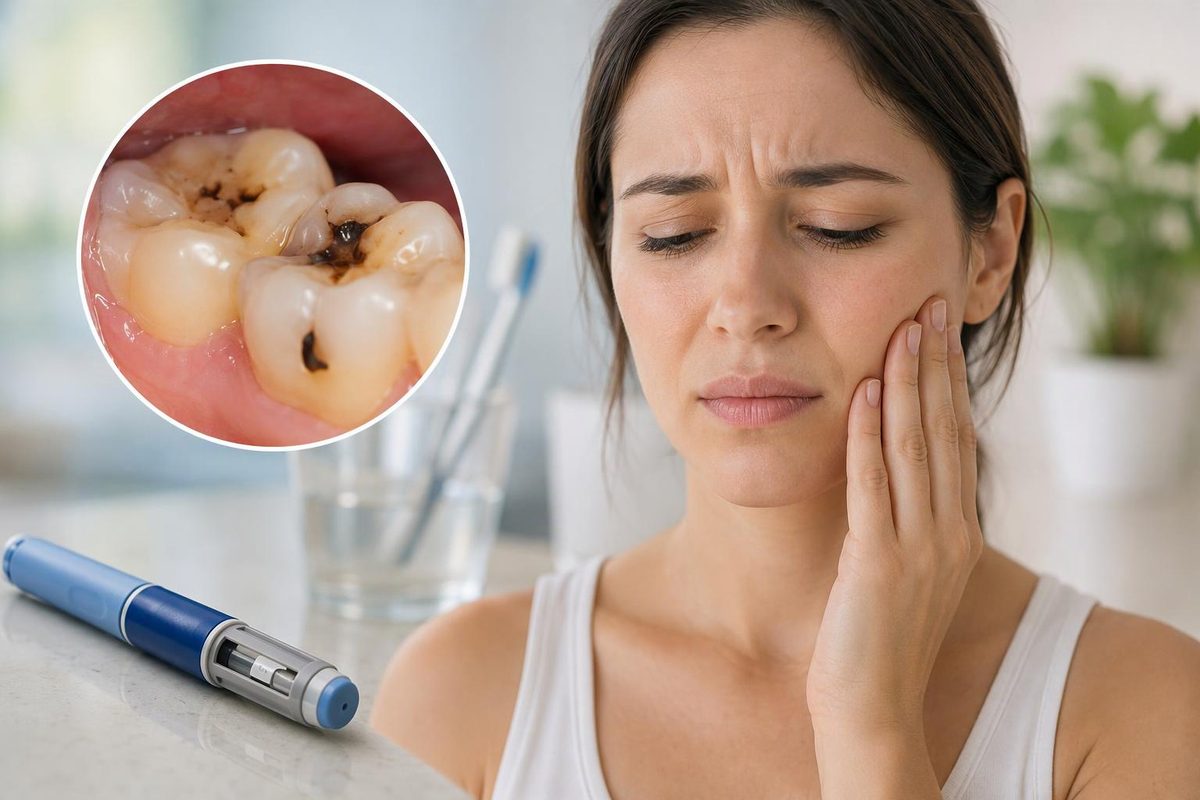
Ozempic (semaglutide) is not an established direct cause of cavities. Research has reported dry mouth during semaglutide use, but a large preliminary study found fewer documented cavities—not more—among semaglutide or tirzepatide users compared with people starting other diabetes medicines. That does not prove the drugs protect teeth, either. Case series, 2026 preprint.
The useful distinction is between a drug directly causing decay and changes during treatment that could make the mouth more vulnerable. Persistent dry mouth matters for cavity risk. Repeated vomiting or reflux can damage enamel through a different process: acid erosion.
What the studies actually show
A 2023 case series described three women who developed dry mouth and reduced saliva flow while taking semaglutide for weight loss. The authors suspected a medication-related effect and called for larger studies. Three cases cannot establish how common the problem is or show that semaglutide causes cavities; the report concerned saliva, not a measured increase in tooth decay. Read the case series.
A preprint posted on August 24, 2026 examined medical records for 184,582 semaglutide or tirzepatide users over 12 months. In matched comparisons with users of other diabetes medicines, documented dental caries—the clinical term for tooth decay—was less frequent. Dry mouth was the most commonly documented oral condition in the treatment group, and its incidence increased with greater weight loss. Read the preprint.
As of November 3, 2026, that version had not been peer reviewed. It combined several brands and two medicines, so its findings are not specific to Ozempic. It also excluded people with repeated prior oral-health documentation, could miss dental care delivered outside participating health systems, and could not eliminate differences between treatment groups. The result is preliminary reassurance against a broad increase in cavities—not proof of causation, protection or long-term safety for every user. Study methods and limitations.
A separate retrospective matched-cohort study of 226,485 GLP-1 receptor agonist users also reported no increased risk for most recorded oral and facial conditions. Reflux was the exception, with higher odds among users. This was likewise an observational, drug-class study, not proof of Ozempic’s effects on an individual tooth. Published study abstract.
How oral changes during treatment could matter
Dry mouth can reduce protection against decay
Saliva washes away food particles, helps control harmful germs and supplies minerals that keep teeth strong. Persistent dry mouth increases tooth-decay risk. However, diabetes and many other medicines can also cause dryness, so a new dry-mouth symptom does not identify Ozempic as the cause. NIDCR dry-mouth guidance.
Cavities develop when plaque bacteria use sugars to produce acids that repeatedly remove tooth minerals. Frequent sipping of sweet drinks or using sugary sweets to relieve dryness can therefore add to risk. This is a possible indirect pathway, not a demonstrated effect of Ozempic on eating habits. NIDCR explanation of decay.
Vomiting and reflux can cause erosion, not necessarily cavities
Ozempic’s U.S. prescribing information lists vomiting among its common adverse reactions and also reports gastroesophageal reflux disease in trials. If stomach acid repeatedly reaches the teeth, it can dissolve enamel without bacterial involvement. That is erosion, rather than tooth decay, and it may cause sensitivity. Ozempic prescribing information, ADA erosion guidance.
The distinction matters because preventing bacterial decay alone does not address ongoing stomach-acid exposure. See how enamel erosion differs from cavities.
What helps protect teeth during treatment
General prevention remains useful, with extra attention to dryness and acid exposure:
- Maintain daily cavity prevention: brush twice daily with fluoride toothpaste and clean between teeth each day. A dentist can assess whether supplemental fluoride is appropriate. ADA prevention guidance.
- Address persistent dryness: sipping water and chewing sugarless gum may help. A dentist or prescriber can investigate the cause and discuss saliva substitutes or medication-related options. NIDCR guidance.
- After vomiting, rinse with water rather than brushing immediately. This avoids brushing an acid-softened tooth surface. Recurrent reflux or vomiting also needs its underlying cause addressed. ADA erosion guidance.
New cavities or persistent dryness warrant a dental assessment and a review of the full medication list; their timing alone does not establish the cause. Medication changes belong with the prescriber, not a self-directed attempt to prevent cavities. Ozempic’s Medication Guide advises contacting the prescriber right away for nausea, vomiting or diarrhea that does not go away because fluid loss can cause dehydration and kidney problems. NIDCR guidance, Ozempic Medication Guide.
Decay Guide is an independent information publisher, not a dental practice. This article provides general reference information, not an individual diagnosis or treatment plan.