
Can Retainers Cause Cavities? How They Can Add to Risk
Retainers can contribute to cavity risk by making plaque harder to remove. Learn how removable and fixed retainers differ—and what studies show.
How this site is written
Decay Guide is written by a health writer, not by a dentist, and no article here has been reviewed by a clinician. We work from public patient-education sources — the NHS, the CDC, the American Dental Association and hospital patient guides — and link to them so you can check what we say. Figures such as pocket depths are quoted as the educational benchmarks those sources use, not as thresholds you can apply to yourself. Nothing here replaces an examination.
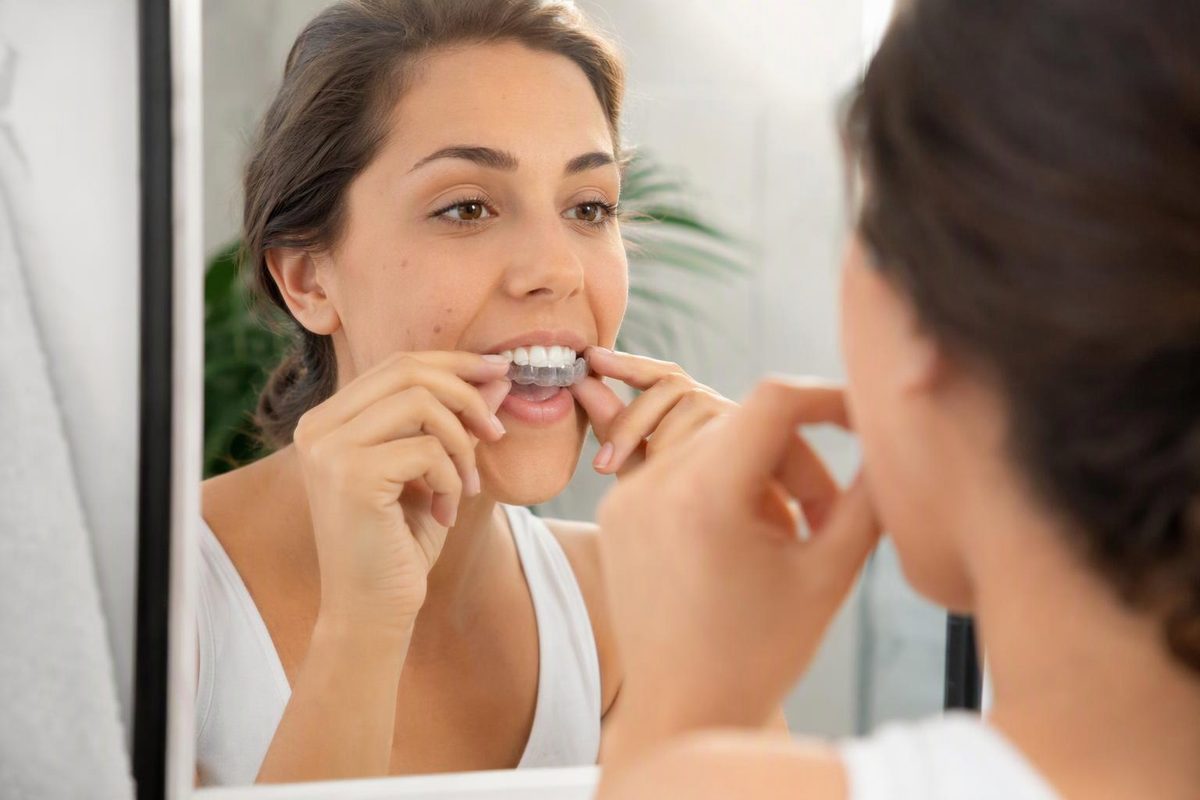
Retainers can contribute to cavity risk, particularly when teeth and the appliance are not kept clean—but wearing a retainer does not automatically cause decay. The concern is plaque control and sugar exposure, not simply the presence of plastic or wire. The British Orthodontic Society warns that sugary snacks and drinks, combined with poor cleaning of teeth and retainers, may cause permanent tooth damage. BOS patient guidance
Why a retainer can matter
A cavity develops when bacteria in dental plaque—a sticky film on teeth—use sugars and starches to produce acids. Repeated acid exposure removes minerals from enamel. Saliva and fluoride help replace those minerals, but continued mineral loss can eventually produce a hole. NIDCR explanation of tooth decay
Retainers can collect plaque and make teeth harder to clean. That provides a way for them to contribute to decay, rather than directly damaging enamel just by being worn. Cochrane review
The cleaning challenge differs by type:
- Removable retainers: Clear plastic retainers fit over teeth; Hawley retainers use a wire and an acrylic section. Taking either type out allows access for brushing, but both the teeth and appliance need cleaning. Cleaning the retainer alone does not remove plaque from teeth. Retainer types; BOS cleaning guidance
- Fixed, or “permanent,” retainers: A bonded wire stays behind the teeth, creating an area that needs extra cleaning attention. Small studies summarized by UT Health San Antonio found plaque or hardened deposits called calculus around some lower fixed retainers, even though they did not find increased decay in the groups studied. University evidence summary
These are reasons to improve cleaning access, not proof that decay is inevitable. Plaque accumulation, tartar and gum inflammation are also not interchangeable with cavities: a study measuring gum bleeding has not necessarily measured tooth decay.
What studies actually show
A 2023 Cochrane review examined retention methods after orthodontic braces. One trial comparing full-time clear plastic retainers with fixed multistrand-wire retainers in the lower jaw found no difference in evidence of tooth decay at 12 months. Some comparisons favored removable retainers for gum health, but that does not establish a cavity-prevention advantage. Cochrane review
The review rated the evidence overall as low to very low certainty. Many comparisons relied on small studies, and most studies followed participants for less than a year. That limits what can be said about long-term cavity risk. The review does not provide a reliable percentage increase in cavity risk from wearing a retainer, or establish that one common type consistently causes more cavities than another.
“No difference found” is not the same as “no risk under any circumstances.” It also does not justify switching retainer types solely to prevent cavities.
Habits that reduce cavity risk while wearing retainers
The practical goal is to avoid leaving plaque on teeth while keeping the appliance clean:
- Remove a removable retainer for tooth brushing. Brush teeth for at least two minutes twice daily with fluoride toothpaste, including at bedtime. BOS guidance; NIDCR
- Clean the appliance separately. Follow instructions appropriate to its material; fluoride toothpaste is for the teeth, not automatically for the retainer. See how to clean dental retainers by type and material.
- Give a fixed wire extra attention. Ask a dentist or hygienist to demonstrate cleaning around it and between the teeth. A floss threader for a permanent retainer may help with suitable designs.
- Limit sugary snacks and drinks between meals and at bedtime. Sugar after bedtime brushing is a concern whether or not a retainer is worn: saliva flow decreases during sleep, reducing teeth’s ability to recover from acid exposure. BOS guidance; NIDCR
Keep regular dental examinations while wearing retainers so teeth can be checked for decay. If decay is found, its appearance after starting retention does not by itself establish that the retainer caused it. The useful questions are whether plaque is being missed around the appliance and whether sugar exposure or other cavity risks need attention.
Do not simply abandon prescribed retention over cavity concerns: teeth can move when retainers are not worn. A damaged, lost or loose retainer needs prompt contact with the orthodontist, rather than waiting for the next routine review. BOS guidance
This is general dental-health information, not an assessment of an individual tooth or retainer.