
A Painless Lost Crown Still Needs a Dentist—Here’s What to Do Now
Save the crown, keep the tooth clean and avoid chewing on it while arranging dental care. Breathing or swallowing difficulty requires emergency help.
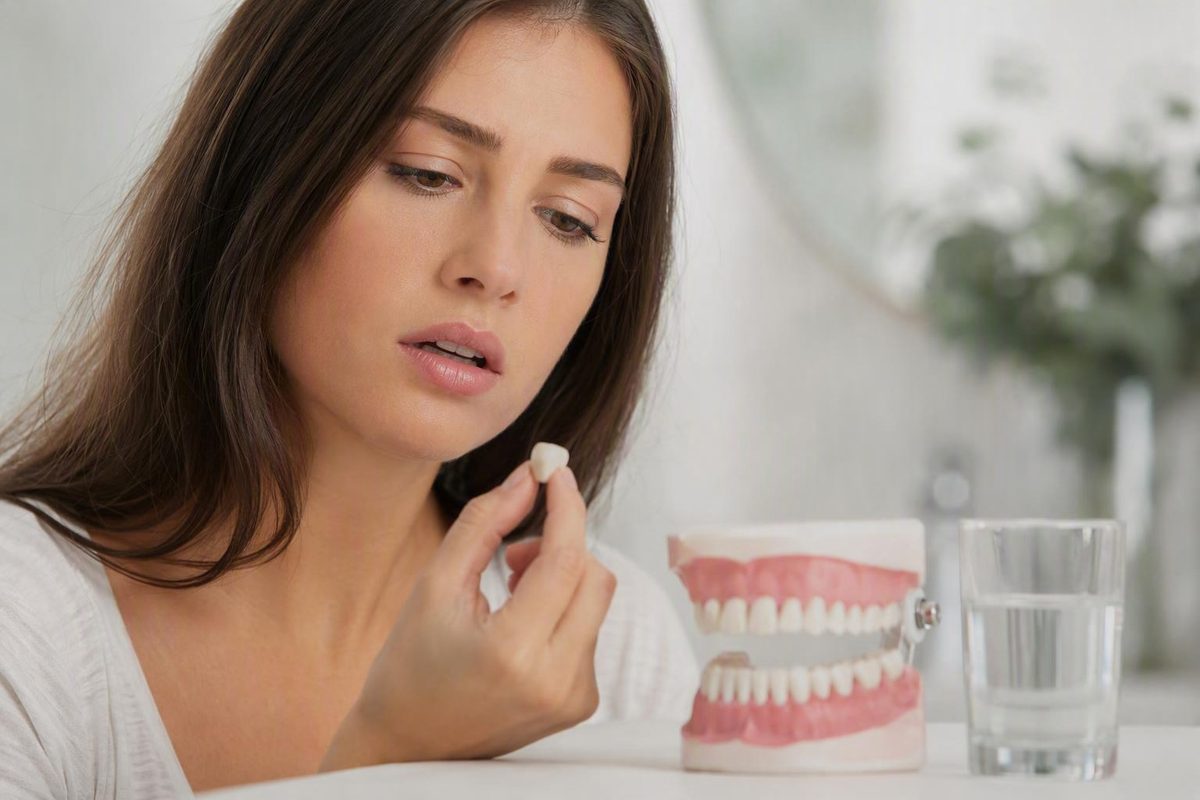
If your crown fell out but it does not hurt, save the crown, protect the exposed tooth and contact a dentist promptly. However, symptoms alone cannot show whether the crown or underlying tooth is healthy enough to leave untreated.
What to do right now
Follow these steps until a dentist can assess the tooth:
- Retrieve the crown. Check whether anything resembling natural tooth material, a filling core or a post is attached.
- Rinse and store it. Rinse the crown gently, place it in a clean, secure container and take it to your appointment.
- Keep the tooth clean. Continue gentle brushing with fluoride toothpaste.
- Reduce pressure on it. Choose soft foods, chew on the opposite side and avoid hard or sticky foods.
- Limit sensitivity triggers. Avoid very hot or cold foods and drinks if they cause discomfort. Sensitive toothpaste may help.
- Call a dental practice. Explain that the crown has completely detached, whether you have pain or swelling, and whether tooth material or a post appears to be attached.
Do not force the crown back into place or use super glue or another household adhesive. Although temporary dental cement is sometimes suggested, home reseating is not appropriate in every case, particularly if the crown will not settle easily or part of the tooth appears to have broken away. General dental-practice guidance supports saving the crown, avoiding chewing on the affected side and seeking prompt assessment rather than attempting a forced repair (lost-crown guidance).
Do not try to separate or replace them yourself.
Is a painless lost crown an emergency?
A painless, fully detached crown is generally a dental-care problem rather than an automatic medical emergency. The response changes if pain, swelling, bleeding, impaired mouth function or airway symptoms develop.
| Situation | Appropriate response | Warning signs |
|---|---|---|
| Timely dental assessment | Contact a dentist promptly and protect the tooth while waiting | No significant pain, swelling, bleeding or trauma; no airway risk; able to eat and open the mouth normally |
| Faster urgent dental assessment | Contact an urgent dental service; severe or worsening symptoms may need same-day assessment | Severe or worsening pain, painful swelling, fever, bad taste with other infection symptoms, persistent bleeding, or difficulty chewing or opening the mouth |
| Emergency medical help | Call the local emergency number or attend an emergency department | Difficulty breathing, speaking or swallowing; major mouth or facial swelling; eye pain or swelling; vision changes; uncontrolled bleeding; or serious facial trauma |
In England, NHS England classifies a loose or displaced crown without an airway risk as non-urgent unscheduled dental care, generally requiring face-to-face care within seven days unless the condition worsens. This is England-specific service guidance and the closest official category for a fallen crown—not a universal deadline or an individual treatment recommendation (NHS England unscheduled dental-care guidance).
Triage can assign a different timeframe based on symptoms, ability to eat and open the mouth, how long the crown has been displaced, medical history, systemic risks and whether the condition is deteriorating.
However, painful swelling, fever, a bad taste and difficulty chewing or opening the mouth can occur with a dental abscess and require urgent dental assessment. Major swelling, eye involvement, or difficulty breathing, speaking or swallowing requires emergency medical help (NHS dental abscess guidance).
Why can the tooth feel fine without its crown?
A crown covers a reshaped tooth and can restore strength and function to a tooth weakened by decay, a large filling, wear or previous treatment. Once the covering comes off, the remaining structure is less protected even if it feels normal.
No pain cannot confirm that the tooth is free from decay, a fracture or another structural problem. Some damage produces little immediate discomfort, and parts of the tooth beneath the crown are difficult to assess at home.
Previous root-canal treatment is one possible explanation for a painless lost crown. Because nerve tissue has been removed from inside the tooth, it may not respond like a tooth with a living nerve. It can still have limited remaining natural structure and require protection.
Possible reasons for detachment include:
- worn or failed dental cement;
- decay beneath or around the crown;
- fracture of the tooth, filling core or crown;
- an inaccurate or deteriorating fit;
- grinding or clenching;
- trauma;
- biting hard or sticky food; or
- ordinary wear.
These are possibilities, not conditions that can be diagnosed from the absence of pain.
Can the dentist put the same crown back on?
Possibly. Bringing the crown is worthwhile even if it looks damaged, but reuse depends on the condition of both the restoration and the tooth.
The usual decision pathway is:
- Assess the crown. The dentist checks whether it is intact, undistorted and capable of fitting correctly.
- Assess the tooth. They look for sufficient sound tooth structure, decay, fractures, and damage to any core or post.
- Investigate if needed. An examination and sometimes an X-ray may be used to assess areas that are not directly visible.
- Choose a restoration. If the crown and tooth remain suitable, the dentist may clean and re-cement the crown.
- Treat underlying damage. Depending on the findings, options can include a temporary repair, a new crown or filling, root-canal treatment, or extraction if the tooth cannot be restored.
Conversely, a detached crown does not automatically mean the tooth needs extraction. General dental-practice guidance describes assessment of the crown and underlying tooth as the basis for deciding between re-cementation and further treatment (assessment of a detached crown).
How to find care if your usual dentist cannot see you
Call your regular dental practice first. If it is closed, listen to its recorded out-of-hours instructions or check its website. Mention pain, swelling, bleeding, fever, difficulty eating or opening your mouth, and whether tooth material is attached to the crown.
If the practice cannot help, use the relevant urgent dental triage service:
- England: NHS 111 may help direct people who cannot obtain appropriate urgent dental care, particularly when urgent symptoms are present. Local access arrangements vary.
- Wales: Local NHS dental helplines are the stated route for urgent dental care (NHS 111 Wales lost filling or crown guidance).
- Outside the UK: Consult the official urgent or emergency dental service for your area rather than assuming NHS pathways apply.
A hospital emergency department is not the usual destination for an uncomplicated, painless detached crown. Hospital care is for the medical emergency signs listed in the triage table.
Frequently asked questions
What should I do if I swallowed the crown or may have inhaled it?
Most swallowed dental objects pass naturally through the digestive tract and do not require removal. An X-ray may sometimes be used to determine whether an object is present and where it is.
Go to an emergency department if you develop abdominal pain, difficulty swallowing, difficulty breathing, or red or black stool. Call the emergency services if symptoms are severe.
Suspected inhalation is more urgent because an object can enter the windpipe or lungs. If the crown may have been inhaled, especially if you are coughing, choking or having any breathing difficulty, seek urgent medical assessment. Breathing impairment is an emergency, and an object located in the airway may need to be removed.
What if the crown is loose but has not come off completely?
Do not pull, twist or force it off. Avoid chewing on that side and contact a dentist promptly. If it comes away on its own, retrieve it if safe, rinse it gently and store it securely.
If the crown is extremely mobile or you are concerned that it could come loose in your mouth, seek prompt dental triage rather than attempting to remove or repair it yourself.
Save the crown, keep the tooth clean, avoid chewing on it and arrange dental care even if nothing hurts. New pain, swelling, fever, bleeding or impaired mouth function increases the urgency; breathing or swallowing difficulty requires emergency help. Only a dental examination can determine whether the original crown can be re-cemented. Decay Guide is an independent information publisher, not a dental practice, and provides general information rather than individual diagnosis or treatment.