
Why One Cheap Crown Rarely Pays for the Trip
A one-crown trip can erase a 70% dental discount. Calculate airfare, hotel nights, break-even cost, and when treatment abroad saves money.
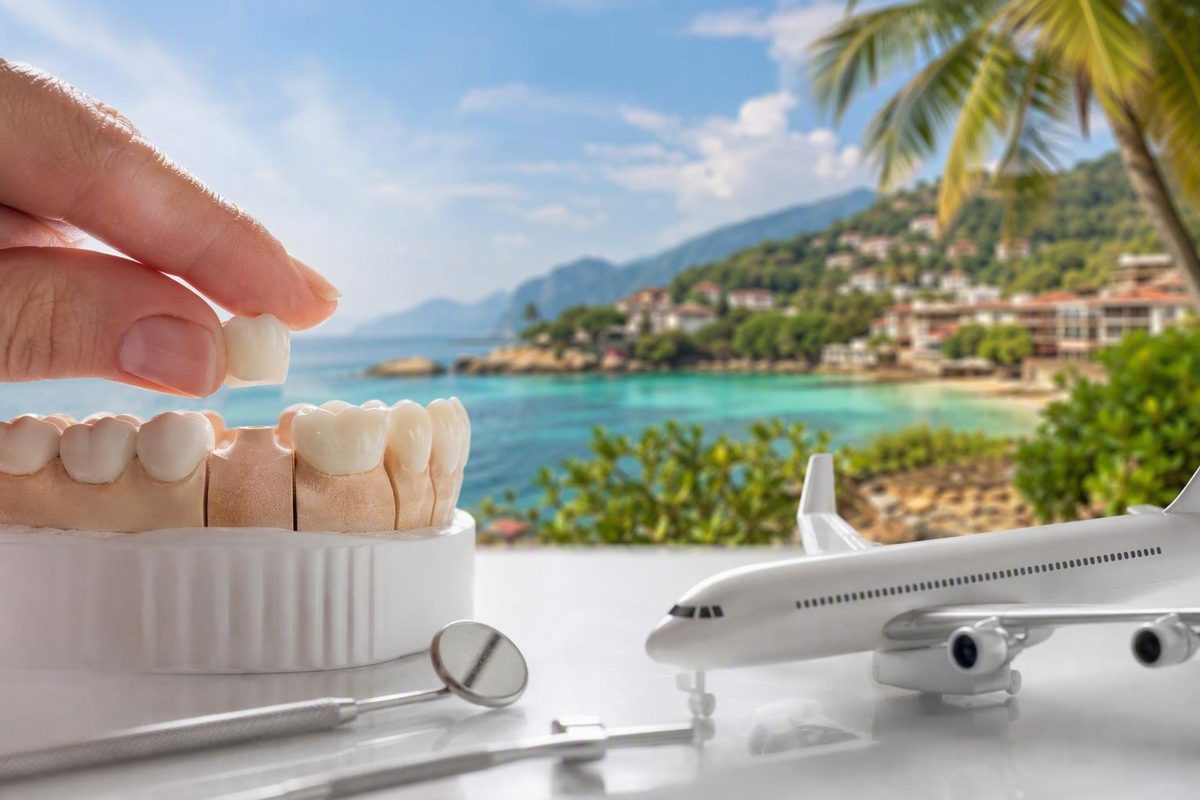
For a single crown, a dedicated dental-tourism trip usually loses money. Mexico’s advertised procedure prices can create a gross saving of up to about $1,150, but a Cancun crown may require three to six days on site; airfare and lodging can consume that entire gap. The practical break-even point can approach $2,500–$3,000 of U.S.-quoted work once a longer stay, missed time, and follow-up exposure are included (CareCostIndex, Medical Tourism Co.).
That verdict applies to a trip booked specifically for one crown. The arithmetic can favor treatment abroad if you can drive across a nearby border, add the crown to travel you were already taking, or need several independently diagnosed restorations. It favors extensive work even more strongly: advertised All-on-4 treatment in Cancun is $7,500–$9,500 versus $25,000 or more in the United States, a gap large enough to absorb ordinary travel costs (Medical Tourism Co.).
The Case For Dental Tourism Is Strong—But Usually About Treatment Prices
The received wisdom is not invented. Overseas dental prices can be substantially lower than U.S. prices, and the difference can be large enough to justify travel.
A Mexico pricing page updated in 2026 lists a single crown at $150–$350, compared with $800–$1,500 in the United States. On those endpoints, the maximum procedure-only saving is about $1,150; a more typical difference within the ranges is roughly $650–$900 (CareCostIndex).
Older GoodRx figures using 2022 data tell a similar story:
| Destination | Reported Crown Price | Data Year |
|---|---|---|
| United States | $1,250–$1,720 | 2022 |
| Mexico | $370–$610 | 2022 |
| Costa Rica | $365–$580 | 2022 |
| Thailand | $465–$580 | 2022 |
| Turkey | $190–$300 | 2022 |
GoodRx cautions that the result depends on the city, clinic, dentist, insurance, and travel arrangements, not merely the procedure price (GoodRx). The 2026 Mexico page also has an ambiguous currency label and does not connect its institutional sources directly to each crown figure. These ranges establish that the dentistry discount is real; they are not personal quotes or all-in budgets.
Dental tourism is also a substantial market. CareCostIndex reports that 1–1.5 million Americans cross the border for dental care annually. Costa Rica reports that more than 80% of its dental tourists are American and that they spend an average of $6,600 per trip (The Costa Rica News). That average trip spending is evidence of demand for larger treatment plans, not proof that one crown supports a dedicated trip.
The mistake in viral comparisons is treating the dentistry discount as the final saving. A $1,200 local crown compared with a $360 foreign crown appears to save $840. If reaching the clinic costs $600 and four hotel nights cost $480, the overseas total is $1,440. The trip loses $240 before meals, local transportation, missed work, financing, or aftercare.
Enter your quote and trip costs; the result shows which option wins and where your break-even point falls.
Separate the dental discount from the cost of reaching the chair. The default models a dedicated trip for a $1,200 U.S. crown.
| Comparison | Abroad | United States | What It Shows |
|---|---|---|---|
| Mexico crown, 2026 page | $150–$350 | $800–$1,500 | Up to ~$1,150 gross gap |
| Mexico crown, 2022 data | $370–$610 | $1,250–$1,720 | Procedure prices only |
| Costa Rica crown, 2022 data | $365–$580 | $1,250–$1,720 | Procedure prices only |
| Thailand crown, 2022 data | $465–$580 | $1,250–$1,720 | Procedure prices only |
| Turkey crown, 2022 data | $190–$300 | $1,250–$1,720 | Procedure prices only |
| Cancun All-on-4 | $7,500–$9,500 | $25,000+ | Large work can absorb travel |
| Four-crown illustration | $4,100 all-in | $6,000 treatment | Included $2,100 travel/lodging |
| Five-crown reported case | ~$4,000 all-in | ~$5,000 dental | Reported saving ~$1,000 |
The 2026 Mexico page has an ambiguous currency label. Published ranges are context, not case-specific quotes. “—” would indicate a figure the reviewed sources did not provide.
The Break-Even Point Depends On What The Trip Must Cover
The basic calculation is: local out-of-pocket price minus foreign treatment price minus incremental trip costs equals net savings.
With a percentage discount, the trip-only break-even local quote equals airfare plus lodging divided by the discount rate. At the calculator’s defaults—70% off, $600 airfare, and four nights at $120—the exact trip-only break-even is about $1,543. Below that quote, the trip loses money; above it, the model shows a nominal saving.
That $1,543 threshold is not a complete risk-adjusted budget. The draft’s longer-trip stress test uses the six-day end of the reported Cancun schedule, $300 of missed work from its illustrative scenario, and a $250 aftercare reserve. Under those assumptions, the threshold rises to about $2,671. That is why a practical break-even can land near $2,500–$3,000 even though the stripped-down airfare-and-hotel calculation crosses earlier.
The $300 and $250 figures are illustrations, not market averages. No current, independent source in the reviewed evidence provides an all-in study for exactly one crown. The calculator therefore separates the known arithmetic from the costs each traveler must supply.
Use the amount you would actually pay locally after confirmed insurance benefits or discounts—not the dentist’s undiscounted list price. The local and foreign plans should cover the same examination, imaging, crown material, buildup if needed, temporary restoration, fabrication, placement, and routine adjustments.
The foreign total should also include taxes, medication, payment fees, transfers, added meals, flight changes, dependent care, and any extra night created by the treatment schedule. If the crown is added to an existing holiday, count only costs caused by treatment rather than assigning the whole vacation to the tooth.
Cancun’s Three-To-Six-Day Schedule Creates A Fixed-Cost Problem
A Cancun facilitator describes a crown trip as requiring three to six days for preparation, a temporary restoration, fabrication, and permanent placement (Medical Tourism Co.). That means one restoration may have to carry a round-trip flight and several hotel nights by itself.
The same fixed costs become easier to absorb when several necessary teeth are treated. GoodRx previously illustrated four crowns in Mexico at $2,000, plus $2,100 for travel and lodging. The $4,100 total compared with $6,000 for U.S. treatment. The example involved two people flying from Denver to Cancun and staying for 10 days.
It cannot be divided by four to estimate a one-crown trip. One crown would not reduce the airfare to one-quarter, and the required stay would not necessarily shrink proportionally. The example demonstrates why multiple restorations can work financially while one does not.
A reported Costa Rica case reached the same result at a larger scale. A patient receiving five replacement crowns spent about $4,000 on treatment, airfare, accommodation, and food—about $1,000 less than the patient’s U.S. out-of-pocket dental cost alone (Academy of General Dentistry). Again, the case cannot be divided by five because the airfare and itinerary were shared across the entire treatment plan.
Adding treatment solely to improve the calculation would be inappropriate. The fixed-cost advantage applies only to work that a qualified dentist has independently determined is necessary.
Existing Travel And Border Access Change The Answer
A nearby border trip can preserve the dentistry discount because ground transportation and a short stay may cost much less than flying to a resort destination. It also makes a return visit less burdensome. The calculation still needs fuel, tolls, parking, accommodation, missed time, and the realistic cost of returning.
Treatment during an existing trip can work for the same reason. A widely shared story described a traveler who paid $19 to repair a cracked filling in Da Nang and reported that the tooth felt normal about a week later. He was already in Vietnam on a family vacation, so the main airfare and accommodation were not costs of obtaining the filling (Yahoo).
The price comparison is genuine for that traveler, but it does not transfer to someone booking an international trip for one tooth. It concerned a filling repair rather than a crown, had about one week of reported follow-up, and provides no evidence about typical crown prices or long-term outcomes.
For an existing trip, include the clinic transfer, any added hotel night, a flight-change fee, treatment-related time off, companion costs, and any detour. Exclude airfare and accommodation that would have been purchased regardless of the crown.
Comparable Quotes Require More Than The Word “Crown”
A low advertised figure may omit services included in the local plan. Before comparing totals, obtain dated written plans identifying the crown material, treating dentist, diagnostic work, fabrication method, appointment count, included adjustments, and foreseeable additional charges.
The plans should reconcile the examination, X-rays or scans, removal of an existing crown, tooth preparation, buildup, temporary crown, laboratory or milling fee, anesthesia, medication, taxes, final fitting, cementation, and bite adjustment. If an in-person examination could change the scope, request both the base price and a schedule of possible added fees.
Published prices vary by crown material, city, remaining tooth structure, laboratory arrangements, exchange rate, and what the publisher includes within “the crown.” Averaging inconsistent consumer tables and promotional ranges creates precision the evidence does not support.
A claimed one-visit workflow also needs confirmation. The supplied evidence does not establish that every material, tooth, clinic, or patient can follow the same schedule. Ask when preparation occurs, whether a temporary is expected, when the permanent crown will be ready, how long the clinic recommends remaining nearby, and what happens if fabrication is delayed.
Quality cannot be inferred from country or price alone. Providers in the same destination can differ in credentials, consent, treatment planning, materials, infection control, laboratory work, communication, and follow-up. Lower prices prove neither inferior nor equivalent care. A qualified dentist must first determine whether a crown is appropriate; the financial comparison begins only after that diagnosis.
Aftercare Can Erase A Small Remaining Saving
Any crown may later need assessment for bite discomfort, sensitivity, chipping, loss of cement, adjustment, repair, or replacement. The reviewed evidence does not establish that those events are more common abroad. Distance changes what obtaining care can cost.
A clinic warranty may cover its clinical work without paying for airfare, accommodation, meals, or missed work. A nominally free adjustment can therefore cost more to use than a local paid visit.
Before booking, ask the overseas clinic whether routine adjustments are included, how long coverage lasts, what is excluded, whether another dentist may touch the crown, and whether a return to the original clinic is mandatory. Ask a local dentist whether they will evaluate a crown placed elsewhere and what an examination, imaging, adjustment, re-cementation, or replacement would cost.
Insurance is policy-specific. GoodRx says U.S. dental insurance rarely covers overseas work, but that general statement does not determine an individual plan. Confirm overseas-provider eligibility, prior authorization, annual maximums, crown-material restrictions, required records, translations, deadlines, and currency conversion directly with the insurer. Travel insurance should be checked separately because planned treatment and related complications may be excluded.
Bring home the diagnosis, treatment notes, X-rays or scans, tooth number, crown material, laboratory details, medication information, aftercare instructions, warranty, itemized receipts, final images, and direct contact details for the treating dentist. Verify that digital files open before departure.
One Crown Works Only When The Travel Is Already Cheap
A dedicated flight-and-hotel trip has the weakest one-crown economics because fixed travel costs attach to a relatively small treatment-price gap. The advertised discount can be 50%–80%, yet the maximum gross saving in the cited Mexico crown range is only about $1,150. Three to six days on site can consume it.
A border trip or already-planned journey can produce a positive result because the crown is assigned only its incremental travel costs. Multiple necessary restorations and full-mouth treatment can generate much larger savings; the cited All-on-4 gap is the clearest example.
Proceed only after comparable written plans leave a meaningful positive balance after travel, time, and realistic follow-up. If persistent or worsening symptoms occur after treatment, seek prompt professional evaluation rather than delaying care to preserve the travel budget.