
Choose the Interdental Cleaner You Can Use Thoroughly Every Day
Floss picks can be a reasonable alternative for people with generally healthy gums and uncomplicated dental needs who struggle to manipulate loose floss.
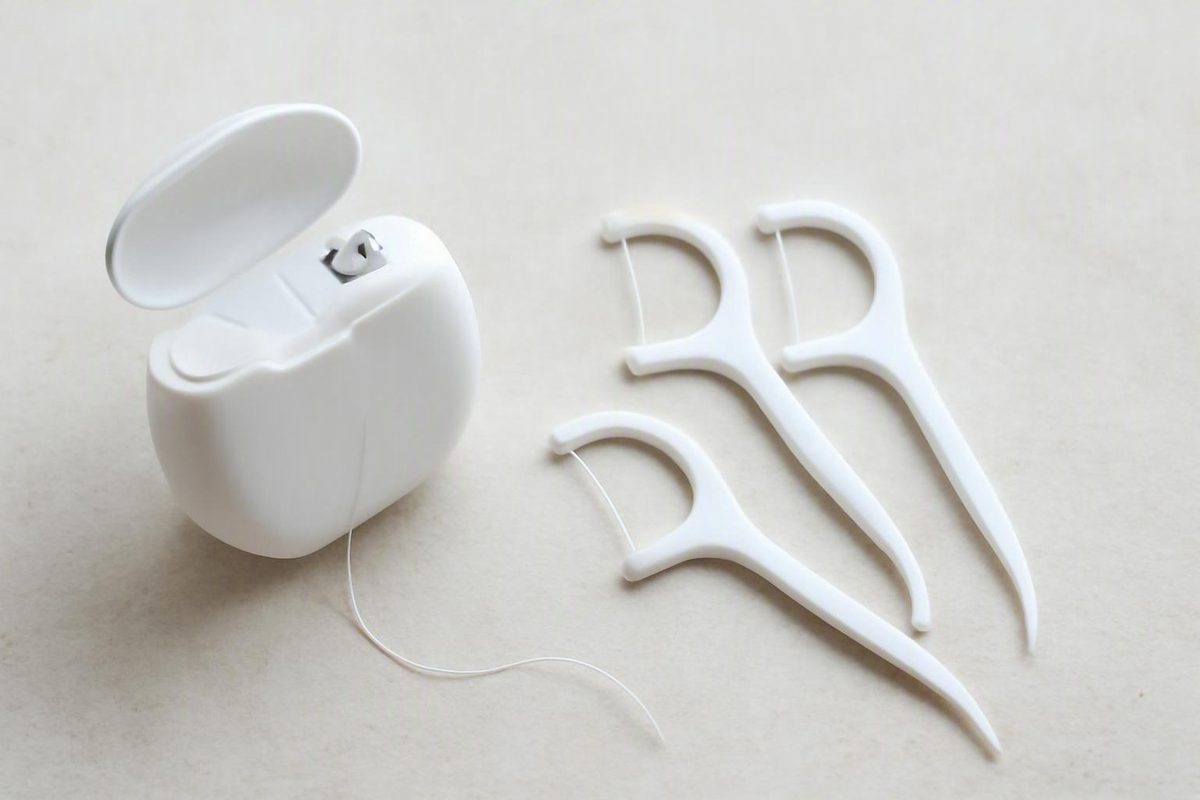
The short answer: string floss offers more control, but picks can be the better practical choice
There is no well-supported universal winner in the dental floss vs floss picks debate. Direct head-to-head evidence is limited, and authoritative guidance does not identify either format as best for every person, dental condition, or health outcome.
Loose string floss has greater technical cleaning flexibility. You can vary its tension and angle, curve it around each tooth, and advance to a cleaner section as you move through your mouth. This makes it easier to adapt the strand to different tooth contours.
A floss pick has a different advantage: handling. Its rigid handle may be easier to grip, operate with one hand, maneuver around rear teeth, and carry away from home. Those practical benefits matter when loose floss is so awkward that it is used inconsistently or not at all.
The distinction is important:
- Technical potential: Loose floss generally offers more contouring control.
- Real-world usefulness: A pick may be more useful when it enables safe, thorough daily cleaning that would otherwise not happen.
A floss pick can therefore be a reasonable alternative for many people, particularly those with generally healthy gums and uncomplicated dental needs who struggle to manipulate loose floss. That does not mean picks have been shown to equal string floss for every outcome, mouth, or type of dental work.
The American Dental Association presents floss, pre-threaded flossers, small brushes, dental picks, and water flossers as options for cleaning between teeth. Its emphasis is on finding a suitable tool and establishing a thorough daily habit rather than remaining loyal to one format (ADA guidance on flossing and interdental cleaners).
Quick comparison
- Choose string floss if you want maximum control over tension, angle, tooth-by-tooth contouring, and access to cleaner sections.
- Consider a floss pick or holder if winding floss around your fingers, reaching rear teeth, or maintaining the habit is difficult.
- Ask a dentist or hygienist if you have braces, a fixed bridge, implants, larger spaces, periodontal concerns, persistent bleeding or pain, or floss that repeatedly catches.
Your best starting choice depends on your technique, hand dexterity, tooth spacing, gum health, restorations or appliances, access to back teeth, and whether you can use the tool gently and thoroughly every day.
Why cleaning between teeth matters
A toothbrush cleans exposed tooth surfaces, but its bristles do not fully enter every tight space where adjacent teeth meet. Interdental cleaning addresses those areas separately.
Plaque is a sticky bacterial film that forms on teeth. Some plaque bacteria use sugars from food and produce acids that can harm enamel and contribute to tooth decay. If plaque remains in place, it can harden into tartar, also called calculus. Once tartar has formed, it requires professional removal rather than more vigorous brushing or flossing at home (ADA explanation of plaque, tartar, and daily flossing).
Removing plaque from between teeth can also support gum health. That does not guarantee that one tool will prevent cavities or gum disease in every user. Oral-health risk depends on more than interdental cleaning, and different research outcomes should not be treated as interchangeable:
- Plaque removal measures how much bacterial film a method removes.
- Gum bleeding is a sign that may reflect inflammation, trauma, or both.
- Gingivitis is inflammation affecting the gums.
- Interproximal cavities are areas of tooth decay between adjacent teeth.
- Periodontitis affects the deeper supporting structures around teeth.
A method that performs well on a short-term plaque score has not automatically been proven to prevent cavities, periodontitis, tooth loss, or other long-term outcomes.
Mayo Clinic recommends cleaning between the teeth once a day. It also notes that the appropriate tool depends on individual needs and suggests holders, brushes, picks, sticks, or water flossers when ordinary dental floss is difficult to handle (Mayo Clinic’s daily interdental-cleaning guidance).
The useful goal is therefore not to defend string floss or picks as a category. It is to remove plaque safely and thoroughly from relevant spaces with a tool you can manage consistently.
How string floss and floss picks differ
String floss is a flexible strand, usually pulled from a spool and controlled directly with the fingers. The user determines its working length, tension, angle, and curvature.
A floss pick holds a short piece of floss taut between rigid prongs attached to a handle. Many disposable products also have a pointed end.
Loose floss can be slackened or tightened as needed. It can generally wrap around the side of a tooth more readily than a fixed strand, making the familiar C-shape technique easier. The user can also adjust the working length for different areas and advance the strand as it becomes used.
A pick exchanges some of that flexibility for simpler handling. It does not require winding floss around the fingers, can be operated with one hand, and may be easier to guide toward back teeth. Although the strand remains fixed between two prongs, the handle can still be angled so that the floss contacts one tooth and then the other. It is too absolute to say that a pick can never make angled contact; the more defensible conclusion is that loose floss usually adapts more freely.
About 18 inches of loose floss provides enough material to wind around the fingers, control a short working section, and advance to cleaner portions while moving through the mouth. A disposable pick instead uses one short, fixed section and is intended for a single cleaning session rather than storage and later reuse (UnitedHealthcare’s description of string floss and single-use picks).
| Feature | Loose string floss | Floss pick |
|---|---|---|
| Contouring control | Highly adjustable; generally easier to wrap around each tooth | More restricted by the fixed strand, although careful angling can improve surface contact |
| Clean-section availability | A longer strand can be advanced as you move through the mouth | One short segment remains fixed in the handle |
| Ease of handling | Usually requires two-handed finger control | Often easier to grip and use one-handed |
| Back-tooth access | Effective when the fingers can be positioned comfortably | A handle may make rear teeth easier to reach |
| Portability | Portable, but requires dispensing and finger wrapping | Compact and ready to use |
| Learning curve | C-shape control takes practice | Initial handling may be simpler, but cleaning both sides of every gap still requires technique |
| Special dental needs | Can be combined with threaders or specialized floss | Standard picks may not fit beneath bridges, wires, or around complex dental work |
| Product variation | Available in different widths, textures, and waxed or unwaxed forms | Handle shape, strand tension, head geometry, and disposable or refillable designs vary |
These are design differences, not proof that every product within one category performs identically. A conclusion about one pick design should not automatically be applied to all picks.
Price, cleaning speed, plastic use, and environmental impact may influence personal preferences, but the supplied evidence does not support a reliable universal comparison on those grounds.
What the evidence can—and cannot—say about effectiveness
The available evidence does not establish a definitive winner between string floss and floss picks.
The ADA recognizes multiple interdental-cleaning tools and advises people to choose one that works well enough to use every day. That is not the same as declaring that picks equal, exceed, or underperform loose floss. Mayo Clinic similarly describes conventional floss as effective for tight spaces and suggests handled or alternative tools when it is difficult to manipulate, without offering a direct floss-pick verdict.
A Dickinson & Branon Dental Care article refers to a 2006 study as finding comparable measured plaque removal with picks and string floss. However, the supplied summary does not provide enough methodological detail to determine how broadly that finding applies. It cannot establish equivalence for cavities, periodontitis, tooth loss, every pick design, or every type of user (the dental practice’s discussion of the limited comparison evidence).
That limitation matters because “effective” can refer to several different endpoints:
- How much plaque is removed immediately or over a short study period
- Whether gum bleeding decreases
- Whether gingivitis improves
- Whether cavities develop between teeth
- Whether periodontitis develops or progresses
- Whether teeth are retained over many years
Results for one endpoint should not be stretched into conclusions about all the others.
Mechanical advantage is not the same as a proven clinical advantage
Loose floss has a plausible mechanical advantage: it can conform more freely to a curved tooth surface. This may make thorough surface contact easier when the technique is good.
Design logic alone, however, does not prove better long-term health outcomes. A flexible strand used quickly, snapped into the gums, or passed down the center of each gap without cleaning either tooth surface may perform poorly. A carefully angled pick used consistently may be more useful than loose floss that remains in a drawer.
A practical way to think about the choice is:
Tool capability × technique × consistency = real-world usefulness.
No part of that equation should be considered in isolation.
Why categorical online claims deserve caution
Many comparison articles from dental practices and oral-care companies strongly favor string floss. Their core mechanical argument—that loose floss adapts more readily to tooth contours—is reasonable. But many provide no direct comparative trial data to support broader statements that string floss always prevents more disease or that picks inevitably leave harmful amounts of plaque behind.
Reports that individual pick users developed cavities are anecdotes, not proof that the pick caused the decay.
Likewise, a disposable pick normally uses one short strand across multiple contacts, while loose floss can be advanced. It is reasonable to prefer cleaner sections when available, but evidence that one pick segment necessarily spreads bacteria in a way that causes clinical disease is limited. That concern should not be converted into an established harm claim.
The bounded conclusion is more useful than either extreme:
- String floss provides greater technical adaptability.
- A carefully used pick may provide reasonable plaque control for some people with uncomplicated needs.
- Neither statement proves universal superiority or equivalence for all health outcomes.
An ADA Seal claim also applies only to the specific product carrying that seal. It should not be interpreted as validation of every floss pick or string-floss product in the category.
A scenario-based guide to choosing your tool
The most suitable starting option depends on the problem you are trying to solve. Practical dental guidance identifies handled tools as possible options when limited dexterity, a strong gag reflex, or difficulty reaching rear teeth makes loose floss hard to manage; that is an accommodation, not proof that the handled tool cleans better (guidance on handled options for dexterity and rear-tooth access).
| Situation | Likely starting option | Reason | When to ask a dental professional |
|---|---|---|---|
| You want maximum tooth-by-tooth control | Loose string floss | It allows adjustments in tension, angle, curvature, and working length, with access to cleaner sections | Ask for a demonstration if you cannot clean both sides without hurting the gums |
| You have arthritis or limited dexterity | Floss pick or floss holder | A handle may reduce the finger coordination required | Ask if you still cannot reach every area or have complex dental work |
| Winding floss around your fingers is difficult | Pick or reusable holder | It avoids finger wrapping while retaining a flossing strand | Ask which design may suit you if access remains difficult |
| You struggle to reach rear molars | Pick or holder | A rigid handle can make positioning easier | Ask for technique help if you can only pass straight through each contact |
| You have a strong gag reflex | Handled pick or holder | Keeping the fingers farther from the back of the mouth may be more manageable | Ask about alternatives if the handle remains difficult to tolerate |
| Portability determines whether you clean | Floss pick | A ready-to-use format may make the habit easier to maintain away from home | Ask if you are unsure whether you reach both tooth surfaces |
| Your gums are generally healthy and contacts are uncomplicated | Carefully angled pick or string floss | Either may be practical when used gently and thoroughly | Ask if persistent bleeding, pain, swelling, or bad breath develops |
| Plain floss sticks between tight contacts | Waxed floss | Waxed floss may be easier to guide through a contact where plain floss sticks | Ask if floss repeatedly shreds or becomes trapped in the same place |
| A child is learning interdental cleaning | Child-appropriate handled option may be easier | A handle can simplify manipulation | Ask for age-appropriate instruction and whether adult help is needed |
| You have larger open spaces | Interdental brush may be more suitable | A strand may not contact the full open surface efficiently | Ask for brush sizing; do not force a brush into a space |
| You have braces | Threader, orthodontic tool, brush, or water flosser may be needed | Wires can obstruct an ordinary strand or standard pick | Request a demonstration tailored to the appliance |
| You have a fixed bridge | Floss threader or another recommended tool | Cleaning may be needed beneath the replacement tooth | Ask how to clean beneath and around the bridge |
| You have implants | Individually selected tool | Implant and restoration design can affect access | Ask which material, size, and technique are appropriate |
| You have periodontal disease or deeper spaces around teeth | Professionally selected method | A standard string-versus-pick choice may not address the area adequately | Ask a dentist or hygienist for individualized instruction |
For children and people with limited dexterity, a handle may be easier to manage, but ease of handling does not remove the need for gentle technique and appropriate instruction (CarolinasDentist’s practical comparison of string floss and handled picks).
A short decision flow
-
Can you control loose floss comfortably? If yes, it offers the greatest flexibility. If not, try a handled tool.
-
Can you clean both tooth surfaces in every gap? If you can only make one straight pass, adjust your technique or try another tool.
-
Do you have braces, bridges, implants, larger spaces, gum disease, or recurring symptoms? If yes, do not force the choice into “string versus pick.” Ask which tool fits the specific area.
-
Which safe option will you actually use every day? Consistency cannot rescue poor technique, but a technically adaptable tool is not helpful if it is never used.
The decision need not be all-or-nothing. You might use string floss where contacts are tight, a holder for the rear teeth, and an appropriately selected brush around a larger space. If you have dental work or gum disease, confirm that combination with a dental professional.
How to use string floss correctly
The purpose of string-floss technique is to clean the side of each tooth, not simply to pop a strand through the contact.
-
Start with about 18 inches of floss. Wind most of it around the middle finger of one hand and a smaller amount around the middle finger of the other. Leave a short section to work with. This approximate length also allows you to advance to a cleaner section as you move around the mouth (string-floss technique guidance).
-
Control the working section. Hold it between your thumbs and forefingers. Use enough tension to guide it without pulling so tightly that control becomes difficult.
-
Guide the floss through the contact gently. Use a small, controlled movement. Do not snap it down into the gum.
-
Curve it around one tooth. Form a C shape so the floss hugs the side of that tooth rather than hanging straight down through the center of the gap.
-
Clean near the gum margin. Move the floss gently along the tooth surface and into the shallow area beside the gum without cutting into the tissue. Avoid forceful sawing.
-
Clean the adjacent tooth. Shift the C shape to the neighboring tooth and repeat. Every gap contains two tooth surfaces, and both need attention.
-
Withdraw the floss carefully. Guide it back through the contact instead of jerking it out.
-
Advance to a cleaner section. Unwind floss from one finger and wind the used portion onto the other as you progress.
-
Follow a consistent route. Work around the upper teeth and then the lower teeth—or use another pattern that helps prevent skipped areas.
-
Include the rear surfaces of the last molars. These surfaces do not share a contact with another tooth, but they should still be included in your cleaning route.
Cleaning should not require pain. Snapping floss through contacts, forceful sawing, or cutting into the gums can injure tissue without improving contact with the tooth.
If ordinary floss sticks or shreds
If plain floss repeatedly sticks, waxed floss may be easier to guide through the contact. Neither waxed nor unwaxed floss is universally more effective; the useful option is one you can place and control without force.
If floss frays, catches, or becomes trapped:
- Stop pulling harder.
- Ease it out gently if possible.
- Try another suitable width, texture, or handled option.
- Do not force a thick strand or interdental brush into a space it will not enter.
- Arrange dental advice if floss catches in the same location repeatedly.
How to use a floss pick without making a single straight pass
A floss pick should do more than remove visible food. Passing once through the middle of a gap does not necessarily clean either adjacent tooth surface thoroughly.
The following is practical technique guidance rather than proof that every pick design performs identically. Commercial pick guidance likewise emphasizes angling the strand and cleaning in more than one direction (practical floss-pick instructions from quip).
-
Hold the pick securely. Use the flossing end—not the pointed end—as the primary cleaning surface between teeth.
-
Guide the strand through the contact gently. Use a small, controlled movement. Do not force or snap it into the gum.
-
Angle the floss against the first tooth. Press the strand toward one side of the gap so it contacts the tooth rather than remaining centered.
-
Move it gently along that surface. Clean near the gum margin with controlled movements. The motion may be more restricted than with loose floss, but the aim remains broad surface contact without pain.
-
Change the angle. Press the strand against the neighboring tooth and repeat. This second angle matters because each space contains two adjacent surfaces.
-
Withdraw it carefully. Ease the pick back through the contact rather than pulling abruptly.
-
Work systematically around the mouth. Include rear teeth and the back surfaces of the final molars. Do not reserve the pick only for places where food is visible.
-
Monitor the strand. Discard the pick sooner if the floss becomes frayed, loose, or heavily soiled.
-
Discard a disposable pick after the session. Follow the directions for the specific product. Do not store a disposable pick for reuse during a later cleaning session.
There is no need to claim that rinsing or replacing a pick partway through one session provides a proven clinical benefit. Nor is there adequate evidence that using one intact segment at multiple contacts necessarily causes disease.
Do not push the pointed end into gum tissue. Product designs and instructions vary, so follow the directions supplied with the specific pick.
If you cannot angle the strand against both sides of a gap comfortably, the pick’s geometry may not suit that area. Try loose floss, a holder with a different shape, or another professionally recommended interdental cleaner rather than repeatedly making a single straight pass.
When neither option is the right tool
Some mouths contain areas that ordinary string floss or a standard disposable pick cannot clean well. Braces, fixed bridges, implants, larger spaces, unusual tooth anatomy, and periodontal disease can change both access and the type of surface that needs cleaning.
The principal alternatives serve different purposes:
- Floss holder: Holds floss in a handle, reducing the finger manipulation required. Some are reusable and restrung; others are disposable.
- Floss threader: Helps route floss beneath an orthodontic wire, under a fixed bridge, or through another restricted area.
- Interdental brush: Uses a small bristled head to clean open spaces and around some orthodontic components.
- Water flosser: Directs a pulsing stream of water around teeth and dental work.
Interdental brushes come in different sizes. A brush should not be forced into a space, and professional selection is particularly useful when gum recession, periodontal treatment, implants, or appliances affect access.
Water flossers may help people with braces, dental work, or limited hand mobility. However, the available guidance does not establish that every water flosser is interchangeable with direct contact cleaning in every location. Different tools address different access problems (overview of picks, brushes, and water flossers).
A dental-practice review also cautions that ordinary picks may not adapt well to deeper periodontal areas or fit beneath fixed bridges and orthodontic wires. It recommends individualized selection for periodontal disease, braces, bridges, and implants rather than forcing a standard string-versus-pick answer (discussion of complex dental needs and tool limitations).
Ask a dentist or hygienist for a demonstration if you have:
- Braces or another fixed orthodontic appliance
- A fixed bridge
- Dental implants
- Larger spaces between some teeth
- Known gum disease or deeper periodontal areas
- Persistent bleeding, tenderness, pain, swelling, or bad breath
- Floss that repeatedly catches or shreds at one location
- An area you cannot reach or clean from both sides
Bleeding deserves a balanced interpretation. Excessive pressure can damage gum tissue, but persistent bleeding may also accompany inflammation. It should not automatically be dismissed as proof that you are merely flossing too hard. Ongoing bleeding or pain warrants professional assessment, especially when it is localized, worsening, or accompanied by swelling.
Decay Guide provides general education written by a health writer. Its articles are not clinician-reviewed, and the site cannot determine an individual reader’s gum condition, restoration contours, implant needs, periodontal areas, or suitable cleaning tools (Decay Guide’s editorial and clinical limitations).
The general baseline remains daily interdental cleaning with a safe, suitable method. Individual dental advice may supersede that guidance when your anatomy, symptoms, appliances, restorations, or disease history create different needs.
Frequently asked questions
Can floss picks clean below the gumline?
A floss pick may reach the shallow area beside the gum when its strand is guided gently and angled against the tooth. Its rigid geometry generally makes adaptation less flexible than loose floss, so the result depends on the pick design, the space, and the user’s technique. Dental-practice guidance favoring loose floss bases that preference on its greater ability to wrap around curved tooth surfaces near the gum margin (discussion of string floss’s contouring advantage).
Do not force the strand under the gum or treat deeper access as a goal to pursue on your own. Clean each tooth surface near the gum margin without causing pain. If you have periodontal disease, implants, recurring bleeding, or concerns about deeper areas, ask a dentist or hygienist whether a standard pick is suitable.
Can I use one floss pick for my whole mouth?
Follow the directions supplied with your specific product. Do not assume that every disposable pick has identical instructions or durability.
If the directions permit one pick to be used through a cleaning session, stop sooner if the floss becomes frayed, loose, damaged, or heavily soiled. Dispose of the pick after that session rather than saving it for later reuse. Dental-practice descriptions generally characterize disposable picks as single-session products, although concerns about bacterial transfer have not been shown to establish inevitable clinical harm (discussion of fixed strands and single-use picks).
The practical question is whether the strand remains intact and controllable enough to contact both sides of each gap. If it does not, replace it according to the product directions.
What should I do if floss gets stuck, shreds, or catches between the same teeth?
Stop forcing it.
If plain floss sticks, Mayo Clinic suggests trying waxed floss. Do not force an interdental brush or thick strand into a tight contact (guidance for floss that becomes stuck).
If floss repeatedly catches in exactly the same location, ask a dentist to examine the area.
Are floss picks suitable for children or people with limited hand mobility?
They can be. A handle may be easier for a child, a person with arthritis, or someone who cannot comfortably wind and control loose floss. It may also improve access to rear teeth.
Suitability still depends on technique. The user must guide the strand gently, contact both tooth surfaces, and avoid pushing the pointed end into the gums. Children need age-appropriate instruction, and a dental professional can advise whether adult help is appropriate. If mobility remains a barrier, ask for a demonstration of holders, brushes, picks, or water flossers.
Should I use floss, an interdental brush, or a water flosser with braces, bridges, or implants?
There is no single answer for every appliance or restoration.
- With braces, a threader, orthodontic floss, interdental brush, or water flosser may help reach around wires and brackets.
- With a fixed bridge, floss may need to be threaded beneath the replacement tooth, or another tool may be recommended.
- With implants, the restoration’s shape, surrounding tissue, and access affect which tool and technique are suitable.
- With larger spaces, a correctly sized interdental brush may provide more surface contact than a strand.
Handled picks, brushes, and water flossers can all address particular access or dexterity problems, but that does not make them universally interchangeable (practical overview of alternative interdental cleaners).
Do not force a brush into a space or assume a standard pick will fit around complex dental work. Ask a dentist or hygienist to select the tool and demonstrate it in the exact area.
The final rule
Choose a safe interdental cleaner that lets you reach every relevant space, clean both tooth surfaces gently, and maintain the habit daily. Loose floss offers the most adaptable tooth-by-tooth control. A floss pick may be the better real-world option when handling, rear-tooth access, or convenience would otherwise prevent cleaning.
For braces, bridges, implants, larger spaces, periodontal concerns, persistent bleeding or pain, or floss that repeatedly catches, seek individualized guidance rather than forcing a string-versus-pick choice.