
Pregnancy Gingivitis Is Usually Reversible—But Don’t Ignore Bleeding Gums
Why gums may bleed during pregnancy, how plaque and hormones interact, what home care helps, and when to arrange a dental examination.
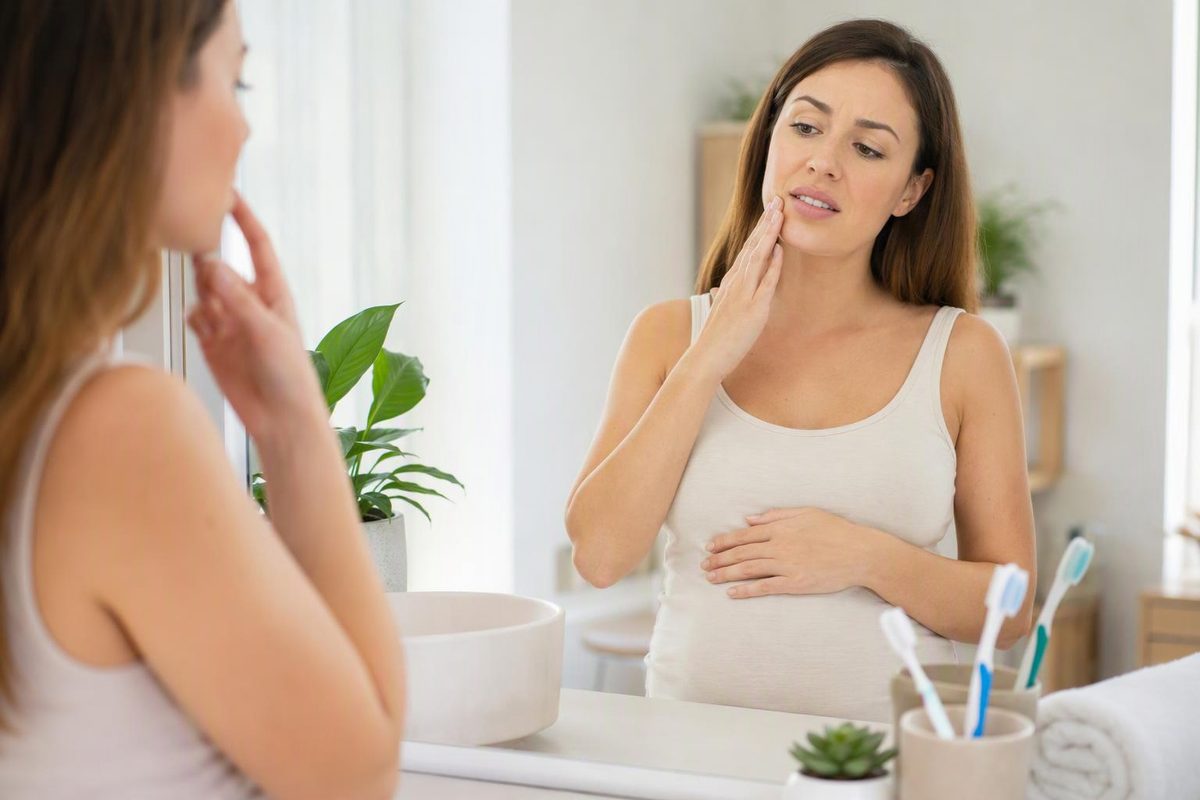
Pregnancy gingivitis is inflammation limited to the gums during pregnancy. Typical signs are red, puffy or tender gums that bleed during brushing or cleaning between the teeth. It is common and usually reversible, but pregnancy does not make repeated bleeding something to dismiss.
The CDC describes gingivitis as an early form of periodontal disease and notes that changing hormones can worsen it during pregnancy. A dental assessment is needed to distinguish gum-only inflammation from periodontitis, in which the tissues supporting the teeth have been damaged.
Hormones amplify the gums’ response to plaque
Pregnancy gingivitis is not simply caused by hormones. Dental plaque—a sticky film containing bacteria—starts the inflammatory response. Pregnancy-related hormonal changes can make gum tissue react more strongly to plaque, so a previously manageable amount may produce more redness, swelling and bleeding.
Research has found substantial variation among pregnant populations, so a single prevalence percentage can be misleading. Studies also suggest that inflammation often increases as pregnancy advances and decreases after delivery, although the timing and severity differ between individuals (review in Mediators of Inflammation).
Common signs include:
- bleeding during gentle brushing or interdental cleaning
- red or darker-looking gum margins
- puffiness or tenderness around several teeth
- persistent bad breath or an unpleasant taste
Bleeding alone cannot show how far gum disease has progressed. Pocket measurements, bleeding patterns, tooth support and—when indicated—imaging are considered together. See gingivitis vs periodontitis for why this distinction matters.
A separate pregnancy-related change is a localized red gum growth called a pyogenic granuloma, sometimes called a “pregnancy tumor.” Despite that alarming name, it is generally benign, but a lump that grows or bleeds easily should be examined rather than assumed to be gingivitis. The American Dental Association lists this growth among oral conditions that can occur during pregnancy.
What helps pregnancy gingivitis
The aim is to remove plaque consistently without injuring already sensitive gums:
- Brush twice daily for two minutes. Use fluoride toothpaste and a soft-bristled brush. Angle the bristles gently toward the gumline rather than scrubbing hard.
- Clean between the teeth once a day. Floss or correctly sized interdental brushes reach plaque a toothbrush misses.
- Continue gentle cleaning if the gums bleed. Stopping allows more plaque to remain. Persistent bleeding, however, is a reason to arrange a dental assessment—not to apply more force. Our guide to brushing the gums gently explains the technique.
- Adapt around nausea. A smaller brush head or mild-flavored toothpaste may help. After vomiting, rinse with a mixture of one teaspoon of baking soda in one cup of water and avoid brushing immediately; stomach acid temporarily softens the tooth surface. This guidance is included in the ADA’s pregnancy recommendations.
Mouthwash may complement daily cleaning in selected cases, but it does not replace brushing and interdental cleaning or remove hardened tartar. Ask a dentist or obstetric clinician before starting a medicated rinse during pregnancy rather than choosing one solely because it says “for gingivitis.”
If plaque has hardened into tartar, home brushing cannot remove it. NIDCR states that tartar requires professional cleaning. The Health Resources and Services Administration says dental examinations, cleanings and almost all other dental procedures are safe during pregnancy. Tell the dental team that you are pregnant and about your medications and pregnancy history.
Does it disappear after delivery?
Inflammation driven partly by pregnancy hormones often improves after delivery. Plaque and tartar do not disappear when hormone levels change, however, and established periodontitis does not reverse simply because pregnancy has ended.
Early plaque-related gum disease can often be reversed with effective daily cleaning, while the tooth-supporting tissues remain intact (NIDCR). If bleeding, swelling or bad breath continues after delivery, have it assessed rather than waiting indefinitely. More generally, plaque-induced gingivitis is reversible before supporting tissue is lost.
When to see a dentist
Arrange a dental visit for recurring bleeding, painful or swollen gums, persistent bad breath, or any new gum lump. Seek urgent dental care for very painful and markedly swollen gums, a loose adult tooth, or a mouth lump, ulcer or red patch; these findings should not be attributed to pregnancy without assessment (NHS gum-disease guidance).
Do not postpone necessary care solely because of pregnancy. The ADA and the American College of Obstetricians and Gynecologists agree that preventive, diagnostic and necessary restorative dental care can be provided during pregnancy. Although periodontitis has been associated with some adverse pregnancy outcomes, causation remains uncertain; periodontal treatment during pregnancy improves maternal oral health and has not been shown to cause adverse maternal or birth outcomes (ACOG guidance).