
Choose a Gingivitis Mouthwash by What the Label Claims
Compare mouthwash for gingivitis by active ingredient, learn when chlorhexidine is appropriate, and see why rinsing cannot remove tartar.
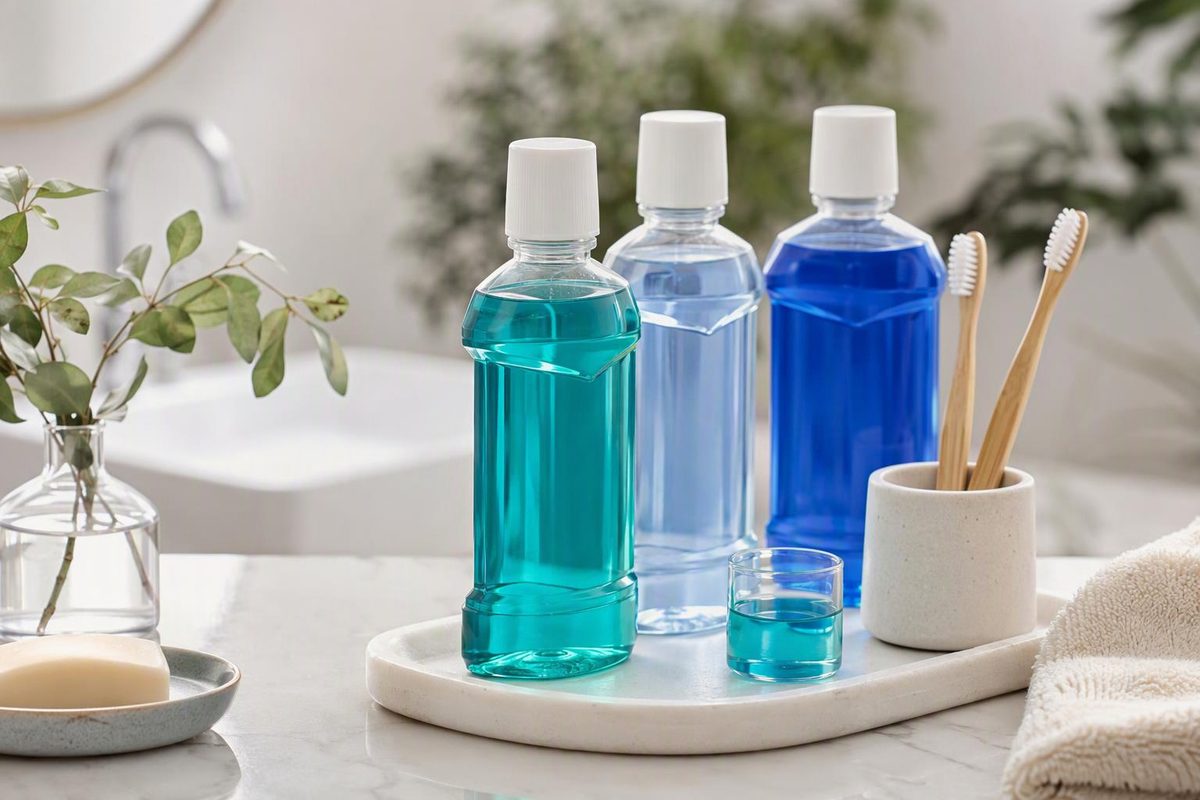
Mouthwash can help reduce plaque and gum inflammation, but it is an add-on, not the main treatment for gingivitis. For routine over-the-counter use, choose a therapeutic rinse whose label specifically claims to control plaque or gingivitis. Essential-oil and cetylpyridinium chloride (CPC) rinses are reasonable options; chlorhexidine is effective but, in the US, requires a prescription and is generally reserved for a limited, professionally directed course.
Choose your situation and check the label claim; the result identifies the appropriate next step.
For Routine Use: Check for a Plaque or Gingivitis Claim
Choose a therapeutic essential-oil or CPC rinse whose complete label specifically says it controls plaque or gingivitis. Use it alongside brushing and interdental cleaning.
Limits of this result
An ingredient name or the word “antibacterial” alone does not prove that every formulation controls gingivitis. Mouthwash cannot remove tartar.
Sources: American Dental Association mouthrinse review; Cochrane chlorhexidine review; US DailyMed labeling; National Institute of Dental and Craniofacial Research. Product availability and labeling vary by country.
Mouthwash Cannot Replace Plaque and Tartar Removal
Plaque-induced gingivitis is inflammation confined to the gums. It can usually reverse when plaque is consistently removed before supporting tissue and bone are lost. Mouthwash can add to plaque control and reach areas that a toothbrush may miss, but it does not physically clean tooth surfaces as brushing and interdental cleaning do.
Mouthwash also cannot remove tartar, which is hardened plaque. Only a professional cleaning can remove tartar, according to the National Institute of Dental and Craniofacial Research. If the inflammation reflects periodontitis rather than gingivitis, less bleeding after rinsing does not show that periodontal pockets or bone loss have been treated. The differences are explained in gingivitis versus periodontitis.
Compare Mouthwash Ingredients for Gingivitis
| Ingredient or type | Role in gingivitis | Main limitation |
|---|---|---|
| Essential oils | Reasonable daily adjunct; formulas commonly combine eucalyptol, menthol, thymol and methyl salicylate | Strong taste or burning; some formulas contain alcohol |
| CPC | OTC antimicrobial that can provide an additional reduction in plaque and gingival bleeding | Benefit varies by formulation; brown staining can occur |
| Chlorhexidine | Produces a large plaque reduction and can reduce gingivitis alongside mechanical cleaning | Usually suited to short-term, professionally directed use because of staining and other adverse effects |
| Fluoride | Helps prevent tooth decay | Fluoride alone is not an antigingivitis treatment |
| Cosmetic rinse | Temporarily improves taste or breath | Does not necessarily control plaque or inflammation |
| Whitening rinse | Intended mainly to reduce surface stain | Does not substitute for an antigingivitis rinse |
The American Dental Association’s mouthrinse review says antimicrobial rinses containing CPC, chlorhexidine or essential oils can reduce plaque and gingivitis when combined with brushing and interdental cleaning. The complete formulation matters: finding one of those ingredients on a label does not establish that every product works equally well.
UK preventive guidance describes the evidence for chlorhexidine as stronger than the low- to moderate-certainty evidence for essential-oil and CPC rinses. That difference is one reason not to treat every “antibacterial” label as equivalent.
Check the package for a specific plaque or gingivitis claim rather than choosing by flavor or by the word “antibacterial” alone. A fluoride rinse can carry a cavity-prevention claim without being intended to treat gingivitis.
In the US, an ADA Seal of Acceptance for gingivitis control is another useful filter. The manufacturer must provide evidence of a statistically significant reduction in gingival inflammation and plaque formation or pathogenicity. The seal is claim-specific: acceptance for cavity prevention or bad-breath control does not automatically establish an effect on gingivitis.
Chlorhexidine Works but Is Not an Automatic First Choice
A Cochrane review of 51 studies found high-certainty evidence that chlorhexidine used with usual cleaning produced a large reduction in plaque. It produced a moderate reduction in mild gingivitis, although the reviewers judged the average change not clinically important because inflammation was already mild. Evidence was insufficient to determine its benefit in moderate or severe gingivitis.
Use for four weeks or longer caused external tooth staining. Reported effects also included altered taste, mouth soreness or irritation, a burning sensation and calculus buildup, although the review’s pooled findings on calculus were inconclusive. UK guidance therefore advises chlorhexidine for short-term use.
In the US, 0.12% chlorhexidine oral rinse is labeled as a prescription drug used as part of a professional gingivitis-treatment program. Availability and labeling differ elsewhere.
Follow the specific product label or dental instructions rather than copying another rinse’s dose or treatment length. Do not swallow chlorhexidine. Stop using it and seek urgent medical help for signs of a serious allergic reaction, such as difficulty breathing or swelling of the mouth or throat.
Fit Mouthwash Into Daily Plaque Control
- Brush gently twice daily with fluoride toothpaste. Clean along the gumline rather than scrubbing harder when it bleeds.
- Clean between the teeth daily. A rinse can flow between teeth, but it does not dislodge attached plaque as floss or an appropriately sized interdental brush can.
- Use the measured amount for the stated time, then spit it out. More product or a longer rinse is not necessarily better.
- Avoid immediately washing fluoride toothpaste away. A practical approach is to use mouthwash at another time of day.
- Separate chlorhexidine from toothpaste. Toothpaste can reduce its activity. The NHS advises using chlorhexidine at a different time or rinsing thoroughly and waiting at least five minutes. See mouthwash before or after brushing for timing by rinse type.
- Choose a formula you can tolerate. Alcohol is not the antigingivitis active ingredient. An alcohol-free antimicrobial rinse may be easier to tolerate if a formula stings or the mouth feels dry.
Do not give mouthwash to a child under 6 unless a dentist directs it; young children may swallow substantial amounts. Follow the product’s age limits for older children as well.
Persistent Bleeding or Tartar Needs Dental Care
Repeated gentle bleeding, redness or puffiness warrants attention even when there is little pain. Gingivitis can be painless, and symptoms alone cannot show whether supporting bone has been affected.
Arrange a dental examination when bleeding persists despite consistent cleaning, tartar is visible, or there is gum recession, persistent bad breath, pus, pain when chewing or a loose tooth. Signs that recur are more informative than one episode of bleeding.
A rinse may make bleeding or breath seem better without removing tartar or treating periodontal pockets. Effective care still depends on removing plaque with brushing and interdental cleaning, having tartar professionally removed when present, and using a tolerable therapeutic rinse only where it adds useful plaque and gingivitis control.